Durable glass-bead road studs improve road safety
Text Chris Elbers Beeld Van Wylick Wegdekreflectoren/Wim Ploeg
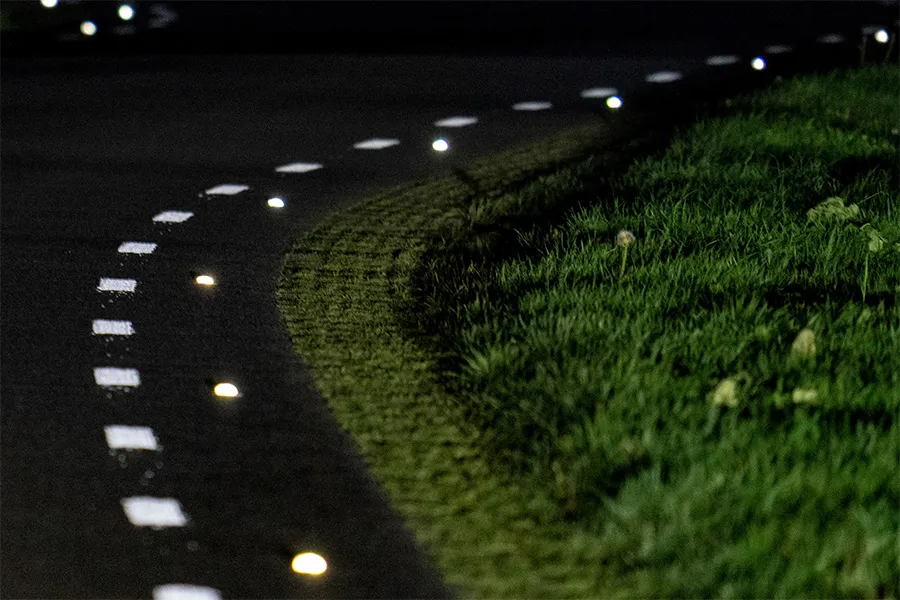
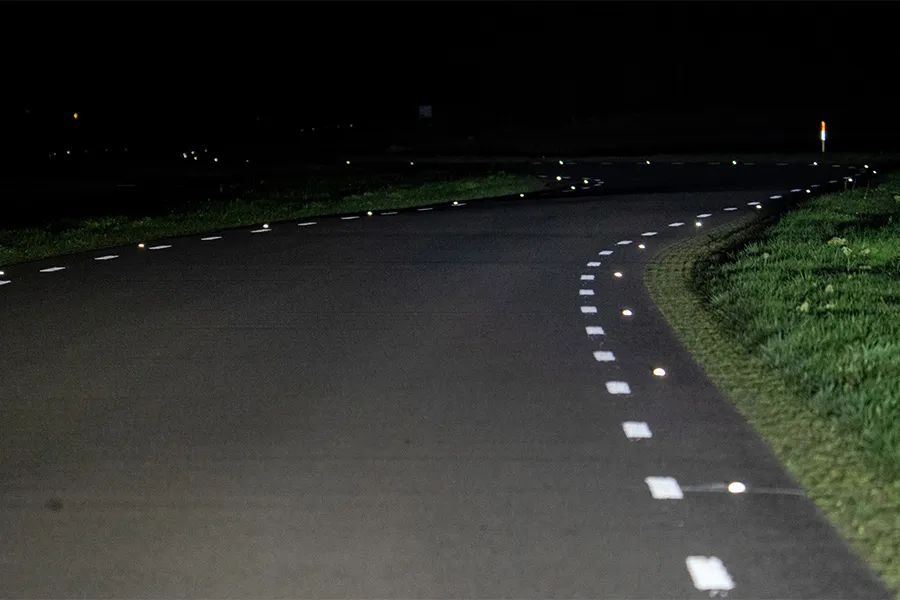
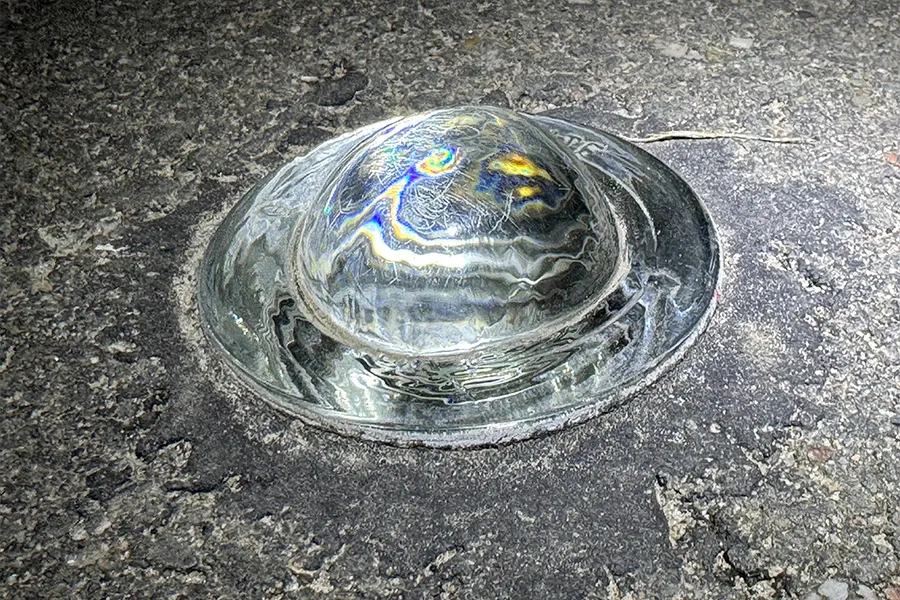
With a mission to actively contribute to road safety in the Netherlands and beyond, Van Wylick Wegdekreflectoren offers a range of powerful, durable solutions. One is the glass-bead road stud, the innovation that started it all for the company, which has operated from Sint-Michielsgestel since 1993. This cost-saving, maintenance-free and virtually indestructible product has a wide range of applications. For example, it can provide a better and safer alternative to the thousands of vulnerable verge reflector posts installed along roads across the country.
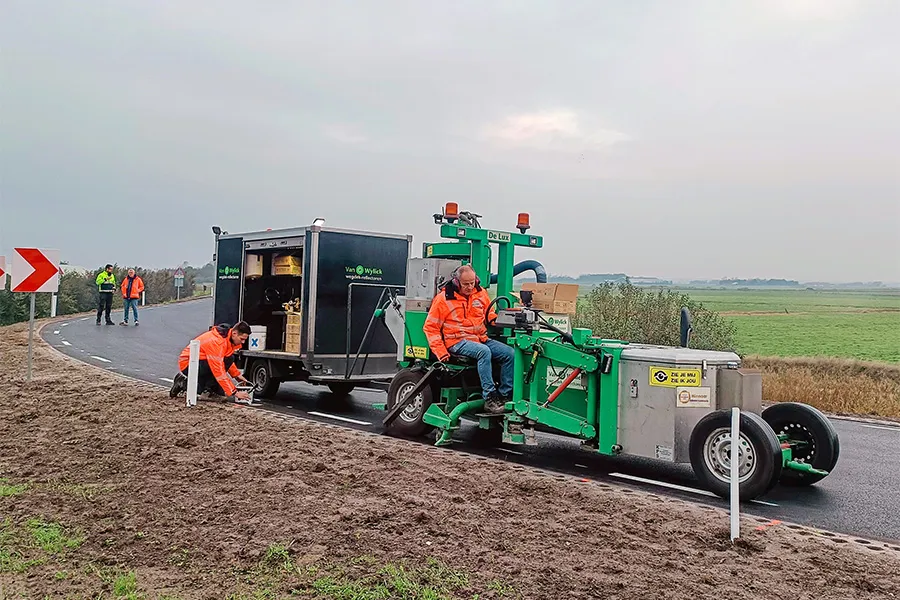
Van Wylick Wegdekreflectoren BV was founded more than 30 years ago by Chris van Wylick, who brought the glass-bead road stud to market. Since 1 January 2024, his daughter Lisette has been at the helm. Her task is to bring the family business’s product range to market. “As well as glass-bead road studs, this includes solar-powered LED reflectors and marker studs,” she says. “These are our specialist products, supplied with installation. For the glass-bead road studs, installation is carried out using the Lux.” This installation vehicle, which won the Cobouw Publieksprijs in 2015, not only ensures fast and efficient installation in the asphalt. Its integrated sweeping and vacuum system also keeps the work exceptionally clean. Combined with the many advantages of the product, it is no surprise that Van Wylick’s glass-bead road studs are increasingly being used by local authorities and provinces to improve road safety sustainably and cost-effectively.
Texel
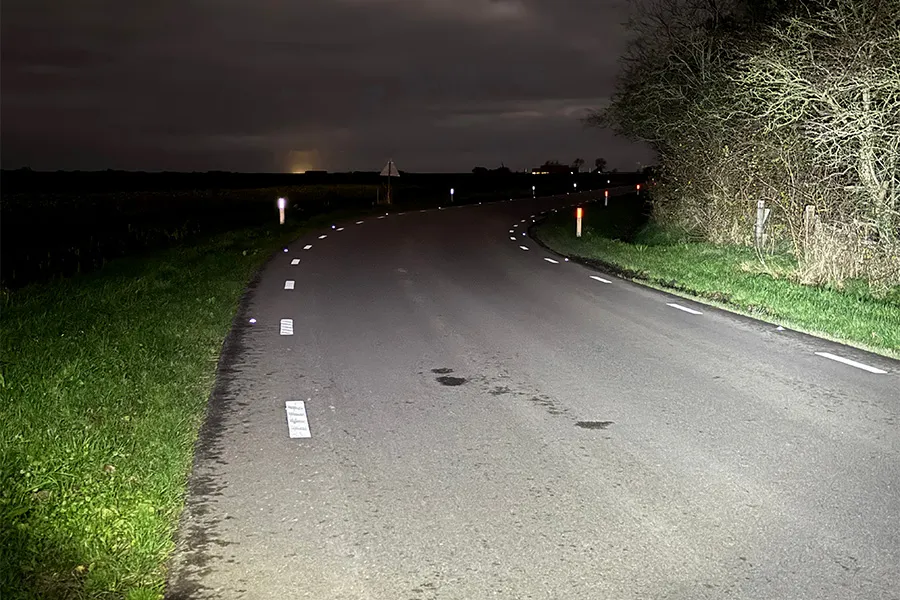
The municipality of Texel has also opted for the product, recently purchasing the first 550 durable glass-bead road studs from Van Wylick for the island’s rural roads. Henri Bijkerk, who has been responsible for managing the municipality’s road assets for about a year, was the driving force behind the decision. His choice was informed by his experience at his previous employer, the province of Overijssel, where he helped introduce reflective glass beads on all provincial roads. “Through thorough field research that also took road users’ behaviour and opinions into account, we were able to show that installing glass-bead road studs meant there was no longer any need for tens of thousands of verge reflector posts and hundreds of lighting columns,” he says. “As a result, almost all the N-roads and a number of motorways in the province have been fitted with the Lux 3, and now also with the Lux 7, Van Wylick’s latest model.”
Replacement
The findings from the research in Overijssel also apply to Texel’s rural roads, where darkness is valued as an asset and public lighting is therefore used sparingly. “When public lighting was removed from the countryside around 10 years ago, active LED units were installed in the road surface at some junctions to guide traffic around the island,” Henri explains. “We’ll supplement the reflector posts currently standing on the verges at bends with glass-bead road studs. We’ll also use them, where road safety permits, as a complete replacement for the hundreds of posts that are damaged each year by mowing, knocked down by vehicles or destroyed by vandalism.”
Benefits
The first 550 glass-bead road studs have recently been installed on three Texel roads, replacing a large number of reflector posts. Initial findings are positive. “In April 2025, we’ll evaluate the installation by asking road users for their views,” says Henri. “If all goes well, we’ll probably fit reflective glass beads at every bend where reflector posts are still in place.” The primary aim, of course, is to improve road safety. The glass beads not only make the road surface more visible; research has also shown that too many verge posts can prevent road users from slowing down sufficiently and lead them to exceed the speed limit more often. They also reduce the number of unsightly obstacles in the landscape and make it easier to mow the road verges. Finally, there are significant financial benefits. A glass-bead road stud lasts as long as an asphalt surface course and, unlike reflector plates, requires little or no replacement. “Van Wylick’s glass beads have already proved their worth in many places across the Netherlands,” Henri concludes. “We expect them to do the same on Texel.”
Een zakelijke vraag aan Van Wylick wegdekreflectoren BV? Get in touch
Companies in this story
Keep following this
Get an email when a new story is published. No account needed.
- ThemeExtending the life of roads and civil engineering structures
- SubjectInfraTech
- CompanyVan Wylick wegdekreflectoren BV