Digital security in construction: how VanMeijel uses SaaS to ensure protection and continuity
Text Susan Peek Image VanMeijel Automatisering
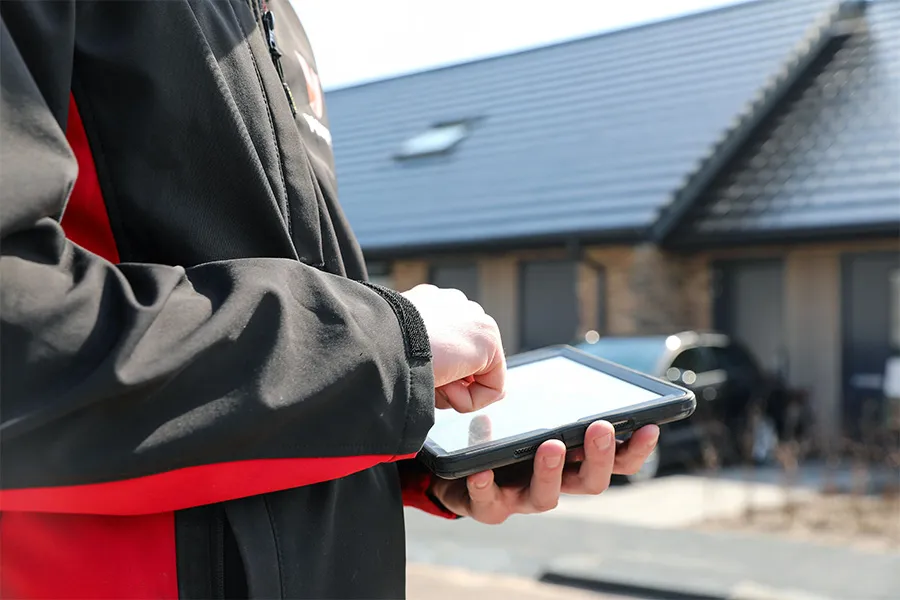
The construction sector has traditionally focused on physical safety, but as digitalisation has increased, digital security has also become essential. Cybersecurity is now the norm, not only to protect sensitive data but also to ensure business continuity. Peter Wouters, team leader of technical consultancy at VanMeijel, talks about the shift to cloud-based solutions and the growing role of digital security in construction.
From on-premise to SaaS: a digital transition
VanMeijel previously provided customers mainly with on-premise systems. This meant that all software ran locally at the customer’s premises, and the customer was responsible for security, backups and updates. Today, digital security is a shared responsibility between software suppliers and customers. SaaS solutions (Software as a Service), software delivered via the cloud, offer major benefits for both security and functionality. Peter explains: “SaaS allows us to provide a much higher level of security, because we can retain control over essential aspects such as backups, authentication and system updates. We ensure that our software, such as Metacom, meets the highest security standards, including ISO 27001, and we also manage and maintain the servers and network.”
However, the customer’s role remains crucial, Peter stresses. “To ensure digital security, end users need to understand secure login procedures and use the right security measures, such as multifactor authentication (MFA). VanMeijel works closely with customers to minimise vulnerabilities and strengthen the digital resilience of their systems.”
The benefits of SaaS for the construction sector
According to Peter, SaaS offers several benefits to construction companies, especially at a time when labour shortages and digitalisation go hand in hand. “Younger employees have different expectations of software than older generations. They want to be able to work from any location, often using apps or other mobile solutions. SaaS makes this possible while we ensure security. For the GWW sector, where fast and reliable access to data is crucial, this helps companies stay flexible and attract the next generation of employees.”
With SaaS solutions such as Metacom, users are no longer dependent on local servers and can access their data anytime, anywhere. Peter says: “The great thing is that the application looks and works the same, but can now be accessed via the internet. All administrative processes, from estimating to invoicing, are secure and accessible. And if anything does go wrong, regular backups make recovery much easier.”
Cyber threats and how to prevent them
The move to the cloud and SaaS also brings new challenges, such as the risk of cyber attacks and ransomware. A ransomware attack is the greatest risk for companies in the GWW sector: “If you can’t access your data, your entire business grinds to a halt. That’s why we ensure customers understand the need for backups and security updates.”
An essential step in improving digital security is multifactor authentication (MFA). Users must enter not only a password but also a second factor, such as verification on their phone. This makes it harder for hackers to access sensitive data. With MFA in Metacom, users can activate this additional layer of security themselves and improve their security.
Why SaaS is the future of digital security in construction
For VanMeijel and Peter, the answer is clear: SaaS offers a level of quality that customers with an in-house IT department cannot match. “Many people think SaaS is only about saving costs, but we see it primarily as a way to take security and functionality to the next level. A few years ago, not all customers saw SaaS as an obvious next step, but there is now a clear trend towards this solution. Almost all customers are now interested in making the switch, partly because of the higher security standards and reduced maintenance of their own hardware. Although the change requires some work on the architecture side, the migration itself generally goes smoothly. SaaS enables companies to focus on their core activities, while VanMeijel takes care of a secure digital environment that is always up to date,” Peter concludes.
Question about this story? Ask your question
Keep following this
Get an email when a new story is published. No account needed.
- SubjectInfraTech