A sneak preview of the smartest and most sustainable infrastructure solutions
Text Armand Landmand Image Rotterdam Ahoy
InfraTech Innovation Award 2025
Two years ago, then Minister of Infrastructure and Water Management Mark Harbers presented the InfraTech Innovation Award. He quoted Albert Einstein, who once said that ‘logic will get you from A to B, but imagination can take you everywhere’. According to Harbers, the InfraTech Innovation Award proves every two years that there is always room to be smarter and do better. The same is true of the 2025 edition. Here is a sneak preview.
As in previous editions, the InfraTech Innovation Award 2025 is divided into three categories: product innovation, process innovation and sustainable collaboration. This year, the jury received nearly fifty entries across the three categories.
Sustainable collaboration
One notable feature of the sustainable collaboration category is that a large proportion of the entries focus on reusing materials. This gives the circular construction economy a boost.
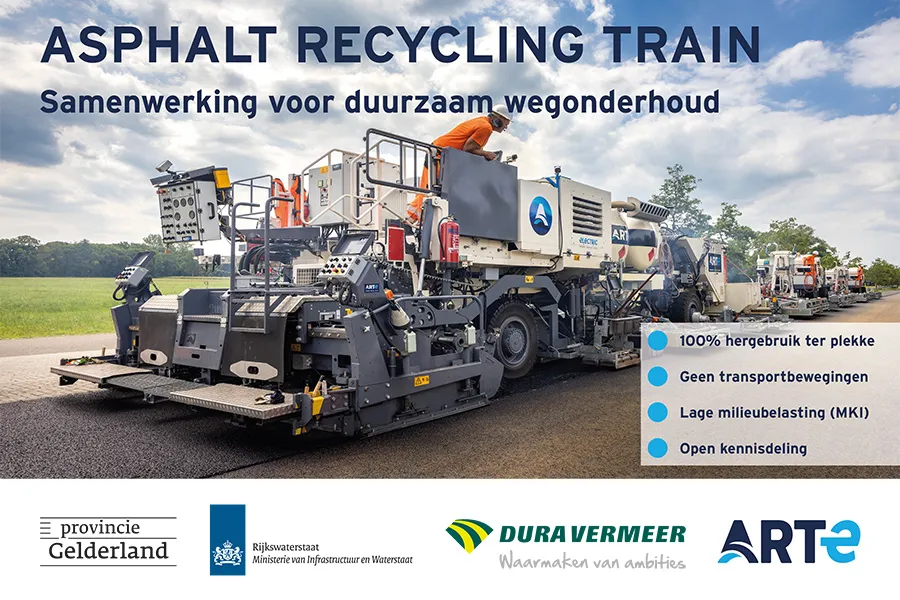
The Asphalt Recycling Train (ART) from Dura Vermeer, Art-E, Gelderland province and Rijkswaterstaat recycles old asphalt directly on site. The ART is a series of maintenance machines that travel one behind another like a train over a damaged road surface, leaving a smooth, new surface behind. The first machines, the pre-heaters, heat the road surface to loosen the asphalt. Next, a remixer loosens and picks up the asphalt, processes it and lays it again on the road surface. Finally, a roller smooths the road surface.
BAM Infra submitted DuSpot, a matching tool for public authorities and contractors. It matches the supply and demand for surplus construction materials at different stages of a project. The aim is to make it easier to reuse serviceable construction materials elsewhere.
In the Buyer Group Grondstromen, public-sector clients (Rijkswaterstaat, municipalities, provinces and water authorities) are developing a joint market vision and procurement strategy for the circular supply and removal of soil. The Buyer Group Grondstromen aims to accelerate the transition to high-value use of soil in projects commissioned by public-sector clients. This can be achieved by focusing on the physical, chemical and biological properties and value of soil.
Process innovation
In the Process Innovation category, data and automation are playing an increasingly prominent role in the maintenance and management of both above-ground and underground infrastructure. Rijkswaterstaat has now completed several successful pilots in data-driven asset management. This approach gives Rijkswaterstaat a better understanding of the condition and remaining service life of its assets, enables it to manage them differently, makes maintenance more predictable and, in turn, more affordable. Rijkswaterstaat’s Data-Driven Asset Management Programme ensures that this way of working is introduced successfully. Several pilots involving hydraulic structures, movable bridges and tunnels have tested management and maintenance using real-time data, artificial intelligence and dashboards at national and regional level. The key question was: ‘does it work?’.
The next phase will focus on ‘standardisation’. During this phase, Rijkswaterstaat will establish the organisational, procedural and technical conditions needed to implement data-driven asset management throughout the organisation for hydraulic structures, movable bridges and tunnels. The key question in this phase is: ‘how do we use it as Rijkswaterstaat?’
Antea Groep goes a step further, even automating the design of railway routes. RailDesign Pro is a tool that designs 3D models of track superstructures for both new-build and renovation projects involving railway routes and station areas, whether they involve one track or several. Based on an alignment line, RailDesign Pro generates a 3D model in Civil3D. The tool ‘reads’ this line and then identifies which track structure needs to be generated for each section of the alignment. The designs generated by the tool comply with ProRail’s design requirements. Designers still have the freedom to make their own additional choices in the design.
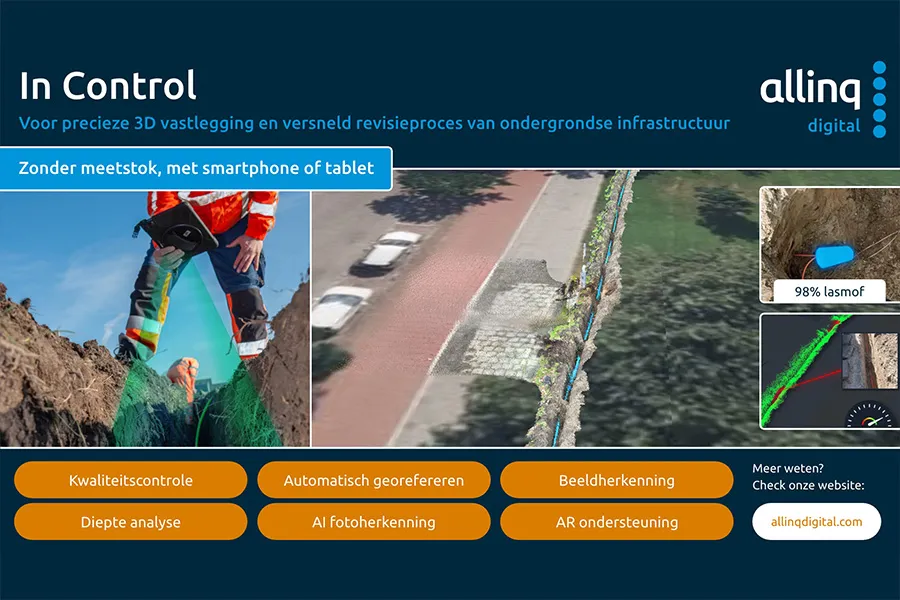
Allinq’s ‘In Control’ innovation offers a solution for our increasingly congested underground infrastructure. Allinq has introduced a solution that accurately records where pipes and cables have been laid and at what depth. The excavation team can easily scan the area where the cable was laid using a mobile phone or tablet. The data is then processed in a 3D platform, or digital three-dimensional map. This digital surveying solution provides a wealth of information. Digitally surveying the trench makes it possible to pinpoint exactly where the cables are and how deep they lie. The application uses a tablet equipped with LiDAR technology to create a three-dimensional point cloud, enabling accurate depth measurements and precise location mapping. Excavation teams, for example, can add images to the point cloud to record valuable visual information. The application stores this information, which can then be used for analysis and reporting.
Product innovation
As is traditional, the Product Innovation category of the InfraTech Innovation Award attracts the most entries. These innovations cover a wide range of solutions, including advanced water management technologies, sustainable construction materials, infrastructure inspection tools and software solutions for project management and procurement. Each innovation focuses on improving sustainability, efficiency and safety in the infrastructure sector, with solutions such as innovative drainage systems, circular materials, advanced inspection tools and new energy management techniques. Projects range from AR applications and modular construction systems to environmentally friendly stabilisation technology and data-driven solutions for dike safety. The common thread running through the 2025 innovations is sustainability, circular use of materials, and improved efficiency and safety in infrastructure projects. They share a vision of reducing the ecological footprint and creating smart infrastructure solutions that contribute to more sustainable management of public resources. Here we highlight some notable innovations that could help address current challenges such as grid congestion, local road maintenance, climate adaptation, biodiversity restoration and circular construction materials.
With smart precast beams, Mobriq halves construction time for high-voltage substation foundations. The modular Mobriq system is a revolutionary way to combine speed and quality in switchyards at all types of energy stations (110kV, 150kV, 220kV and 380kV). The system was developed and successfully used by Mobilis for TenneT at the 380 kV high-voltage substation in Tilburg, the 220 kV substations in Zevenhuizen and Bleiswijk, and the 110 kV substation in Eibergen.
XenoBike is an innovative solution from Belgian company XenomatiX, designed specifically for inspecting cycle paths. It is a four-wheeled electric bicycle equipped with XenoTrack LiDAR technology and a complete 6D scanning package. The technology is designed to assess the condition of cycle paths and identify potential hazards such as cracks, holes and bumps, helping to make maintenance more cost-effective. XenoBike uses LiDAR to create a detailed 3D model of the cycle path, which is then used to map maintenance needs and safety measures. Its compact size allows XenoBike to inspect hard-to-reach areas inaccessible to larger vehicles, such as narrow alleys and recreational paths. This helps ensure the safety and comfort of cyclists, as potential obstacles such as tree roots, subsidence and other defects are detected and accurately located. The data collected can be easily integrated into Pavement Management Systems (PMS) and Geographic Information Systems (GIS), making it easier to plan and maintain cycle paths.
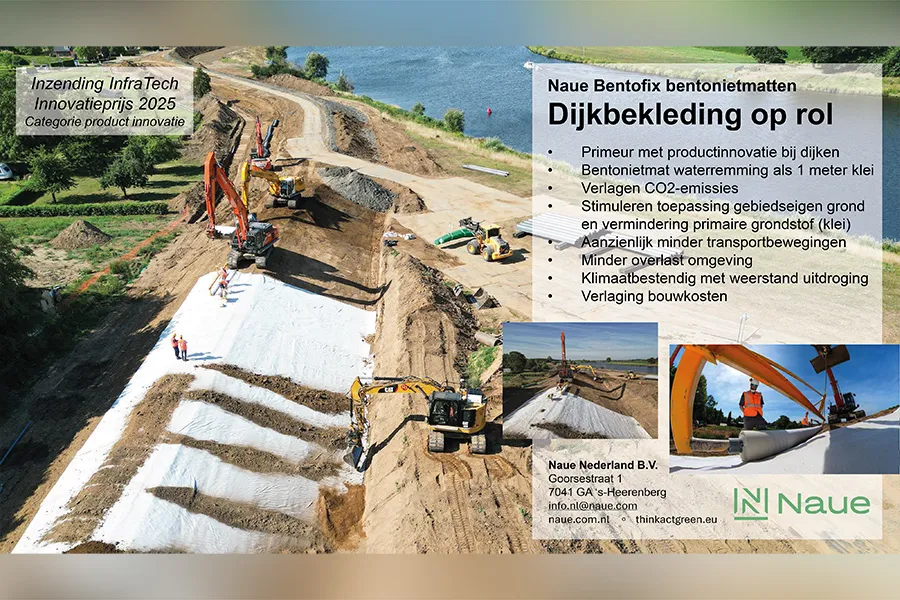
Rolled dike protection, such as Naue Bentofix, is an innovative solution consisting of geosynthetic clay liners (GCLs) that can be easily unrolled for rapid installation. Bentofix contains a layer of highly swellable sodium bentonite clay between two geotextile layers, providing a durable, self-sealing barrier. This technology effectively protects against erosion and stabilises dikes by reducing water permeability and increasing structural strength.
Flax is a material that has been used for thousands of years to make clothing, bags and ropes for ships. Recently, this ancient material has been ‘rediscovered’ and could well become the construction material of the future. The EU project ‘Smart Circular Bridge’, led by Eindhoven University of Technology, recognises this potential by building three urban bridges from a biocomposite made of flax and a special bio-resin. This material is light and highly stable, with properties comparable to aluminium or light steel.
The ‘Smart Circular Bridge’ project is a consortium of fifteen partners led by Eindhoven University of Technology. The project team consists of five universities, seven innovative companies and three municipalities.
The first bridge was installed in 2022 at the international horticultural exhibition Floriade in Almere. Two other ‘Smart Circular Bridges’ for pedestrians and cyclists were built in Ulm (Germany) and Bergen op Zoom, in 2022 and 2023 respectively. The close collaboration between academia, industry and local authorities led to a host of innovations.
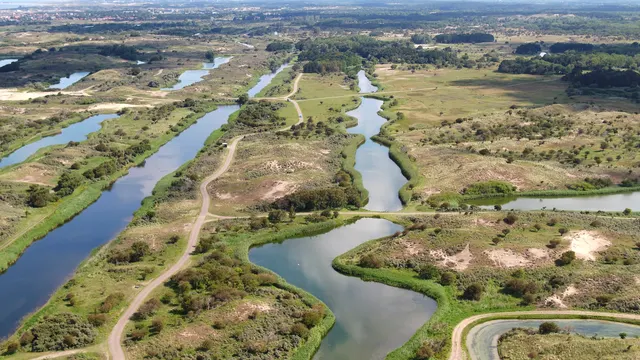
Many ponds, lakes, canals and waterways lack structure and are almost devoid of vegetation. Young fish often have little protection in these waters, making them easy prey for predatory fish and cormorants. Fish forests are an excellent way to improve fish stocks in these waters. A speciality of Van Aalsburg, a fish forest consists of two rows of posts filled with willow branches. Alternatively, it can be built using a framework of willow branches tied together, with gaps ranging from a few cm to, for example, 40 cm. Fish forests can be installed in water depths of 50 to 300 cm. The branches create cavities in which fish can hide. Smaller cavities offer shelter mainly to young fish, while larger fish can find better cover among thicker branches and in larger cavities. Fish find plenty of food in and around fish forests. The forests also provide spawning grounds.
Minister presents the awards
Over the coming weeks, the jury of the InfraTech Innovation Award, comprising Arno Visser (jury chair and chair of Koninklijke Bouwend Nederland), Joop Polfliet (Director of Public Works and Urban Management, Municipality of Rotterdam), Diana Beuting (Chief Engineer-Director (HID), Rijkswaterstaat), Marcel Hertogh (Professor at TU Delft and Erasmus University Rotterdam), ir. D’tasha Demmerer (project engineer, hydraulic structures, Witteveen+Bos and board member of Jong NLingenieurs) and Doekle Terpstra (chair of Techniek Nederland), will review all the entries and then select nine innovations (three per category) to give a presentation in December. The winners will be announced on 15 January 2025 by Barry Madlener, Minister of Infrastructure and Water Management. He will present the awards from 11 am in the Rijkswaterstaat pavilion.
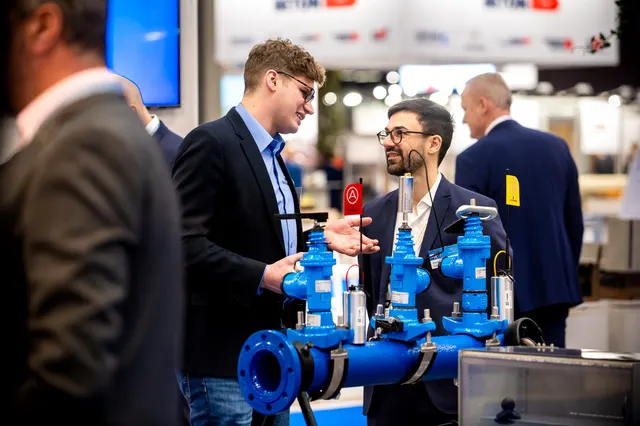
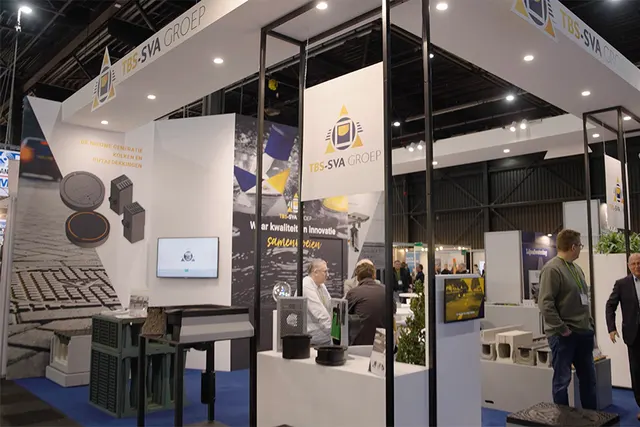
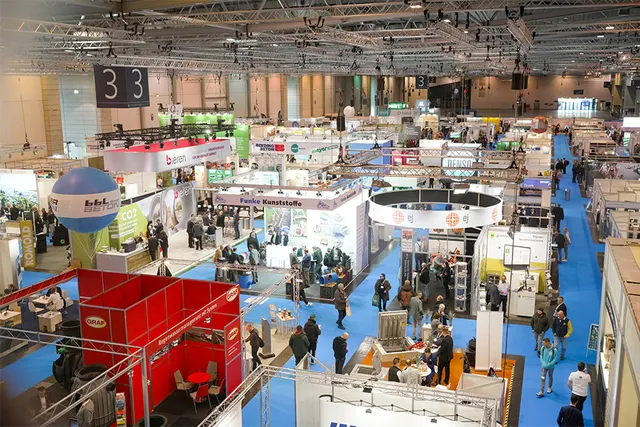
With more than 450 exhibitors and over 200 knowledge sessions, InfraTech 2025 offers plenty of networking opportunities and inspiration. Register now for free admission at www.infratech.nl
Question about this story? Ask your question
Companies in this story

Keep following this
Get an email when a new story is published. No account needed.
- SubjectInfraTech
- CompanyInfraTech
- CompanyMobilis
- CompanyVan Aalsburg BV