Quality control supplemented by leak detection
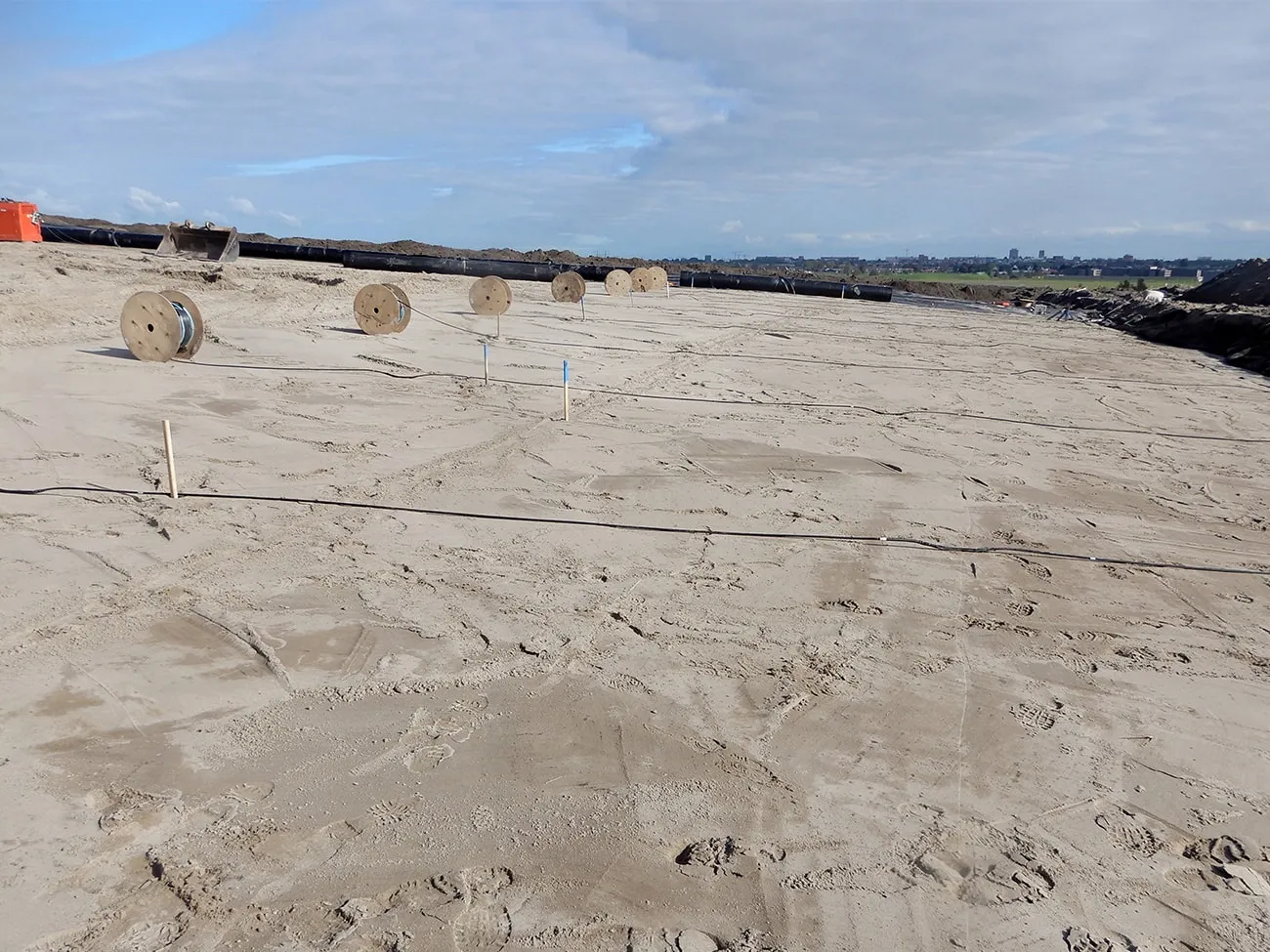
In the Netherlands, landfill sites must comply with the regulations set out in the Soil Protection (Landfill) Decree of 1993. This requires landfill sites to have a base liner and a cap to protect the soil from contamination by waste. A number of landfill sites in the Netherlands have caps whose performance is monitored using leak detection. Long-term research has now shown that leak detection measurements provide greater assurance than a standard liner construction, and that preventive replacement can be avoided.
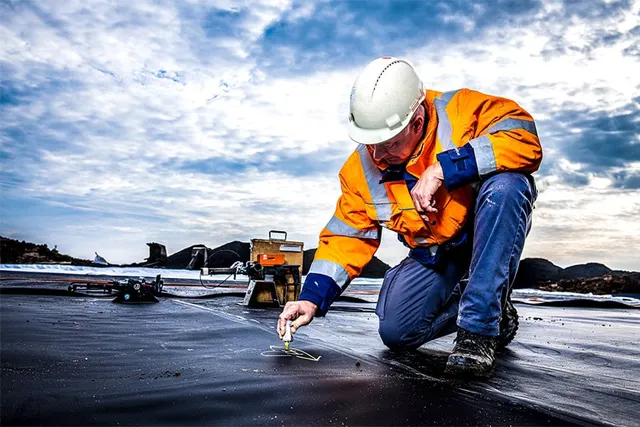
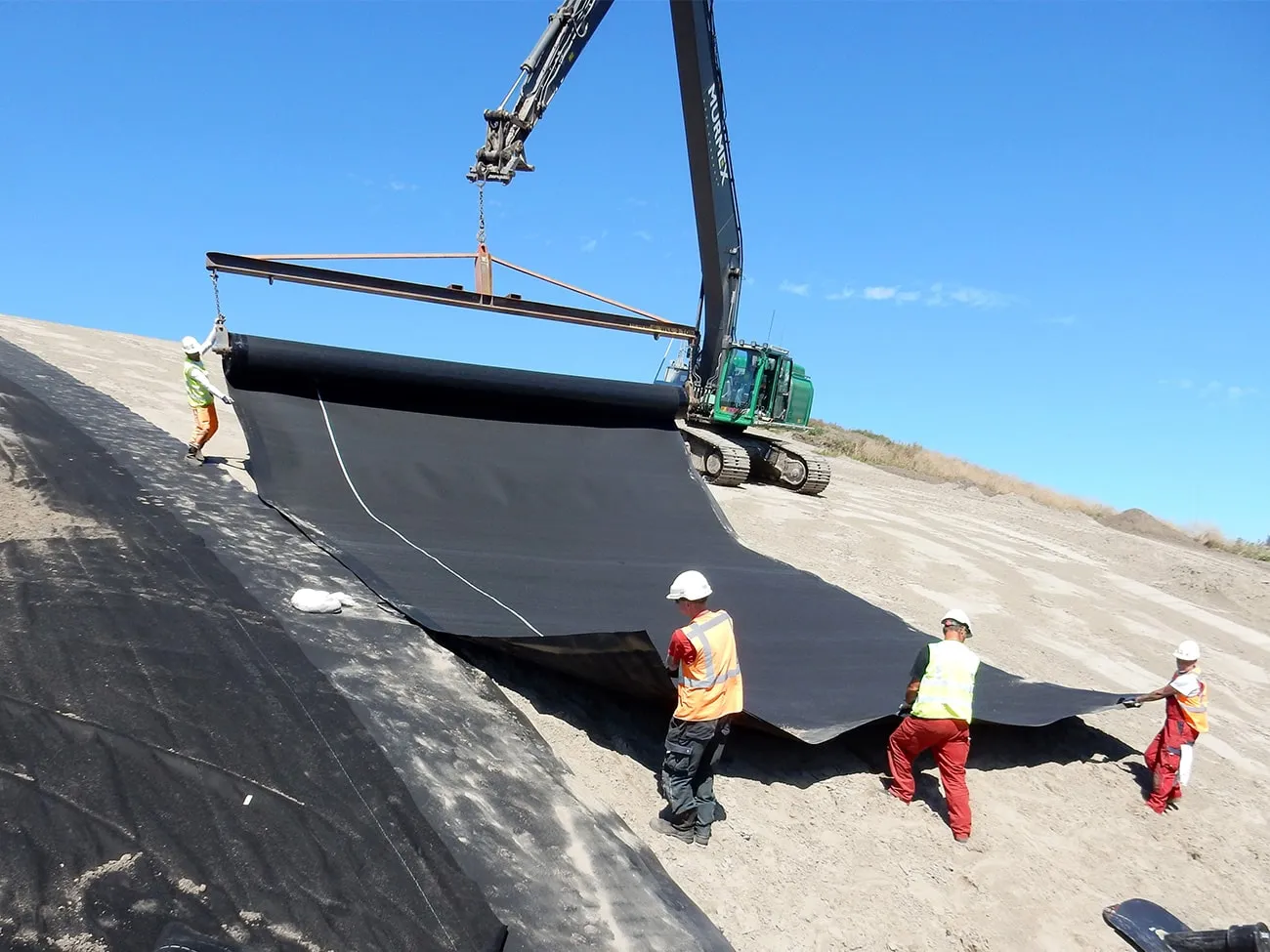
Enviro Quality Control BV was the first inspection body in the Netherlands to be accredited as a type A body by the Dutch Accreditation Council, in 2005. “Despite continuous quality control by highly experienced inspectors, there is a risk of damage occurring during construction, particularly when a cover layer is placed over the liner,” says Andries Steerenberg of Enviro Quality Control. “Damage incurred during construction can no longer be seen visually, but it can be detected using a leak detection and location system.”
Safety measure
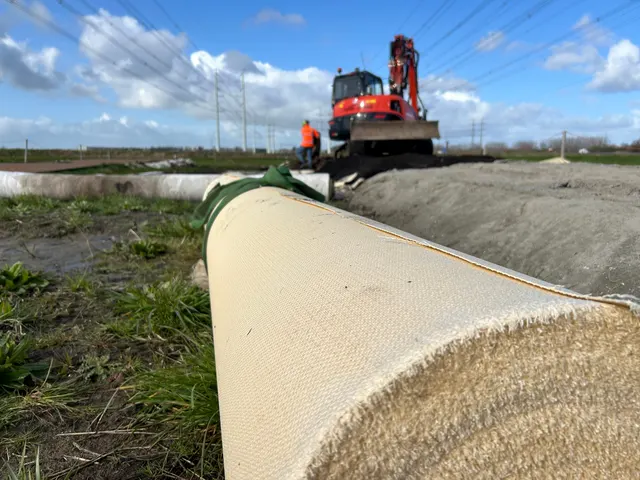
In addition to protecting the soil, a landfill cap in the Netherlands must also prevent water from passing through. Steerenberg explains: “No rainwater is allowed to enter the landfill body or escape from it. Under the Soil Protection (Landfill) Decree, the cap must consist of a composite liner made up of a mineral layer and plastic sheeting. The mineral layer acts as a kind of ‘safety measure’ in case anything goes wrong with the sheeting. Leak detection can be used instead of the mineral layer. The assurance of containment provided by the mineral layer is then provided by the leak detection system. A cap made up of sheeting with leak detection is considered an equivalent alternative to a reference liner under the Guideline for Sealed Final Cover Systems (VROM, 1991), provided that leak detection measurements are carried out periodically and any leaks detected are repaired within ten days.”
Geologger
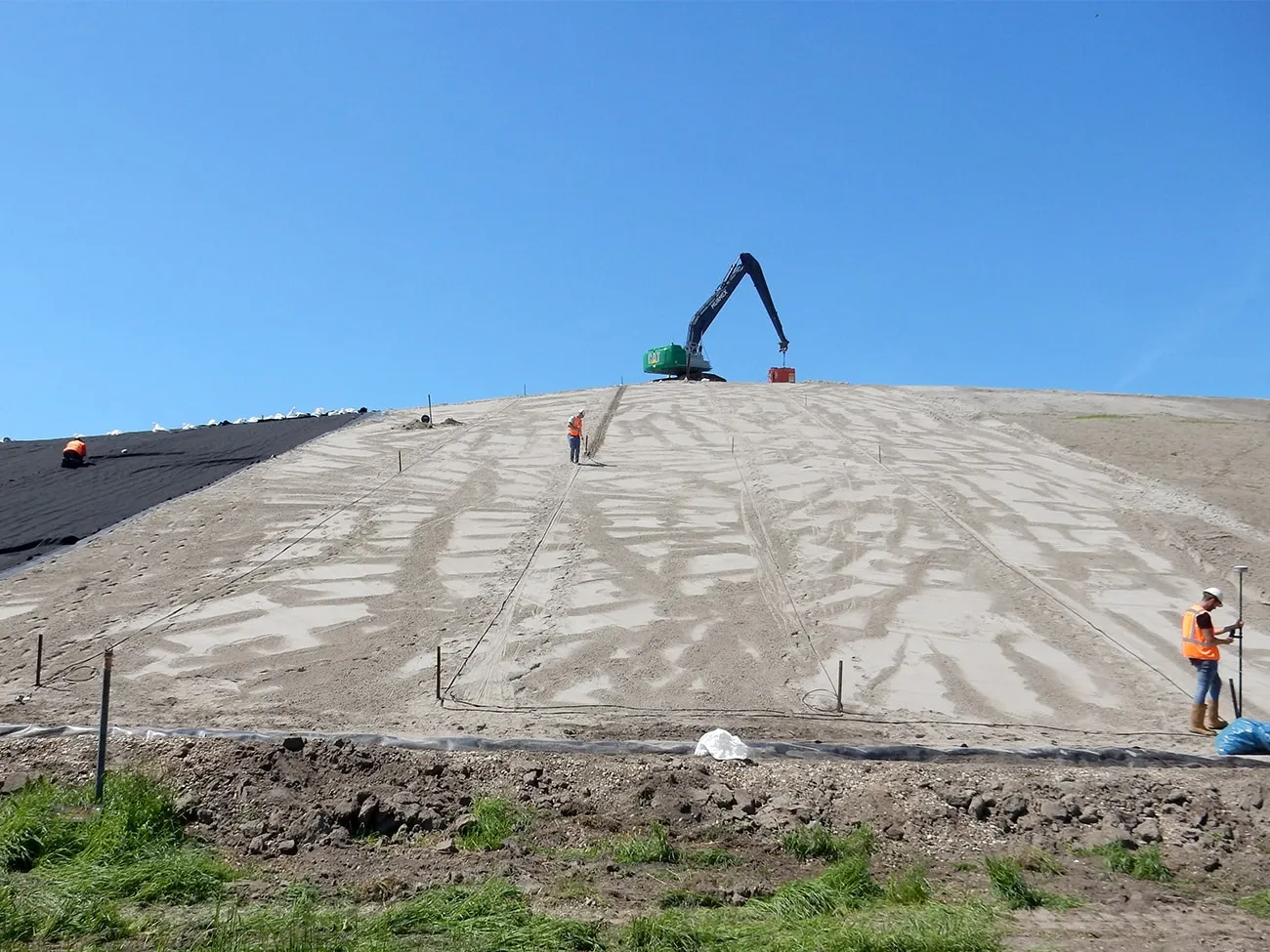
Twenty years ago, the German company PROGEO Monitoring Systeme und Services GmbH & Co. KG developed the Geologger leak detection system as an alternative to the mineral layer. “Geologger can detect rainwater leaking through a sheeting liner and even pinpoint the exact location of the leak, so repairs can be carried out immediately,” explains Steerenberg. “With a standard composite liner, a leak is only discovered when water is found in the landfill body or contamination is detected in the groundwater in the immediate vicinity. It can take years to find out that there is a leak. And even then, its location is unknown, making repairs impossible. Geologger provides that assurance. It can prevent the need for preventive replacement of the cap.”
Equivalence
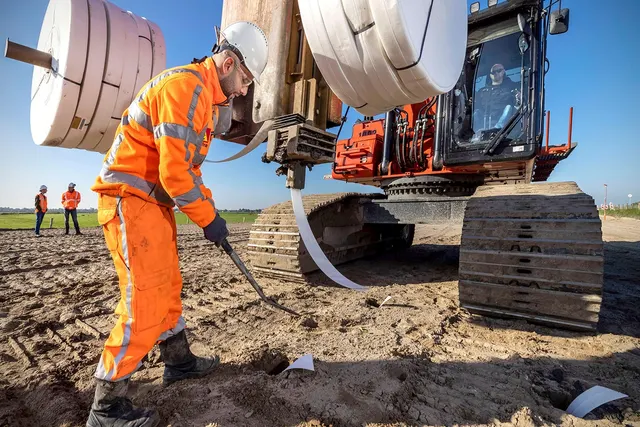
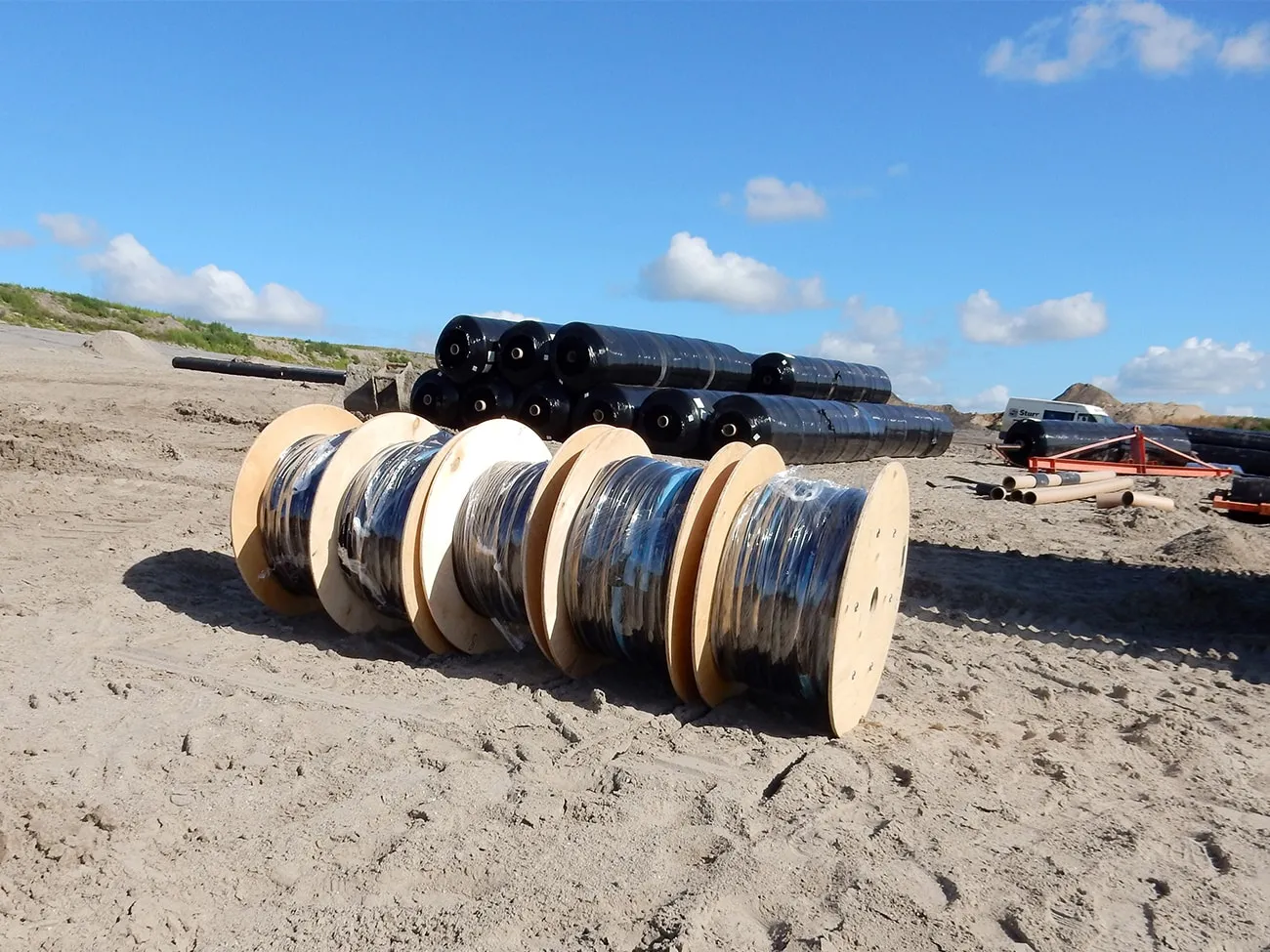
The equivalence of Geologger has been accepted by BOOG. “As part of the equivalence assessment, the measurement results from Geologger systems already in use are closely monitored. Bodemzorg has monitored the leak-tightness of the sheeting using Geologger at the former Schoteroog and HollandseBrug landfill sites over the past 15 years. The findings show that, despite careful working practices, holes have still formed in the sheeting due to sharp objects in the cover layer and the intensive use of heavy machinery on site during construction. Although the holes were generally no more than a few centimetres across, Geologger made it possible to locate and repair the leaks. All leaks have been successfully repaired, and the caps at the former landfill sites are now 100% watertight.
Afvalzorg was the first to apply the Geologger leak detection system in a landfill cap in the Netherlands, at the Schoteroog landfill site in Haarlem in 2004. “The system is now widely used in the capping of the Hollandse Brug landfill site in Naarden, Het Friese Pad inEmmeloord and the C2-Deponie on the Maasvlakte. Last year, part of the Nauerna landfill site in Assendelft was fitted with the leak detection system.”
Question about this story? Ask your question
Keep following this
Get an email when a new story is published. No account needed.
- ThemeMaterials and techniques for infrastructure
- SubjectGeotextiles