A uniform digital environment for Waterschap Vallei & Veluwe
Text and images ICT Group
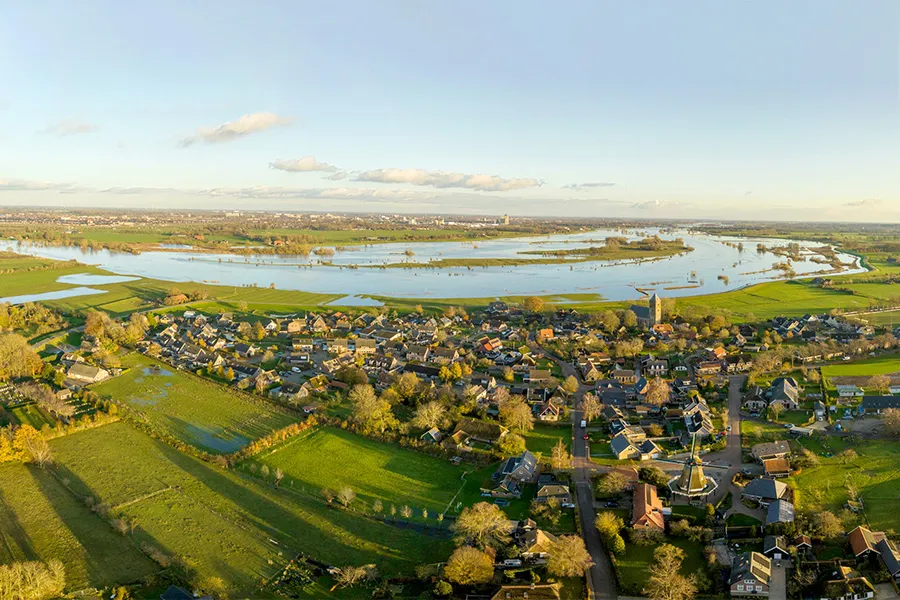
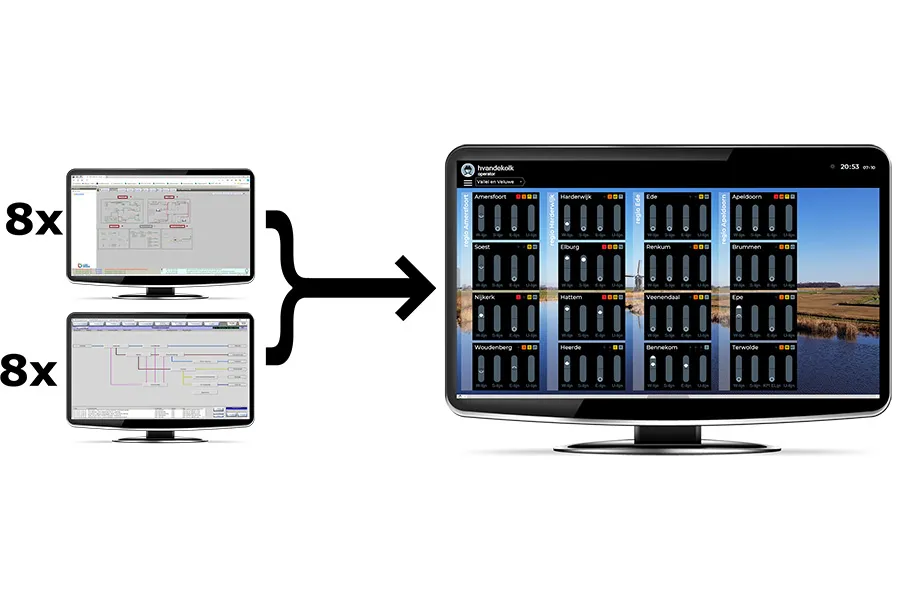
Following a merger in 2013, Waterschap Vallei & Veluwe had been working with two SCADA systems for years. Or, more accurately, with sixteen different configurations across sixteen wastewater treatment plants and almost one hundred sewage pumping stations. The aim was to replace these separate environments with a single new application whose look and feel would be more like a clear, multidisciplinary dashboard than a complex, mission-critical operational system. ICT Group took on the challenge.
Henri van de Kolk, project manager at Waterschap Vallei & Veluwe, remembers the market consultation in 2019 well. A video showed what the future SCADA system might look like. The aim of the new application was to provide users with tailored information on any device they chose. The integrators present were amazed by the possibilities, but also raised some critical points. After all, you can often do all sorts of things technically in a small demo, but in practice things tend to be much more challenging. “We found the tender quite daunting. What we were asking for had never been done before, which could put bidders off and result in an unsuccessful tender,” says Van de Kolk.
Tailored information
The water authority wanted the Operations Management Interface (OMI) to put the user at the centre. Depending on their role and location, the application would retrieve the right data from various underlying data sources and display it in a way that gave users immediate access to the information they needed.
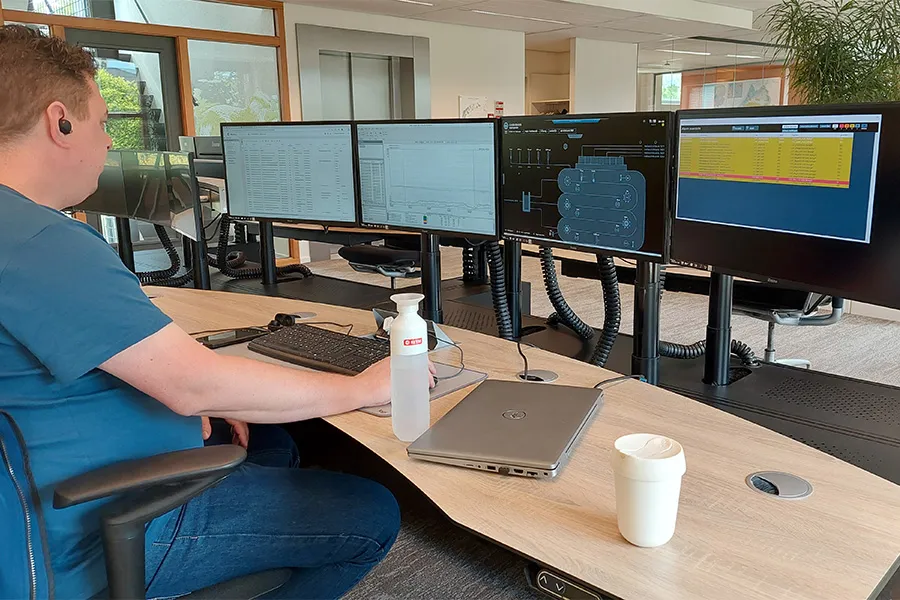
Users include operators, maintenance technicians and staff in central control. “They all have different information needs,” says Van de Kolk. “Maintenance technicians need information about the pumps and valves they are working on, or are going to work on, while staff with a control function want to see information about measurements from treatment processes, including any deviations. For each user group, you need to design a user interface (UX design) that meets their needs and requirements. The OMI also has to be accessible on any device. On a mobile device, you should see the same information as on a laptop or desktop screen.”
Working well together
The technical challenge was considerable. ICT Group submitted a bid and won the tender. “ICT Group impressed us with its plan and during the interviews,” says Van de Kolk. “We were very enthusiastic about its approach to designing and implementing the OMI, combining user experience with flexibility during implementation. What’s more, throughout the entire preparatory phase, they gave us the feeling that we would be able to work well together. And ultimately, that may be even more important than the technology, especially in a large, complex project like this.”
Separating IT and OT
ICT Group began the project by carrying out a baseline assessment of the existing systems at all sixteen sites and interviewing users. “There were plenty of opportunities for improvement, but people were so used to the systems that they hadn’t really thought about what could be better,” says Michèl Manders, Operations Manager at ICT Group.
Once the starting point had been mapped out, two teams were formed. One focused on the purely technical aspects: networks, hardware and all the software-related issues connected with the technology. The other focused on the user interface (OMI).
Best Value approach
In retrospect, Van de Kolk is glad he chose the Best Value approach to the project. “We really said: ICT Group, you’re the experts, so we’ll follow your advice.” That did not mean that every recommendation was accepted without question. “We always asked ourselves whether the advice was right for our organisation. Did certain technical choices suit our people and our processes, for example? Those three aspects are inextricably linked. And, of course, there has to be a balance between price and quality. The best technical solution is often also the most expensive. Sometimes you simply have to make concessions.” These issues regularly led to intense discussions. Even so, the relationship remained good throughout. “I’d give ICT Group top marks for collaboration. They always take the long-term view. They’re not trying to prove they’re right, even though sometimes, as it turned out, they were. They simply want to deliver the best possible solution, taking all the challenging circumstances into account. That’s where we always found common ground. In challenging conditions, we’ve delivered something innovative that we can be very proud of.”
Question about this story? Ask your question
Keep following this
Get an email when a new story is published. No account needed.
- SubjectDigitalisation & software