









Why wood is the sustainable solution!
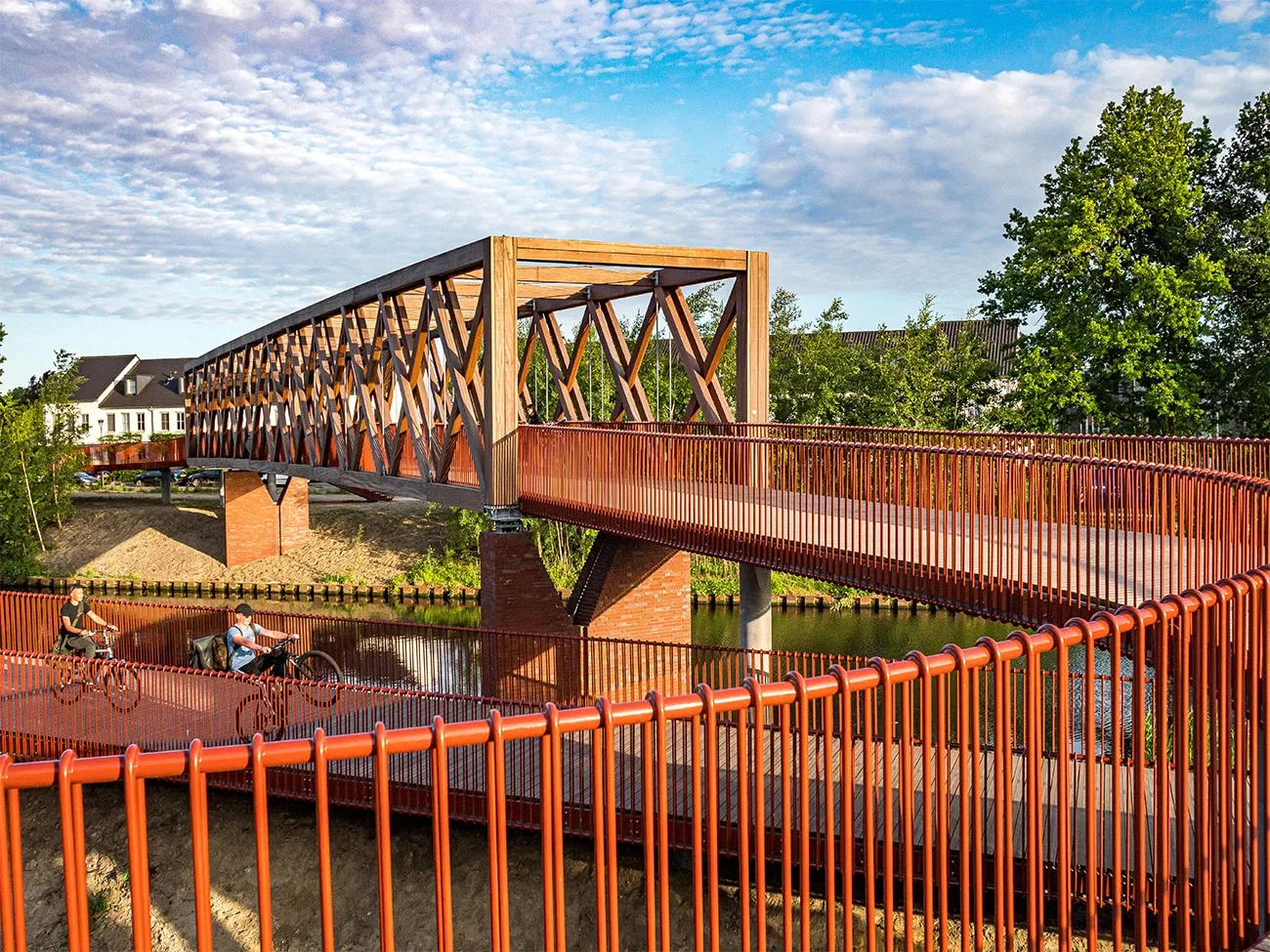
Sustainability and circularity are the key considerations currently shaping choices about materials and applications in civil engineering. Finding solutions, however, is not easy. Wood is an obvious choice.
Why wood?
Wood has many properties that align perfectly with government ambitions, objectives and requirements relating to climate, raw materials and waste policy, sustainable procurement (MVI), environmental policy (reducing environmental impact) and the circular economy. Renewable, bio-based, repairable, reusable and recyclable, with a sustainable source, low environmental costs, a low CO2 footprint, a CO2 sink (storage), low weight, easy to work with, suitable for prefabrication and disassembly, and offering the potential to recover energy and heat: these are all characteristic properties, in addition to the excellent technical and aesthetic qualities of this natural material. Using more bio-based products such as wood directly helps to meet various current policy objectives.
Sustainable bio-based materials
Renewable materials from sustainably managed sources are crucial to achieving circularity targets. Research shows that only a very small proportion of construction materials are reused in construction and civil engineering after demolition. According to EIB, the potential for maximising reuse from existing buildings will also remain limited in the future (EIB, 2019). Wood and other renewable, sustainably managed bio-based products are therefore essential to complement the use of secondary recycled materials.
Wood is currently the most widely used bio-based material in civil engineering. Alternative materials are increasingly being marketed as “bio-based”, although their natural carbon content is often unknown. Bio-based composite bridges often have only a deck made of synthetic resin with an unspecified bio-based content. A European standard (EN 16785) is now available to determine whether composite products or chemical raw materials can be described as “bio-based”, including a certification process to prevent “greenwashing”. Natural materials such as wood do not need to be certified.
There are good reasons for the growing number of sustainable timber projects
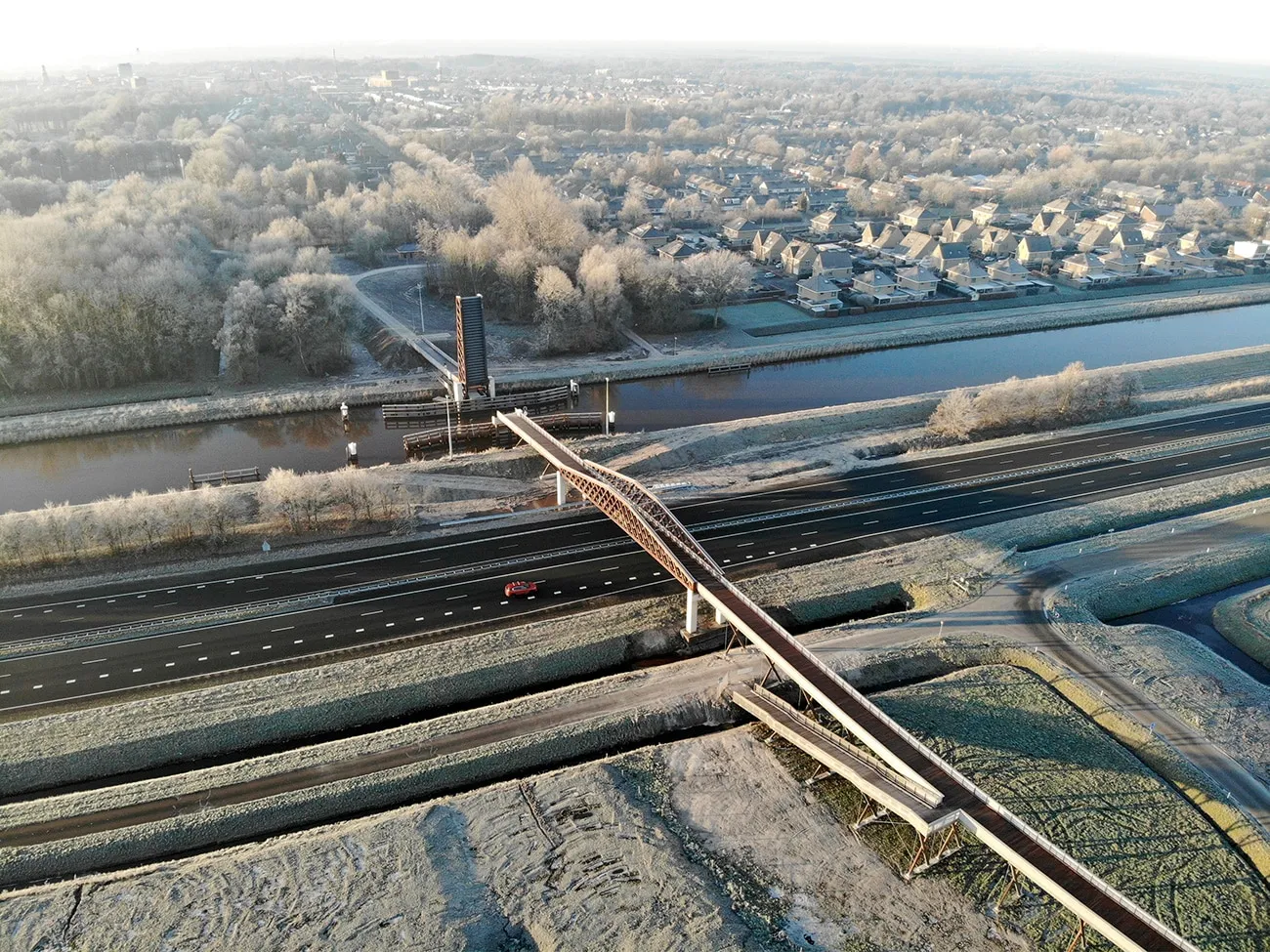
More and more clients are choosing wood. Following a tender based on environmental costs and CO2 footprint, the Province of Groningen recently delivered the Blauwe loper, which includes the Pieter Smit brug. At 800 metres long, this timber and steel walking and cycling bridge is the longest in Europe. The bridge has a design life of 80 years and was designed to require little maintenance. After some initial apprehension about using wood among engineering firms, the Municipality of Oirschot received its impressive, landmark truss bridge over the Wilhelminakanaal in 2020. ProRail also seems to be coming round. Following the impressive timber roof structure at Assen station, Station Ede-Wageningen will also be enhanced with a beautiful timber structure. The design team for Rijkswaterstaat’s Balgzand road bridge also put forward timber options at a later stage. These scored better than traditional materials for climate impact, material use and circularity.
How can I convince the client that wood is sustainable?
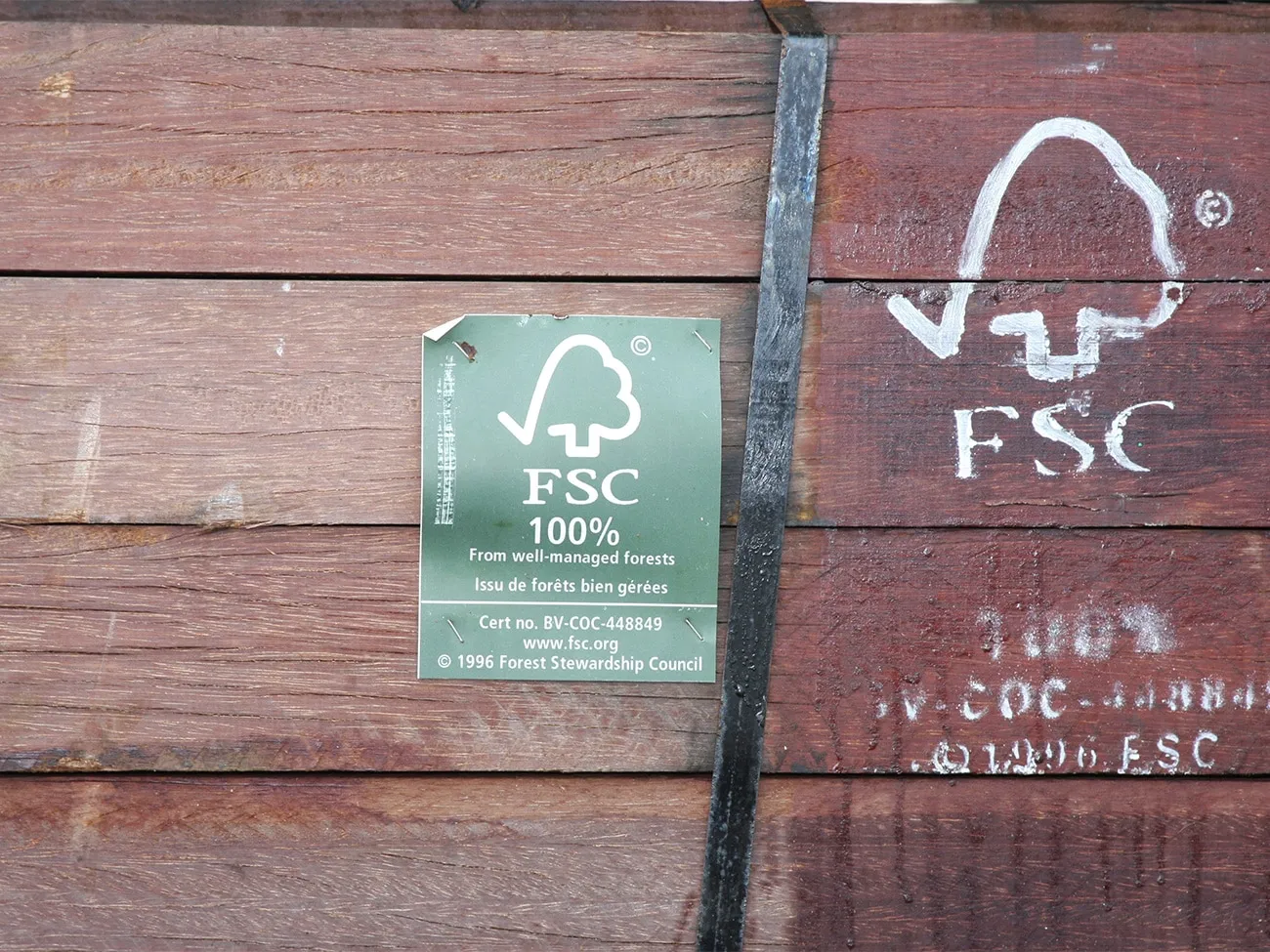
For over 25 years, the timber sector has been the only construction-material sector with globally recognised certification systems that demonstrate and guarantee the sustainable sourcing of wood.
These systems safeguard social values, including biodiversity, landscape, water storage and the rights of local communities. At the same time, these forests, together with the long-term use of wood in construction and civil engineering, make a major contribution to reducing the greenhouse effect. The Dutch government has therefore established specific sustainable procurement requirements, which are monitored by the Sustainable Timber Procurement Assessment Committee (TPAC) (www.inkoopduurzaamhout.nl). Timber certified by FSC, PEFC, Keurhout or STIP can be shown to come from sustainably managed forests and is monitored from “harvest to waterfront”. These certificates meet the Dutch government’s sustainable procurement criteria (TPAC). There is ample “sustainable timber” available in the Netherlands. More than 83% of all timber imported is currently covered by these certificates and therefore comes from sustainably managed forests. Suppliers who are members of the Nederlandse Vereniging van Nederlandse Houtondernemingen even achieve 93% demonstrably sustainable imports (Probos, 2021)
What about deforestation?
That concern is understandable, but it is unwarranted when using sustainably certified timber. Forests under sustainable management are maintained through sales of certified timber and can withstand pressure from investors seeking to use the land for other purposes. Forests, particularly in tropical regions, that are not under sustainable management are at high risk of destruction. This is because they generate little or no income. Agricultural crops such as soya, palm oil and cocoa generate much higher profits, much faster: “A forest that earns its own living, has a greater chance of survival”. If we want to preserve tropical forests and their biodiversity, it makes sense to use sustainably produced timber from these forests. This generates the income needed to manage them, combat poaching and support local communities. So always buy sustainably, and make sure specifications and tenders require timber to be certified and meet TPAC requirements. If Europe were to buy 100% sustainably produced timber, this would have a positive impact on the conservation of 18 million hectares of forest and could contribute to capturing as much as 100 million tonnes of CO2 annually (Probos, 2020).
Service life of timber applications
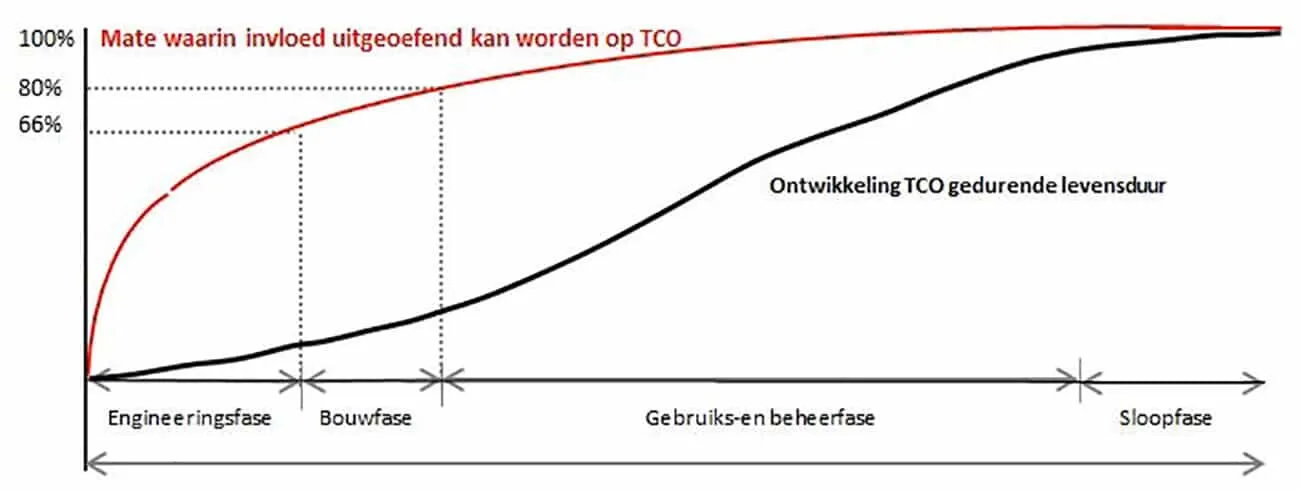
The service life of a timber application depends primarily on its design and detailing. Giving this stage of the project the right attention and effort can deliver the greatest benefits over the full service life (see chart 1). Where timber is in prolonged contact with soil and water, the choice of timber species or product is also decisive. As long as timber can dry quickly, the risk of deterioration is limited. Smart, well-ventilated detailing can significantly extend the service life of a timber application. Research shows, for example, that adding a capping board to a timber sheet pile wall can easily extend its service life by an average of 20%, from an average of 36.6 years to 43 years (Centrum Hout, 2018).
Significant benefits can be achieved by changing how bridge decks are fixed to the supporting structure. The CROW-CUR Handbook: Timber in Civil Engineering, on sustainable design and detailing, will be published after the summer. It contains many examples of how to extend service life.
Timber species selection and service life
The choice of timber species is determined primarily by its location and application, the associated use class and the strength class required by the design. For use in contact with soil and water, timber species with high resistance to fungi are required, that is, those with a natural durability class of 1 or 2. Azobé, bilinga, okan, tali, massaranduba and angelim vermelho are well-known species in civil engineering, but there are also lesser-known species (NEN 5493: 2010) and modified timber products (thermally or chemically treated) that meet this requirement. By including the required durability and strength classes (performance requirements) in your specification or contract, rather than simply copying them from an existing specification, you enable the supplier to make the best proposal: the right timber for the right application. Specifying requirements in terms of performance not only helps with pricing and security of supply, but also benefits forests. Sustainably managed forests produce many more reliable timber species than are currently specified. Specification texts are available at
www.houtindegww.nl/technische-info/.
What about the (life-cycle) costs?
Until now, project decisions have usually been based on investment costs and risk, with no budget routinely set aside for ongoing costs such as maintenance. Environmental costs were also not taken into account. Fortunately, clients are increasingly using total life-cycle costs (Total Cost of Ownership) as the basis for decisions. Service life and environmental impact are important factors. In addition to comparisons of the TCO, or Life Cycle Costing (LCC), of bridges (RvO, 2013) and sheet pile walls (Centrum Hout, 2016), Rijkswaterstaat recently commissioned an LCC study of lock gates as part of the MultiWaterWerk (MWW) project, with a view to greater standardisation in the future. Based on a reference brief, tendering clusters calculated the technical specifications and associated life-cycle costs over a design life of 100 years for steel, timber and fibre-reinforced plastic (FRP) lock gates.
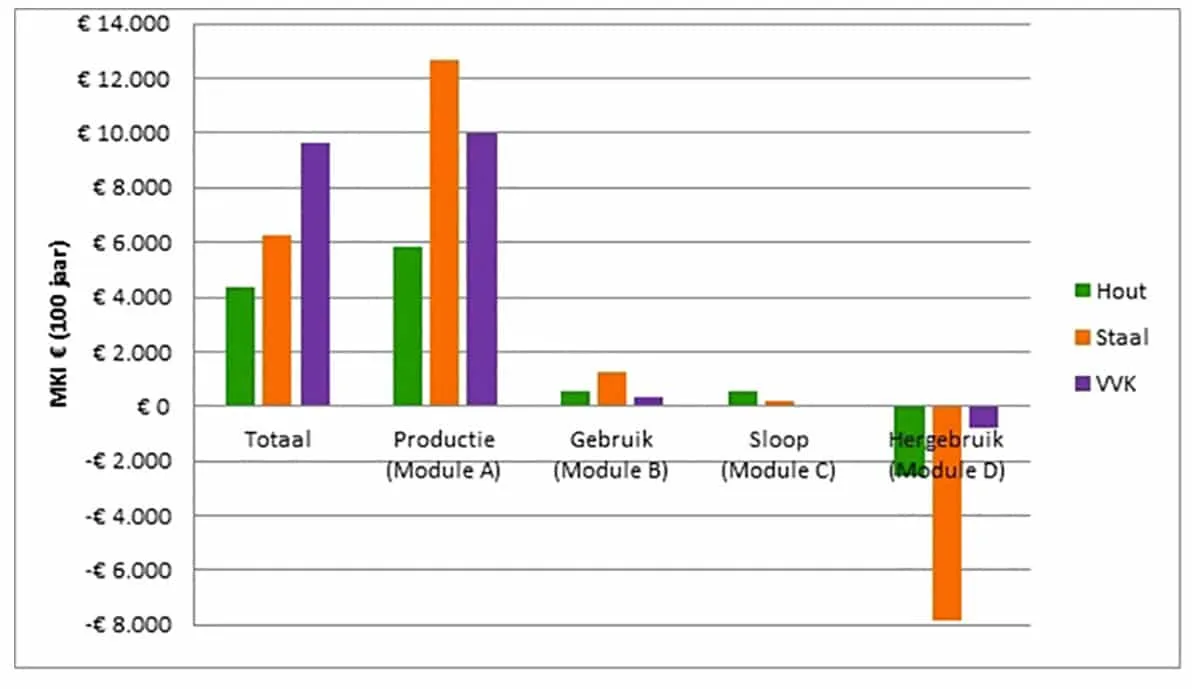
The study shows that timber lock gates have the lowest environmental costs (ECI in €) (see chart 2).
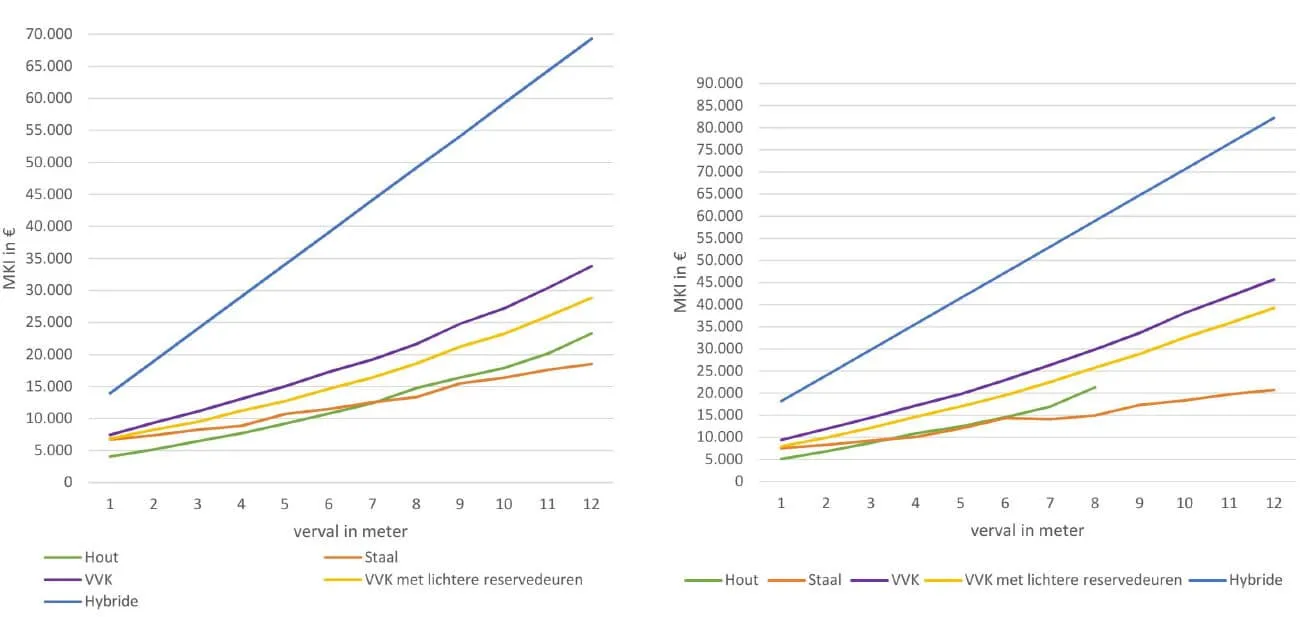
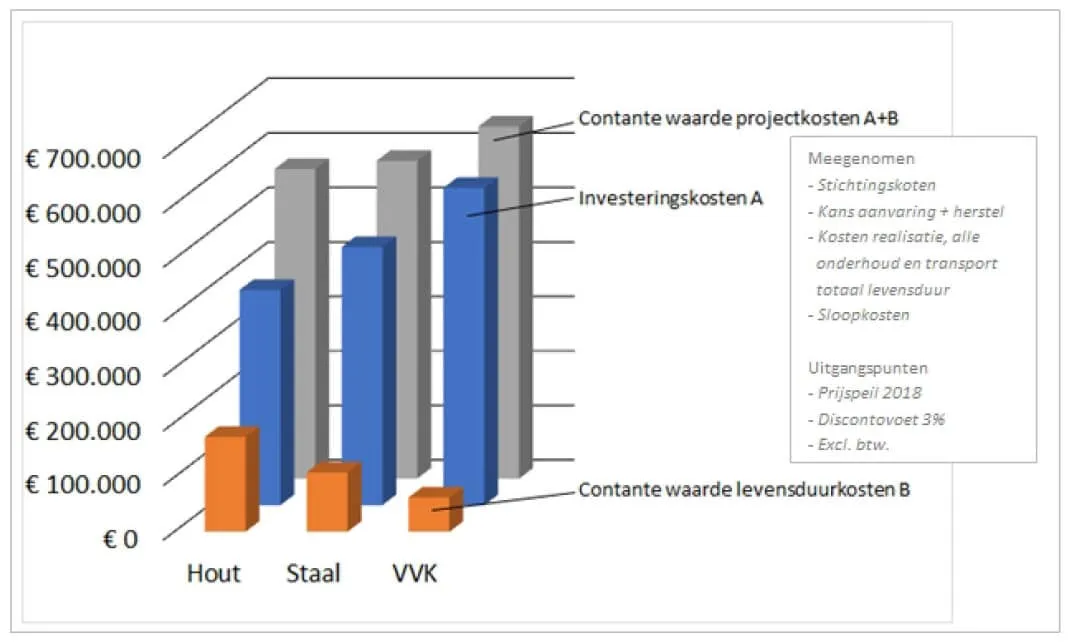
When the head difference is also taken into account, timber lock gates perform best in locks with a head difference of up to 7 metres, at clear widths of 10 and 12.5 metres. At greater head differences, steel lock gates perform slightly better. Fibre-reinforced plastic (FRP) and hybrid lock gates perform worst in this respect (see charts 3a and b). Timber lock gates also have the lowest total life-cycle costs (TCO) over 100 years, despite intermediate replacement and maintenance (see chart 4).
Would you like to help shape guidance for timber bridges?
Bouwcampus, RWS, Centrum Hout and FSC Nederland are working with dozens of municipalities, provinces, water authorities and other supply-chain partners to develop a “Guideline for Timber Bridges” for clients. To get involved or find out more: https://debouwcampus.nl/trajecten/hout-in-de-gww
References available on request from Centrum Hout
Question about this story? Ask your question
Keep following this
Get an email when a new story is published. No account needed.
- ThemeLower emissions and more reuse
- SubjectNews







