









Where there’s smoke… safe evacuation becomes difficult
Text Chris ElbersImage Kingspan Light + Air
A considerable proportion of the hundreds of bridges, locks, tunnels and viaducts across the Netherlands will be replaced or renovated in the coming years. A major undertaking that calls not only for an innovative approach, but also for close cooperation between government and industry. “A highly interesting challenge that we are keen to contribute to as a specialist in daylight solutions, natural ventilation and smoke control,” says Stan Veldpaus on behalf of Kingspan Light + Air.
Global statistics show that the greatest danger in a fire is not the flames, but the smoke that spreads through a building or site. Smoke obstructs our vision and causes breathing difficulties, making a safe evacuation more difficult. And in the event of a fire, you only get one chance to escape safely. “Building owners and operators therefore have a duty and responsibility to ensure the ongoing safety of building occupants,” says Stan Veldpaus, Technical and Commercial
Adviser, Smoke Control Systems. “Effective fire safety measures must be put in place, meeting at least the requirements of our Building Decree and suited to the location and its use. How smoke behaves and is controlled plays a key role here, and our Fire Safety Team is happy to provide support. For more than forty years, we have advised on, designed, supplied, installed and maintained smoke and heat exhaust ventilation systems (SHEVS), which remove smoke and heat effectively and efficiently. This helps preserve safe escape conditions for building occupants for longer, giving them sufficient time to evacuate safely. It also gives the fire service more time to carry out rescues and extinguish the fire, better protecting the building and its contents.”
From advice to installation and maintenance
Different buildings have different needs, and require different SHEVS. To recommend, supply and install the right systems for each project, Kingspan Light + Air always starts by assessing the situation. “For new-build projects, we often carry out design calculations based on the design drawings and in accordance with current standards,” says Stan. “This usually results in a recommendation and a Schedule of Requirements, setting out the requirements, the intended use and the system’s objectives. The advice and requirements are reviewed by the competent authority and an accredited inspection body, after which we are happy to develop them into a practical design and a certified installation.” Renovation and conversion projects usually involve a site survey, as in most cases the building drawings are no longer available, complete or up to date. “From there, we once again begin the process of design calculations, a Schedule of Requirements and a SHEVS design, and can also take care of supply, installation and maintenance as required.”
Natural smoke and heat exhaust systems
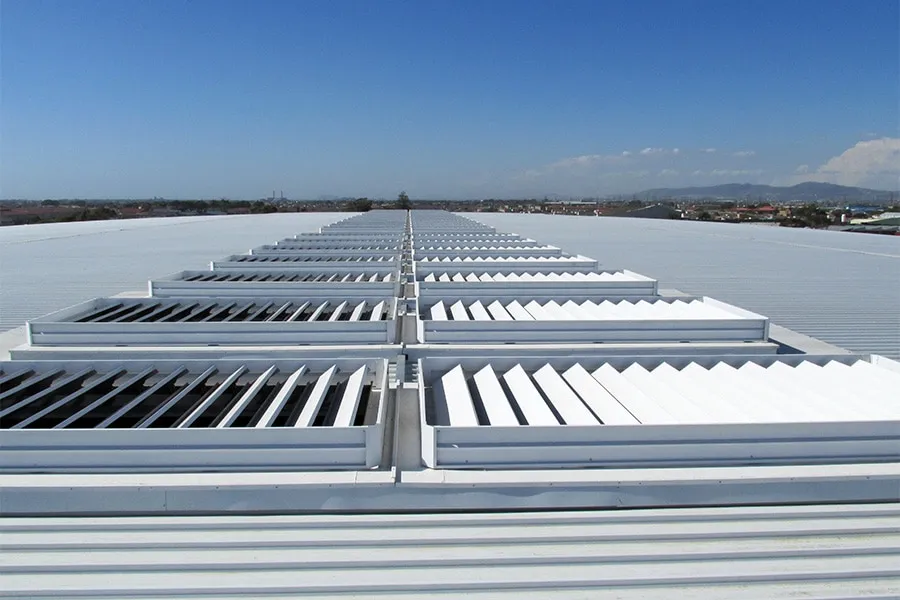
“Clean combustion does not produce toxic gases,” Stan emphasises. “When smoke burns, however, toxic gases are released. That is why an efficient SHEVS is crucial to our safety.” Kingspan Light + Air offers a range of solutions. Veldpaus first mentions natural SHEVS. “If you want to remove smoke effectively by natural means, it is best to make use of thermal properties. Smoke rises and collects at the top of the building, where it gradually cools. As a result, the smoke eventually begins to descend again, making conditions increasingly dangerous. Removing smoke from the top of the building with the help of ventilator flaps prevents hazardous situations.” Natural SHEVS were originally used mainly in industry, where large areas of unobstructed façade are available for air intake. “This air supply is essential for a natural exhaust system to function properly.”
Following their use in industry, natural SHEVS are also highly suitable for atrium buildings, which often have unobstructed façades for air intake and glazed roofs for smoke and heat exhaust. “A third important category is the access galleries of multi-storey residential buildings, which are increasingly being enclosed for comfort reasons,” says Stan. “To enable safe escape along an enclosed gallery, new-build projects often include fire-resistant partitions. This is more difficult in renovation projects, where we may recommend façade louvres that open automatically in the event of a fire. This creates a situation equivalent to having an open façade.” However, there are also situations in which natural SHEVS are not sufficiently effective. “For example, buildings with limited options for air intake, or where wind can significantly affect the performance of the SHEVS units. Mechanical SHEVS are the right solution in these cases.”
SHEVS in underground car parks
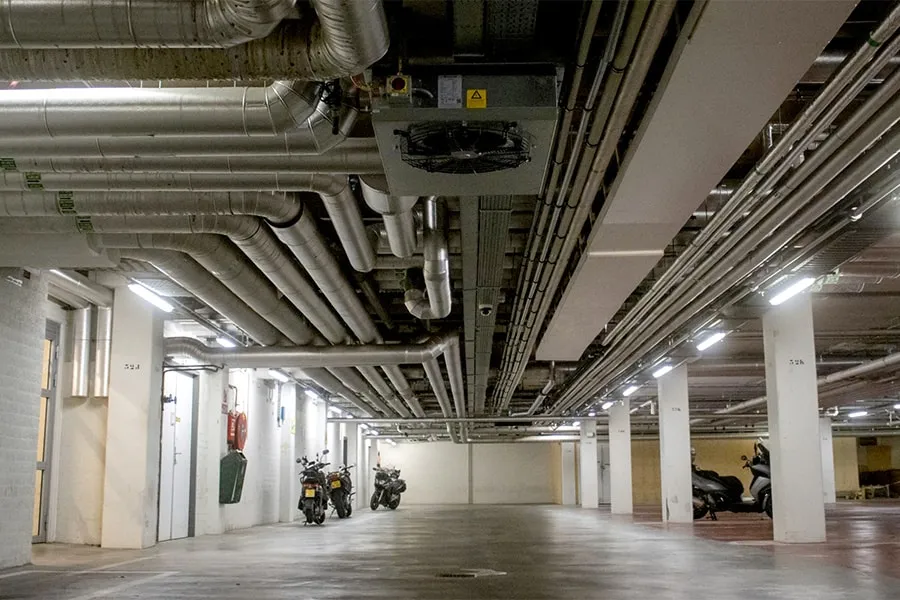
Smoke compartmentation and smoke clearance, for example in car parks, are also popular SHEVS solutions. Kingspan Light + Air plans to focus even more on this market. “There are several above-ground car parks and mobility hubs in the Netherlands where smoke and heat can be removed naturally,” says Stan. “Most car parks, however, are below ground level, making a mechanical solution with shafts and jet fans necessary.” Car parks are characterised by low floor-to-ceiling heights. “SHEVS are particularly well suited to tall buildings, where smoke and heat are contained and exhausted at the top, creating safe escape conditions below. Car parks do not have this kind of zoning. Smoke and heat must therefore be mechanically driven in one direction, then extracted to the outside through ducts and large fans. Specific expertise is needed to deliver this effectively and efficiently.”
The same applies to a new development in car parks: the growing number of electric cars and charging spaces. “To identify the right combination of measures here too, we are happy to assess the requirements, intended use and objectives.”
Pressurisation systems for high-rise projects
With building land in short supply in the Netherlands, residential and office buildings are increasingly being built upwards. To ensure safe escape routes in these buildings, specific requirements apply to stairwells, covering everything from capacity and accessibility to safety. Stan says: “The Building Decree, for example, requires high-rise projects to have a lobby. However, this often reduces the usable or lettable floor area, so an equivalent alternative is often chosen: a pressurisation system. In this case, a mechanical supply system delivers exactly the right amount of air into the stairwell. This prevents smoke from entering and ensures a safe escape route.” SHEVS pressurisation systems are always balanced systems, he explains. “That is why a pressure-controlled exhaust facility is also installed, to prevent the pressure from rising too high. After all, everyone in the building must still be able to open the stairwell doors easily. A fire detection system ensures the system is activated correctly.”
Innovative solutions for tunnel renovation
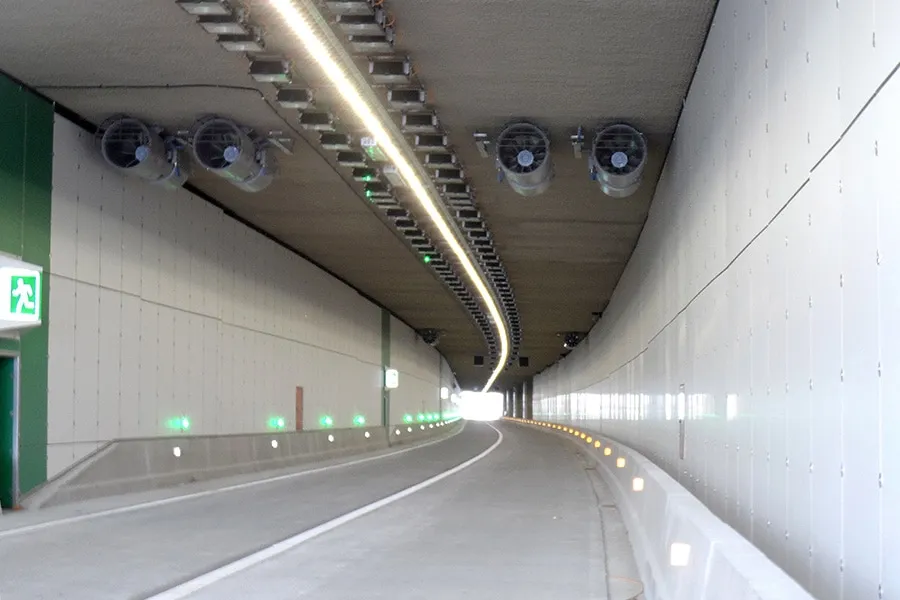
Finally, Stan sees growing demand for tunnel renovations. “Our water-rich country has hundreds of bridges, locks, tunnels and viaducts dating from the 1950s and 1960s, which are due for renovation or replacement after years of intensive use. We are keen to play a part here too, taking care of the entire process from advice and design through to installation and maintenance. Rijkswaterstaat, ProRail and other stakeholders can draw on our many years of industry knowledge and experience, as well as our most innovative systems. For example, we have optimised the shape of the impellers in our tunnel fans, making them even more effective. Our latest suspension systems can also deliver significant benefits, and we are keen to tell the market more about them.”
Question about this story? Ask your question
Keep following this
Get an email when a new story is published. No account needed.
- ThemeExtending the life of roads and civil engineering structures
- SubjectNews







