









When electrifying the construction site, remember the risk assessment and emergency response arrangements
Text Roel van GilsImage Aboma
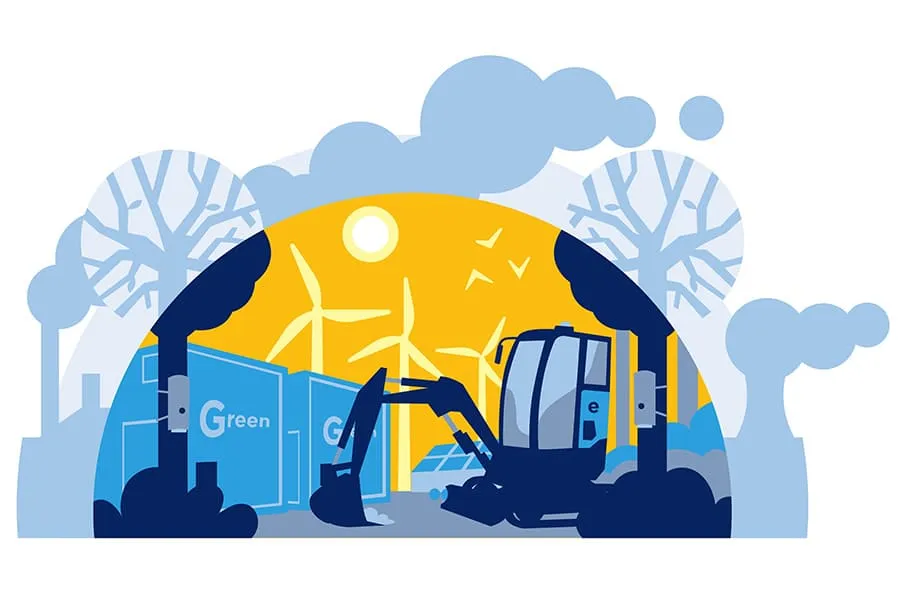
Electric equipment is growing in popularity. However, it is worth remembering that a safe machine can be used unsafely, and that unsafe use can compromise the safety of a machine. Electrifying the construction site and its equipment also changes the risk assessment and emergency response arrangements. This is not always recognised, say the experts at Aboma Inspections and Consultancy.
Electric equipment is gaining popularity, but the range currently available from manufacturers (OEMs) is still fairly limited, says Bas van Gruijthuijsen of Aboma Inspections. “What we are seeing is companies taking the initiative to electrify equipment themselves, or have it done for them. This has serious implications for liability, however, because replacing the power source is considered a ‘substantial modification’. This means you suddenly become the manufacturer of that machine and have to comply with all current regulations. This is generally very much underestimated. At Aboma Inspections, we help companies follow the right process, so that the ‘new’ zero-emission machine meets all the applicable standards and requirements.”
Energy supply
A safe electric machine is one thing, but using it safely is at least as important. “First of all, it has a considerable impact on the layout of the construction site,” says Pieter Visser of Aboma Consultancy. “You can no longer simply fill up the tank. A charging point or power supply is needed in the construction pit. This means that the coordinating contractor has to organise the energy supply very differently. It may seem like a simple step, but the electrical installation needs to be assessed carefully. The amount of power you draw from the grid is becoming a sensitive issue. The electricity grid is already at capacity, or close to it, in virtually every province. On top of that, demand for electricity peaks during breaks and at night, precisely when nobody is on site. This has implications for the emergency response and incident management arrangements.”
Controlled burn-out
There are many potential pitfalls when using electric equipment, and they certainly should not be underestimated. Aboma Consultancy is in contact with several safety regions. “There is still a lot they do not know either,” says Pieter. “The fire service is quite wary of electric equipment. You cannot just pick up a burning 65-tonne electric wheel loader and drop it into a container. So they let it burn out under controlled conditions. And often several electric machines are parked right up against each other because the charging cable is not long enough. An incident can then prove very costly. This needs to be included in the risk assessment too: how much power am I putting together around a charging point? Or should the equipment be spaced further apart, like the rule requiring a 4-metre clearance around a gas tank? These are things people do not take into account, but they can have enormous consequences.”
Aboma regularly organises knowledge-sharing sessions on the electric construction site. “The initial aim is to raise awareness,” says Pieter. “For example, we hold ‘early bird sessions’ on topics such as emergency response on the electrified construction site. We can make it very big and complex, but it starts with awareness and recognising that things are different from what we are used to. The questions will follow naturally.”
Question about this story? Ask your question
Keep following this
Get an email when a new story is published. No account needed.
- ThemeConstruction equipment and transport in motion
- SubjectNews







