









We know how to make a (construction) process more efficient, smarter and greener
Text Susan PeekImage Dieseko-Woltman, Siemens, VSE Industrial Automation
What do infrastructure, construction and industry have in common? The answer is clear, according to Radboud van Dusseldorp and Stefan Lekkerkerker of VSE Industrial Automation in Schoonhoven: the technology behind them. Electrical control is needed everywhere, and using largely the same technology, VSE can help clients in a range of sectors tackle the challenges of the energy transition. They will be demonstrating this at Vakbeurs Energie, taking place from 10 to 12 October at the Brabanthallen in ‘s-Hertogenbosch. In this article, we look ahead to the event.
Fifty years of experience
For many organisations in infrastructure, construction and industry, VSE is the technical, certified partner of choice for sustainability and energy efficiency. The company will celebrate its fiftieth anniversary next year and, over the past decades, has designed and implemented energy-efficient control systems for numerous bridges, locks and flood defences. “We also have a proven track record in automating and electrifying earthmoving machinery, generator sets and other construction equipment,” says Radboud van Dusseldorp, Commercial Technical Manager at VSE. “And we help industrial companies save energy and reduce their connection capacity. As experts in Automation & Motion Control, we know better than anyone where the bottlenecks are, but also where untapped opportunities lie. We are involved from the outset through to handover, contributing proactively throughout, so we can deliver the most comprehensive solution, tailored to each project.”
Increasingly high-tech
“Like industry, the infrastructure and construction sectors are becoming increasingly high-tech,” says Stefan Lekkerkerker, Technical Specialist at VSE. This is leading to exciting sustainability and circularity projects for VSE. “We approach every project from a controls perspective, whether it involves a bridge, a lifting installation or a piling rig, because the technology behind these seemingly different structures is largely the same.”
Vakbeurs Energie
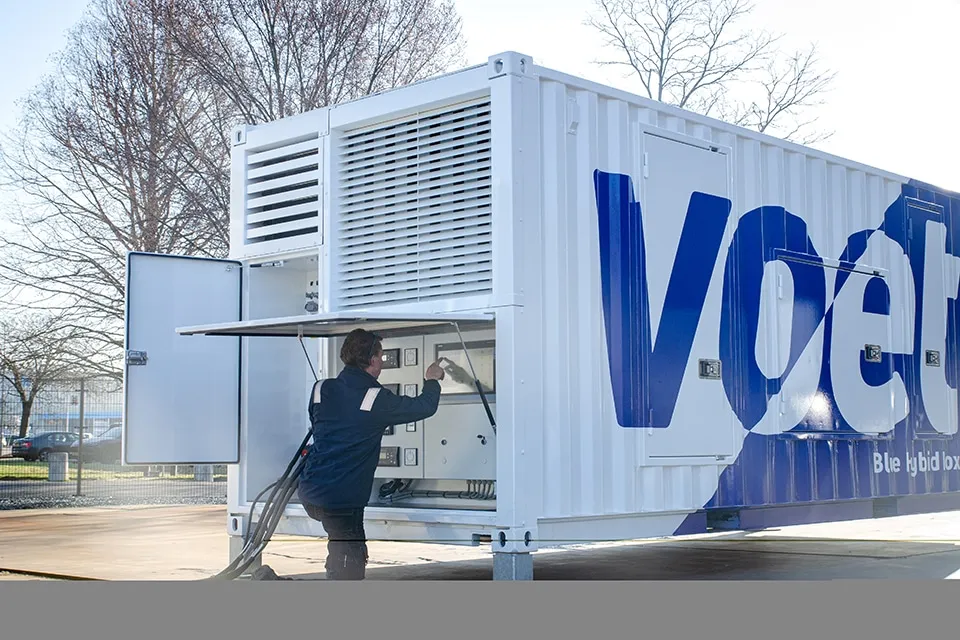
VSE will have a strong presence at Vakbeurs Energie, the Netherlands’ largest business networking event focused on the energy transition. Stefan will lead several seminars, explaining electrification projects and demonstrating smart solutions for the short-term storage and release of energy. Visitors can also see a range of demonstration setups, including an efficient synchronous reluctance motor that combines high efficiency with dynamic performance and sustainability, and a scale model of a bridge demonstrating sustainable control. “These are all smart technologies that help our customers minimise energy losses, reuse energy and become less dependent on the capacity and stability of the electricity grid,” says Stefan.
3B-Bruggen building block
VSE has extensive experience with 3B control systems. Radboud explains: “Ten years ago, we made the Ramspolbrug fully energy-neutral and were the first to combine control systems and drives with Siemens’ universal 3B-Bruggen building block.” This building block manages all the dynamic functions of a bridge, enables predictive maintenance, improves reliability, reduces faults and allows operators to be deployed flexibly. It was extensively tested, both in theory and in practice, on the Wantijbrug. Stefan explains that the control system is simulated as far as possible, after which the client conducts an IFAT to test the actual components. “We have a great deal of experience with simulations: anything we cannot test on the test setups, we try to cover in a simulation environment. Only then do we go on site to the bridge to do our work.”
From diesel to batteries
In civil engineering, electrifying very heavy construction machinery is playing an increasingly important role in reducing CO2 emissions. VSE offers solutions to help clients comply with stricter environmental regulations, carry out projects in zero-emission zones and contribute to the goals of the Paris climate agreement.
IE4 energy class or higher
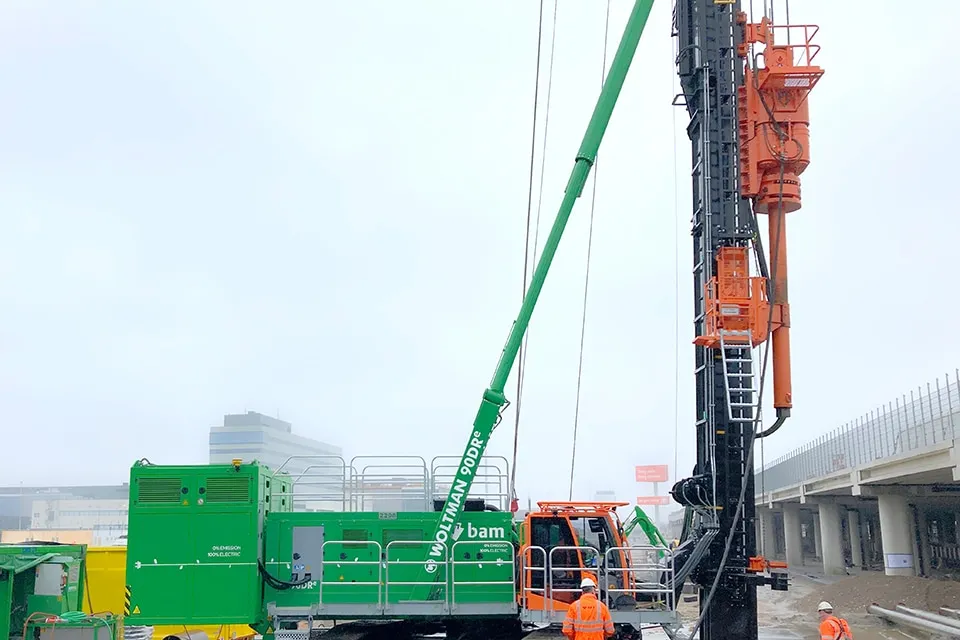
More and more companies want to improve their own energy efficiency and reduce their footprint, while legislation is also imposing increasingly stringent requirements. This applies to industry too, says Radboud. “As rising energy demand in industry goes hand in hand with increased CO2 emissions, governments around the world are looking for ways to reduce consumption and emissions. The EU has established the International Efficiency (IE) standard, with IE4 replacing IE3 from 1 July 2023 and plans for an IE5 efficiency level. Radboud considers this a positive development. “That is why VSE, together with its partner Siemens, is working hard to offer innovative solutions to challenges like this.” These include Ultra/SuperCaps, for low connection capacities or unstable electricity grids. The Netherlands’ first installation of this technology was the UltraCaps on Torsit’s warehouse cranes. “Hybrid generator sets and the electrification of a 100-tonne piling rig are other projects through which VSE has gained considerable knowledge and experience to help other clients make their operations more sustainable,” Stefan concludes.
Question about this story? Ask your question
Keep following this
Get an email when a new story is published. No account needed.
- ThemeLower emissions and more reuse
- SubjectNews







