









Volvo’s (bio-)LNG trucks on the rise, up to 100% CO2 reduction possible
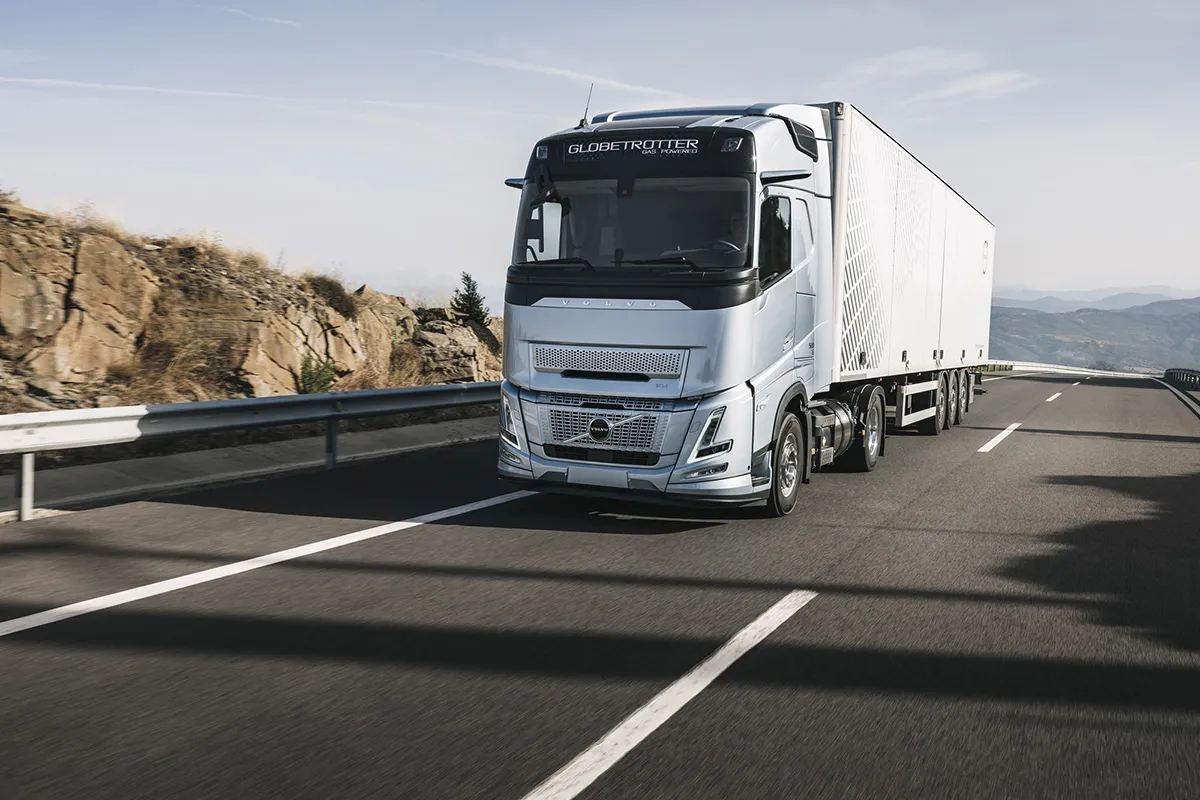
Demand for Volvo trucks running on (bio-)LNG is growing. Sales rose by more than 25% in 2024. Renewable fuels can reduce CO2 emissions by up to 100%. This makes (bio-)LNG trucks an increasingly popular solution for transport companies looking to reduce their carbon footprint while keeping TCO competitive.
Global customer demand for Volvo trucks running on (bio-)LNG is growing. Volvo Trucks has sold more than 8,000 gas-powered trucks worldwide. Sales rose by 25% in 2024, with the Netherlands, Sweden, Norway, Spain and the United Kingdom among the leading markets. Volvo’s gas engines are available in the Volvo FM, FH and FH Aero models, and can switch seamlessly between biogas (non-fossil gas produced from organic waste) and conventional liquefied natural gas (LNG).
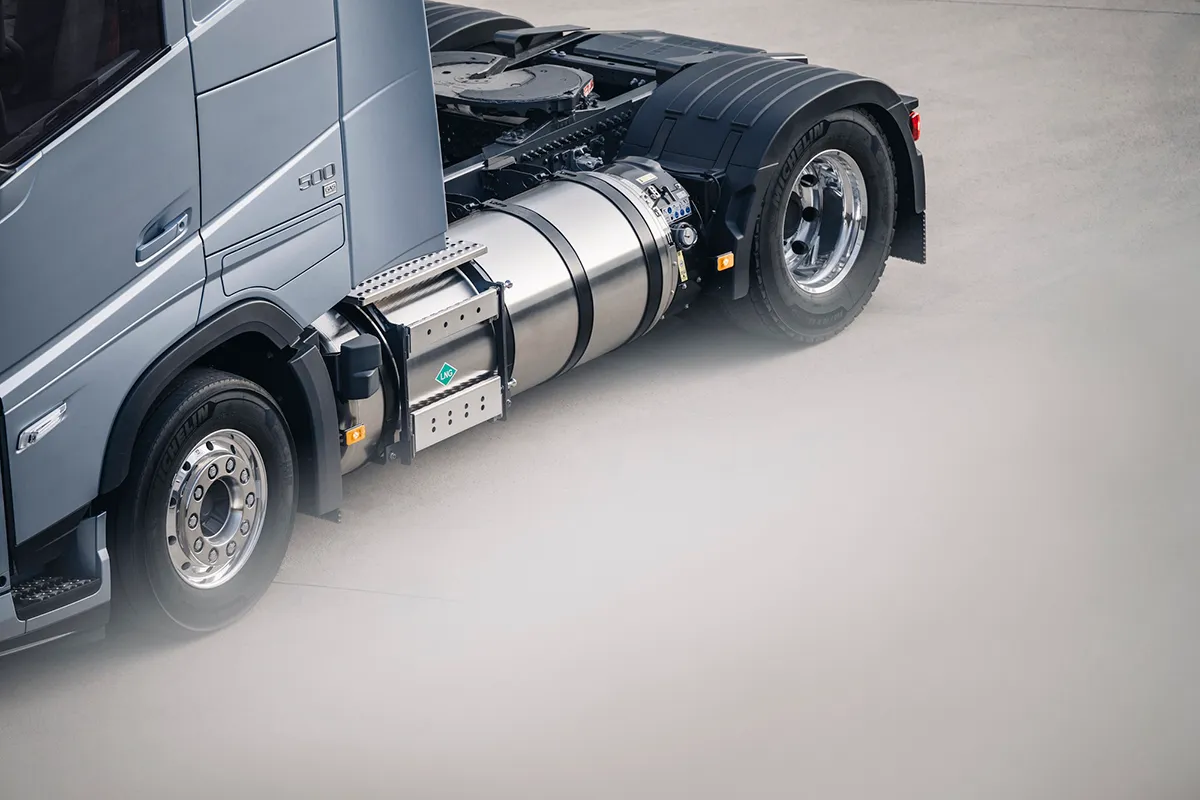
Volvo trucks running on (bio-)LNG can cover distances of more than 1,000 kilometres on a single tank, making them suitable for transport tasks such as long-haul operations and intensive regional distribution. In many cases, trucks running on (bio-)LNG are a good alternative for applications where, for example, an electric powertrain is not suitable. This helps transport companies and businesses that procure transport services to operate more sustainably.
“Many of our customers are choosing to replace their diesel trucks with (bio-)LNG trucks as a straightforward way to reduce their CO2 emissions here and now,” says Jan Hjelmgren, Head of Product Management at Volvo Trucks. He continues: “Volvo’s (bio-)LNG trucks are a real win-win for transport companies, combining a lower TCO with a smaller carbon footprint while maintaining productivity.”
Several countries already have an extensive network of filling stations, with growing access to biogas. Global biogas production grew by 21% in 2024*. This means that the potential to reduce CO2 emissions by up to 100% is available to a significant number of users. Bio-LNG is a cost-effective solution compared with diesel in markets where tax incentives and government subsidies support renewable fuels and low emissions.
Conventional LNG also reduces CO2 emissions by up to 20% (tank-to-wheel) compared with diesel trucks. This also brings immediate benefits under CO2-based toll systems such as the Maut in Germany and the truck toll due to be introduced in the Netherlands next year.
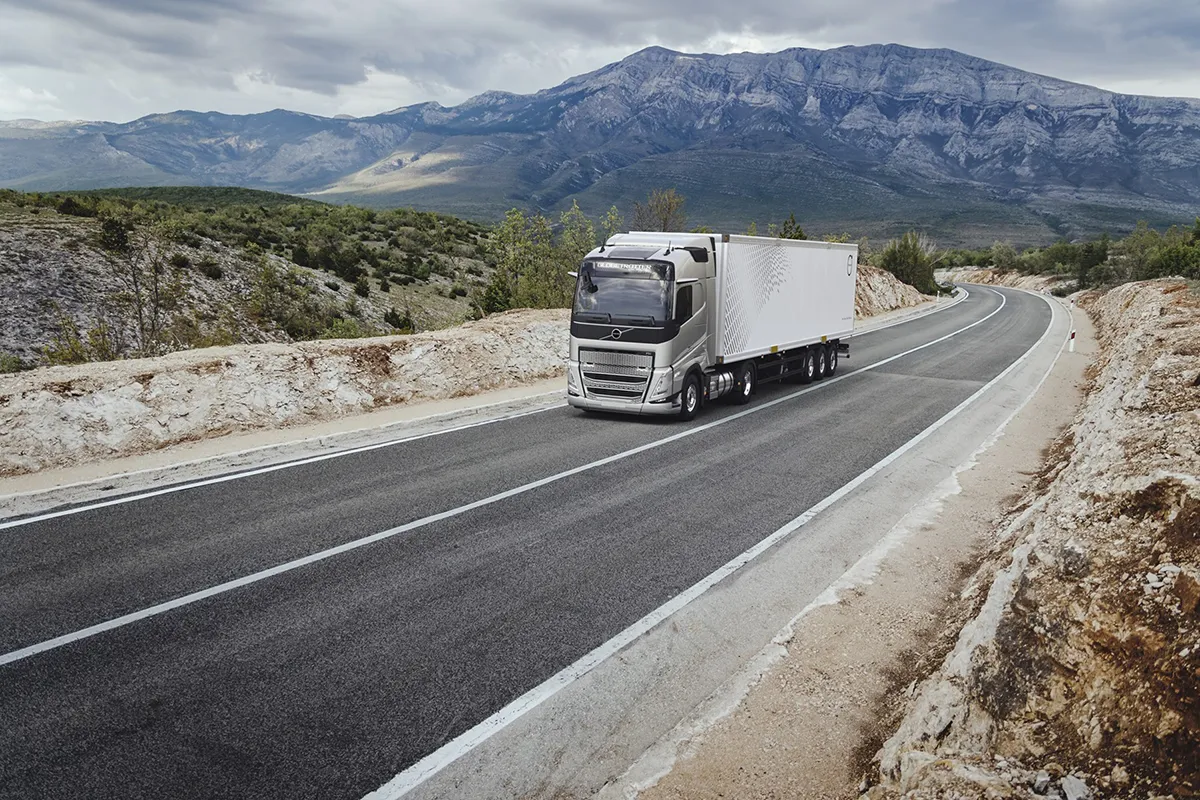
Significant savings on CO2 and operating costs, with no compromises
Volvo offers exceptional gas-engine technology based on the D13 diesel engine. This means performance is on a par with that of a diesel truck, but with lower CO2 emissions.
“Our gas engines feature technology that clearly outperforms the competition in terms of power, torque, engine response and fuel consumption. Drivers tell us they appreciate the low noise levels, power and comfortable driving characteristics of our gas trucks,” says Jan Hjelmgren. “We see great potential for (bio-)LNG trucks as we move towards zero-emission transport.”
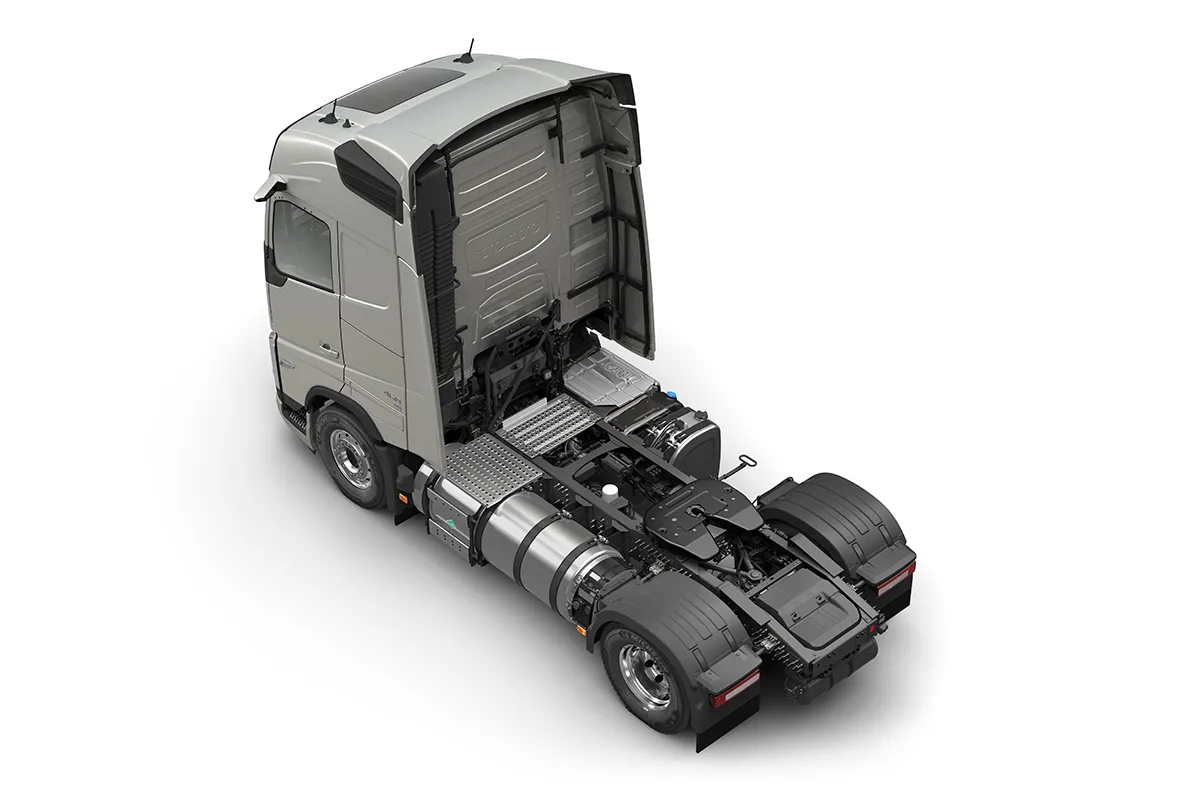
Facts about CO2 savings with (bio-)LNG trucks:
- Switching from diesel to LNG (liquefied natural gas) saves up to 20% in CO₂ emissions (tank-to-wheel).
- Switching from diesel to bio-LNG saves up to 100% in CO₂ emissions (well-to-wheel).
- Bio-LNG is produced from feedstocks such as household waste, agricultural waste, manure and sewage.
- Bio-LNG is identical to conventional LNG in terms of performance, storage and refuelling.
Facts about Volvo trucks running on (bio-)LNG:
- Volvo Trucks offers gas engines in the following models: Volvo FM, FH and FH Aero, in 4×2, 6×2 and 6×4 tractor or rigid configurations, suitable for a GCW of up to 70 tonnes.
- Volvo’s G13 LNG engine is based on the D13 Euro 6 diesel engine and is available with three power outputs: 420 hp/2,100 Nm, 460 hp/2,300 Nm and 500 hp/2,500 Nm.
- The largest fuel tank has a capacity of 225 kg of gas, giving a range of more than 1,000 kilometres.
- Volvo Trucks’ gas engine uses the fuel-efficient HPDI (High Pressure Direct Injection) technology from supplier Cespira.
- Volvo’s gas engine uses a small amount of diesel as an ignition fuel. When HVO (Hydrotreated Vegetable Oil) is used for ignition, CO₂ emissions can be reduced by up to 100% (well-to-wheel) compared with a truck running entirely on diesel.
- Biogas is a fuel for internal combustion engines, which in turn are a crucial part of Volvo Trucks’ powertrain strategy to achieve zero emissions by 2040. Volvo Trucks’ so-called ‘three-pillar strategy’ for reaching net-zero emissions comprises battery-electric engines, fuel cell-electric engines and internal combustion engines running on renewable fuels.
*According to a report by the European Biogas Association
Question about this story? Ask your question
Keep following this
Get an email when a new story is published. No account needed.
- ThemeLower emissions and more reuse
- SubjectNews







