









Using recycled plastic in bank protection
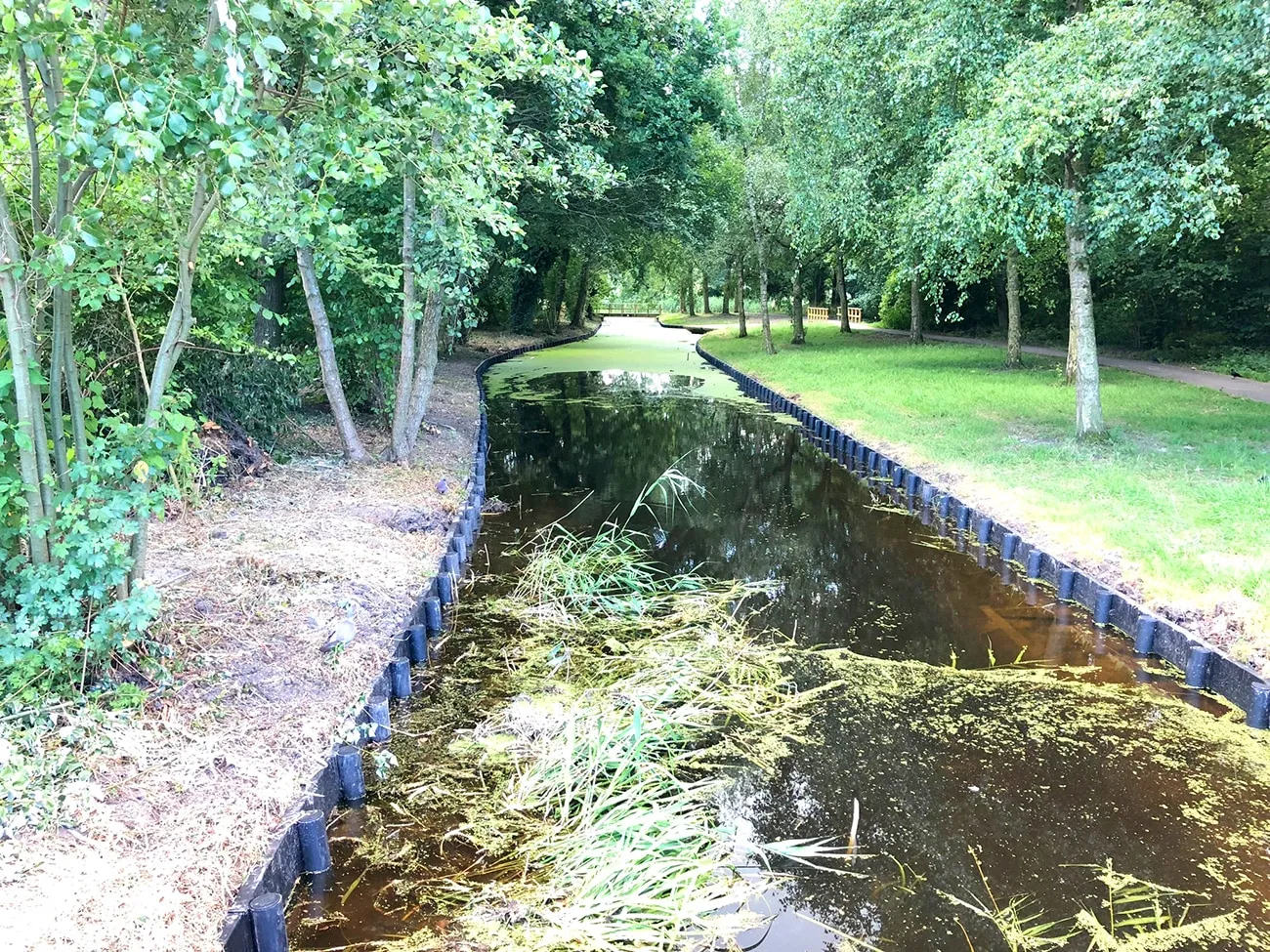
Recycled plastic offers an alternative to the hardwood commonly used in bank protection. Its advantage is its longer service life. In contact with water, plastic can last up to 50 years, and can then be reused.
Using recycled plastic in bank protection offers an alternative to the hardwood commonly used. Its advantage is its longer service life. In contact with water, plastic can last up to 50 years, and can then be reused.
Does plastic have a lower CO2 footprint or emissions than wood?
Hip Groen’s bank protection combines European softwood with recycled HDPE plastic. Softwood is used below the waterline, where it does not rot because there is no oxygen underwater. This technique was developed by the Romans and was already in use in their time. Spruce has much lower emissions and therefore has less impact on the environment than plastic. That is why our system uses no more than 10 to 15 per cent plastic per linear metre of bank protection. Plastic is used only where spruce is not suitable.
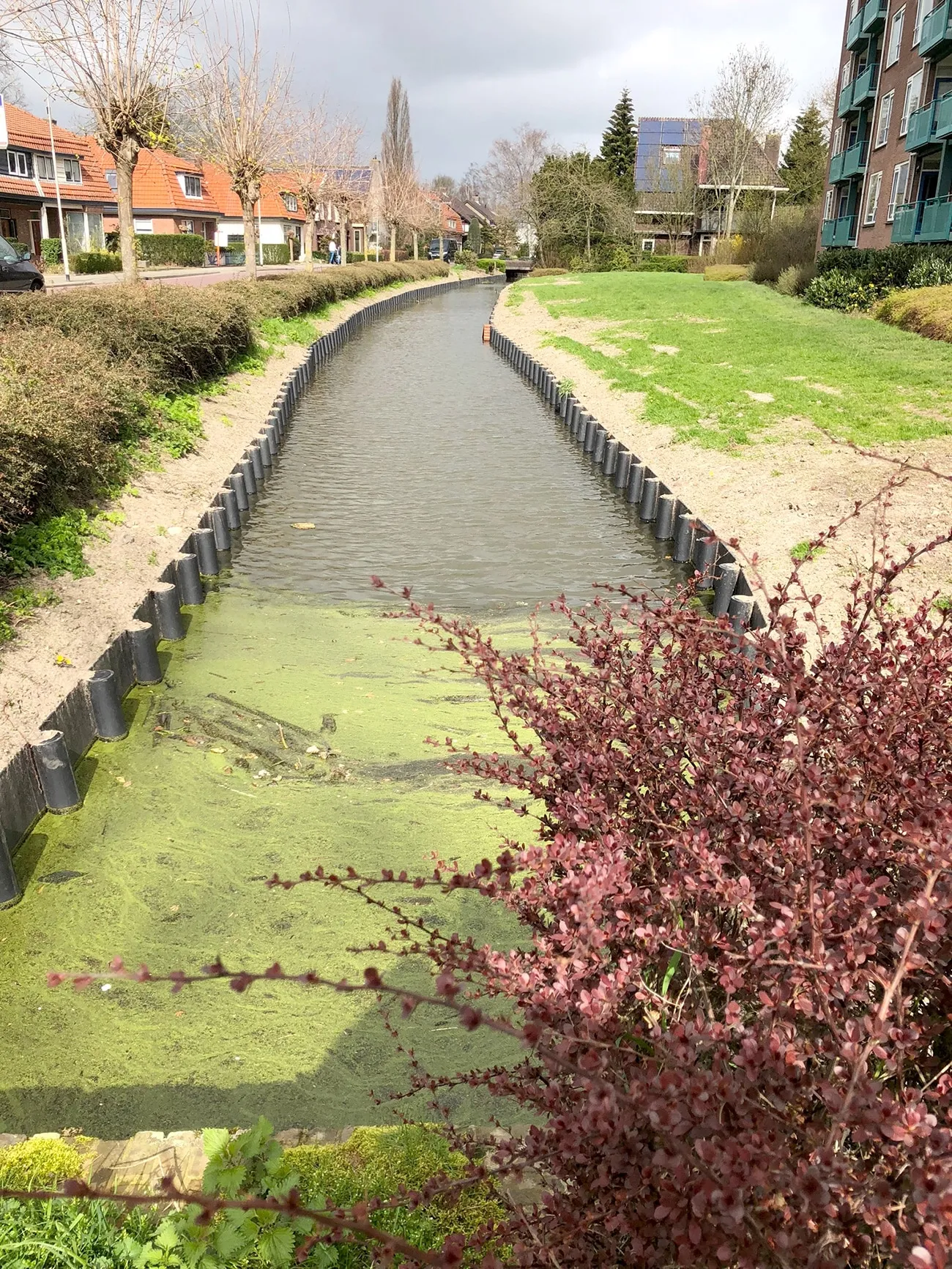
Trees absorb CO2 as they grow, and our softwood comes from production forests in the Netherlands, Germany and Belgium. The CO2 released during production is offset by new planting, making the material carbon neutral. Plastic has a significant environmental impact, partly because of its energy-intensive production process. It is made from crude oil, and transporting it to the Netherlands has a greater impact. However, the right combination of materials gives HIP Groen a very low environmental impact.
What is the quality of the plastic?
This depends greatly on the types used. Mixing different types of plastic, such as polypropylene and polyethylene, creates a bond that is weaker than when only one type is used. As a result, the material may lose strength sooner. It also has a much lower glass transition temperature, the point at which the material breaks, in freezing conditions than mixed plastics of low quality. There is a particular risk of breakage under stresses such as moving ice. Low-quality plastic is often reinforced with additives such as glass fibre, which can then hinder recycling. The plastic used in HIP Groen bank protection is therefore made from a single type of material, namely 100 per cent recycled HDPE: the highest quality and very strong.
HDPE has been tried and tested for years, including in drinking water pipes. It can withstand temperatures down to minus 80 degrees Celsius. Because it is not mixed with other plastics, it can also be reused several times without losing strength. The product also meets the legal requirement to reduce the use of low-quality plastics.
A business enquiry for HIP Groen®? Get in touch
Companies in this story

Keep following this
Get an email when a new story is published. No account needed.
- ThemeLower emissions and more reuse
- SubjectNews
- CompanyHIP Groen®







