









Tree contractor presses ahead with shift to zero emissions
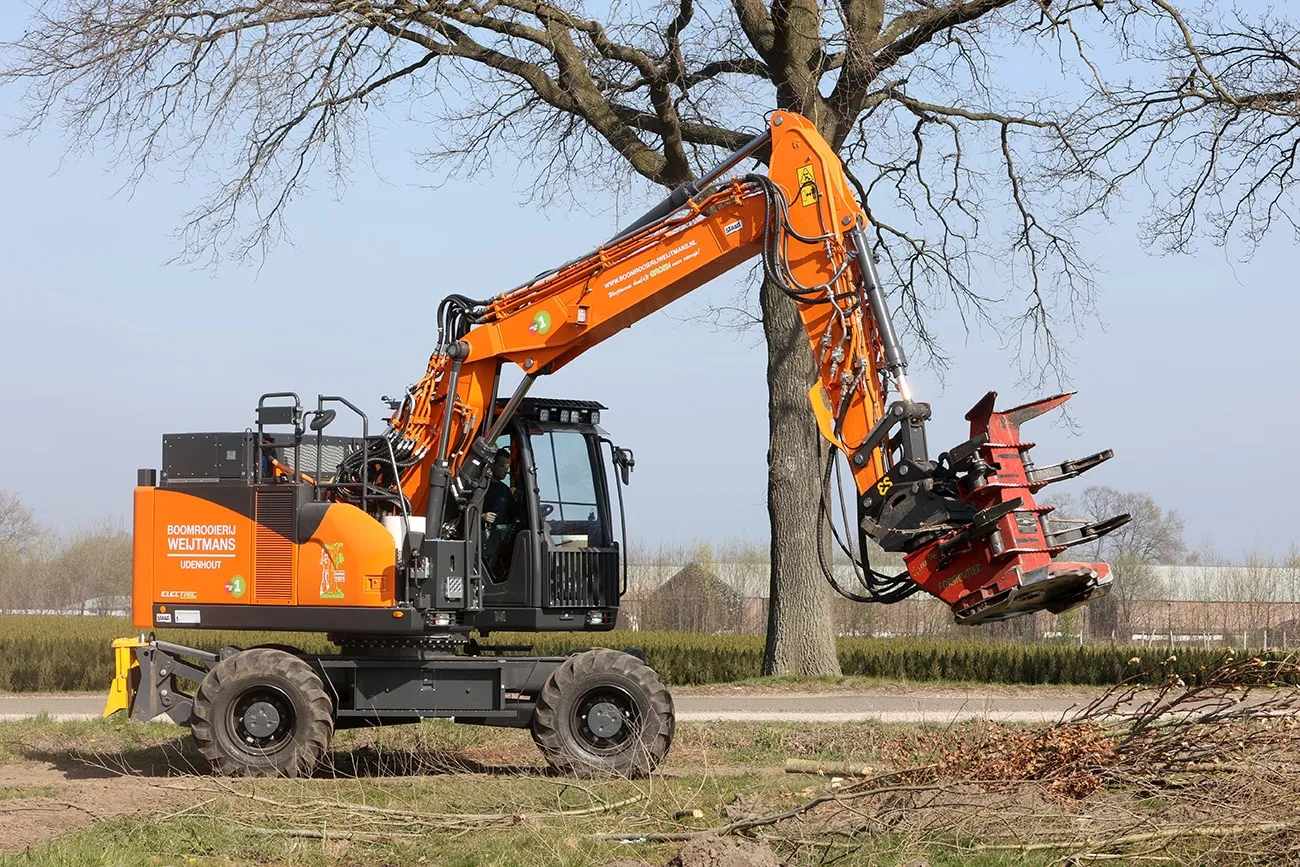
Boomrooierij Weijtmans began taking steps towards fossil-free operations some time ago. Since 2019, for example, the company has operated from an energy-neutral headquarters in Udenhout. The roofs of its buildings have since been covered with solar panels to provide sufficient charging capacity for its rapidly expanding electric fleet. But there are also
barriers, as Kees Weijtmans has experienced first-hand. “Grid congestion costs a fortune.”
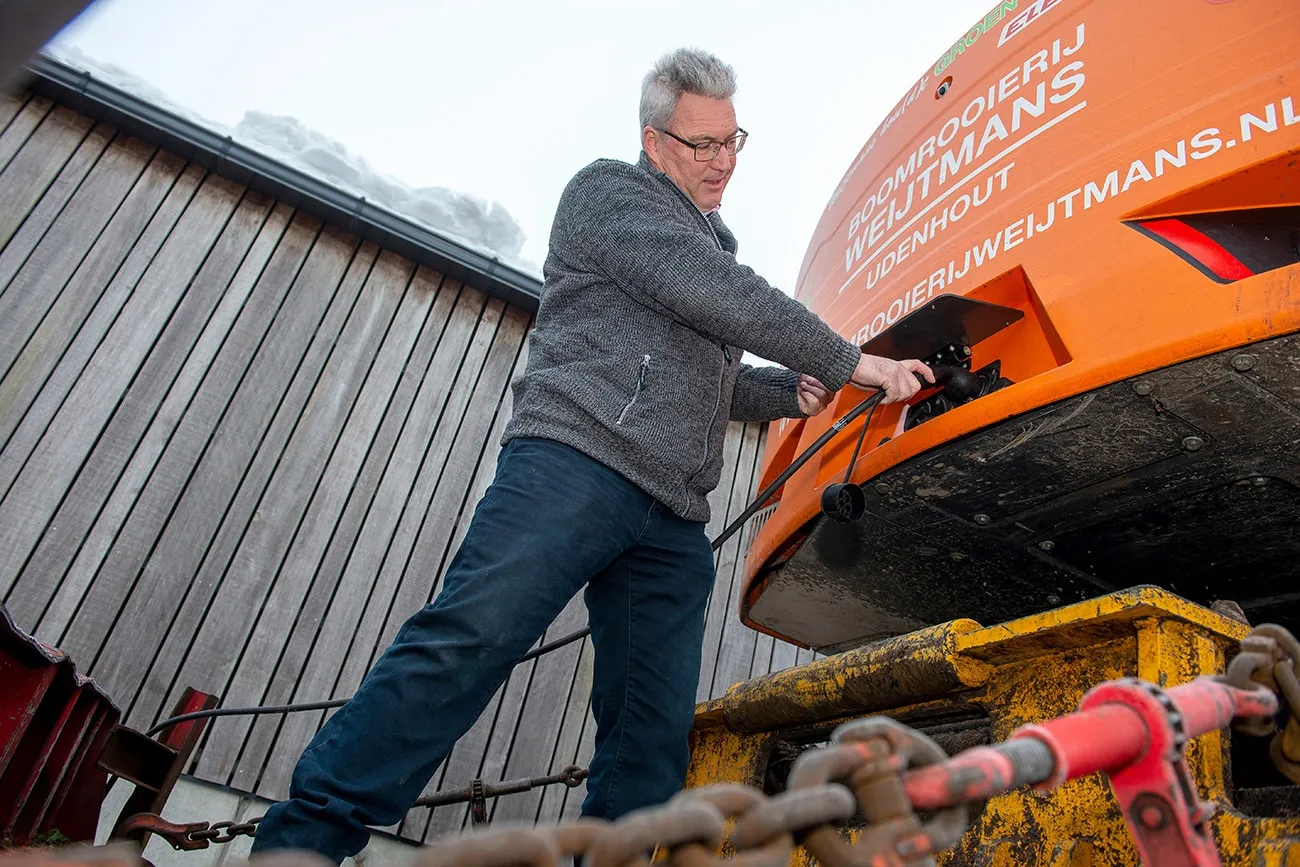
At the beginning of 2022, Weijtmans became the first in the sector to put an electric mobile crane into service. The investment was supported by the DKTI fund through the national ‘De Bouwplaats van Morgen’ initiative. This year, a substantial number of new electric vehicles and machines are being added, including several electric service vans, electric access platforms and a number of electric DAF XF trucks. Two battery containers are also on their way to supply energy at project sites. All in all, this represents an investment running into millions.
More scrutiny of emissions
“We often work in sensitive natural areas or densely populated residential areas. Minimising environmental impact and reducing noise pollution are therefore important,” says Weijtmans. “Clients such as local authorities, provinces, water authorities and Rijkswaterstaat are increasingly scrutinising the emissions of work equipment. I need not elaborate on the widespread pressure to keep the Netherlands’ economic engine running while minimising emissions…” If you want to make rapid progress, you quickly run into almost insurmountable barriers. “The network operators in the Netherlands are nowhere near ready for large-scale electrification. The development of local networks is being hampered, and the rapid installation of additional charging points often proves impossible.”
Is this a showstopper for businesses looking to press ahead with investment in fossil-free operations? To what extent does this put the maximum deployment of often considerably more expensive electric equipment at risk? “We are dealing with it by investing heavily in our own generation and storage capacity. But these investments come on top of the often more expensive electric work equipment. It would be good if the government took another close look at whether all the existing subsidy schemes are sufficient to create strong momentum for businesses to make a rapid transition to zero emissions. I have quite serious concerns about that,” Weijtmans concludes.
Question about this story? Ask your question
Keep following this
Get an email when a new story is published. No account needed.
- ThemeLower emissions and more reuse
- SubjectNews







