









The unstoppable rise of sustainable asphalt
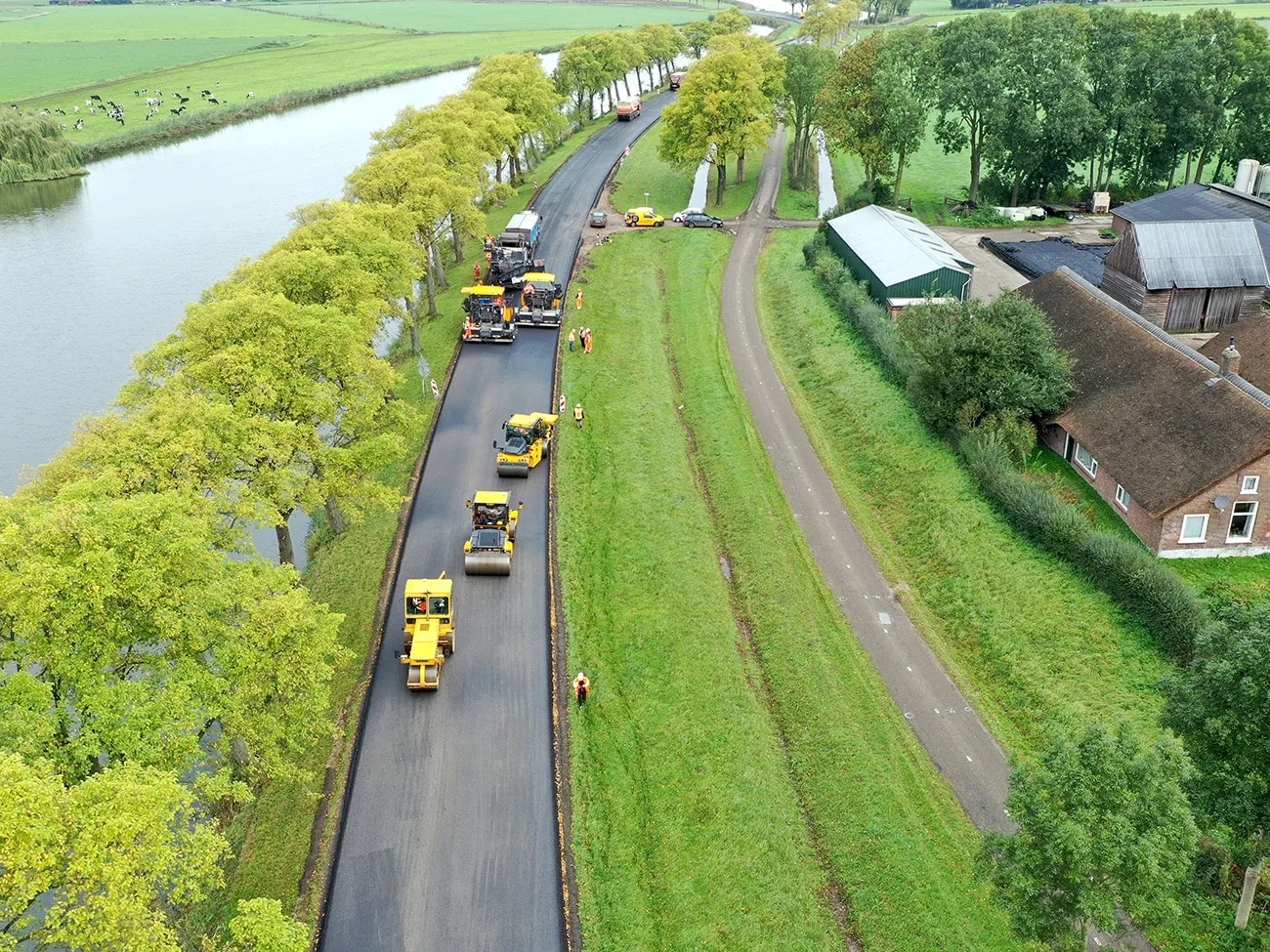
Circular and bio-based raw materials, open innovation and collaboration. According to the CHAPLIN consortium, these are essential to successfully green the asphalt supply chain. Since 2019, companies, government bodies and knowledge institutions have been working together within CHAPLIN to replace bitumen, the fossil-based binder in asphalt, with renewable raw materials. The urgency is high, as is the ambition: a 50% reduction in CO2 emissions by 2030 and 100% by 2050.
Value-chain collaboration for bio-based and circular asphalt
Bitumen quality and availability under pressure
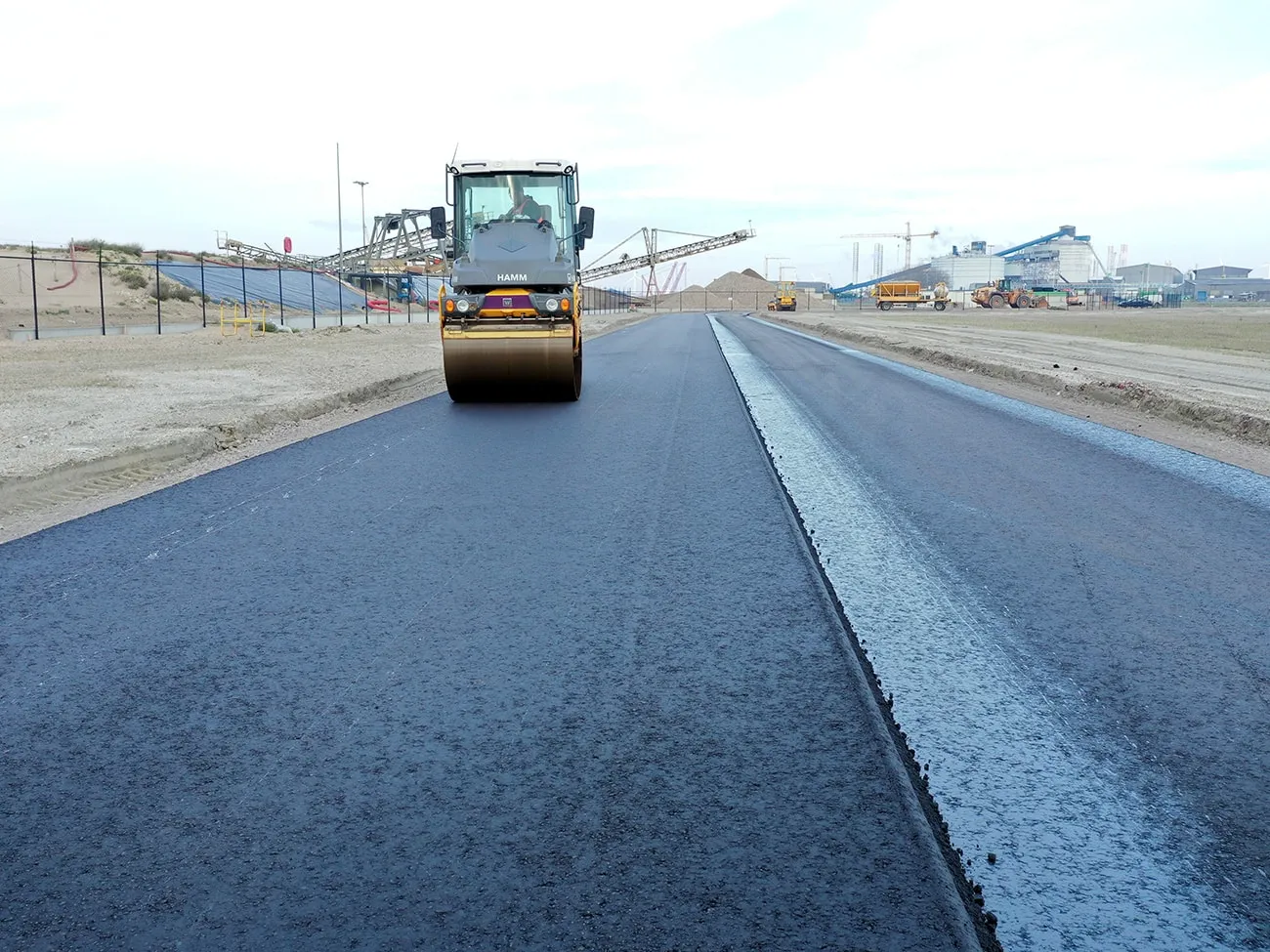
Changes at refineries and geopolitical tensions are putting increasing pressure on the quality, availability and price of traditional bitumen. “In the long term, the availability of oil-based bitumen can no longer be taken for granted,” says Edwin van Osch, director of AsfaltNu. “You can see that Europe is accelerating the reduction of CO2 emissions and cutting its oil consumption. I expect this to become noticeable in the coming years. We are an asphalt producer with sustainability as our mission, so we want to drive and encourage the search for an alternative to bitumen. But we cannot do that alone. CHAPLIN brings together the various stakeholders in this field and can ensure that we tackle this together as a sector.”
Bio-based raw materials
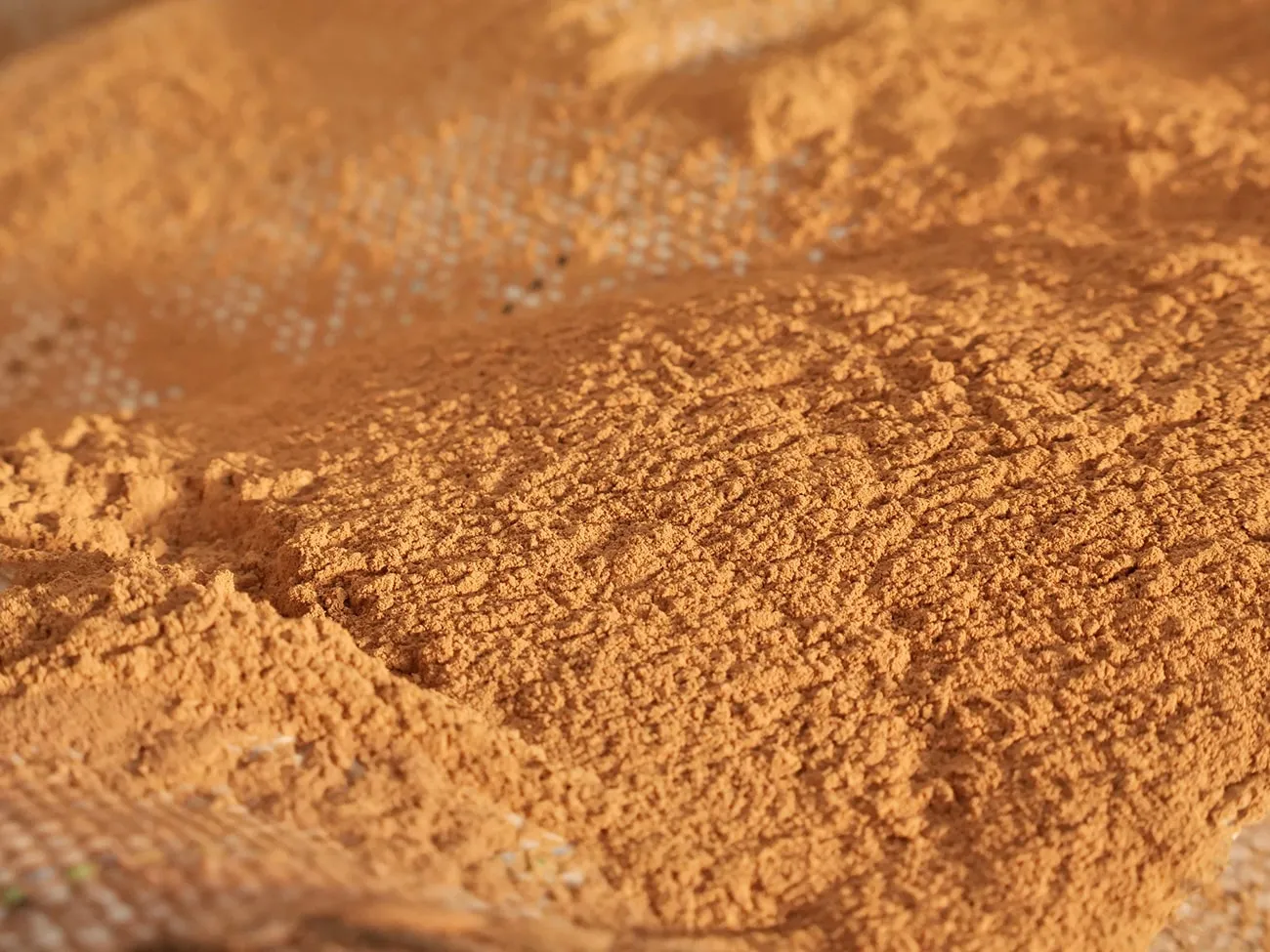
“Using bio-based raw materials to replace bitumen is a highly effective climate measure for sustainable road surfacing,” says CHAPLIN programme leader Joop Groen. “These materials are derived from wood and plants and become available as residual streams from the production of, among other things, paper and cellulose, as well as from biorefineries. Carbon dioxide is absorbed from the atmosphere as they grow, and when these materials are incorporated into asphalt, the CO2 is locked away in the road for a long time. CHAPLIN’s collaboration therefore makes an important contribution to greening the road construction industry and reducing CO2 emissions. It also offers the road construction sector alternative raw materials, which are very welcome now that fossil-based bitumen is coming under increasing pressure.”
Business case
Replacing bitumen with a bio-based binder requires highly innovative new technologies, and CHAPLIN members have already achieved a number of successes in this area. For example, they have gained initial insights into which raw materials work best, what modifications are needed at asphalt plants, which occupational health and environmental aspects need to be taken into account, and whether the technology is economically viable. The programme leader is positive about the business case: “Calculations by CHAPLIN members show that bio-asphalt is currently about 10% more expensive than fossil-based asphalt. As volumes increase and buyers are eventually required to operate more sustainably, I expect bio-asphalt to become competitive and ultimately replace fossil-based asphalt.”
Utrecht University is one of the academic partners involved in CHAPLIN. Martin Junginger, professor of bio-based economy, sees great added value in the collaboration: “The transition to a circular economy requires interdisciplinary collaboration. We need each other. Independent, objective research is important for road authorities and asphalt producers. Using our models and analyses, we can provide insight into environmental and economic performance and show exactly how much better bio-based asphalt is, and in what respects. In turn, we need primary data from CHAPLIN members. I’m pleased to see our research being put into practice and that we are working together to contribute to the development of a bio-based economy.”
Scaling up
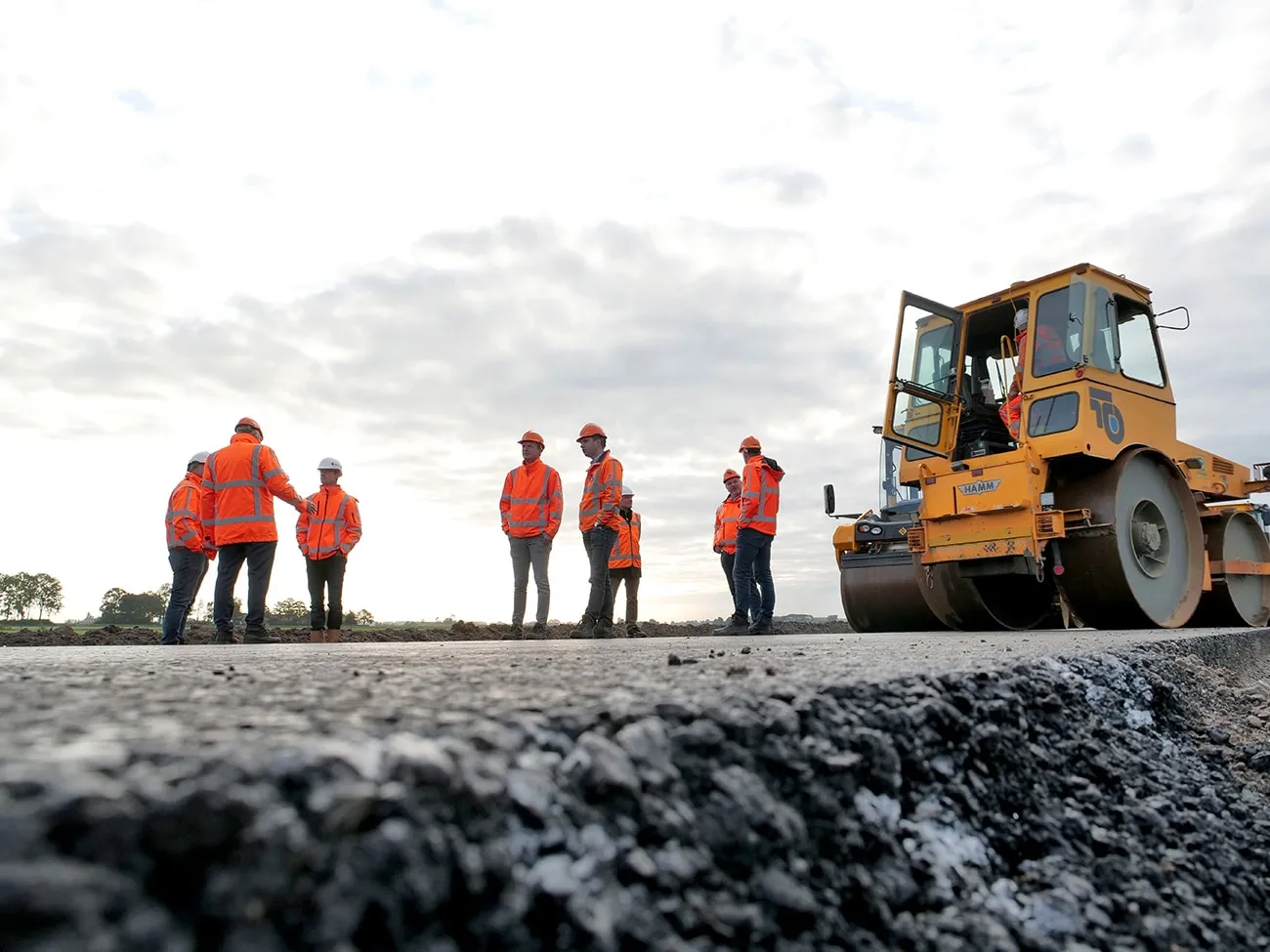
To date, 25 trial sections have been laid on roads across the Netherlands, using different asphalt mixes. The test results provide valuable information for further learning and development. Insights have also been gained into the climate and environmental performance of lignin-based bio-asphalt. According to Joop Groen, the results so far are very promising: “Calculations by Utrecht University show that we can already achieve a CO2 reduction of up to 75%! There are 136,000 kilometres of asphalt in the Netherlands alone, so the potential of this innovation is enormous.”
Road authorities such as Rijkswaterstaat, the provinces and municipalities recognise this too. They are highly motivated and committed to making the necessary sustainability improvements as quickly and robustly as possible.
The challenge and ambition: 100% bio-based asphalt as a standard product
The consortium’s challenge and ambition is to offer 100% bio-based asphalt as a qualified and accepted standard product that is widely used. To pursue this mission, the new CHAPLIN-BBM project was launched on 20 September 2022, with BBM standing for 100% bio-based binder.
“We are working on a fully bio-based binder with the same, or even better, functional properties than fossil-based asphalt. This applies to production, laying and use. Like current asphalt, our bio-based asphalt must be suitable for recycling and scalable to a volume of at least 50 ktonnes per year, so that bitumen can be fully replaced. It must also be guaranteed to be compatible with fossil-based bitumen. This is because it will become mixed into recycling streams, and so that a gradual transition can be made, with the proportion of bio-based raw materials increasing over time. Like bitumen, the bio-based binder must also be suitable for SMA, AC, porous asphalt and other mixes.
We want to make it widely available so it can genuinely be used as a standard solution throughout the sector.”
“Because this project brings together a large number of road builders, road authorities and knowledge partners, the combined knowledge and experience are unparalleled. In addition, a substantial range of facilities can be put to use, and the road authorities have been closely involved from the outset in defining the requirements. This means we are developing the market and the product hand in hand, which will support broad implementation and maximise the impact. Project management is carried out by Circular Biobased Delta as an independent party; the work itself is done jointly.”
AsfaltNu is one of the parties that set up the project to develop a 100% bio-based binder. Edwin van Osch, director of AsfaltNu: “We contributed to drawing up a set of requirements and a plan for how we, as a consortium, can meet them. Bio-based products must not restrict the possibilities for reuse or production at lower temperatures, for example, and the quality of asphalt made with these alternatives to bitumen must be at least equal to that of existing asphalt. As soon as the first bio-based products become available, we want to develop and test prototype mixes. This will help us turn their use into a practical reality and ensure that we can continue to deliver the trusted quality of asphalt in the future. I’m very pleased that so many parties identify with the project and have decided to take part.”
Daring to depart from the beaten track
The road construction sector has traditionally been rather conservative, and does not readily welcome innovation. All parties are now convinced that there is a need to become more sustainable, and that it can be done. However, there are still hurdles to overcome before bio-based asphalt is fully accepted and used. AsfaltNu director Edwin van Osch puts it: “You can’t keep doing things the way you always have. You have to be open to new, sustainable products and have the courage to start using them without knowing the final 10%. Dealing with uncertainty is a major challenge, but one we have to take on as a sector.”
That is a call endorsed by Martijn Verschuren, Manager Business Development at asphalt producer H4A: “I would like to see the entire Dutch road construction sector switch to sustainable asphalt. Get involved, invest, have confidence and dare to depart from the beaten track!”
Continuity in the sustainability transition
More direction from the government would help ensure greater continuity in the transition to sustainability. Martin Junginger of Utrecht University says: “If you want to develop innovations successfully, it doesn’t help to keep having subsidy projects lasting 1 or 2 years. New questions often arise during research, and you also want to be able to monitor the pilots over the long term. You can’t expect small asphalt companies to fund that investment themselves. In my view, policymakers should consider how to organise this over the long term and on a structural basis, as a Dutch success story in the transition to a sustainable society. Create instruments that persuade clients to use sustainable products. Environmental benefits are already taken into account to a limited extent, which helps a little, but much more could be done.”
Supply-chain-wide collaboration
To offer road authorities thoroughly researched bio-asphalt on a large scale, broad collaboration is needed, based on the principle of open innovation: going it alone gets you there faster, but together you go further!
The entire supply chain is represented in the CHAPLIN programme. The collaboration brings together companies (road builders and asphalt producers) and government bodies (Rijkswaterstaat, provinces and municipalities), supported by research and technology organisations (Utrecht University, Wageningen Food & Biobased Research, TNO, Q8 Research and the Asfalt Kennis Centrum). The partners are developing the technology and stimulating its market introduction, thereby making a major contribution to sustainable road surfacing.
Martijn Verschuren, Manager Business Development at asphalt producer H4A, clearly sees the added value of the collaboration: “We are all facing the same challenge: we need to stop using fossil raw materials. Individual companies can work on this, and we do, but CHAPLIN has now built up a broad network across the Netherlands, with a great deal of knowledge and experience. It’s good that CHAPLIN is taking the lead, setting the course with its partners, talking to all the parties and informing and convincing clients about the importance, necessity and quality of bio-based asphalt.”
The collaboration was recognised last year when it won the WOW prize. Platform WOW, a partnership of 11,000 road and water managers, awarded CHAPLIN the WOW prize for the most inspiring and innovative collaboration programme. For Martin Junginger, professor of bio-based economy at Utrecht University, this was a special moment: “When the expert jury, which assessed projects on innovation, sustainability and supply-chain collaboration, chose CHAPLIN as the winner, it was truly fantastic! In my view, those are the three strengths of our collaboration, and it was wonderful recognition from experts in the field.”
Partly because the collaboration is running so smoothly, the consortium is steadily moving towards commercialising bio-based asphalt. This raises questions: who owns the innovation, who will apply it and who gets access to the results? The collaboration needs to be carefully orchestrated. “That is why we use collaboration agreements,” says Joop Groen. “With each partner, we set out clear agreements on what they contribute and what they can expect in return. Our guiding principle remains that we work through joint innovation. This has proved itself in practice over the past few years, and we will certainly continue with it. It calls for an open mindset among participants, and I am proud that, despite our different interests and backgrounds, we have managed to work together so constructively and effectively.”
Projects, Expedition Days & knowledge sharing
Joop Groen explains how the collaboration works in practice: “Parties become members, thereby supporting the collaboration, and can then take part in specific projects. Last year, we successfully completed two projects, and recently we launched a follow-up project to develop a technology for bio-based binder that will ultimately make it possible to replace 100% of fossil bitumen with bio-based binder.” The CHAPLIN consortium now has around thirty members.
“As well as projects, we organise a CHAPLIN Expedition Day twice a year, where members can meet. In early November, we will be guests at Boskalis’s road construction laboratory QRS-LAB in Rotterdam, which I am really looking forward to. Finally, we have a newsletter for partners where we share knowledge and experience and put out calls. Our consortium is open. We would like to involve more road authorities, as they have a guiding role from their position. Pioneers who want to encourage and apply this development are still welcome.”
Question about this story? Ask your question
Keep following this
Get an email when a new story is published. No account needed.
- ThemeExtending the life of roads and civil engineering structures
- SubjectNews







