









“The Dutch infrastructure sector is innovative, and we as the government support that”
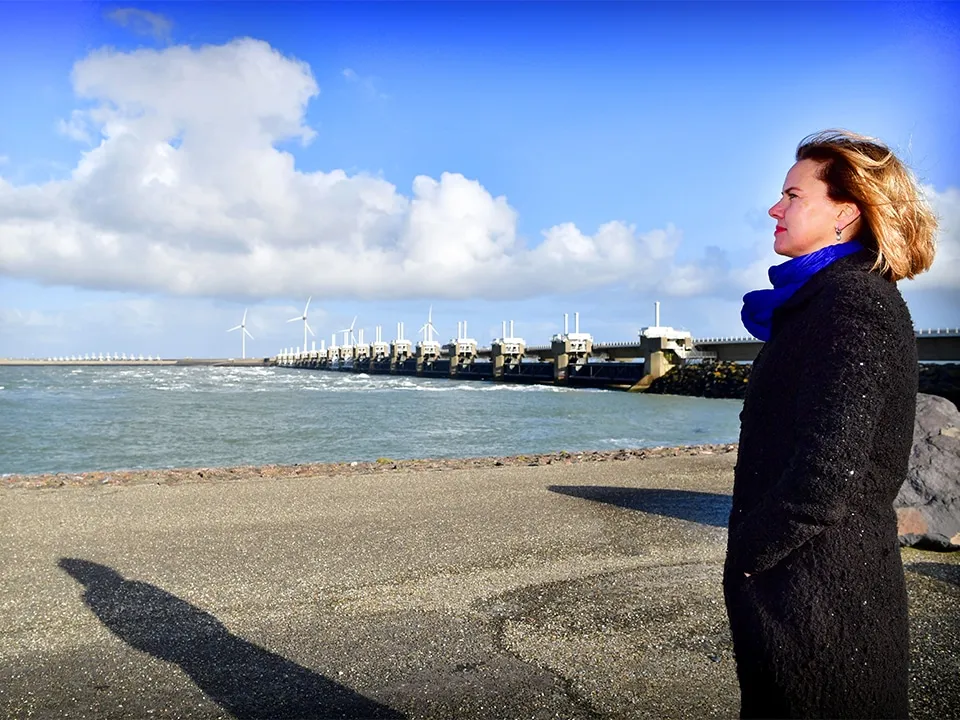
These are uncertain times for everyone. Despite the coronavirus pandemic, the civil engineering sector has thankfully not ground to a halt. Or should we say it has not stood still? Not only is the innovation that characterises our sector continuing unabated, there is also plenty of work to do. That work has not come out of thin air. As a sector, we owe much of it to our government’s willingness to think along with us, and above all to think ahead.
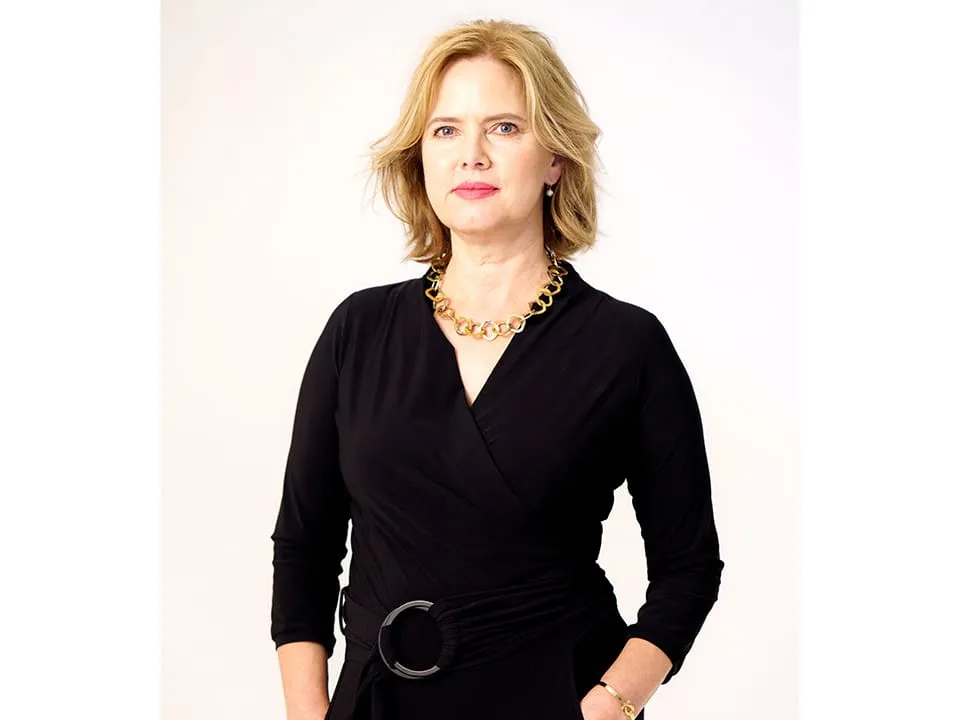
GWW Magazine had the honour of interviewing Cora van Nieuwenhuizen, Minister of Infrastructure and Water Management, about the government’s involvement in the Dutch infrastructure sector. Topics included the current crisis, the Netherlands’ role as a European transit hub, digitalisation in infrastructure and sustainability.
The infrastructure sector in times of crisis
Previous issues have featured articles in which the entire civil engineering sector expressed its gratitude for the projects brought forward by the government, while also voicing concerns. In particular, there are worries about order books once the pandemic is officially over. Will all the ammunition have been spent by then? Not only have maintenance and replacement projects been brought forward, but work has also proceeded faster than usual, thanks to lighter traffic on the country’s roads. How is the government ensuring continuity? Minister van Nieuwenhuizen: “Bringing projects forward did not, of course, start because of the coronavirus pandemic. The sector was already at risk of running into difficulties because of the nitrogen and PFAS problems. To prevent a crisis in the sector at that time, as new-build projects were postponed, we worked tirelessly to bring maintenance and replacement projects forward. This involved extensive consultation with the construction sector. Then the coronavirus pandemic hit, with all its consequences. Keeping the sector at work became even more important. We sat down with all the trade associations to form a task force. The conclusion was that we could carry on working while observing the coronavirus measures. We can work at a distance of one and a half metres, and we can work safely by looking out for one another. Within the task force, we established the right approach for carrying out work under the changed circumstances.”
No less than 1.9 billion euros for accelerated maintenance and replacement
After the Second World War, a great deal of infrastructure was rebuilt within the same time frame. “All the projects from that period now need maintenance or replacement. The government has allocated a total of 1.9 billion euros for this, of which we are now bringing 1.1 billion euros to market more quickly. This is in addition to the 265 million euros we had already allocated for this purpose,” says the minister. Examples she gives include major maintenance on the A50 and N18, major dredging work and the replacement of conventional lighting with LED lighting. “A budget of 44 million euros has been allocated to replace the lighting,” she explains. “Other examples include projects to replace mooring posts and safety barriers. Some projects could perhaps have waited, but we decided to go ahead because they can be carried out without encountering the nitrogen and PFAS problems. A lot of work is associated with projects of this kind, and they involve multiple disciplines.”
Setting a good example as the government
“The Dutch infrastructure sector is innovative, and we as the national government absolutely support that,” Minister van Nieuwenhuizen continues. “Our support for innovation makes it worthwhile for the market to invest in it. That is why we are keen to set a good example. Take electrification, for instance. We are providing subsidies to make vehicles on the road and on the water greener. We are also happy to contribute to making asphalt more sustainable, and we are seeing some great innovations in this area too. The ‘demonstration garden’ on the A73 is a good example. There, we are looking at extending service life, reducing noise, lowering rolling resistance and improving asphalt recycling. If you consider DBFM contracts, you can see how making changes now will bring significant benefits later.”
New-build projects
We ask the minister if it is known when new-build projects will come back into the picture. She replies: “When I took office, we had a problem with underspending. More money than projects... We started addressing this by actually bringing projects forward. New construction projects that have been delayed by the nitrogen and PFAS situation will be taken up again after this phase of accelerated maintenance and replacement projects. One lesson we learned from the previous crisis is that the BBL programmes (vocational work-based learning programmes) had dried up. Not enough young people were entering the sector, even as projects were picking up. That leaves you short of workers. This is an important area for the sector to focus on if it wants to be able to work at full capacity in the future.”
Minister van Nieuwenhuizen goes on to explain that the national government does not make up the entire market. Although work has been brought forward by the national government, there has been less anticipation at provincial and municipal level. “To do our bit, we have allocated an additional 500 million euros over a 10-year period for road safety. The aim is to deliver local projects through co-funding with the province. There were so many applications that we increased the 100 million euros allocated for 2020/2021 to 200 million euros. The successful projects will be announced in November. This is a clear win for road safety and the regional civil engineering sector. Many small projects add up to a major undertaking!”
The Netherlands as a major transit hub
When it comes to the Netherlands’ role as a major transit hub for goods, the government takes a ‘corridor approach’. Minister van Nieuwenhuizen explains: “We are keen to facilitate routes to Belgium, France and Germany. There is extensive contact on this, both within our country and with the countries concerned. We have good road infrastructure and truck parking facilities. We are investing in our waterways and railways. Everything is being done to increase capacity. Frans Timmermans is championing the ‘Green Deal’, and there is a great deal of discussion about what we can do together and how we can make things more sustainable. The EU provides funding under the ‘Connecting Europe’ programme. This includes support for shore power facilities. The green light is being given to freight transport, which is enormously important, especially during the coronavirus pandemic. As European transport ministers, we are working closely together on this.”
This cooperation is reflected, among other things, in the new port vision that has been drawn up. “We have stated our intention not to compete with one another, but instead to strengthen one another.
For example, the Minister of North Rhine-Westphalia said that Rotterdam is their gateway, rather than Hamburg. Bear in mind that North Rhine-Westphalia has as many residents as the whole of the Netherlands. Initiatives have also been launched within the Benelux framework to introduce digital consignment notes, another good example.”
Digitalisation in infrastructure
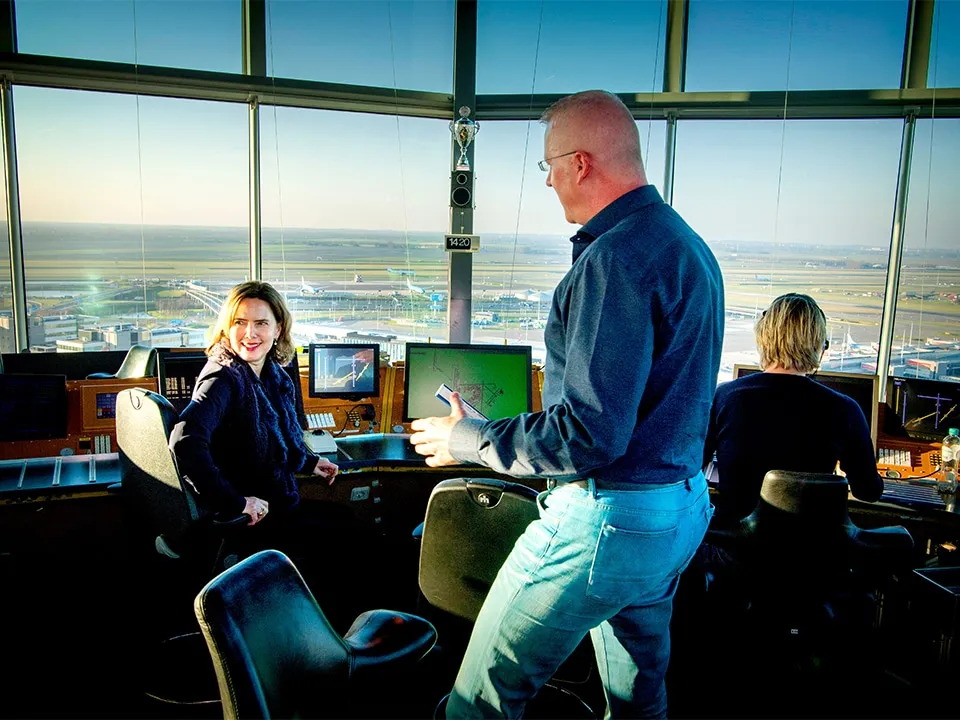
Asked where the government comes in when it comes to the sector’s digital transformation, she replies: “As a government, we try to do a lot ourselves, but we cannot do without businesses. That is why we have set up a ‘Data Taskforce’ jointly with eight countries. The working group also includes six car brands and eight navigation system manufacturers. When it comes to road safety, we should cooperate rather than compete. Connecting road traffic at the level of the vehicles themselves creates a smart network from which everyone benefits. For example, a warning of slippery road conditions, linked to GPS data, is sent to the network when a car detects a spinning wheel. Has an airbag been deployed? The car then reports an accident to the network. Following traffic is alerted extremely quickly, as is the road authority. This all comes under the heading of ‘Incident Management’, and developments in this area are extremely important. The fact that all the major car manufacturers are taking part means that this system will soon become a reality.”
Who is involved in this Data Taskforce? “The following EU member states and road authorities are involved: the Netherlands, Ministry of Infrastructure and Water Management; Spain, Ministry of Home Affairs La Subdirección General de Gestión de la Movilidad DGT; Finland, Transport and Communications Agency TRAFICOM; Germany, Federal Ministry of Transport and Digital Infrastructure; Luxembourg, Ministry of the Economy; Austria, ASFINAG; Belgium, Flanders MOW; and England, Highways England,” the minister lists. “The participating Service Providers are HERE Europe B.V. and TomTom Traffic B.V., and the Automotive Supplier is NIRA Dynamics. The participating car brands are Audi, BMW AG, Ford Smart Mobility Ltd, Mercedes Benz, Volvo Cars, Scania and Honda. The association ACEA is also involved.”
Sustainability in infrastructure
What is the government doing to promote sustainability in the sector and support the climate agreement? “We are introducing a subsidy scheme for zero-emission equipment. We are carrying out pilot projects, for example on the A16. In our tendering procedures, we will increasingly give greater weight to emissions-free working, creating an incentive for the market to move in that direction. I understand that this can sometimes be very difficult for companies, but overall it will also generate work. When it comes to sustainability, we distinguish between the construction phase and the use phase. An added benefit is that emissions-free working in infrastructure acts as a catalyst for non-infrastructure projects, because emissions-free working is desirable everywhere. Many machines are interchangeable, after all, and are also used in the construction sector. And for anyone wondering whether electrifying equipment is feasible: all the major car brands are already doing it, and manufacturers of heavy equipment have already achieved their first successes. It is possible, and it is on its way. The market determines what happens, after all,” Minister van Nieuwenhuizen concludes.
Question about this story? Ask your question
Keep following this
Get an email when a new story is published. No account needed.
- ThemeLower emissions and more reuse
- SubjectNews







