









Sustainable foundation engineering: ‘Look beyond the engine’
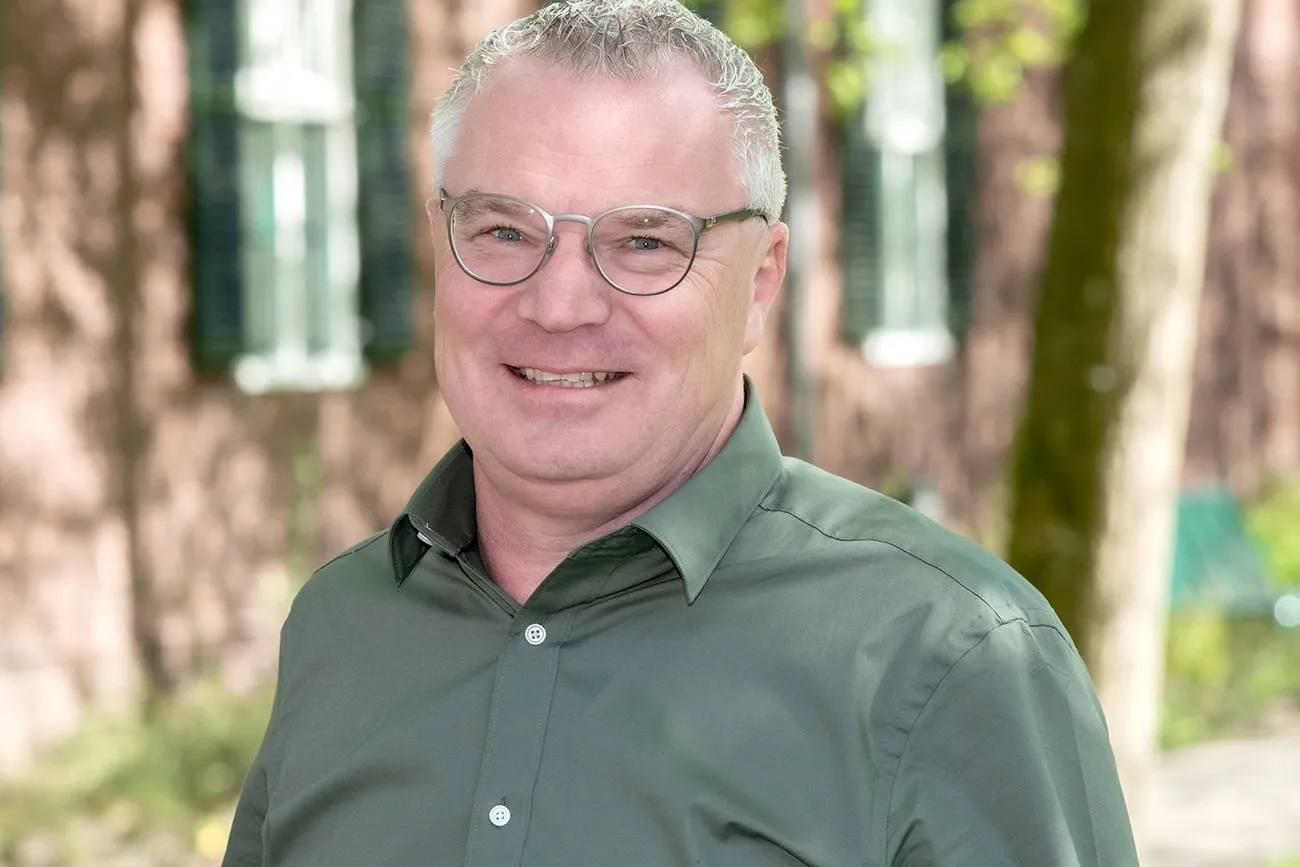
Sustainability is an important issue in the foundation engineering sector. It is one of the key priorities of the Dutch Association of Foundation Contractors (Nederlandse Vereniging Aannemers Funderingswerken, NVAF). Director Jaap Estié stresses that sustainability is a broad social issue that goes well beyond making the engine of a foundation machine more sustainable. He brings us up to date on the many sustainable initiatives and current developments within the association.
Last year, the NVAF celebrated its 75th anniversary with a major event attended by all its members. “We are a very active association that continues to grow and represents the interests of our member companies,” says Estié. “Our members are hugely involved. Thanks in part to the tremendous commitment of the many volunteers from member companies who serve on working groups and committees, we are able to achieve excellent results for the industry together. Results that would be absolutely unattainable at an individual level.”
Token gestures
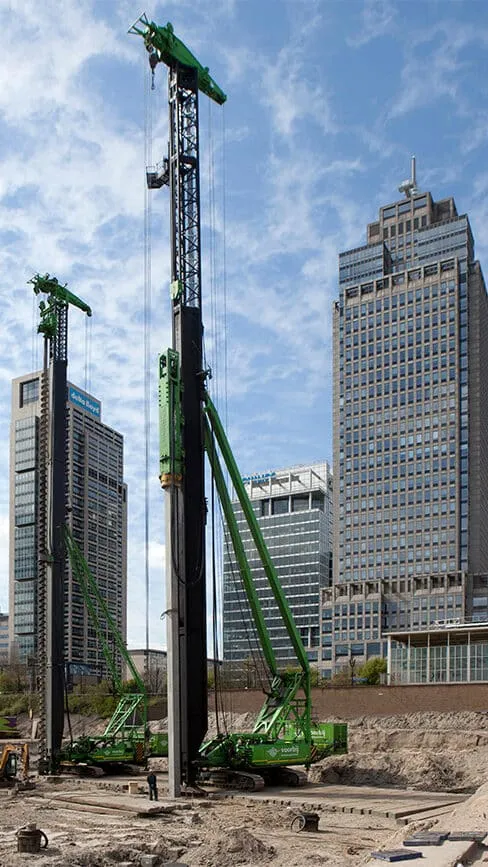
If you consider the design of a foundation, 90% of the total CO2 emissions associated with it are embedded in the ground. “Indeed, concrete and steel account for that share. So don’t focus solely on the engine of a foundation machine, but take a broader view,” says Estié. “That said, there is plenty of development in this area. We are gradually seeing the first zero-emission machines come onto the market. But, of course, these machines need a power supply. What we are seeing now is that construction power is often not available in sufficient quantities. Using a diesel generator to run an electric machine is, of course, a token gesture. A more interesting option for many companies may be to repower ‘older’ Stage III machines, which were the market standard until just a few years ago, to meet Stage V standards. This is a good intermediate step towards significantly reducing CO2 and nitrogen emissions.”
Pile reduction factors
Another ongoing issue for the NVAF is the debate surrounding pile reduction factors. “This also has a direct impact on sustainable foundation engineering, albeit a negative one. The introduction of pile reduction factors has meant that, under the new calculation standards, the average foundation pile has become considerably heavier,” Estié explains. “That means you are putting more CO2 into the ground. Designs may only use different, that is, higher, pile class factors if this is demonstrated by means of load tests in accordance with NPR 7201. One of our member companies has now had its own pile class factors approved (see later in this magazine, ed.). The NVAF has also launched initiatives: ten member companies have joined forces and have carried out several pile tests on screw injection piles. The main aim was to investigate the differences between types of pile toe. The effect of introducing a water-cement ratio was also examined: what does it do to the grout sheath around the pile? Municipalities and supervisory authorities all have their own ideas on this.”
Safe excavation
The NVAF also works beyond the ‘boundaries’ of its own association. For example, it is very active in the Cable and Pipeline Consultation Group, a partnership between excavators, network operators and underground asset managers. Estié says: “The aim is to prevent as much damage to cables and pipelines as possible. Clients need to consider physical safety during construction at the design stage, including cables and pipelines underground. In practice, this is only addressed during construction, and by then it is often too late. As an association, we completed a guideline last year on safe excavation.” The guideline on safe lifting was also updated last year and covers the safe lifting of foundation elements. “It specifically looks at how fall protection can be used instead of double securing, and led to the introduction of our own lifting-load poster.”
As if that were not enough, last year the NVAF also actively contributed to European guidelines on reducing CO2 emissions in foundation design. “The guideline has been translated into Dutch and made available to our members. We are also devoting a lot of attention to foundation repair, a major issue in the Netherlands because of climate change, and we are seeing growing interest in our foundation engineering training school. Finally, there has been a change of chair at board level. Ted van ‘t Hek takes over from Ton Groeneweg, who has been appointed an honorary member.”
Question about this story? Ask your question
Keep following this
Get an email when a new story is published. No account needed.
- ThemeUnderground construction
- SubjectNews







