









Rush on Digital Twins of tunnels
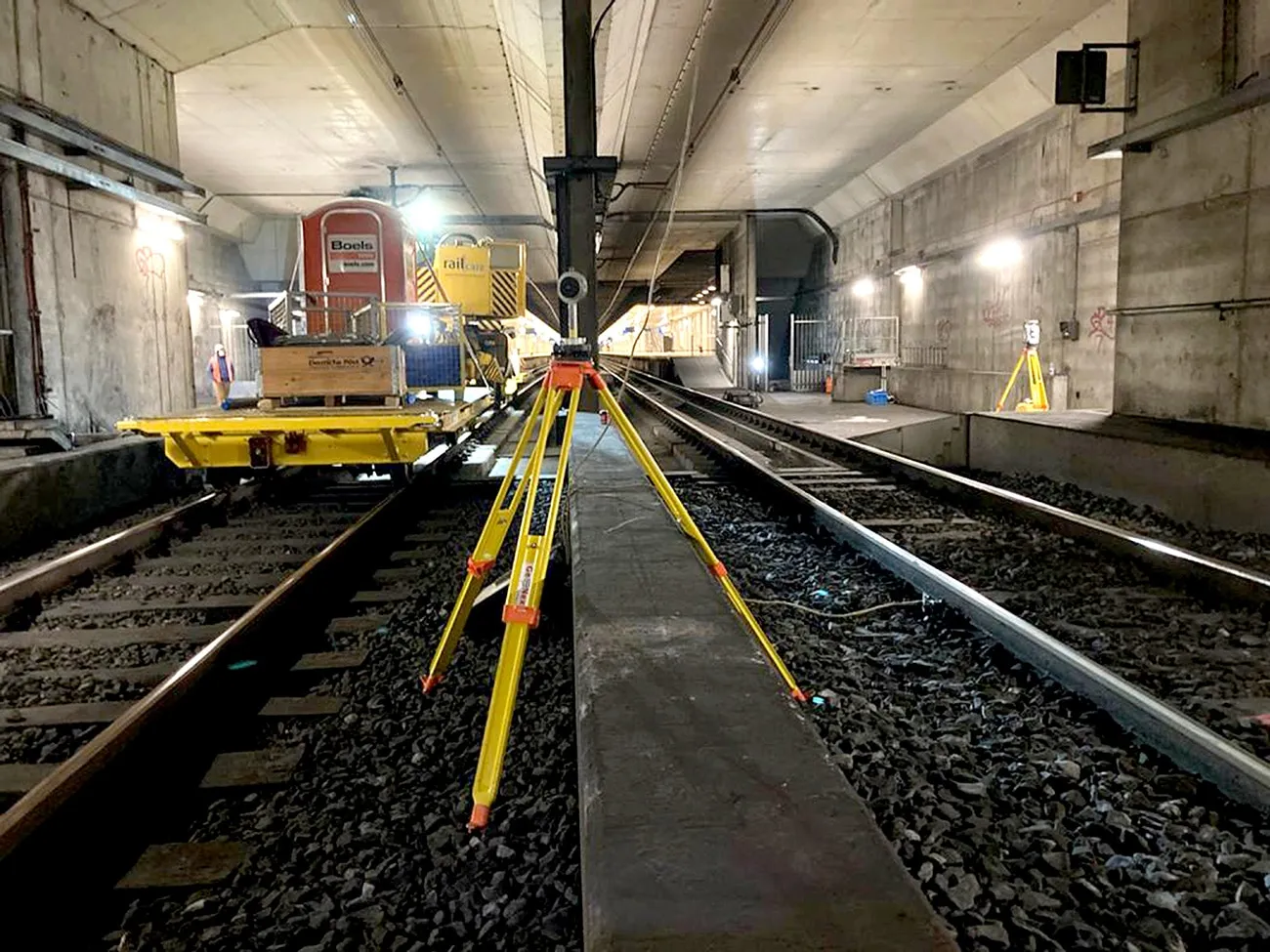
For road and rail operators, tunnels are often a major headache. They are frequently old and outdated, and information about their equipment and structural condition usually dates back to the last century. Nico Schaefers, founder and owner of GeoNext, says Rijkswaterstaat and ProRail have in recent years been focusing more than ever on digitally mapping the many tunnels across the country. And with good reason.
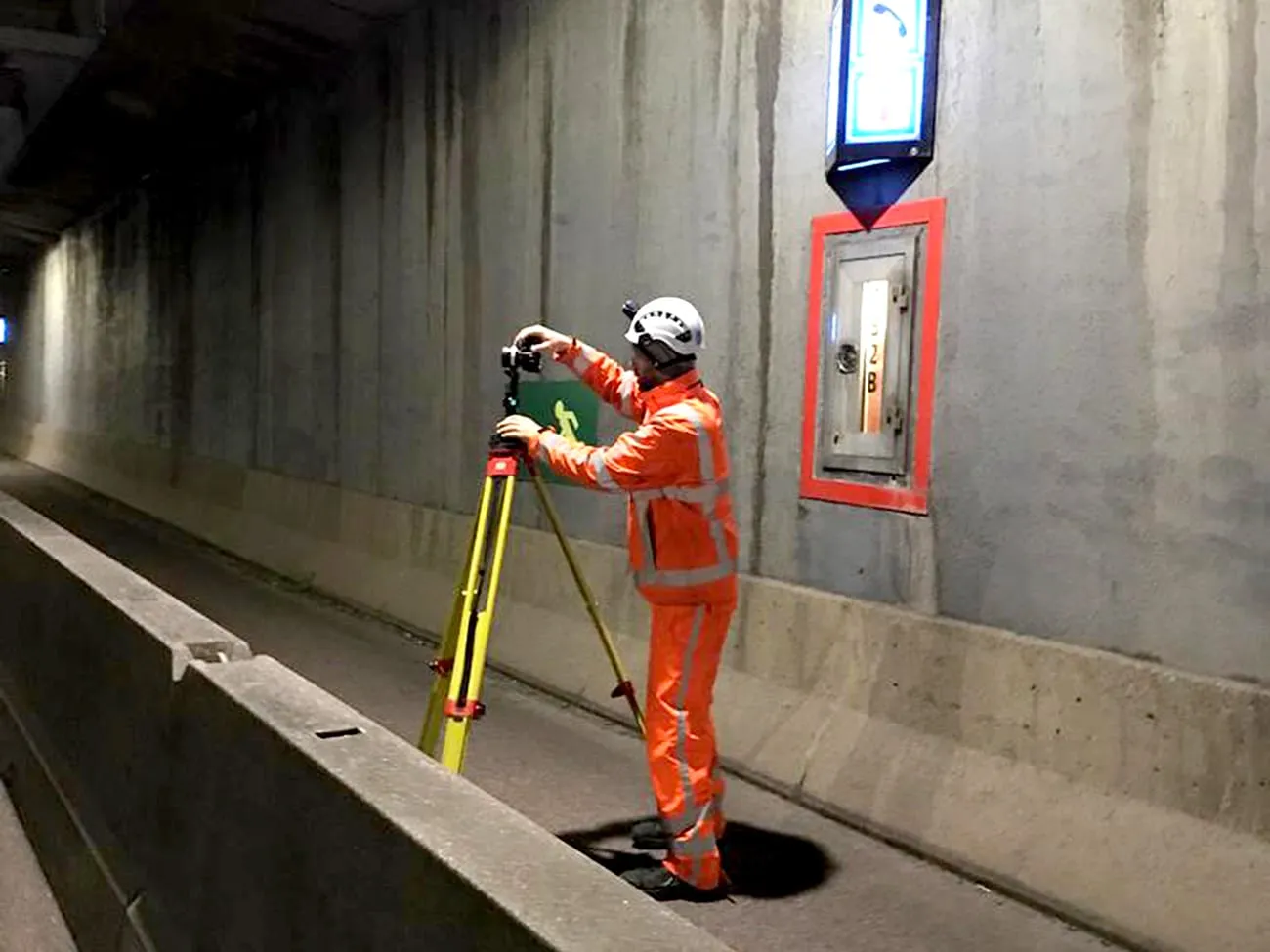
According to Schaefers, a major programme of tunnel maintenance will be needed in the coming years to ensure traffic flow and safety for decades to come. “It is important to have an accurate picture of a tunnel’s current condition, and to know whether any movement or deformation has occurred.” That may sound strange, but the Coentunnel, for example, has shifted about 40 centimetres to the south over the past 40 years. “That kind of information is crucial when you need to maintain and improve a tunnel.”
Schipholtunnel
Last year, GeoNext carried out a precise survey of the Schipholtunnel to provide a basis for the major maintenance work planned for the tunnel. “The six-kilometre-long tunnel has not been surveyed since it was completed in 1978,” says Schaefers. “ProRail asked us to create an exact copy of the tunnel as it currently stands, comprising two bores and platforms. The problem is that you cannot simply go in. The survey can only be carried out during a possession, when other parties are usually working there too. You can imagine that months of preparation are needed to ensure the survey runs smoothly. Using specialist software, we developed a geometric model so that we would be fully prepared on site. Nothing can go wrong during the survey, it requires almost military precision. Teams need to know exactly who is doing what, when and with which equipment.”
Point cloud
The entire tunnel, including its platforms, has now been surveyed using static scanners. “By standardising the data capture and processing workflow, with every activity coordinated down to the smallest detail, we were able to carry out the entire process as a one-piece flow,” says Schaefers, looking back with justified pride. “All visible objects in the tunnel, such as the fans, signage, track centreline, ballast, cables and pipes, and so on, were also surveyed precisely. All the survey data was processed as a whole. This enabled us to produce a homogeneous point cloud with demonstrable quality. ProRail was delighted with the result. Contractors now working in the Schipholtunnel are using the survey data we collected for their design and construction plans. The great thing is that those contractors are now asking us to create a Digital Twin from the point cloud. Capturing data is one thing, making it fit for purpose is a specialised skill.”
GeoNext is currently also working on tunnels managed by Rijkswaterstaat, including an immersed tunnel, as well as for ProRail. “Unlike ProRail, Rijkswaterstaat expects a fully developed Digital Twin.” GeoNext is carrying out this work together with Movares.
Question about this story? Ask your question
Keep following this
Get an email when a new story is published. No account needed.
- ThemeUnderground construction
- SubjectNews







