









Robust tie cables for jointless transitions
Text Armand LandmanImage Carl Stahl
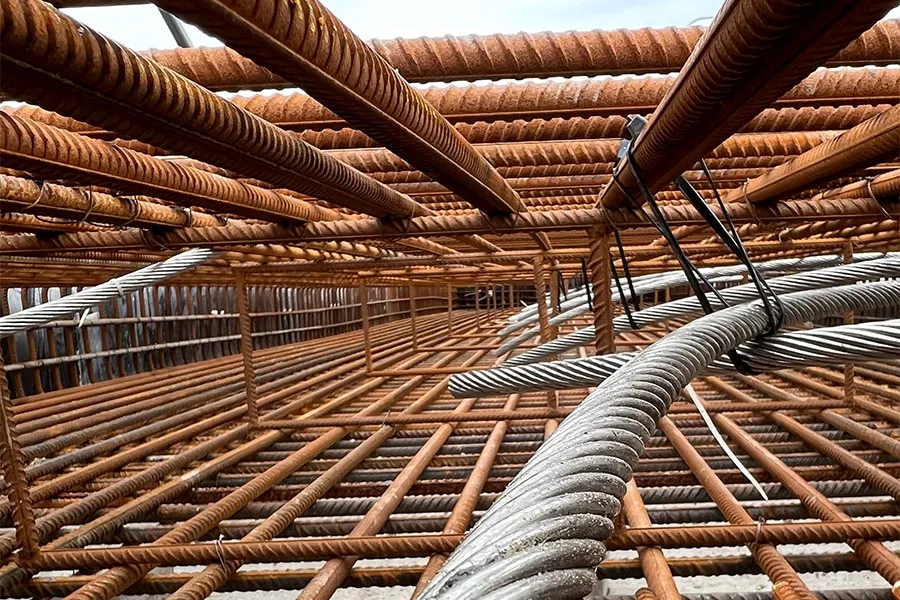
Jointless transitions are an increasingly common technique in the construction of structures such as bridges and viaducts. The different sections are joined without joints. The technique involves applying a thin layer of elastic material, such as rubber or plastic, to the ends of the sections, which are then bonded or clamped together.
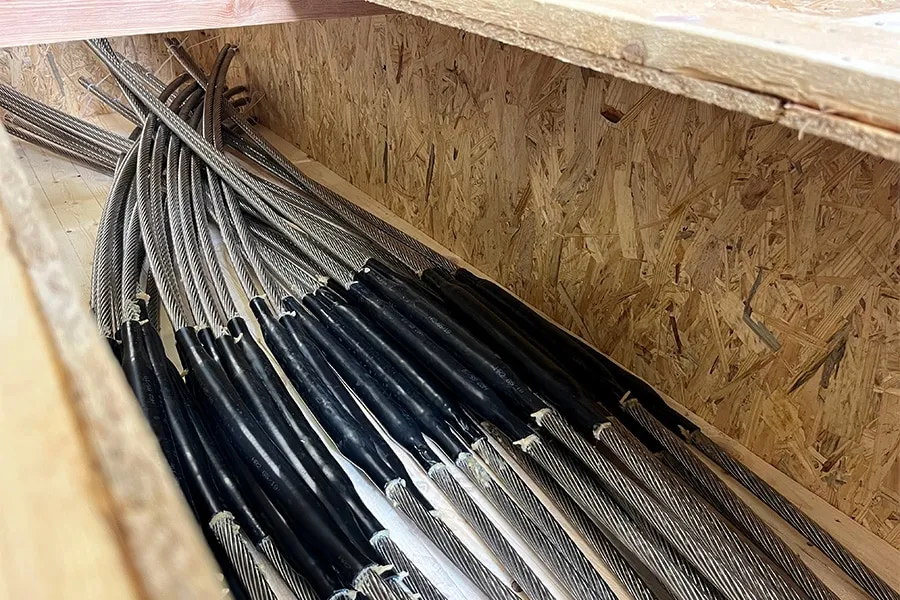
This creates a continuous structure that is better able to withstand temperature fluctuations, vibration and deformation. It offers several benefits, including greater durability, less maintenance, reduced noise and improved aesthetics.
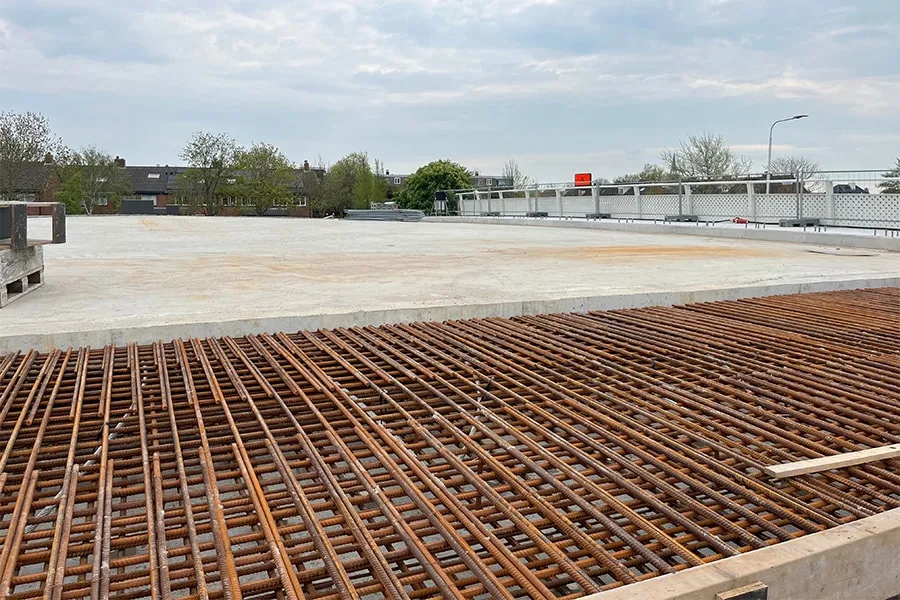
The reason for constructing jointless transitions between the abutment and the approach slab is to prevent cracking where the approach slab joins the abutment. Structurally connecting the abutment to the deck creates an integral structure without expansion joints or bearings. This results in lower maintenance costs and less noise.
Compressive forces
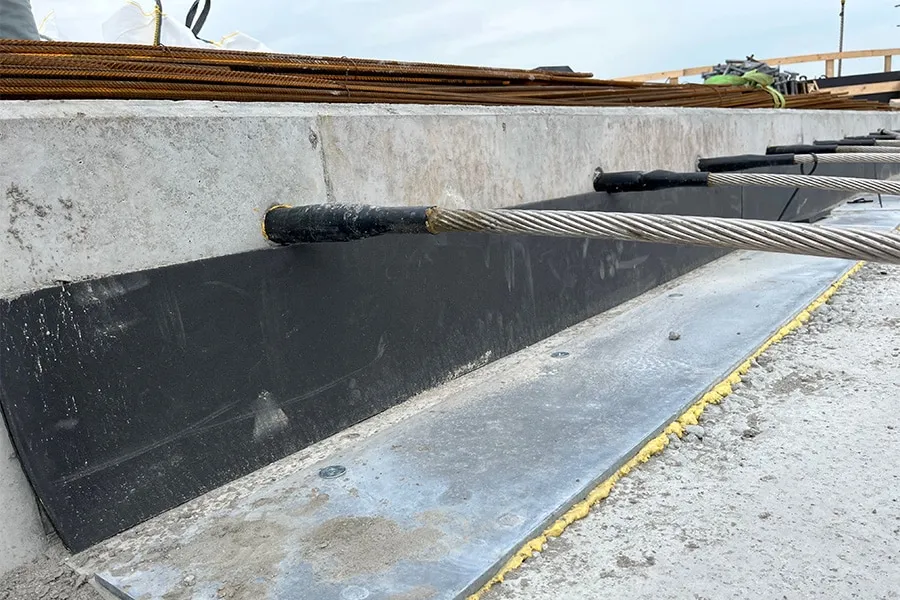
The disadvantage of this type of construction, however, is that deformation and movement of the structure must be accommodated by both the asphalt and the embankment behind it. The approach slab is connected to the deck by a structural connection, a stainless steel cable, which allows some movement of the slab without generating significant compressive forces. These movements must be absorbed by a flexible system of specially designed asphalt with strain-distributing layers. The strain-distributing properties of this asphalt system prevent cracking in the top layer of asphalt.
In a jointless transition, there is minimal space between the abutment and the deck. The expansion gap between the deck and the abutment prevents the concrete from cracking, while the cables prevent the deck and abutment from shifting or settling, keeping everything in place.
Stainless steel cables are used to connect the different sections. These cables connect the approach slabs, located in front of and behind the structure (the concrete structure), to the rest of the concrete structure. This prevents the approach slabs from shifting if settlement occurs.
Specifications
As a specialist wholesaler of stainless steel cables and other products, Carl Stahl makes things easier for road builders by supplying these cables as ready-to-use products. They are manufactured in full accordance with the technical specifications set by Rijkswaterstaat.
Carl Stahl specialises in plastic rope, stainless steel cables and cable nets, available made to measure, on reels, in batches or as individual items. “We place great importance on adding value for our customers,” says Jennifer Swagers. “All our materials are supplied in bulk and often on reels. Specifically for jointless transitions, we manufacture custom stainless steel tie rods, 3.50 metres long, in our workshop. In accordance with Rijkswaterstaat specifications, the cable has a diameter of 22 mm and consists of 1×19 wires twisted together. This creates a fairly rigid ‘structure’ that does not bend easily. We then apply Densoband over a 600 mm length in the middle of the cable, inside protective plastic heat-shrink tubing. This is designed to absorb stresses caused by rotation in the deck. These preparations result in a complete product that is ready for immediate use by the road builder.”
As mentioned, the cables have a diameter of 22 mm and consist of 1×19 wires, which makes them fairly rigid. 6×36 cables are also requested occasionally, but these are less rigid.
Question about this story? Ask your question
Keep following this
Get an email when a new story is published. No account needed.
- ThemeExtending the life of roads and civil engineering structures
- SubjectNews







