









Reused wind turbine blades perform as a fully fledged noise barrier
Text and images Rijkswaterstaat
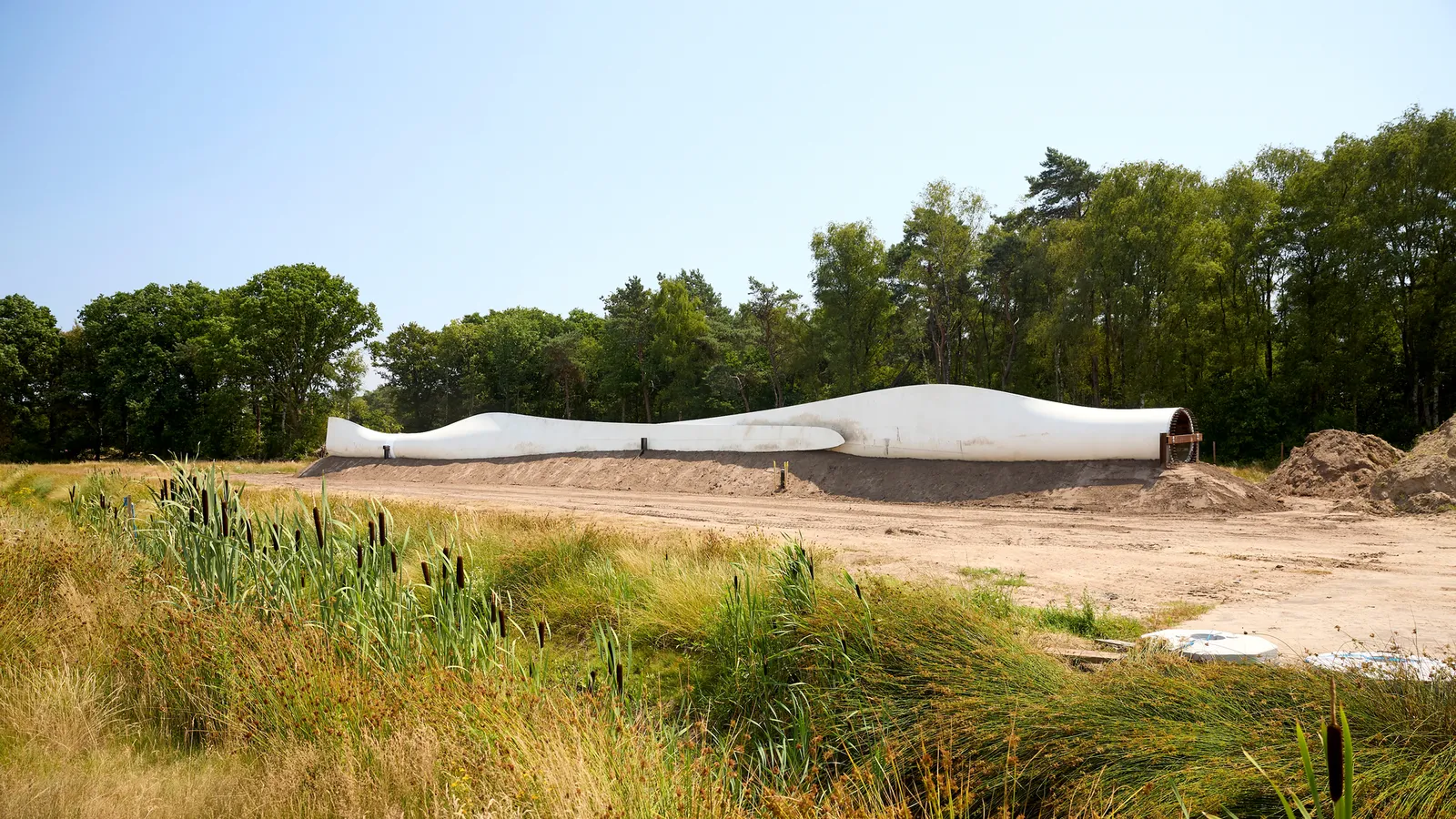
Six months after its unveiling, the Blade Barrier at Rijkswaterstaat’s test site is demonstrating that reused wind turbine blades could provide a credible, circular alternative to traditional noise barriers. Initial measurements show that the innovative barrier achieves noise reduction comparable to that of a standard concrete noise barrier.
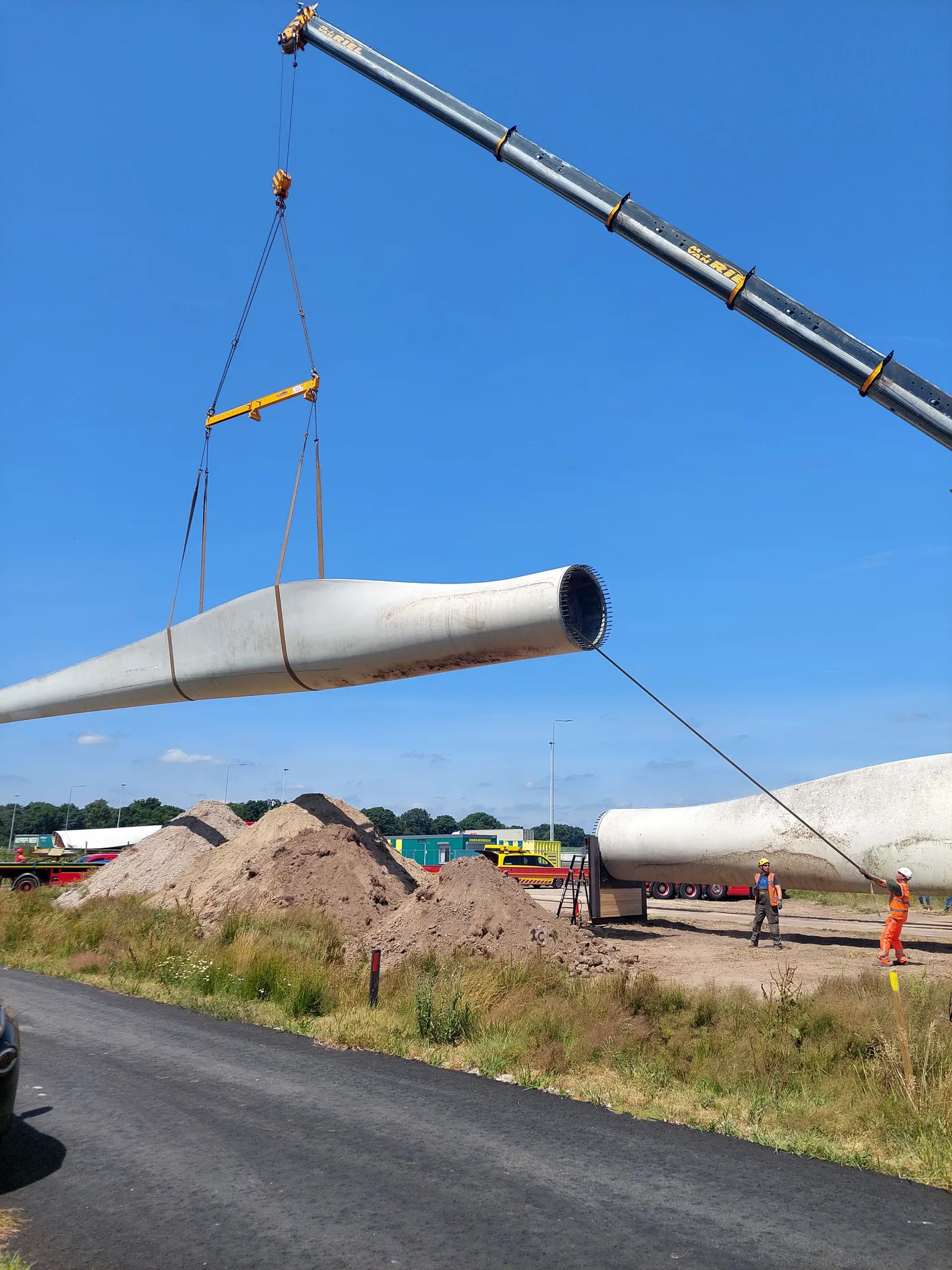
The Blade Barrier was unveiled on 2 July 2025 as a world first for the Netherlands: the first noise barrier built from decommissioned wind turbine blades. The 60-metre test installation runs alongside the A58 near Oirschot and is being monitored until the end of 2026 as part of InnovA58, Rijkswaterstaat’s living lab.
Acoustic performance
Initial acoustic studies show that the Blade Barrier delivers good noise reduction. Built from two complete turbine blades and one section cut from a blade, the barrier varies in height from 3 to 4 metres. Evaluation using scientific models shows that its acoustic performance is comparable to that of a traditional noise barrier approximately 3.3 metres high. The acoustic study of the Blade Barrier was carried out by M+P and Demcon on behalf of Rijkswaterstaat.
Rijkswaterstaat is pleasantly surprised by the results. Willem Jan van Vliet, noise mitigation expert: “The results have made the barrier’s acoustic performance clear. We now know how to model it in a standard road traffic noise assessment.”
This means that one of the key assessment criteria, acoustic performance, has now been demonstrated in principle. The installation in July 2025 also demonstrated that the barrier can be built. Monitoring will continue until the end of 2026, with results on the remaining criteria, financial impact, safety and maintenance, and sustainability, to follow.
An alternative to a growing waste problem
The Blade Barrier is an initiative by start-up Blade-Made, which focuses on the high-value reuse of wind turbine blades from decommissioned wind farms. These blades are difficult to recycle and are becoming a growing waste stream worldwide.
Using them as secondary construction materials in large-scale infrastructure assets offers the wind industry a sustainable solution for complex waste streams. The construction sector saves on cement and steel, thereby reducing its environmental impact. This benefits both sides. The noise barrier aligns with Rijkswaterstaat’s ambition to work in a fully climate-neutral and circular way.
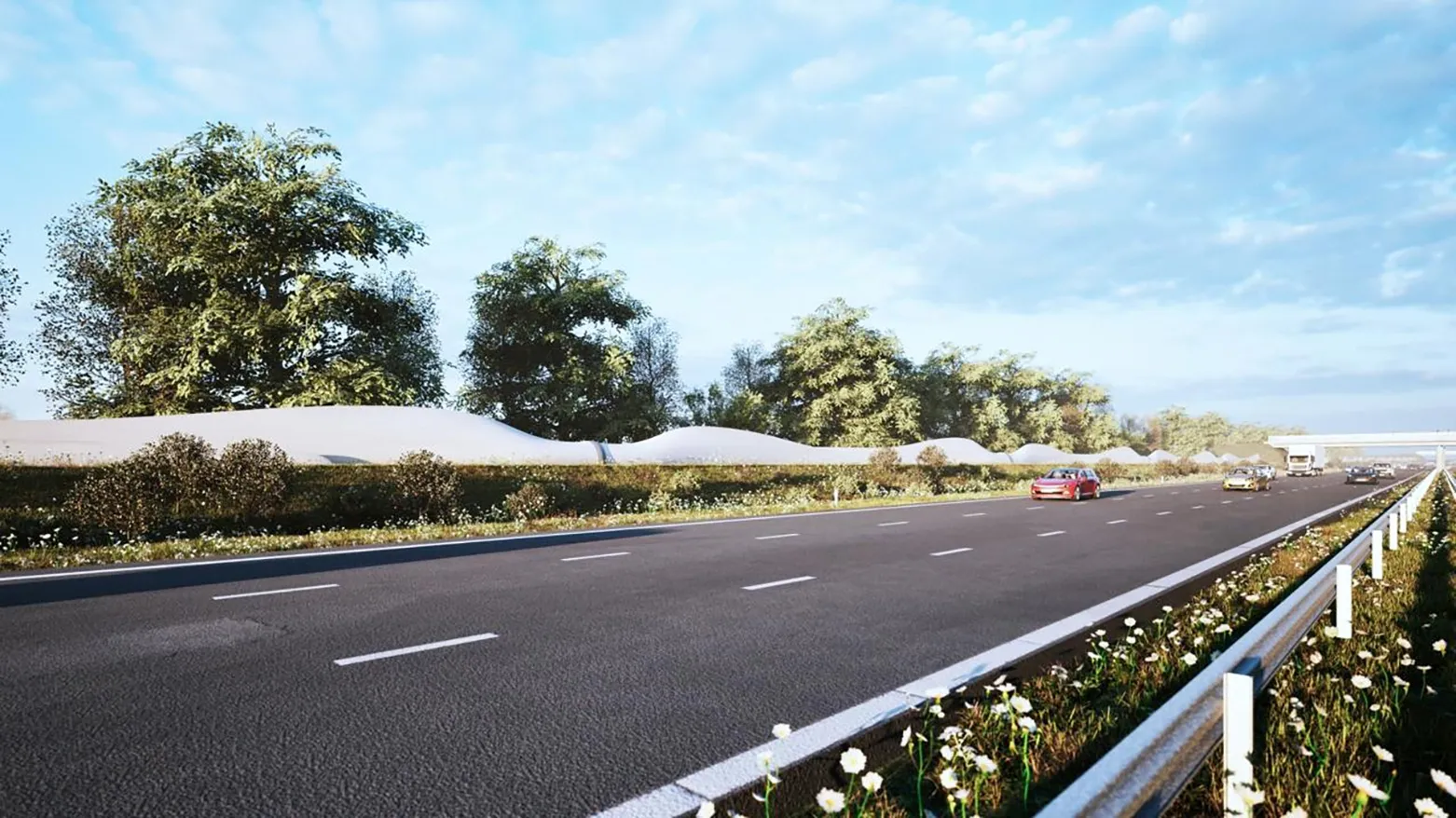
A living lab
Through the InnovA58 project, Rijkswaterstaat is contributing the test site, expertise and co-funding. The Blade Barrier supports the ambition to develop sustainable, circular infrastructure assets that can also be used in day-to-day practice. Following the first positive results, InnovA58 also aims to inform other road authorities, such as municipalities and provinces, about the potential of circular noise barriers. The Blade Barrier shows that reusing complex waste streams such as wind turbine blades can lead to fully functional, scalable infrastructure solutions with a lower environmental impact.
The test installation was delivered in collaboration with Dura Vermeer, which has been involved in its development and implementation from the outset. The province of North Brabant is also involved, through a financial contribution from the Circular Breakthrough Projects Programme.
Question about this story? Ask your question
Who worked on it
Blade Barrier in Oirschot
- acoustic assessmentM+P
- acoustic assessmentDemcon
Keep following this
Get an email when a new story is published. No account needed.
- ProjectBlade Barrier
- ThemeLower emissions and more reuse
- SubjectNews
- CompanyM+P
- CompanyDemcon







