









Prestressing systems crucial to maintenance of movable bridges
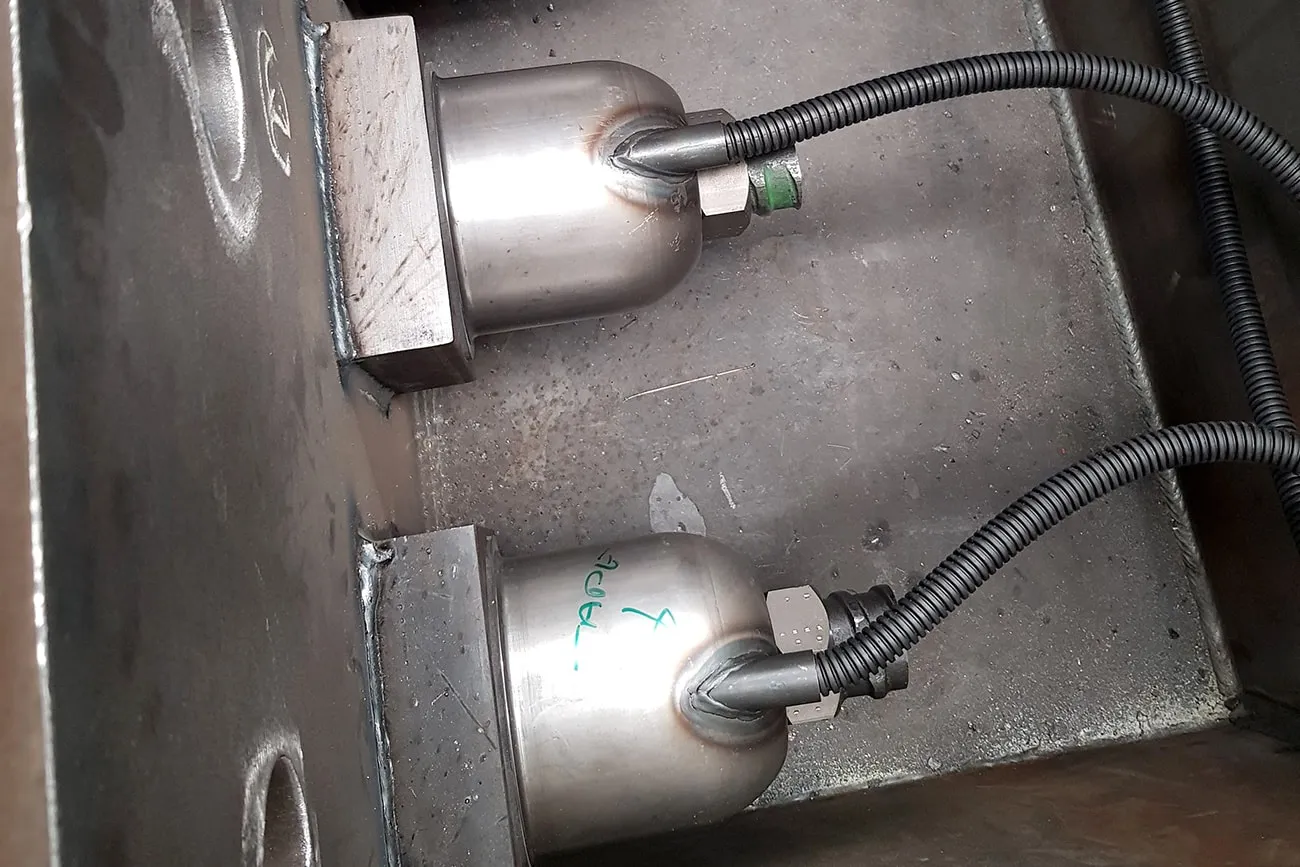
A significant proportion of the movable bridges in the Netherlands are ageing. Built during the post-war reconstruction period to standards that are now outdated, they are in need of a major upgrade. In many cases, the pivot points and bridge leaves are being replaced to meet current design methods and capacity requirements. This results in different dimensions that do not match the historic concrete substructures. DYWIDAG’s prestressing systems can overcome this ‘problem’ too.
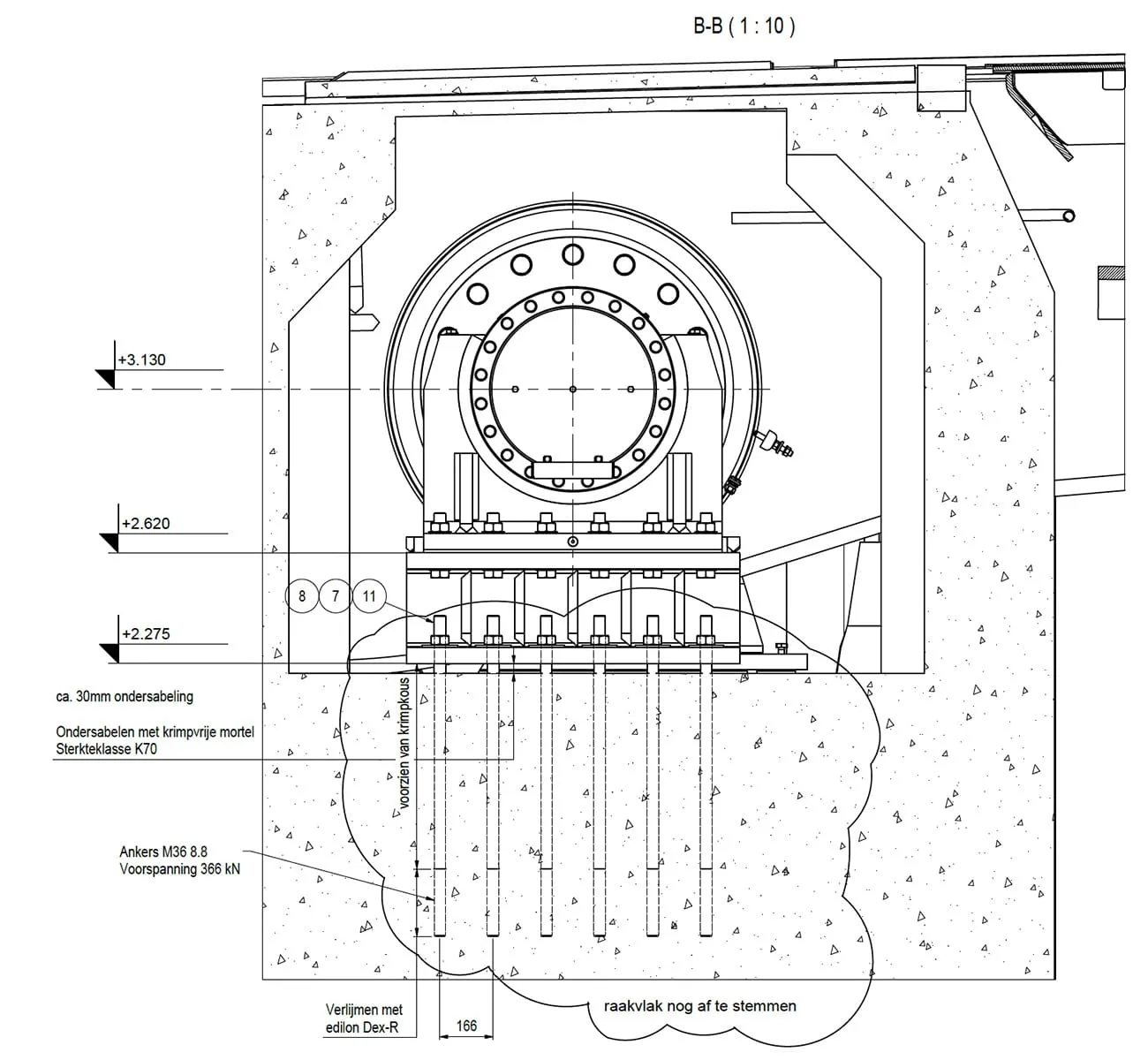
Bridges are designed for a service life of 100 years. Most bridges in the Netherlands were built in the 1960s and 1970s. Traffic has changed considerably since then. The higher loads and heavy traffic volumes have also affected the condition of the country’s civil engineering structures. We are therefore on the eve of a major renovation programme. In fact, work is already under way on a number of movable bridges. DYWIDAG’s prestressing systems have an important role to play in this work.
Prestressing anchors
When the entire operating mechanism is replaced, anchoring it to the concrete substructure often presents a challenge, explains Robert Jansen of DYWIDAG. “Because of the more stringent standards, the new pivot point is generally a different size. In addition, the anchors securing the steel shoe to the concrete substructure no longer meet current standards. A new anchoring system therefore has to be designed. The forces involved are high, because the entire bridge is supported at the pivot point. Space is also limited. For historical reasons, the concrete substructure is left untouched. We then drill holes in it to suit the new dimensions. Our prestressing anchors are installed in these holes and bonded along their lower section. The upper section forms the free length. The new operating mechanism is then installed, the nuts are fitted and the assembly is tensioned to achieve the required forces.”
According to Jansen, the space available for DYWIDAG to tension the anchors is extremely restricted. “This calls for constant coordination between the steelwork contractor, the main contractor, the lead structural engineer and DYWIDAG as the anchoring systems specialist. It is a fascinating and, above all, iterative process to develop a suitable solution from a handful of key figures. That is exactly what we do best. Our anchoring systems take over where others stop. As mentioned, the forces are high. For this type of operating mechanism, a sustained force of between 30 and 40 tonnes per bar is required. That is no problem for us. And if the concrete substructure is not strong enough, we can reinforce it too, for example by anchoring a pivot point right through the structure. We do not shy away from a challenge.”
Question about this story? Ask your question
Keep following this
Get an email when a new story is published. No account needed.
- ThemeExtending the life of roads and civil engineering structures
- SubjectNews







