









Piling was not an option here. We made our name in the hard ground of southern Germany’s geology
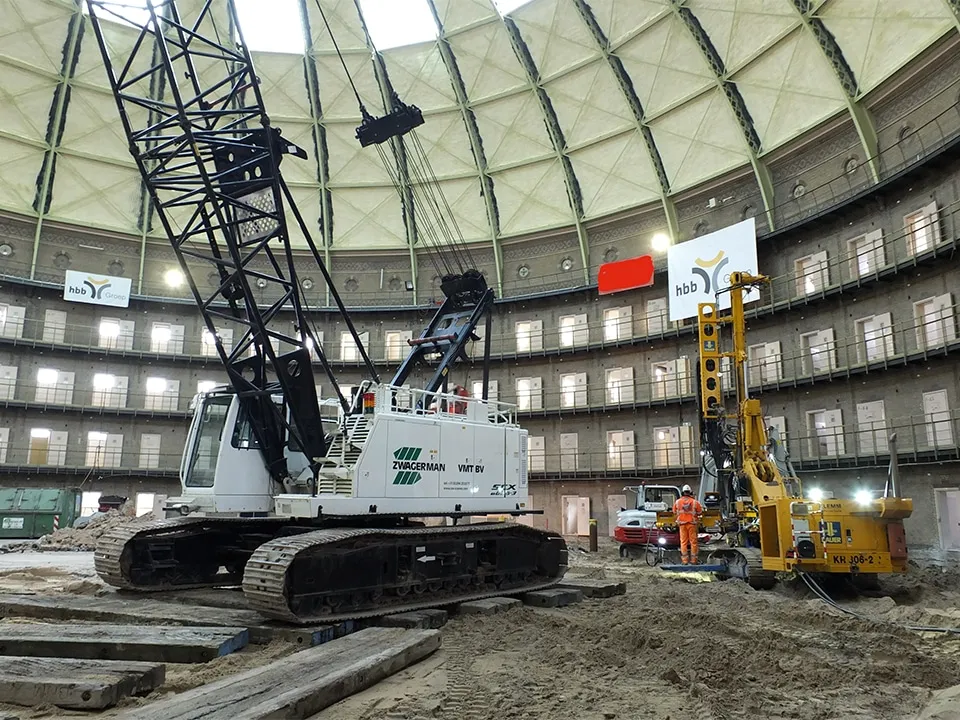
BAUER is a world-renowned name. Its Dutch subsidiary was established in 2003. Since then, Bauer Funderingstechniek has also been involved in major foundation projects in the Netherlands, including Spoorzone Groningen, the Blankenburgverbinding, the new shipyard for De Vries XL and underground car parks.
BAUER Funderingstechniek, based in Mijdrecht in the province of Utrecht, is the Dutch subsidiary of the internationally active BAUER Group. The BAUER Group’s head office is in Schrobenhausen, Germany. With turnover of €1.6 billion and more than 11,000 employees, the BAUER Group is a global leader in foundation engineering and foundation equipment.
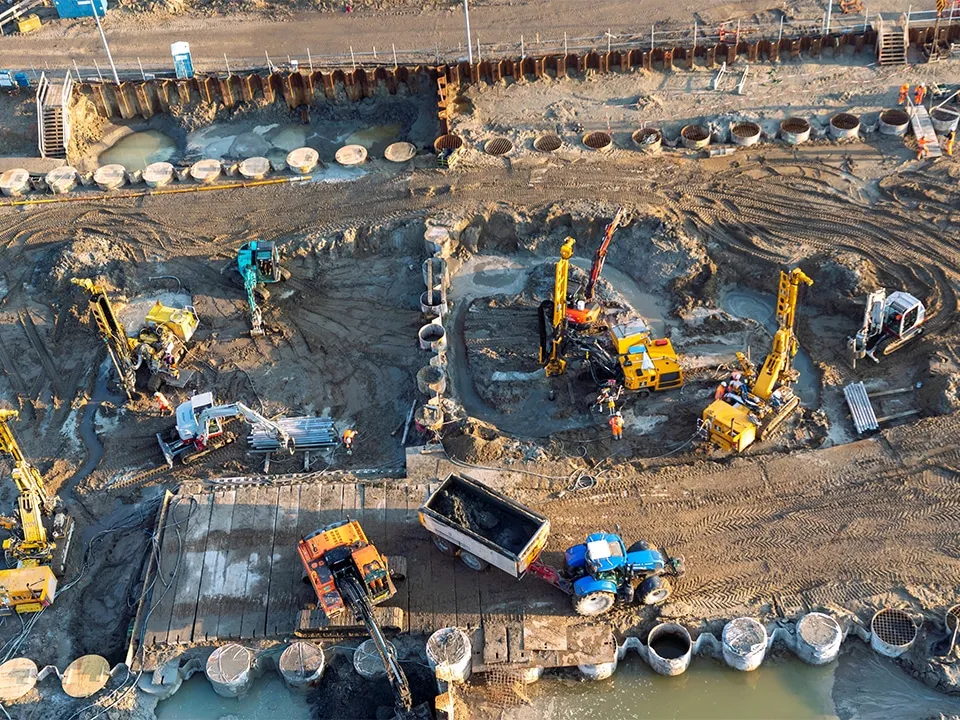
At the forefront from the outset
2003 was an ideal year to set up a subsidiary in the Netherlands. The economy was booming and construction was in full swing. As the number of inner-city construction projects grew, so did demand for specialist foundation techniques. “There was a particular need for vibration-free techniques and foundation piles that could be installed at greater depths,” says Eelco van der Velde, director of BAUER Funderingstechniek. “BAUER already had considerable experience in both techniques. The soft ground in the Netherlands is very different from the hard ground in southern Germany, where piling was not really an option. This meant we were immediately at the forefront in terms of technology.”
GEWI piles: slender and strong
Our extensive experience and strong commitment to quality led to contracts for major foundation projects. BAUER contributed to the High Speed Line and the North-South Line, including underground metro stations in Amsterdam. “GEWI anchor piles were used on all these projects,” says Van der Velde. “These foundation piles are slender, have a high tensile load capacity and can be installed to depths of up to 65 metres. They are ideal for underground car parks and deep tunnel approaches,
where they resist the upward pressure of groundwater.”
Mixed-in-Place soil mixing
BAUER has been around for more than 225 years. The company has a rich history of countless inventions and innovations, including the diaphragm wall cutter. “BAUER is a family business, now led by the ninth generation. You can tell. The subsidiaries are given a great deal of trust and scope to develop by the parent company. This has also led to the development of grout anchors and Mixed-in-Place soil mixing. This latter technique is used to strengthen dykes and create foundation elements and structural walls by adding a binding agent, usually cement, to the soil.”
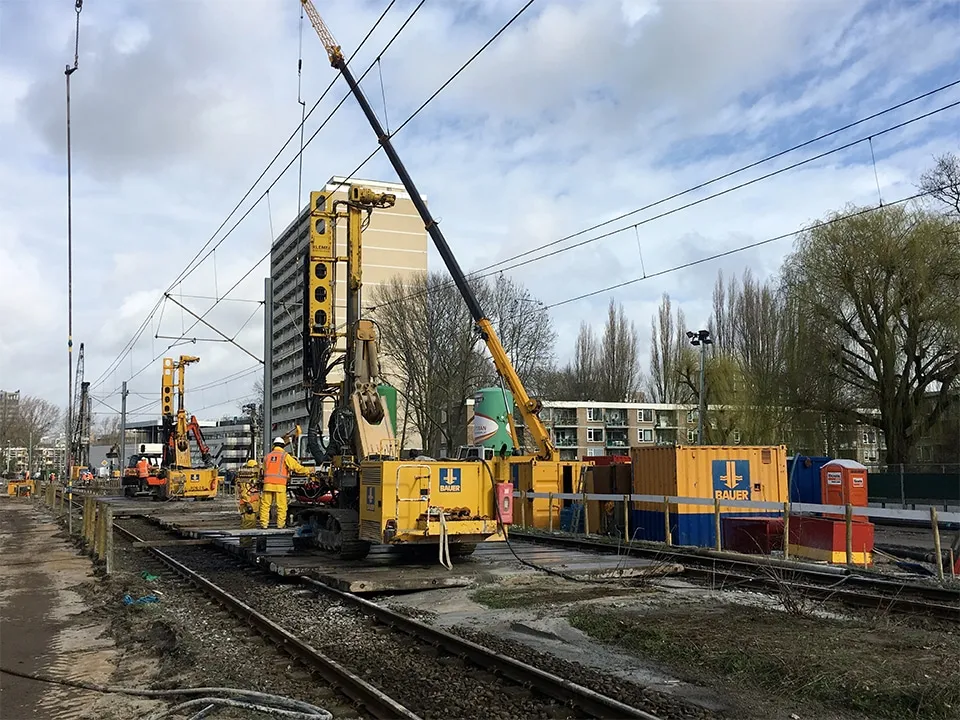
Always developing
“I doubt development will ever stop at BAUER,” says Van der Velde. “Our range of foundation techniques is extensive, covering vibration-free, bored and excavated techniques, with large-diameter bored piles, up to two metres in diameter, as the showpiece. They are used to support skyscrapers of the kind we know from Asia and the Middle East! BAUER has also developed and built the associated machinery in-house. This is one of the reasons we are now involved in resource extraction and the foundations for offshore wind farms. Our own team usually devises and engineers the solutions, but if it cannot, we have the support of head office. So it is always worth involving us at an early stage.”
Question about this story? Ask your question
Keep following this
Get an email when a new story is published. No account needed.
- ThemeUnderground construction
- SubjectNews







