









No circular economy without concrete maintenance
Text and images BetonOnderhoudsPlatform
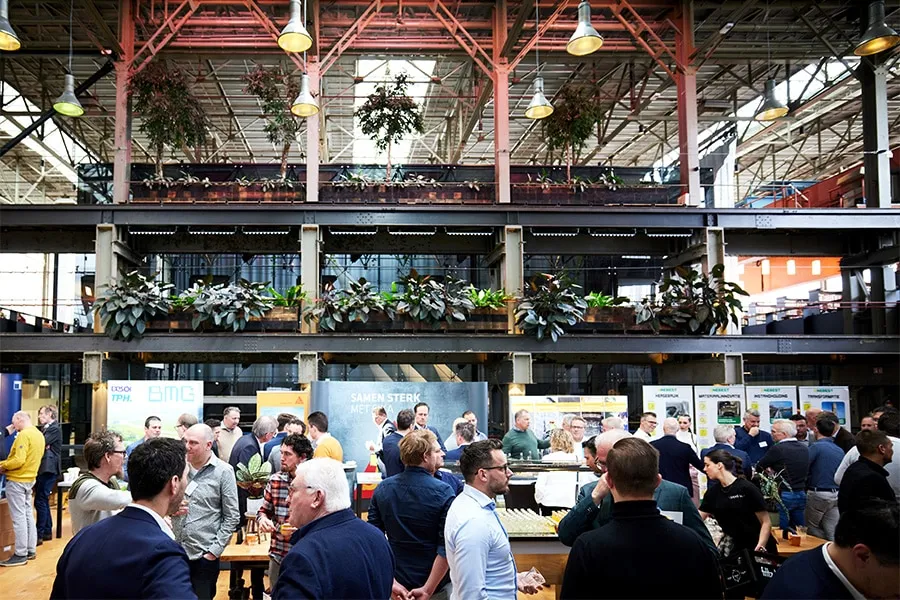
After organising a Concrete Repair Afternoon in the north of the country for several years, it was now the south’s turn. The first Southern Concrete Repair Afternoon was held on Thursday afternoon, 30 March, at the LocHal in Tilburg, organised by the BetonOnderhoudsPlatform.
The aim of the day was to show how sound investigation, maintenance, repair and strengthening of concrete structures contribute to the circular economy we are working towards. Rather than demolishing, preserve; create new possibilities through strengthening and the use of new techniques, with the slogan: ‘No circular economy without concrete maintenance’.
Visitors were welcomed with a sandwich lunch. Following opening remarks from BOP chair Anthony van den Hondel, who also moderated the event, the various speakers took the floor.
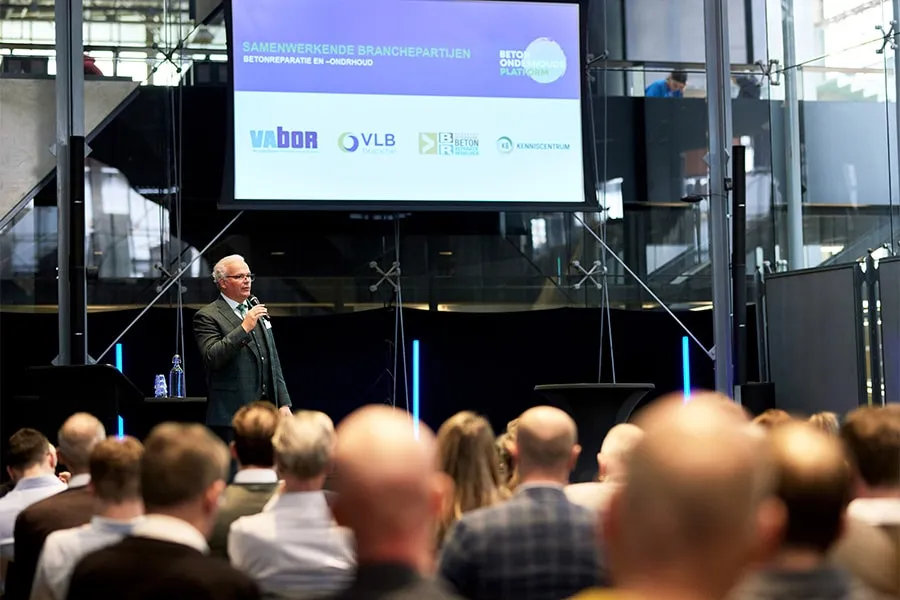
The climate is changing. What now?
After Patrick Dewez of Solid Services gave us an insight into the history of the venue and surrounding area where the Concrete Repair Afternoon was held, Gerard van der Steenhoven of the University of Twente and former chief executive of KNMI spoke about climate change resulting from global warming caused by rising CO2 levels in the atmosphere. It became clear that there is a causal link between rising temperatures and greenhouse gas emissions, and that the construction industry in general, and the concrete sector in particular, can certainly play an important role in reducing them. One thing to bear in mind is ‘hidden emissions’. For example, look beyond replacing cement in concrete to include your own production and mobility, purchased electricity and goods, and the use and disposal of products sold.
How ecologically intelligent are you?
This was the question posed by author and change management professional Daan Fousert. Ecological intelligence means using what you need without causing harm, or repairing damage to nature, the Earth and humanity. Sustainability is one part of this. We can replace 30 to 50% of the cement in our concrete with used cement, limestone filler or chemical admixtures. That is obviously fantastic, but repair should really be the preferred option, because demolishing buildings also destroys the energy that went into constructing them.
Reuse in practice
Wouter van den Berg of Nebest spoke about ‘Closing the Loop’, a consortium developing circular solutions and innovations to give existing civil engineering structures a second life as new structures. A number of practical examples were discussed, including the reuse of the girders beneath the A9 at Keizer Karelweg in Amstelveen. Martijn Broekman of Bo-Ex presented a housing example, the Ivoordreef plan in Utrecht, where the initial focus was on identifying which components from the existing buildings could be reused in the new plan. As in Wouter van de Berg’s example, taking stock and ‘harvesting’ proved to be among the most important steps in the process. The inventory also considered whether components that could not be used in the new plan might be reused in another project. When harvesting materials, the demolition contractor should be involved at an early stage to establish what is and is not possible.
Maintenance and repair in practice
Two market segments were covered: industry and housing. Pascal van Montfort of Royal HaskoningDHV and Joep Lemmens of Sitech Services outlined the challenges they face in repairing and renovating around 7,000 columns forming part of the pipe racks at Chemelot, so that this infrastructure can remain in use for another 25 years or even longer. In the past, standard solutions were used, based on the insights, knowledge and benchmarks available at the time. New insights into maintenance are needed to develop the right solutions. These must be suitable for the site and broadly applicable. Comparing different innovative maintenance measures in a test area at Chemelot helps achieve this. The test area will identify the most effective maintenance measures to extend the service life by 25 years. The maintenance experts present were invited to propose sustainable solutions that would improve the performance of their assets.
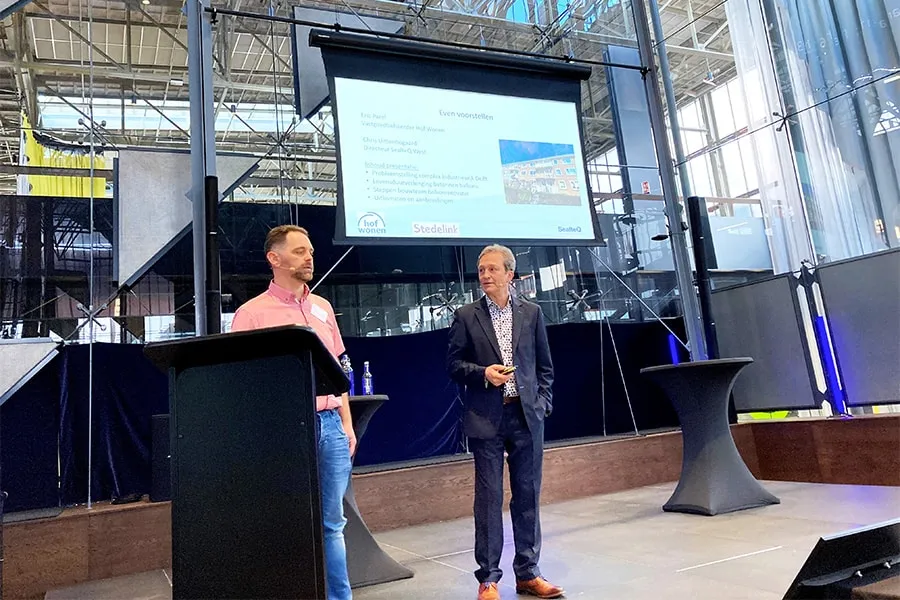
The housing case study brought together the client, Eric Parel, property manager at Hof Wonen, and the contractor, Chris Uittenbogaard, director at SealteQ West. The project involves extending the service life of 328 concrete balconies in an industrial district in Delft. Here too, conducting an inventory, guided by the principle that ‘what gets measured gets managed’, was crucial. The aim of the balcony renovation was to enable the homes to remain in use for another 15 years without major maintenance. Forming a construction team was key to the success of the renovation.
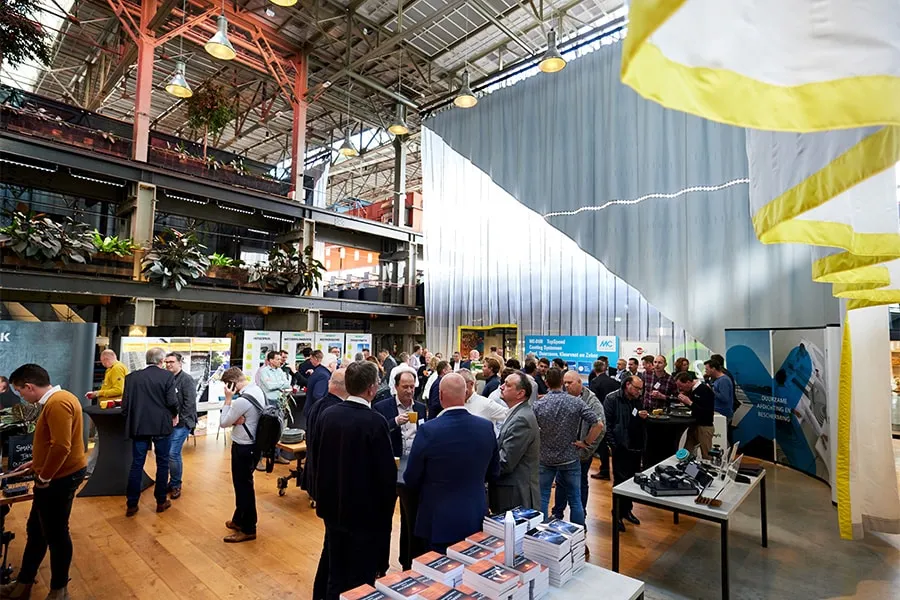
During the break and after the talks, there was plenty of time and space for networking in the networking area, where around 12 companies had stands, with refreshments provided. With a diverse range of speakers and topics, and good networking opportunities, it was a useful and successful afternoon for many.
Question about this story? Ask your question
Companies in this story

Keep following this
Get an email when a new story is published. No account needed.
- ThemeExtending the life of roads and civil engineering structures
- SubjectNews
- CompanyNebest BV







