









Modular Viaduct makes 2030 climate targets achievable
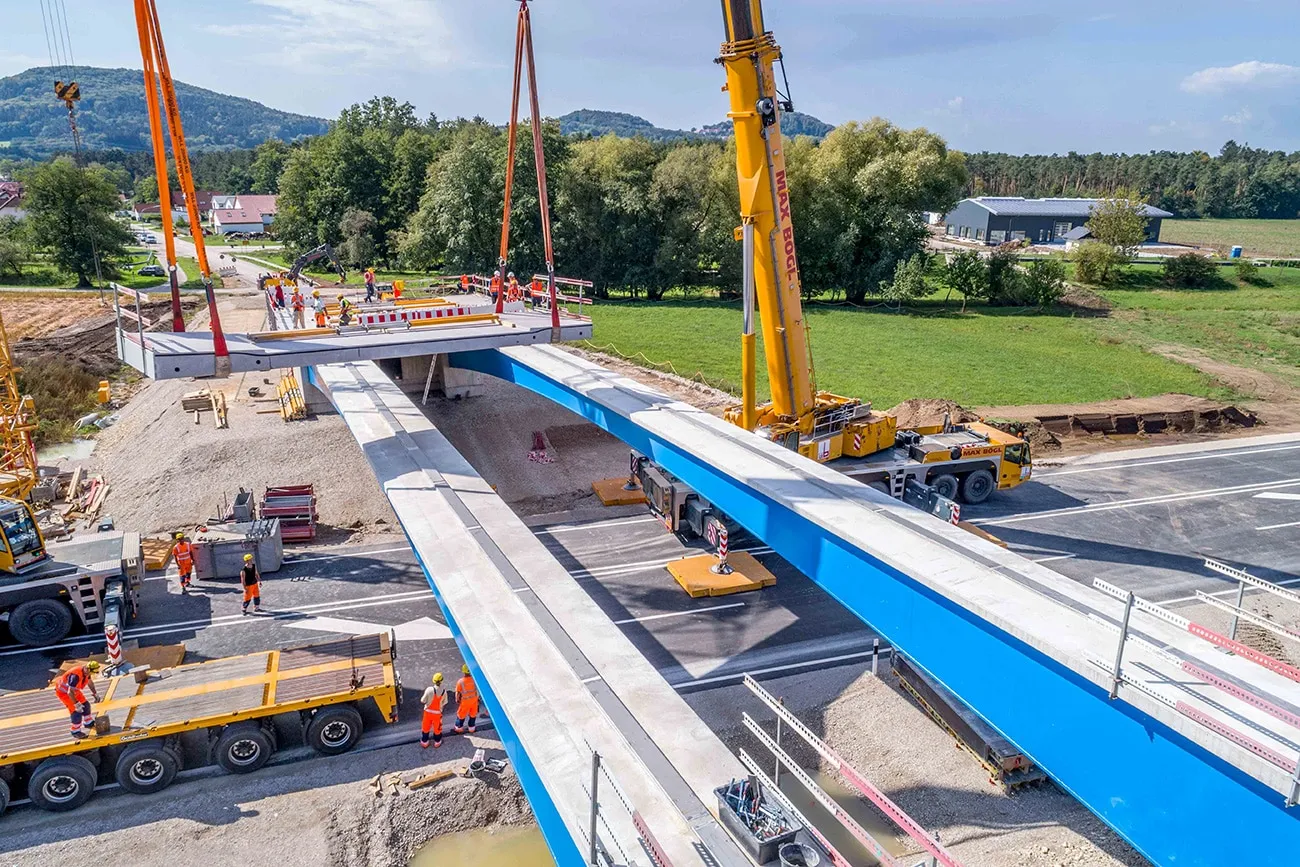
As a Dutch company, we have set ourselves the goal of reducing CO2 emissions by 55% by 2030 and becoming fully circular by 2050. The infrastructure sector is no exception. The new Modular Viaduct Bögl makes these targets ‘suddenly’ achievable. The concept won the Innovation Award at InfraTech 2023 earlier this year, and is also ideally suited to the major replacement task facing the Netherlands.
No asphalt, no joints, a (very) short construction time, easy dismantling and reuse: just some of the features of the Modular Viaduct Bögl. “From a sustainability perspective, in view of the shortage of skilled workers and the nitrogen problem, it is definitely an interesting concept,” says Mike Rijnbeek, project acquisition manager at Max Bögl Nederland. “The only challenge we still face is emissions-free installation. Fossil-free equipment in this class is not yet available, but it is only a matter of time.”
High-level reuse
The Modular Viaduct Bögl consists of abutments built as reinforced earth structures, with a span made up of steel-concrete beams and concrete deck slabs. “It is a complete bridge system made from precast elements, all of which we prepare in our factory,” Rijnbeek explains. “On site, all that remains is assembly. Because the deck slabs are ground to very precise tolerances, they fit together seamlessly. They are prestressed with a steel cable, creating a watertight, monolithic structure. This allows us to keep the structure slender (in other words, use less material, ed.) and avoid the need for joints or asphalt. Another major strength of the concept is that it enables reuse to a high standard. Taken together, this results in substantial life-cycle cost savings.” Rijnbeek therefore argues that life-cycle costs should be taken into account in tenders. “At present, the focus is purely on construction costs. It is only logical that life-cycle costs should also be included.”
Industrialisation and standardisation
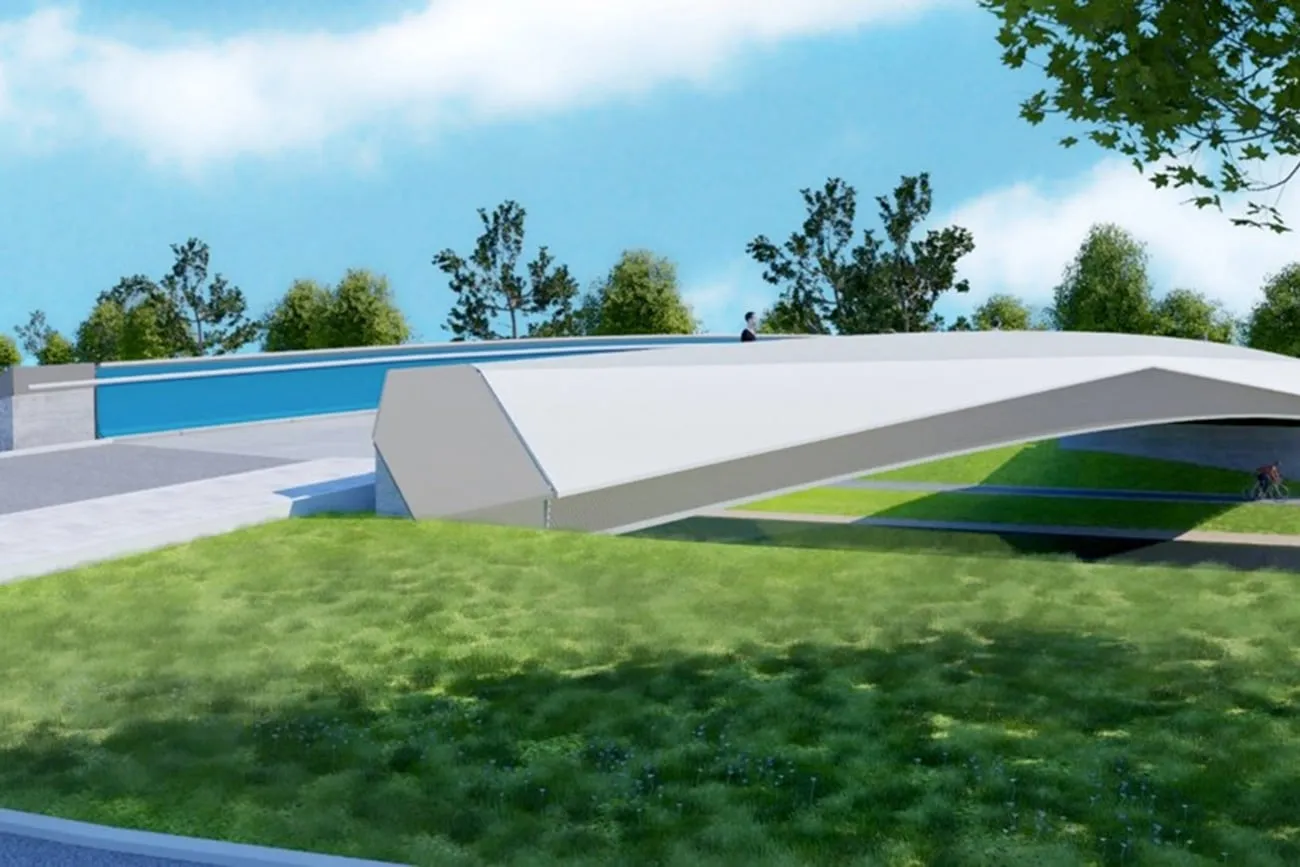
The economic service life of an average viaduct in the Netherlands is between seventy and eighty years. “The individual elements of the Modular Viaduct Bögl can easily be used for two life cycles,” Rijnbeek says. “And even after that, the elements have not reached the end of their useful life. A deck slab, for example, could then be used as a floor slab in a building. This product-focused approach is in Max Bögl’s DNA. We strongly believe in industrialisation and standardisation. The latter often has negative connotations, but standardisation actually makes reuse easier. That certainly does not mean everything has to look the same: there are many possibilities when it comes to parapets and edge elements (see artist’s impression, ed.). Serial production creates economies of scale and lowers production costs.” Rijnbeek sees considerable opportunities, particularly in the Netherlands’ major replacement programme. “How good would it be to procure in ‘bulk’? The more elements we can produce at once, the more cost-effective it becomes, both in terms of sustainability and production capacity. What’s more, our concept allows more viaducts to be built with a limited number of skilled workers. And disruption to the surrounding area and road users is significantly reduced.”
With four standard span lengths and two deck widths, Max Bögl can replace more than 85% of the current Rijkswaterstaat viaducts. “Because we produce the elements in series, we use far fewer raw materials. Over the first life cycle, we save 49% on materials compared with a traditional construction method. CO2 emissions over that first life cycle are as much as 70% lower,” says Rijnbeek. “And if we can also use fossil-free equipment for installation, there will be further savings. We therefore have high expectations for our Modular Viaduct Bögl, because we are already well positioned to meet the 2030 climate targets.”
Question about this story? Ask your question
Companies in this story

Keep following this
Get an email when a new story is published. No account needed.
- ThemeExtending the life of roads and civil engineering structures
- SubjectNews
- CompanyInfraTech







