









Maximum bearing capacity on weak ground
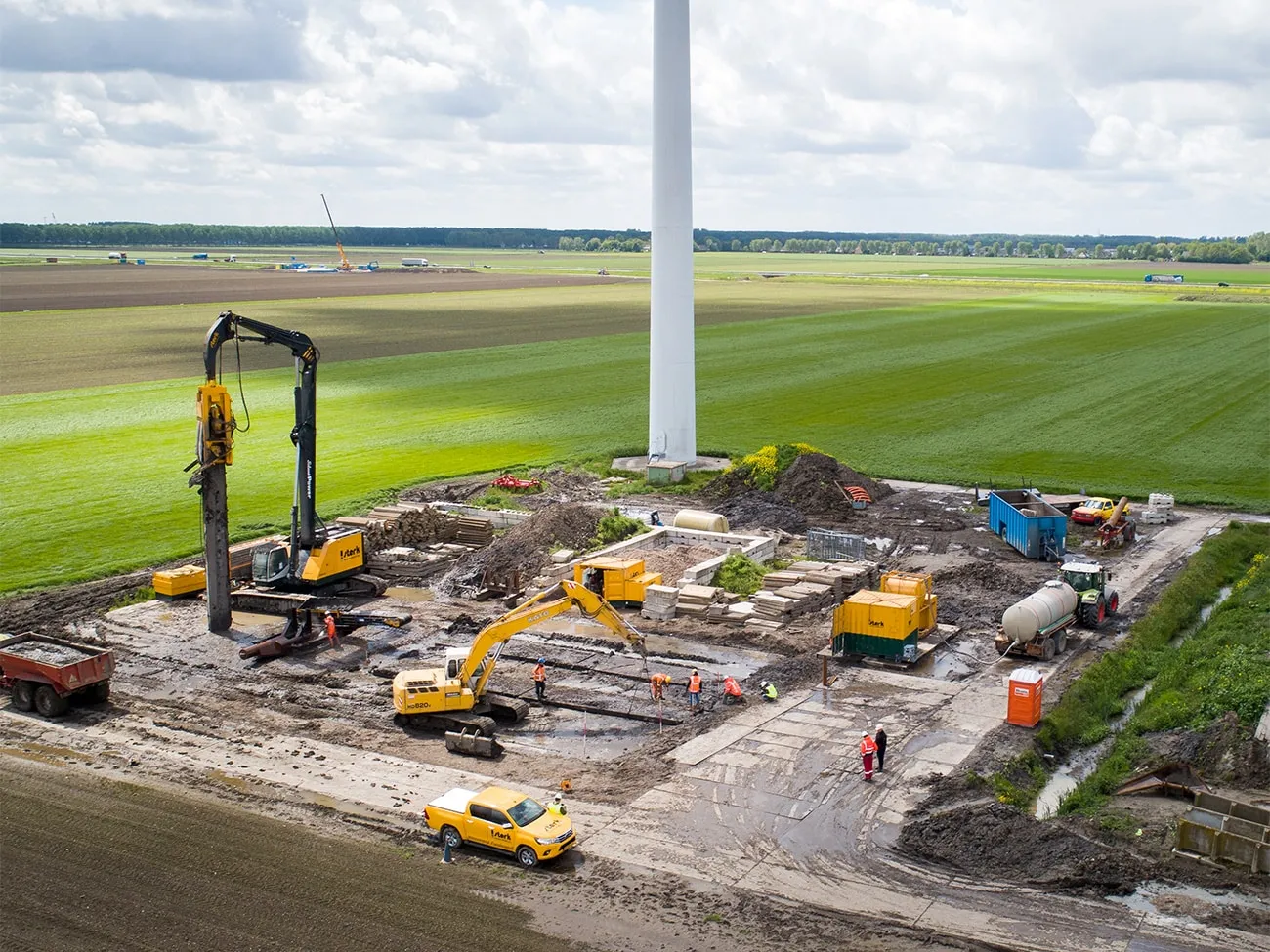
‘Nomen est omen’, as the Latin saying goes. In other words, a name is an omen. That certainly applies to the pooling of expertise by two specialist companies. Sterk BV and Mammoet Heavy Duty Pavements (HDP) joined forces to develop a solution to tackle the adverse effects of weak ground. The result was an innovative idea that has now passed its first real-world test with flying colours.
We speak to Peter van Halteren, director at Sterk BV, Ronald Kleinjan, director at Mammoet HDP, and Roel Brouwer, principal consultant and co-owner of Geobest. It is a compelling story about a solution made possible by bringing together expertise from different disciplines.
A solution to a universal problem
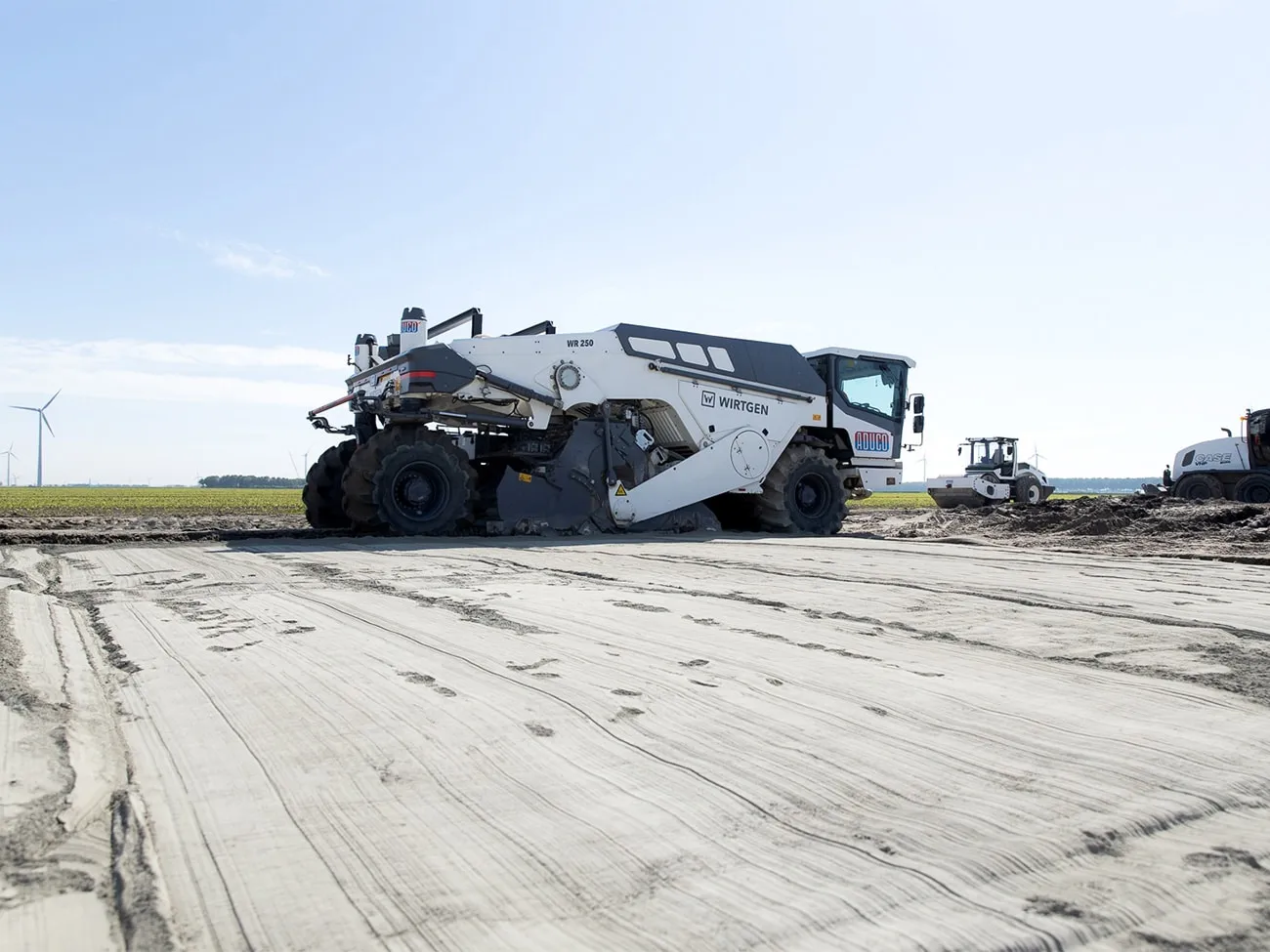
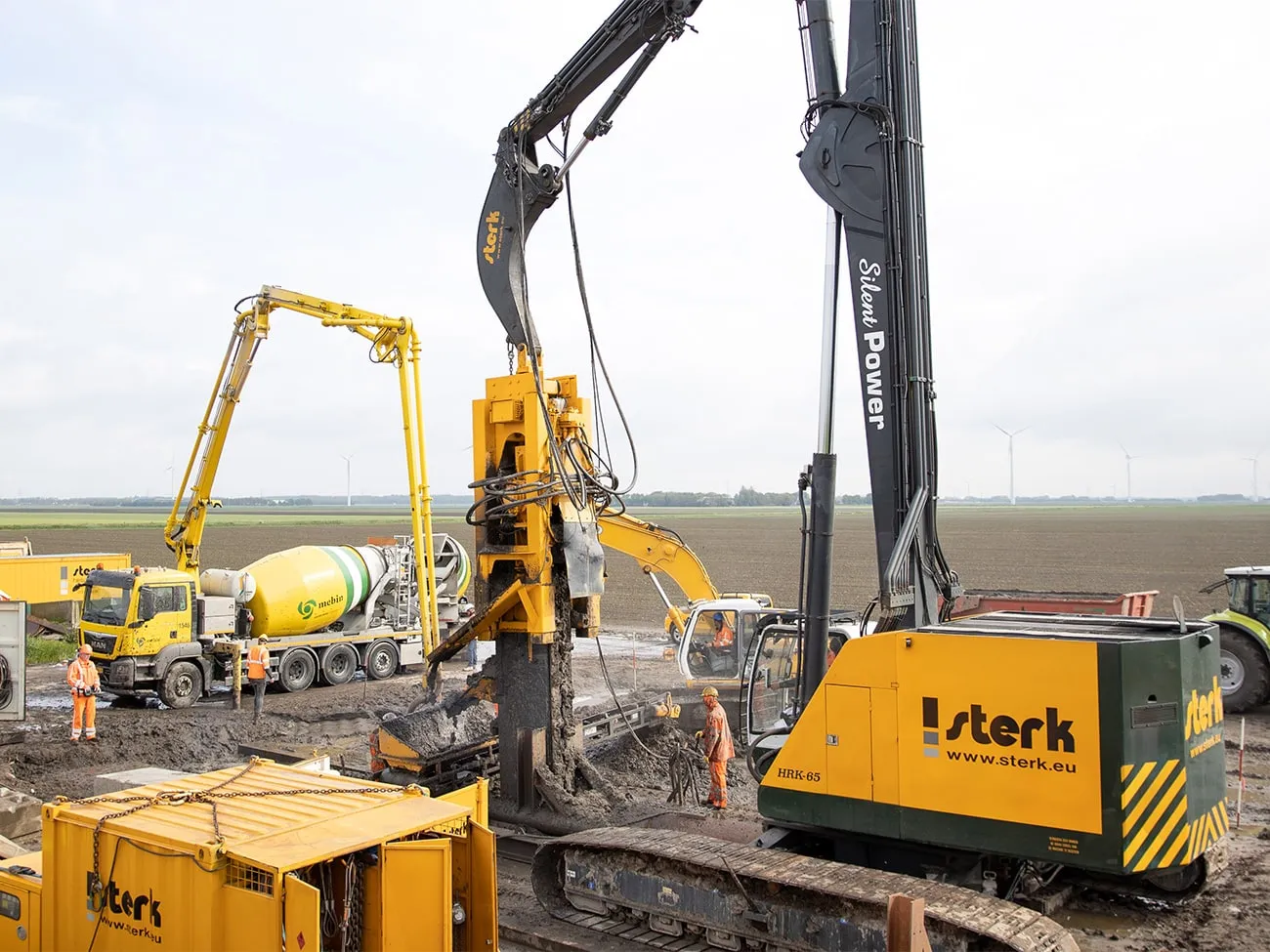
In the civil engineering sector, weak ground is a familiar challenge. Depending on how poor the ground conditions are, various solutions can be used to make the ground suitable for traffic and able to bear loads. These include reinforcement mats, road plates and so on. Problems really arise when the ground has very low bearing capacity and the load on it is high. One example is constructing crane hardstands on weak ground. Both Sterk BV and Mammoet HDP have their own solutions for increasing bearing capacity on weak ground. A former Mammoet employee brought the two companies together. Mammoet HDP offers the Enviro-Mat, a system that uses locally sourced soil, cement and an additive to create a load-bearing layer. Compared with alternatives, it saves time, materials and money, while reducing a project's environmental footprint. The Enviro-Mat can be used for both temporary and permanent surfacing of roads, storage yards and crane tracks. Mammoet has successfully deployed the Enviro-Mat worldwide. Roel Brouwer says: “In the Netherlands, the Enviro-Mat can be used in many cases without preloading, unless the soil is too compressible.” Sterk has its own technology, the E-wall. A special milling machine cuts a trench in the ground. The soil is removed completely and the resulting trench is immediately filled with a material of choice, forming underground walls. Peter van Halteren says: “Combining the Enviro-Mat and E-wall creates maximum bearing capacity.” The two separate techniques complement each other perfectly. “We have the underground walls under control thanks to the use of controlled materials such as concrete, bentonite, sand, gravel or even locally sourced soil mixed on site.” Roel adds: “The test showed that using E-walls down to the sand layers minimises settlement. Adding the Enviro-Mat to the E-wall creates ground on which a crane hardstand can be built without any problems.”
From theory to practice
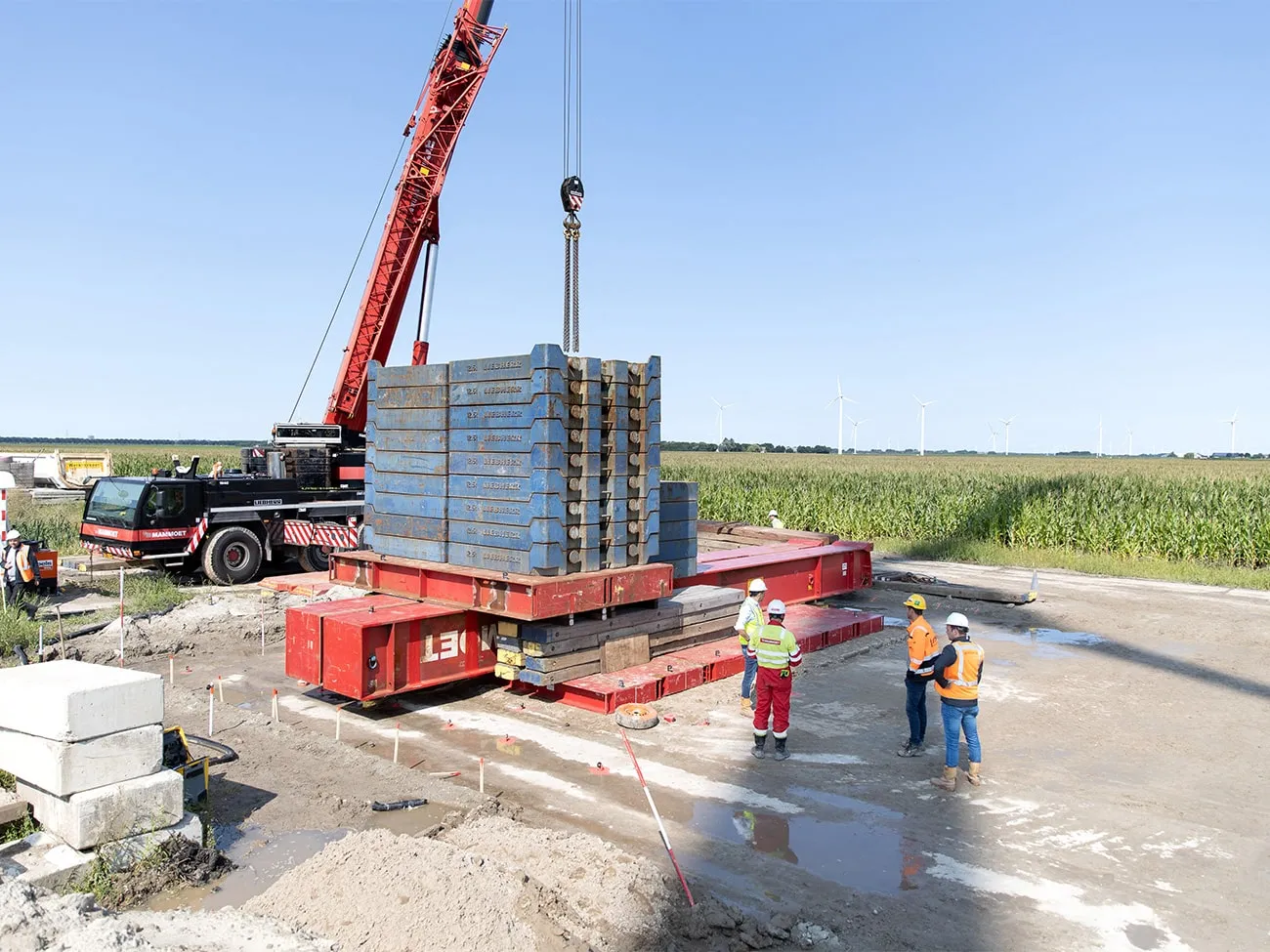
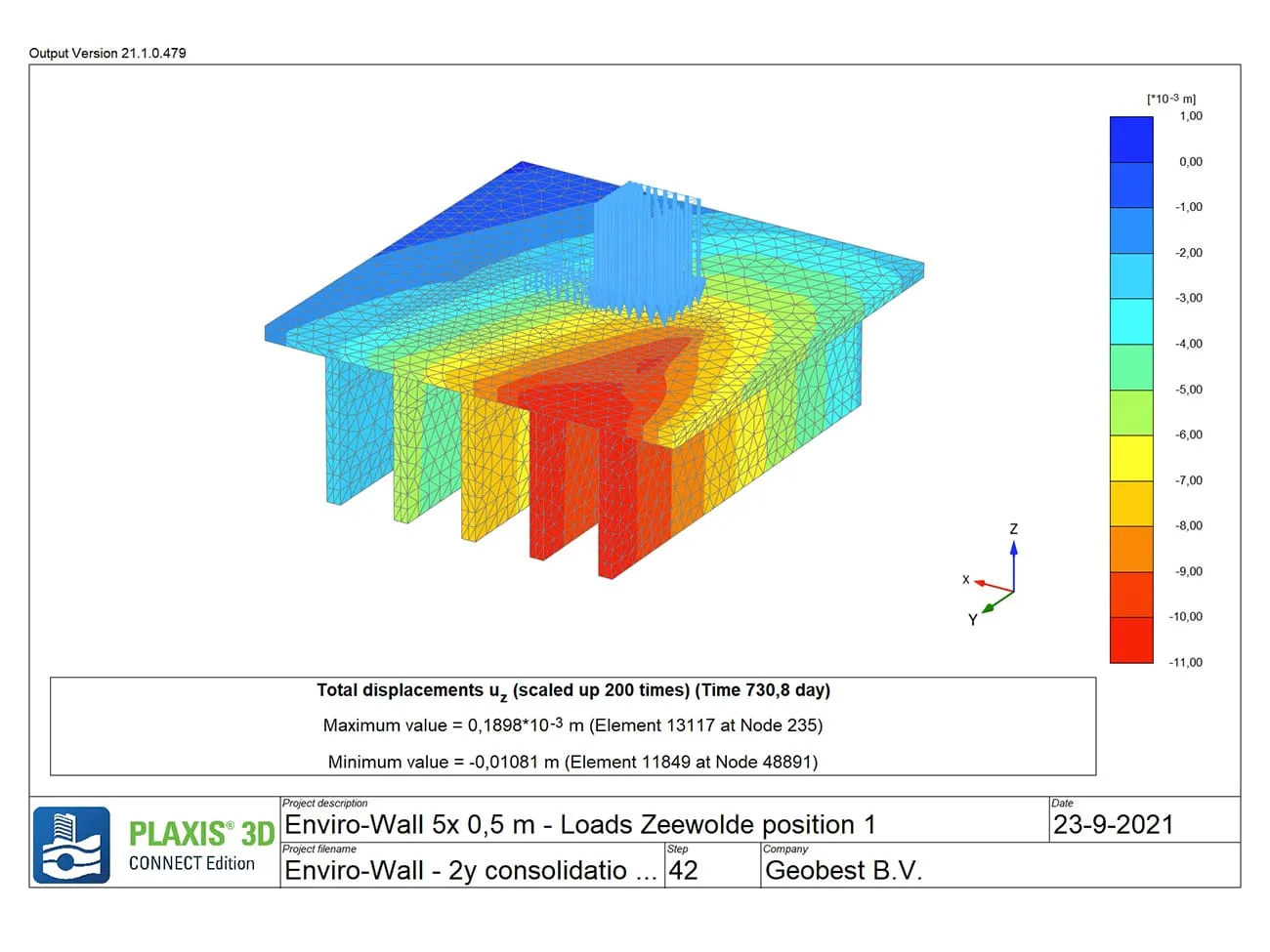
The innovative solution had its first real-world test in Zeewolde, where crane hardstands were needed for the construction of wind turbines on very weak ground. “We knew in theory that it should work,” says Peter van Halteren. “We simulated the models in software, and the results were promising. In practice, we carried out a test and subjected it to an extremely high load, while carefully monitoring everything, of course.” Roel adds: “We compared the good numerical results from the simulation with the data from the practical test. We were then able to explain and reproduce the entire test in Plaxis.”
Two clear improvements
Ronald continues: “Our system offers two improvements. We can use less cement and work with a lighter mix (mortar). By putting locally sourced soil from the trench back in with other materials, such as cement with Geosta as an additive, we work sustainably while achieving excellent properties.” Roel adds: “Geosta makes the mix both hard and flexible. This gives it the flexibility and toughness to deform rather than break.” Ronald says: “We are currently calculating the limits that need to be set for this. It is a very interesting option for Mammoet.”
A wide range of applications
For any load exceeding 10 tonnes per m2, this type of ground would normally require a very heavy foundation. This is time-consuming, costly and less sustainable. “Our combined techniques can make ground capable of bearing loads at a range of locations. Think, for example, of container terminals, runways and sites for temporary buildings. That is where our solution can make a difference.”
Peter explains: “The E-wall was originally conceived as an improvement on the soil mix wall, but it has many more applications. Imagine using it as an anti-piping or stability solution for dike works, or for the walls of small pumping stations or basements. Combined with the Enviro-Mat, it opens up many more possibilities, including road stabilisation and laydown areas. It is a great partnership for solving foundation issues, wherever they arise.” Roel concludes by emphasising that the solution allows for fully bespoke foundation design. “We can vary the spacing between the E-walls, set the depth and choose the direction. We have a calibrated model as our starting point. It is post-engineering based on post-analysis.”
A business enquiry for Sterk BV? Get in touch
Companies in this story
Keep following this
Get an email when a new story is published. No account needed.
- ThemeUnderground construction
- SubjectNews
- CompanySterk BV







