









‘Lightweight’ sounding rig
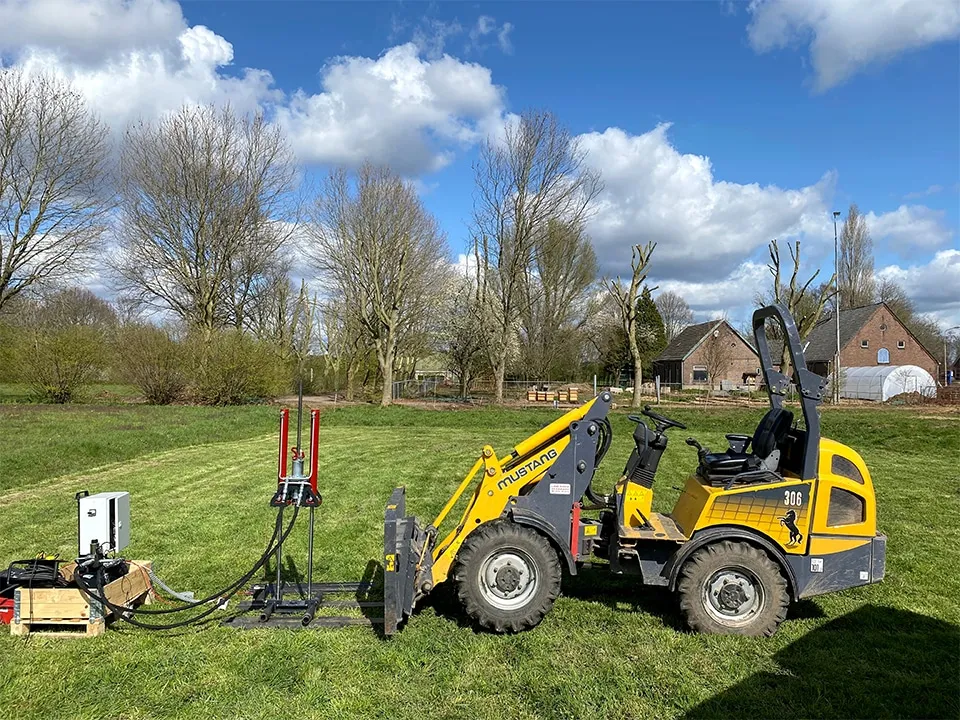
Geotechnical investigations on dikes and quay walls, or checking foundations at sites that are difficult to access, often cannot be carried out using a standard cone penetration testing vehicle.
These are usually cumbersome, heavy machines. As a market leader in equipment for investigating soil and water, Royal Eijkelkamp is now presenting an alternative: the Parvus CPT. A compact cone penetration testing unit that can be mounted on an excavator, a pick-up, a van or even on the back of a quad bike.
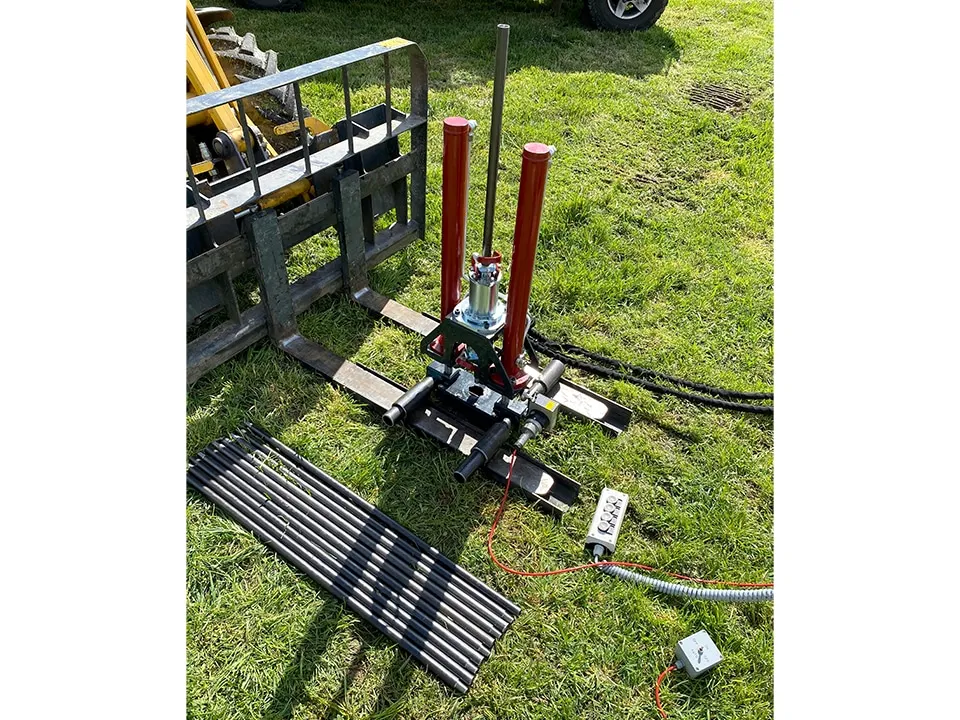
“Cone penetration testing vehicles are often heavy machines because considerable force is needed to push the cone into the ground,” explains Rutger van Goethem of Royal Eijkelkamp. “The cone measures the condition of the soil using a wide range of geotechnical parameters. Our company offers a large range of this type of equipment for geotechnical investigations, and we are continually working to improve and develop new equipment for markets around the world. Several users of our equipment needed a more compact cone penetration testing unit. That prompted us to develop the Parvus CPT in collaboration with Geonius, one of its earliest users.”
35 KN of pushing force
Parvus means small. The unit weighs just 50 kilograms and has a pushing force of 35 KN. “The weight of the vehicle carrying the unit is used as a counterweight,” says van Goethem. “A typical van, for example, has a payload of 3.5 tonnes. You can then drive comfortably to your destination, position the vehicle and carry out the cone penetration test. So it works perfectly well alongside a quay wall or on a dike. A pick-up may be a better option for sites that are difficult to access. We are not concerned about what the Parvus CPT is mounted in or on, as long as its frame can be secured to the vehicle or the ground. It can also be attached to the arm of an excavator, or mounted on the back of a quad bike or tractor. In these cases, it uses the machine’s hydraulics or, where available, a 230 Volt mains supply. This allows you to cover longer distances while still collecting the right information very quickly.”
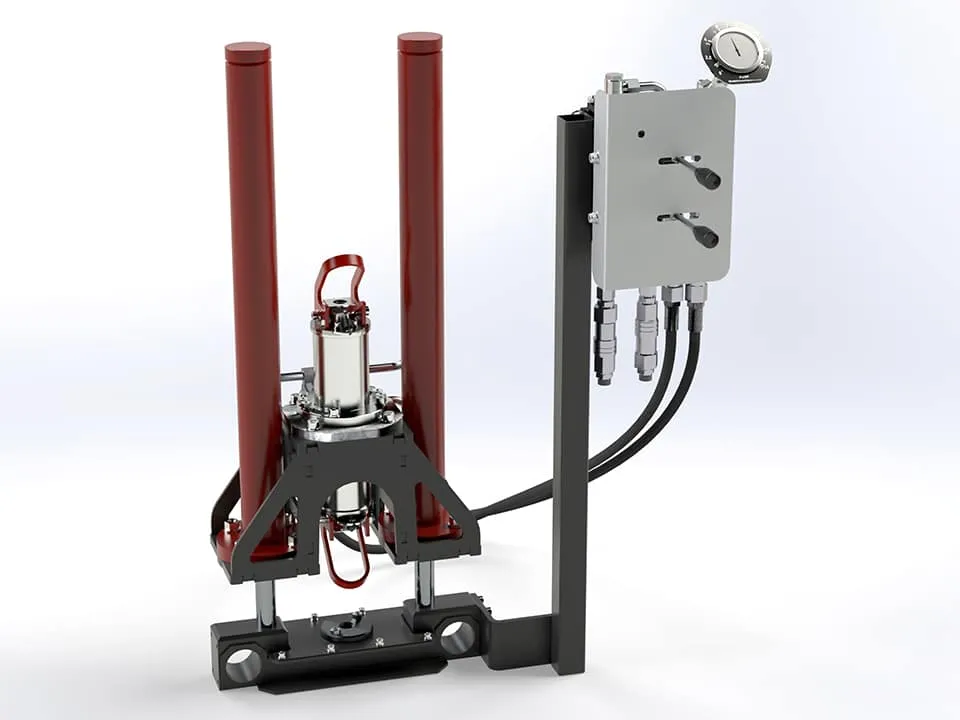
As you would expect, the Parvus CPT has a smaller sounding mast and a lower pushing capacity than a cone penetration testing unit mounted on a large truck. Van Goethem: “We use a smaller-diameter cone that requires less pushing force but still delivers the same results. You can choose a 2 cm2 cone, which records cone resistance, sleeve friction and inclination. The 5 cm2 cone also records pore water pressure. This means you can carry out a full cone penetration test. We supply the Parvus CPT as a complete solution and have now built one unit, which Geonius is testing in a range of applications. Production is expected to start before the summer this year.”
Question about this story? Ask your question
Keep following this
Get an email when a new story is published. No account needed.
- ThemeUnderground construction
- SubjectNews







