









Fully electric A-Frame Dredger
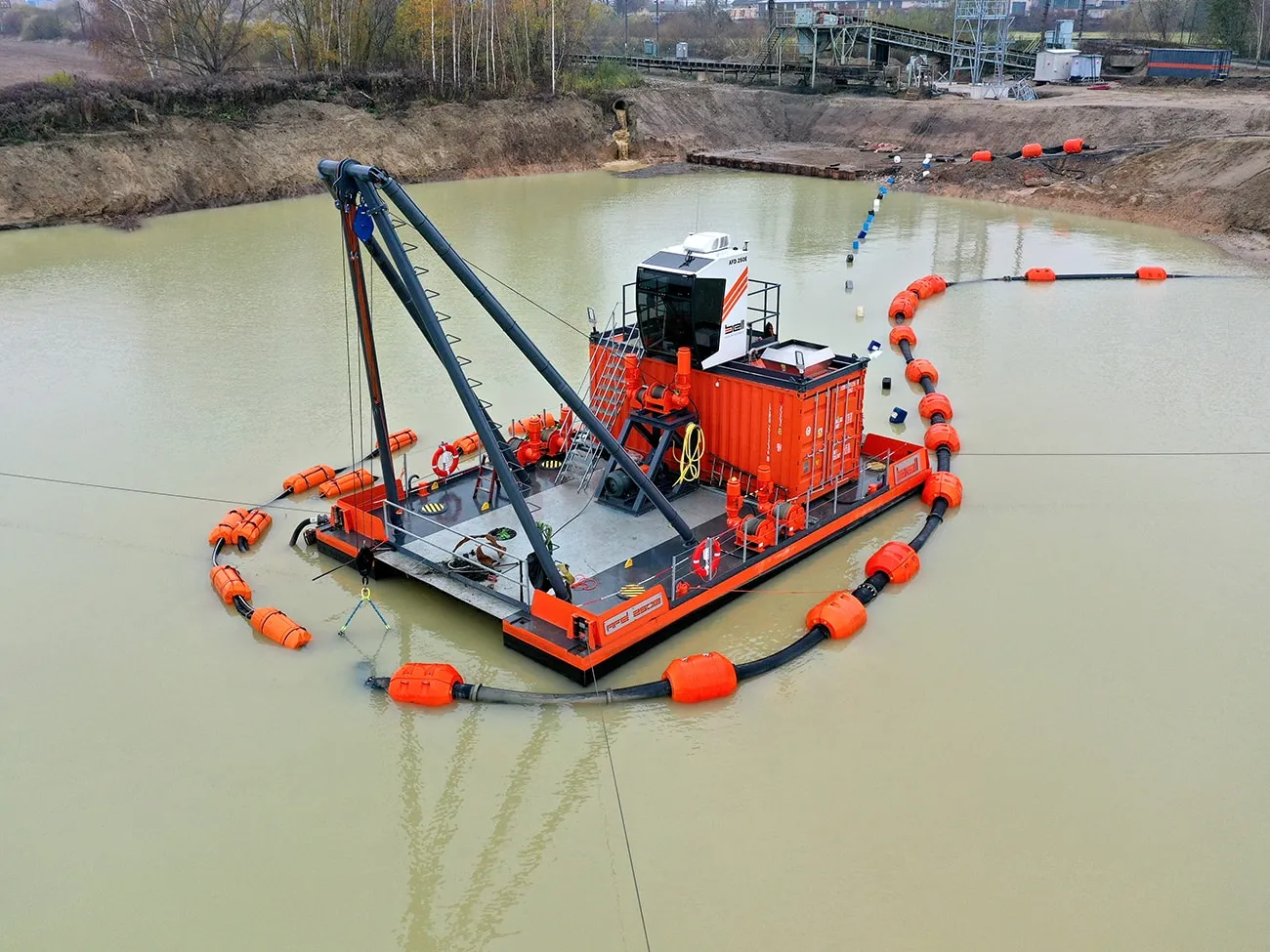
Bell Dredging builds a wide range of dredging equipment. Until recently, this was mainly powered by diesel hydraulics, but Bell has also been supplying fully electric dredging equipment for some time, including an electric version of the Bell A-Frame Dredger. Naturally, we wanted to find out more.
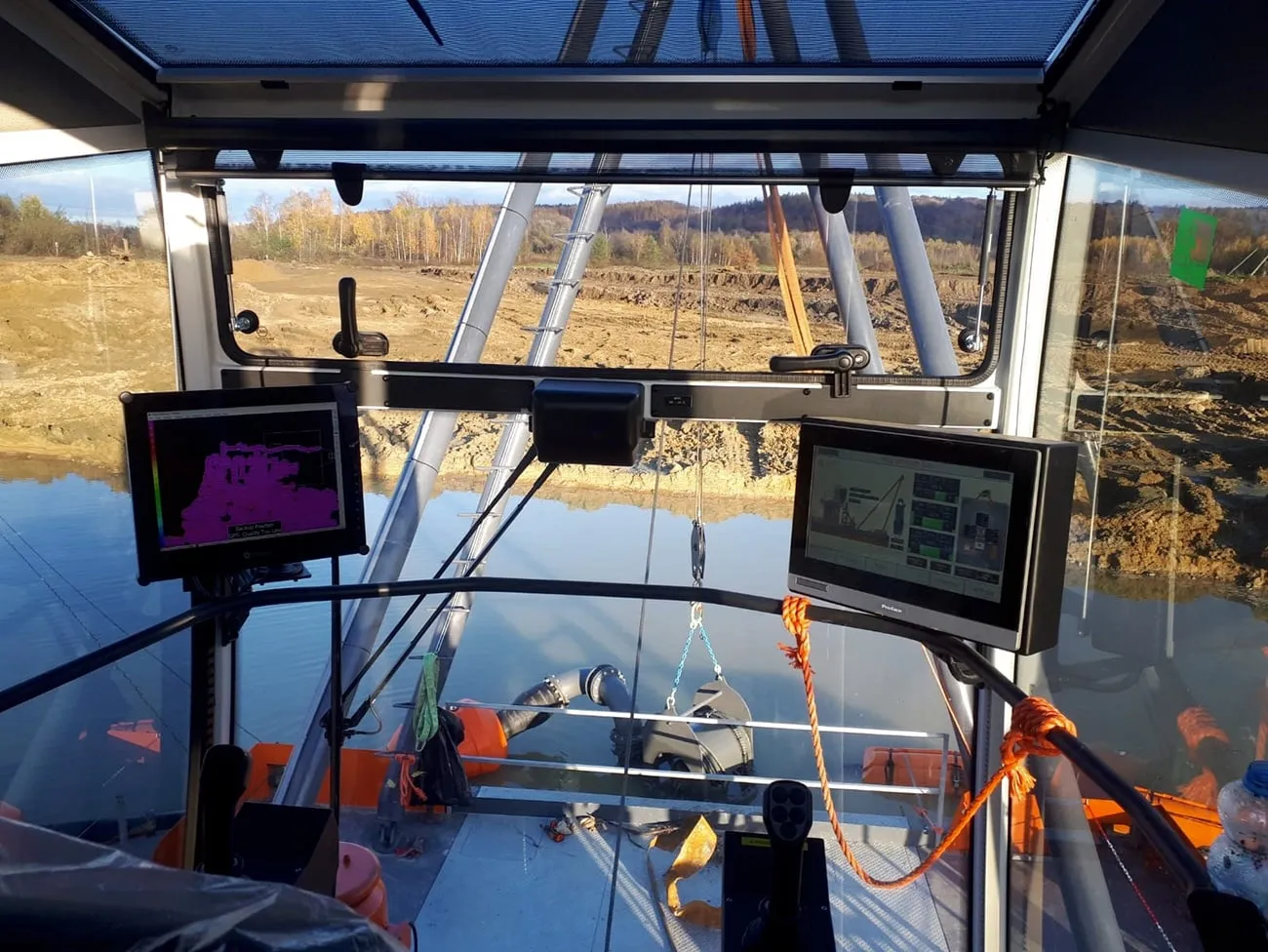
The Bell A-Frame Dredger (dredger) consists of two pontoons with a frame between them. “The basic design is essentially a catamaran,” explains Thijs van den Outenaar of Bell Dredging Pumps. “The A-frame is located on deck, along with a container that serves as the engine room. Above it is the operator’s cab, which in turn offers a clear view of the entire A-Frame Dredger. The Bell dredge pump hangs from the A-frame and is available with discharge pipe diameters ranging from 100 to 400 millimetres.”
Variable-frequency drive and transformer
Bell has also seen growing demand for electric equipment, driven in part by climate targets. “Our A-Frame Dredger is ideally suited to this,” says Van den Outenaar. “In the fully electric version, the diesel technology is replaced by variable-frequency drives and a transformer. The vessel is then simply connected to shore power, and the onboard transformer converts it to the required voltage. At reservoir projects, for example, you can use electricity generated by the dam. A win-win.”
Deeper
Like the ‘traditional’ version with an internal combustion engine, the electric A-Frame Dredger is available with discharge pipe diameters ranging from 100 to 400 millimetres. “A major advantage of an A-frame configuration is that the pump is lowered on a winch, allowing you to dredge considerably deeper than with, for example, a cutter suction dredger,” notes Van den Outenaar. “In the standard configuration, the A-Frame can reach depths of up to 100 metres. With pressure compensation, we can go even deeper, depending on the material to be dredged. The Bell pump is fitted with either a sand head or a double cutter head to suit. We also use Constant Tensioning, whereby the winches automatically pay out and haul in, allowing the operator to control the platform very easily using joysticks in the cab.”
Question about this story? Ask your question
Keep following this
Get an email when a new story is published. No account needed.
- ThemeFlood protection and climate-resilient water management
- SubjectNews







