









Floating solar parks
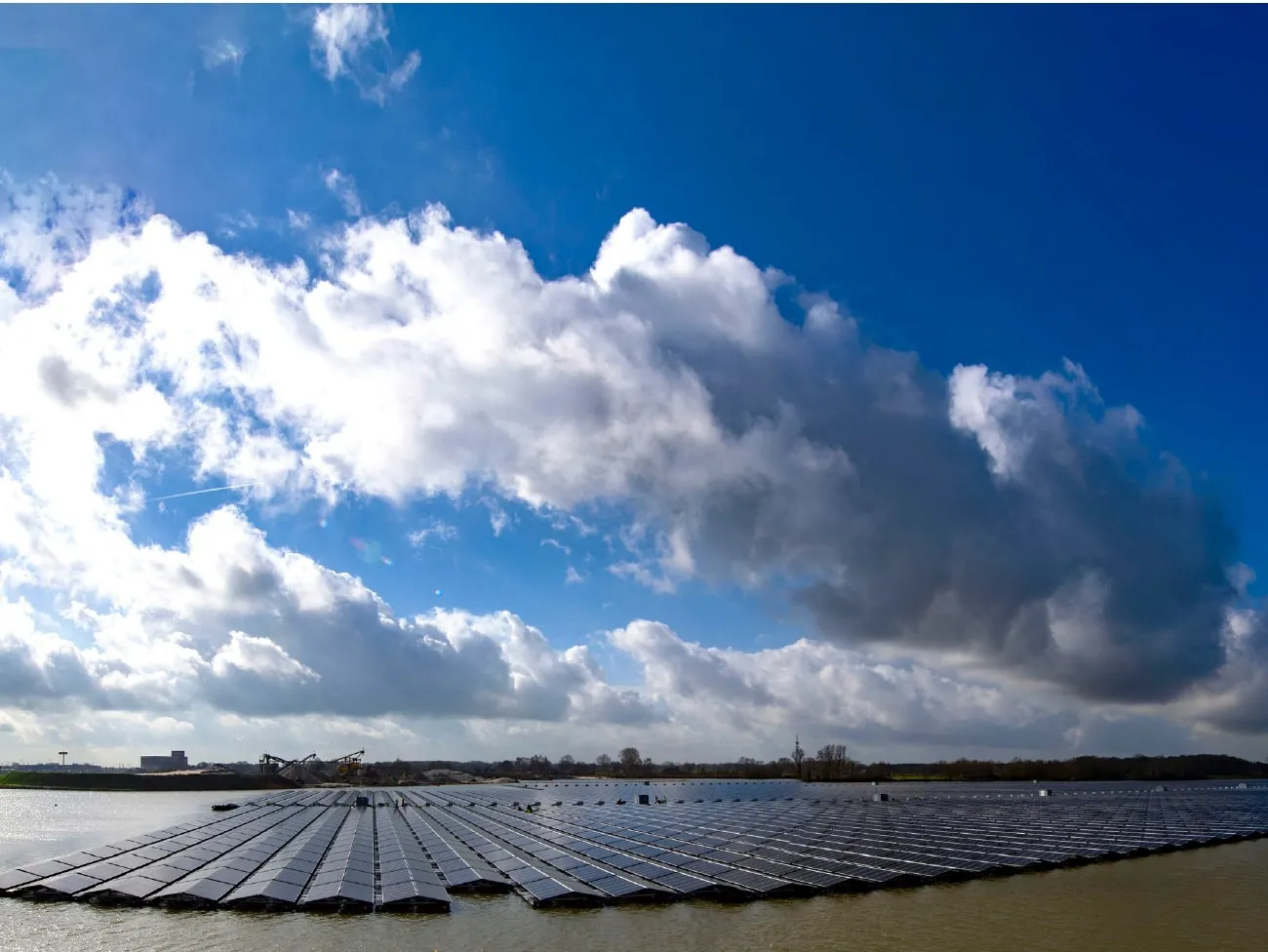
Solar energy is essential to achieving climate targets, with the Netherlands needing to be almost CO2, and energy-neutral by 2050. But the energy transition is progressing slowly, so it is important to deliver even more solar energy projects. However, space for solar panels is limited. GroenLeven is making solar energy generation at sites with a dual purpose the new norm, creating solar energy sources on rooftops, greenhouses, car parks, landfill sites, industrial estates and bodies of water.
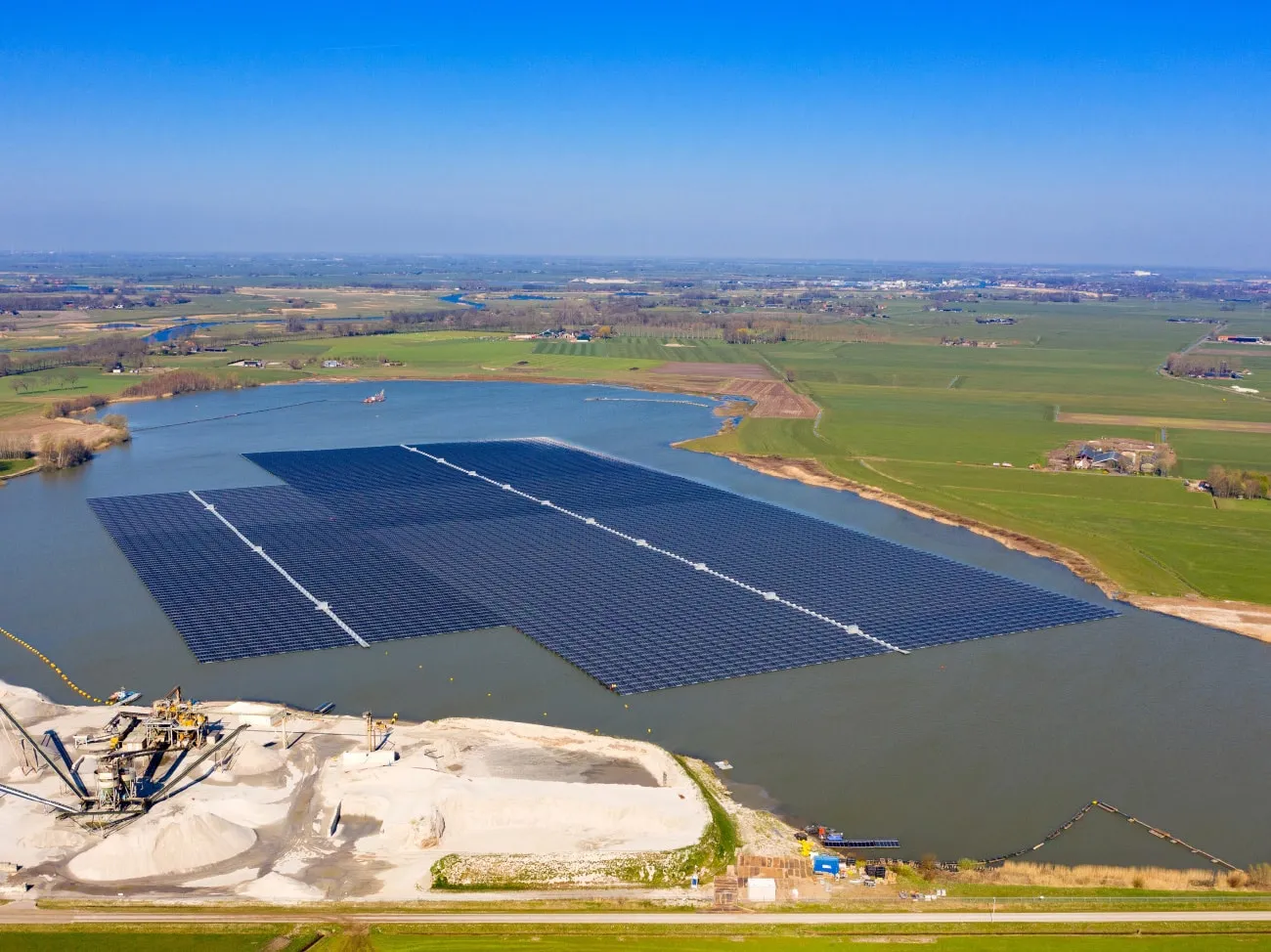
We spoke to Willem Biesheuvel, Floating Solar Project Manager at GroenLeven, about the potential and benefits of floating solar parks. “The Netherlands has thousands of disused sand extraction lakes, inland waterways and dredging depots. These are particularly well suited to solar panels on the water.”
Large floating solar park
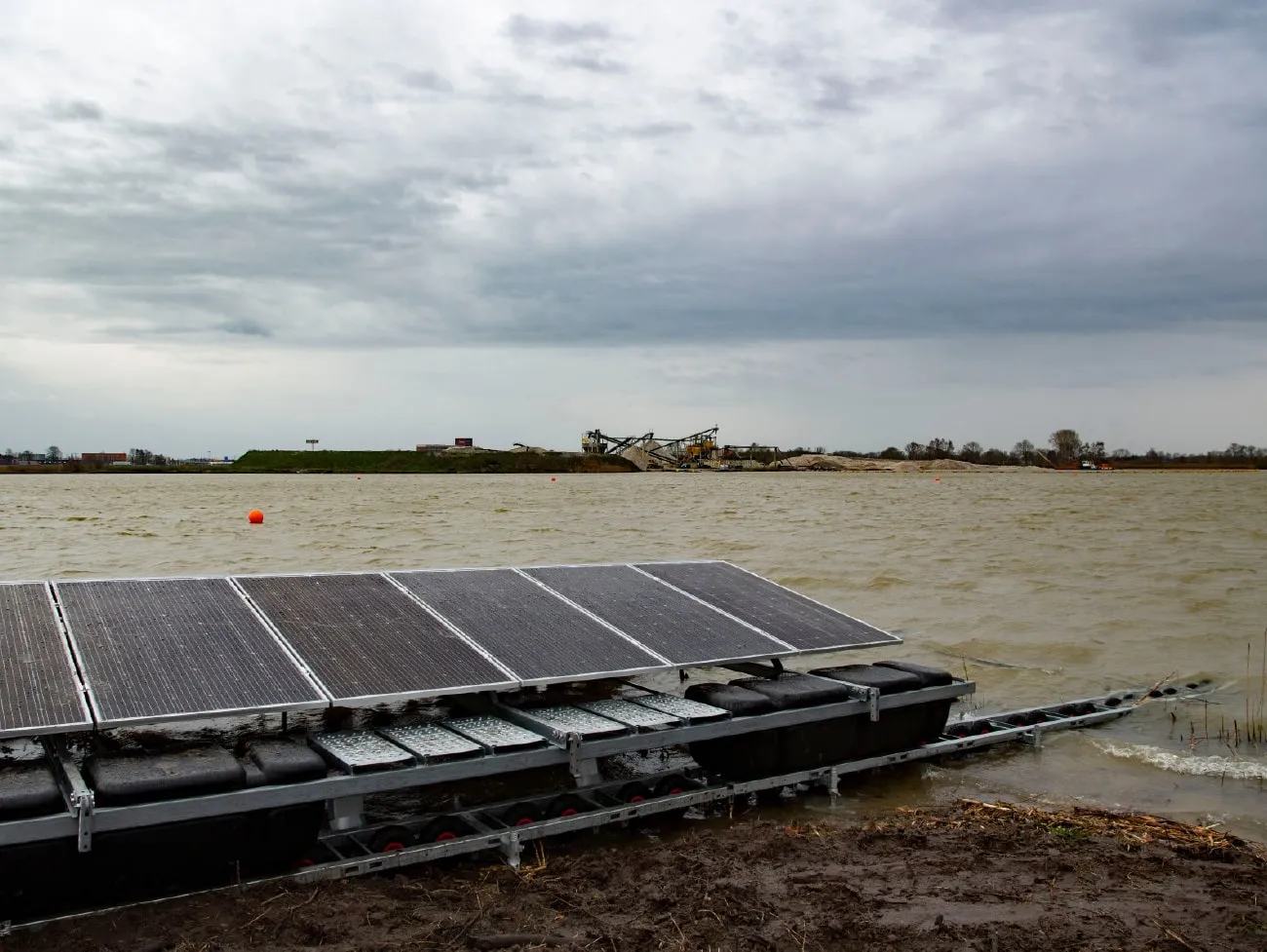
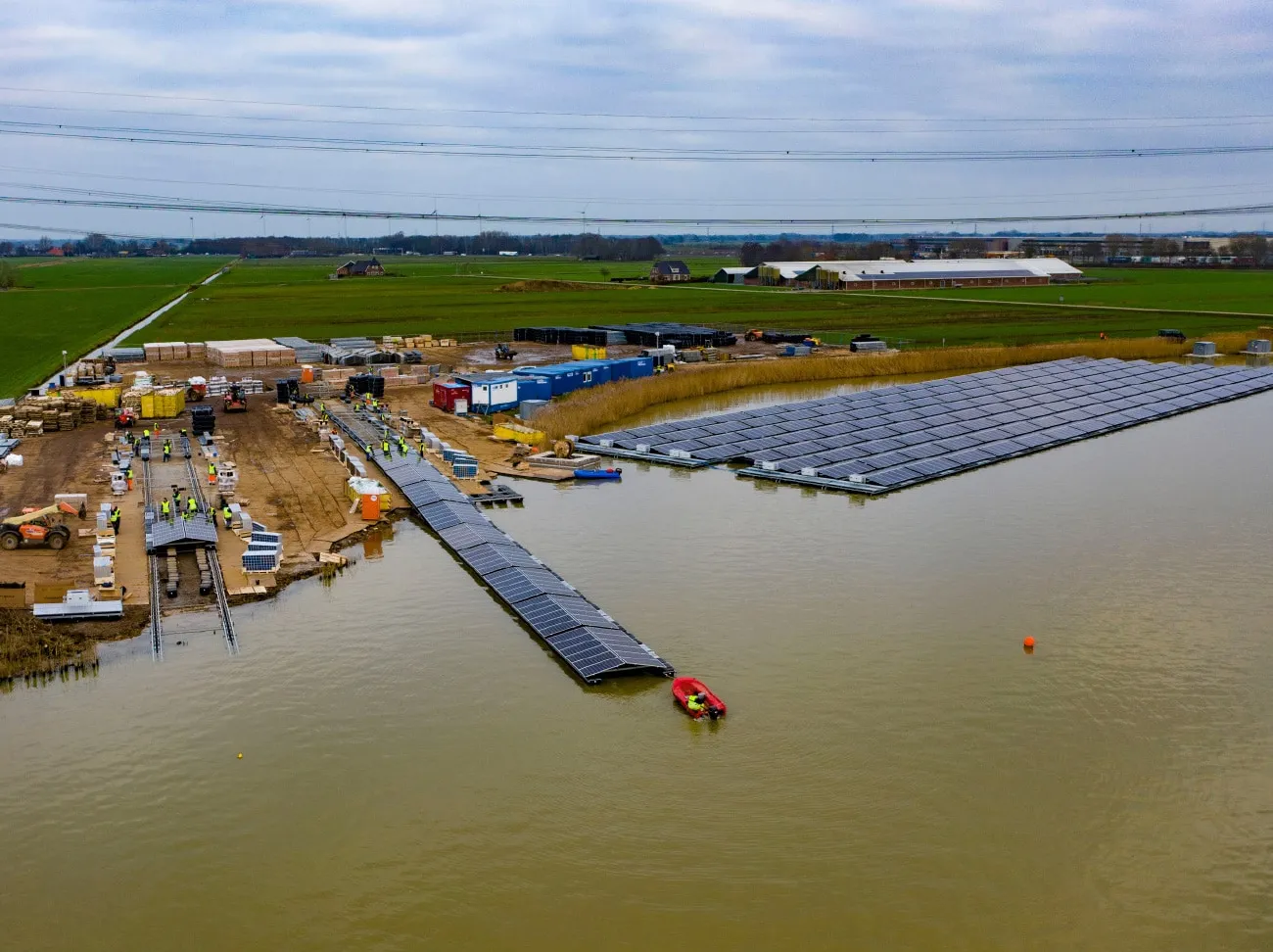
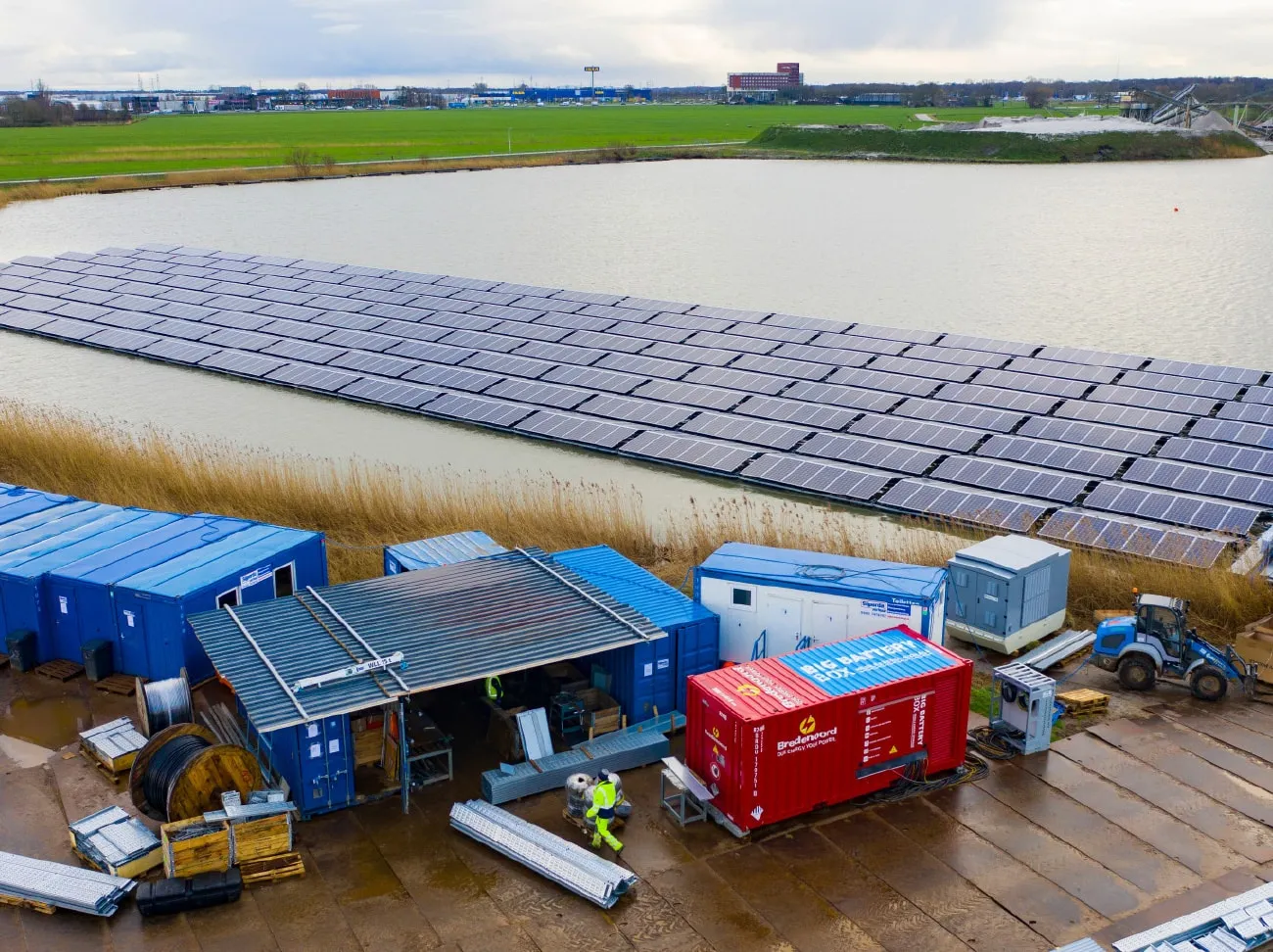
In 2020, GroenLeven built what was then Europe’s largest floating solar park on the Bomhofsplas in Zwolle (18 hectares, 27.4 megawatts). Together with the Sekdoornse plas in Zwolle (14.5 megawatts), it supplies sustainably generated electricity to no fewer than 12,000 households. Biesheuvel is proud of the efficient approach and the speed with which a solar park like this can be built: “On site, work proceeds like an assembly line, with the park built step by step. Each solar boat has four floats, around which the steel frame is clamped. The solar panels are clamped into the frame at an angle of 12 degrees, making them easy to maintain or replace. We install 2,000 panels a day. It is not only the pace of construction and installation, but also the scale of a project like this that means you make a real contribution.”
Ecology plays an important role
Ecology plays an important role in GroenLeven’s floating solar parks. “The park must fit into the landscape without disturbing the ecology. This was carefully considered when designing the structure. Special anchoring in the lakebed keeps the solar park in place, while avoiding the banks, where most ecological activity takes place. To ensure the panels let in enough light and air, they sit slightly above the water and there is extra space between them, allowing heat to escape. Sand extraction pits are quite deep, and the water remains fairly cool even in summer. This has a positive effect on output, giving you a better return from your panels. The east-west layout also helps distribute output more evenly throughout the day.” GroenLeven is working with ecological consultancy Buro Bakker on a long-term study into the effects of the solar park, both above and below water. “We take a very conscious and careful approach to all aspects of ecology.” Biesheuvel mentions the biohuts: “These are woven baskets filled with wood or shells, attached underwater along the sides of the park. They shelter young fish, encourage fish populations to grow and act as a nursery. Hanze University of Applied Sciences Groningen also conducted a year-long study at our solar park, using sensors in the water beneath the centre of the park and along its sides. The findings were surprisingly positive. Because the system sits fairly high above the water, the water can flow freely, light and air can pass through, and the system has little effect on the water’s temperature or oxygen levels.”
Integrated system
Building floating solar parks requires careful planning and coordination. “It is also important to bring the electricity safely ashore and optimise this process. A solar park also needs inverters and transformers. What is unique about our system is that these float on the water too. We have designed a standard system in which everything is integrated. Only one cable is needed to connect the solar park to land and feed electricity into the grid. The entire construction process can also be CO2-neutral, as some of the solar boats start supplying power from the outset. This is environmentally friendly, as well as efficient, because sand extraction lakes are often very remote. The solar boats used during construction are the final piece of the puzzle for the complete solar park.”
Fantastic innovation
“Innovative systems like these, our floating solar parks with a dual purpose, are fantastic projects through which GroenLeven is making a contribution, a very substantial one, to the energy transition and the Dutch Climate Agreement. As experts in solar on water, we continue to explore the possibilities, and we see that they are enormous. With our vision and the technology behind it, while keeping the ecological considerations firmly in view, we are working towards a cleaner, better world.” Biesheuvel concludes: “Floating solar parks are functional, sustainable and indispensable.”
Een zakelijke vraag aan GroenLeven? Get in touch
Companies in this story
Keep following this
Get an email when a new story is published. No account needed.
- SubjectNews
- CompanyGroenLeven







