









Electrification can be a challenging task
The path to 2030 and 2050 is not always clearly lit. While some companies know exactly what measures they need to take and how to electrify their equipment, others are still in the dark. The reason is that the conditions for electrification vary considerably, both from one machine to another and between sectors. The same is true in water engineering, where there is certainly a willingness to electrify, but the path to doing so can be difficult. Fortunately, businesses facing these challenges can call on professional support. Electure is one such company: it not only provides advice, but also comes up with practical solutions. Mark Remijnse (director) and Jeroen Ritzer-van Dinther (Sr. Consultant & Ontwikkeling) of Electure talk to us.
Fortunately, you don’t have to go it alone
Zero-emission (water) engineering sites
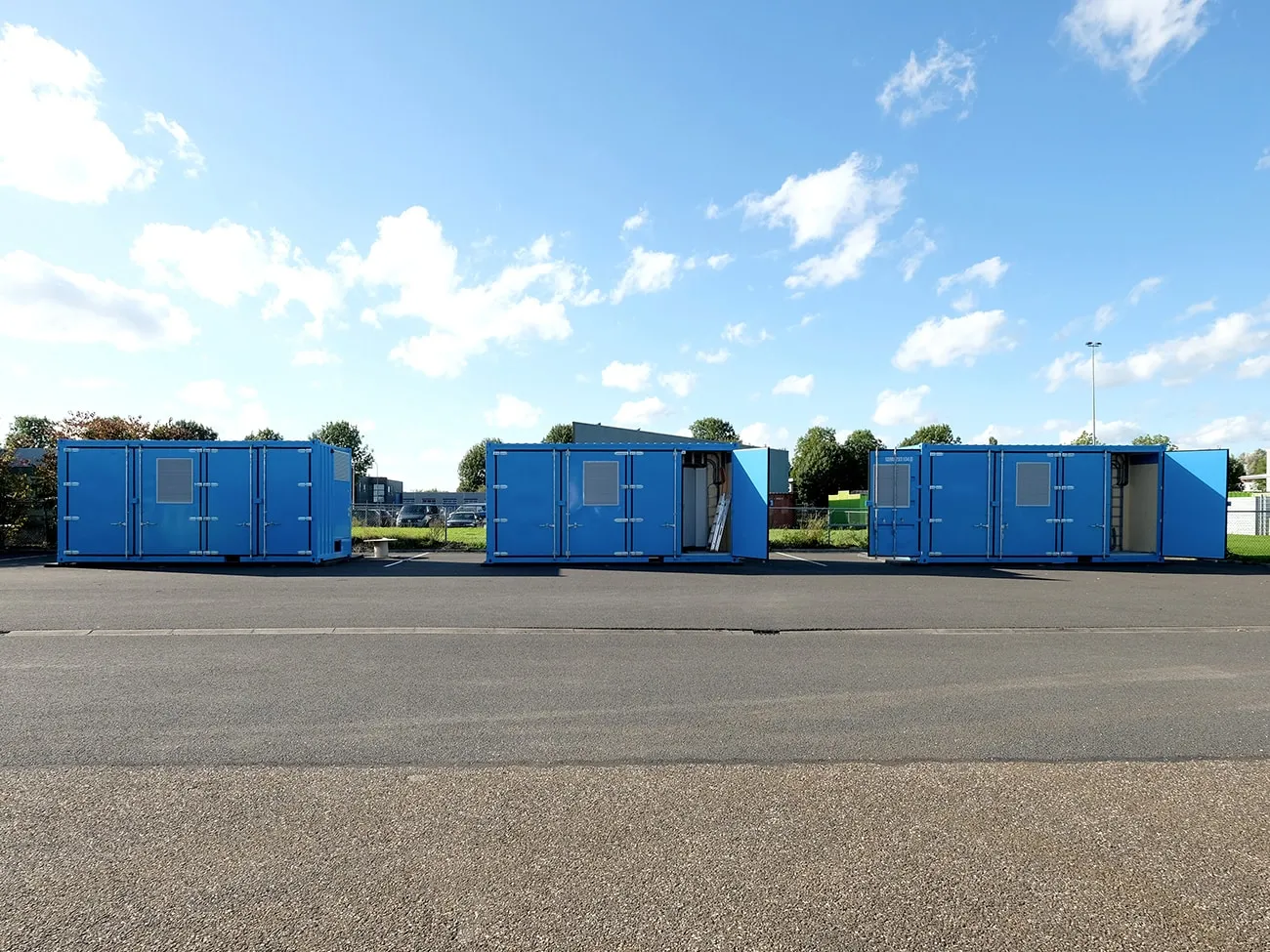
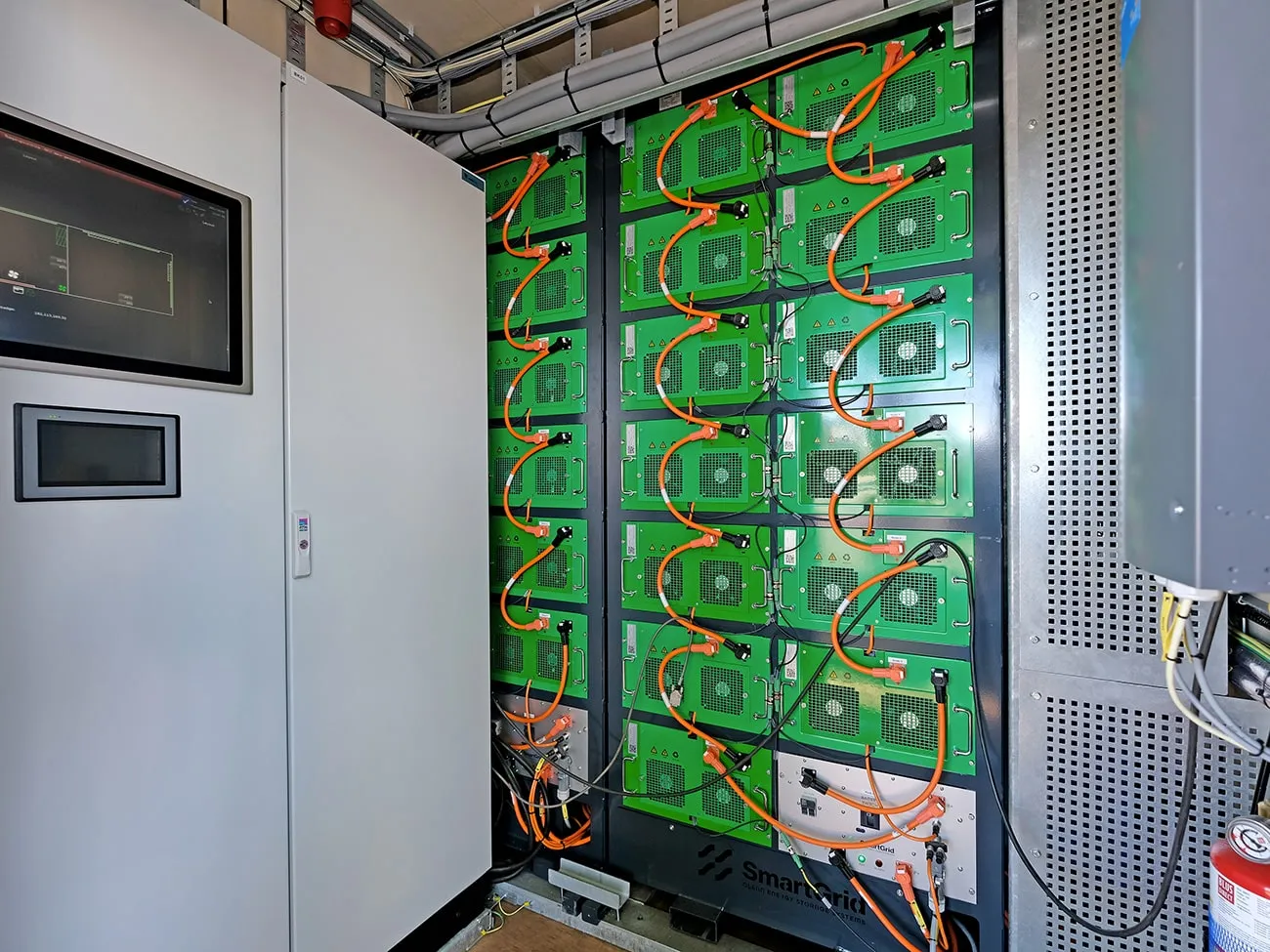
As an organisation, Electure focuses, among other things, on zero-emission construction sites and equipment-led electrification challenges. Previous editions of this magazine have covered its e-CO2tainer, a mobile power supply, in detail. The e-CO2tainer is fitted with batteries and a generator running on HVO fuel. “The e-CO2tainer is, of course, a great development that makes it possible to supply power in places without a grid connection, but Electure does more than that. We help with the entire electrification process and also focus on energy solutions,” explains Mark. “Think, for example, of charging points and energy storage.” Electure’s e-CO2tainer is already being used successfully on projects, including Kop van Bakens Harderwijk and A16 Rotterdam. “At the latter, the De Groene Boog construction consortium is aiming to make the site as emission-free as possible. Our e-CO2tainer is making a significant contribution to that.”
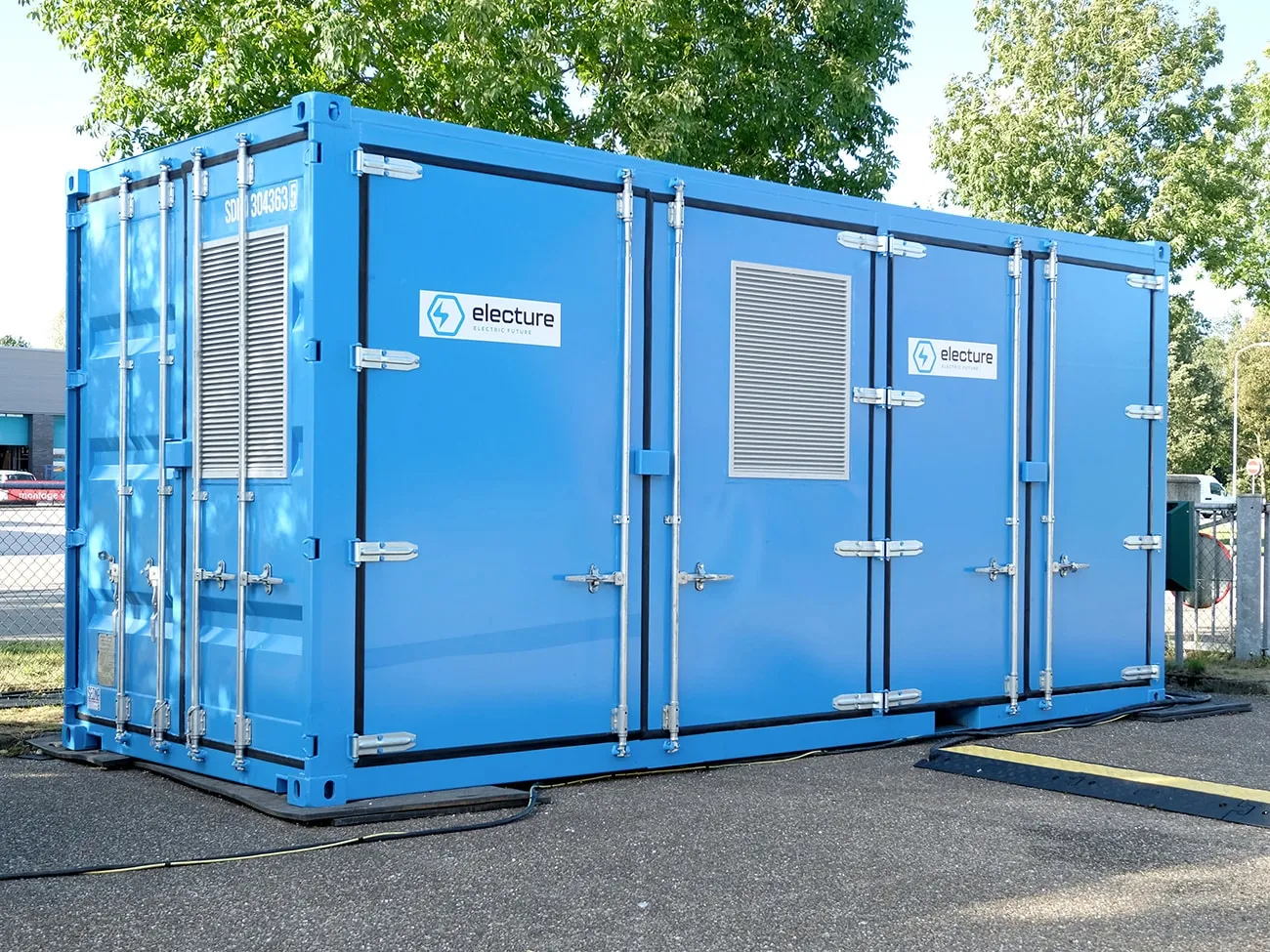
The water engineering sector wants to electrify. It is making excellent progress in some areas, but gaps remain. Could the e-CO2tainer also offer a solution for water engineering? Jeroen replies: “To answer that question, we first need to address a broader one: ‘Are we prepared to look at the issue differently?’ In principle, all equipment can be electrified. But how do you keep work going? Every step towards electrification brings a corresponding demand for energy. An electric crane on a construction site that can run for only an hour on a battery pack is no use if you have no way of keeping it running. The solution you choose and what you need to do to implement it determine whether it succeeds. Do you have grid power? Is there an e-CO2tainer on site, with its generator doing the work? Or do you use interchangeable battery packs stored alongside the crane? It is the same in water engineering. You sail from A to B, moor at B and carry out your work. How do you ensure a continuous power supply? I can say with a high degree of certainty that shore power is a luxury you will rarely come across in water engineering. An e-CO2tainer could offer a solution, for example on a pontoon. Interchangeable battery packs could be brought in by bunkering vessels. The point is that there is no single solution: you need to consider the circumstances, the surroundings, the vessel and the equipment on board. That calls for a bespoke approach to each situation. Standardisation would be ideal, but water engineering varies too much in all its different aspects.”

Sharing is the way forward
Mark continues: “It is also very much a question of money. As Jeroen describes, every attempt at electrification requires a bespoke solution. If you can afford the investment, that is not a problem, but bear in mind that it costs more than standard solutions would. We need a culture of sharing standardised battery packs. That would be a practical first step. One thing is certain: clients need to start specifying emissions requirements in their tenders, including in water engineering. That will encourage companies to invest. Clients must be prepared to pay the price and assess the emission-free performance offered fairly. Choosing a bid driven by emissions is out of the question.”
Jeroen: “Energy will no longer be stored in a ‘tank’ that belongs to you, but in interchangeable carriers. Most solutions in (water) engineering are still hybrid for now. If you want complete freedom to work, interchangeable battery packs or a clean generator on board are the best options.” Mark: “Those who are allowed to connect to a supply line on the water could consider having electric equipment on board plugged into the vessel, which in turn is connected by cable to a battery enclosure on shore (which could be an e-CO2tainer). Then you can quickly and easily swap the battery packs on land, without any extra work on board, and keep working efficiently in a green way.” Jeroen adds: “You can also consider straight away where to put the inverter: do you still want it on board, or should it be placed with the batteries on shore?”
Mark concludes: “Anyone facing challenges like these is very welcome to come to us with their problem. There is a wealth of knowledge here, and every day we create bespoke solutions for our customers. We can even get involved in the tender if required. Working with various partners, we know how to arrange construction site connections that others would consider impossible. That is not all: we explicitly consider the complete solution over time for the entire project. To give you an example, for a recent tender the basic energy requirement came to a provisional sum of approximately € 5 million. By reviewing it and proposing a different plan, we managed to bring that down to a provisional sum of < € 2 million. That is a real added-value contribution from Electure, wouldn’t you say?”
Question about this story? Ask your question
Keep following this
Get an email when a new story is published. No account needed.
- ThemeConstruction equipment and transport in motion
- SubjectNews







