









De Poel pumping station makes polder system less vulnerable
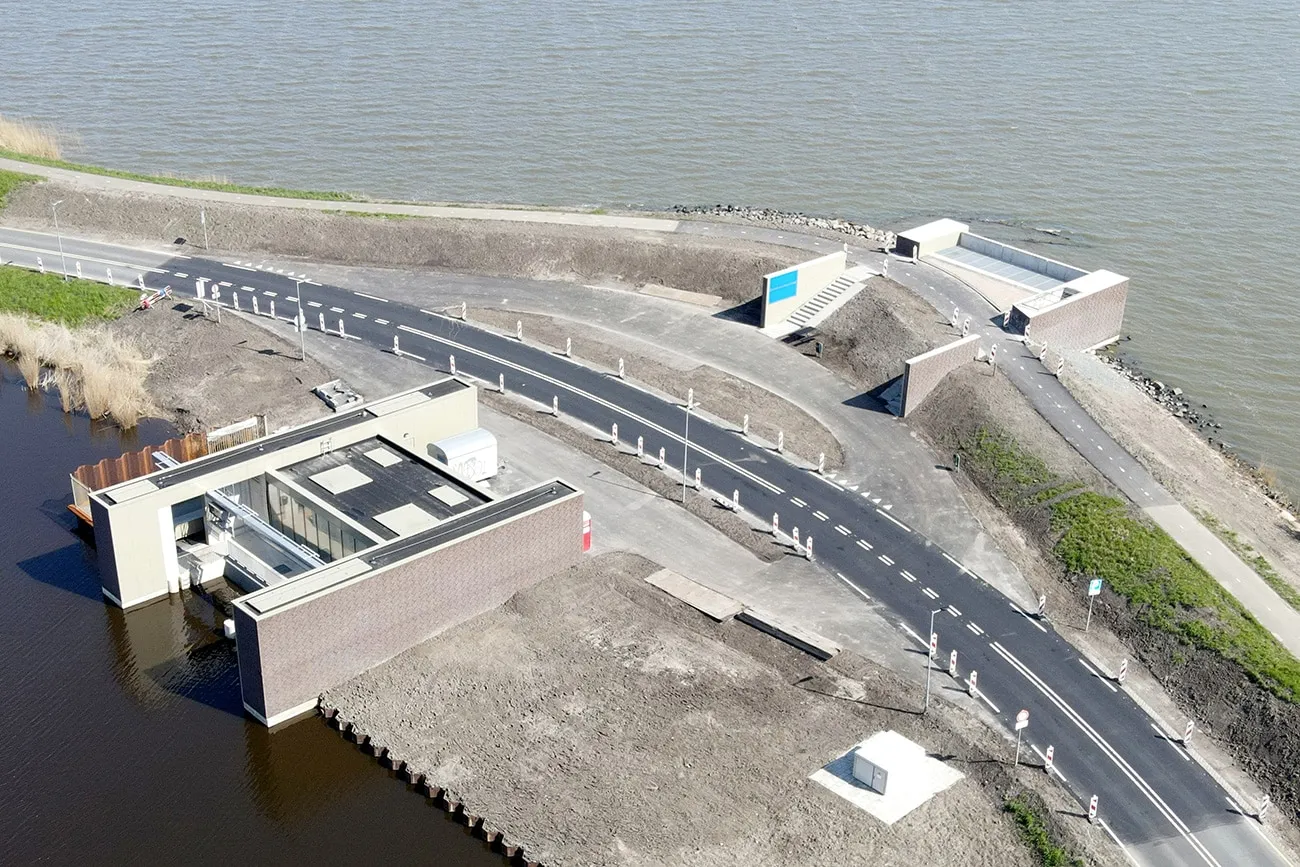
De Poel pumping station controls water levels in the Waterlandse boezem, the main water system of canals and waterways in the area between Monnickendam, Purmerend, Landsmeer and Schellingwoude. As the old pumping station had reached the end of its 100-year technical service life, it had to be either renovated or replaced. For various reasons, Hoogheemraadschap Hollands Noorderkwartier opted for the latter.
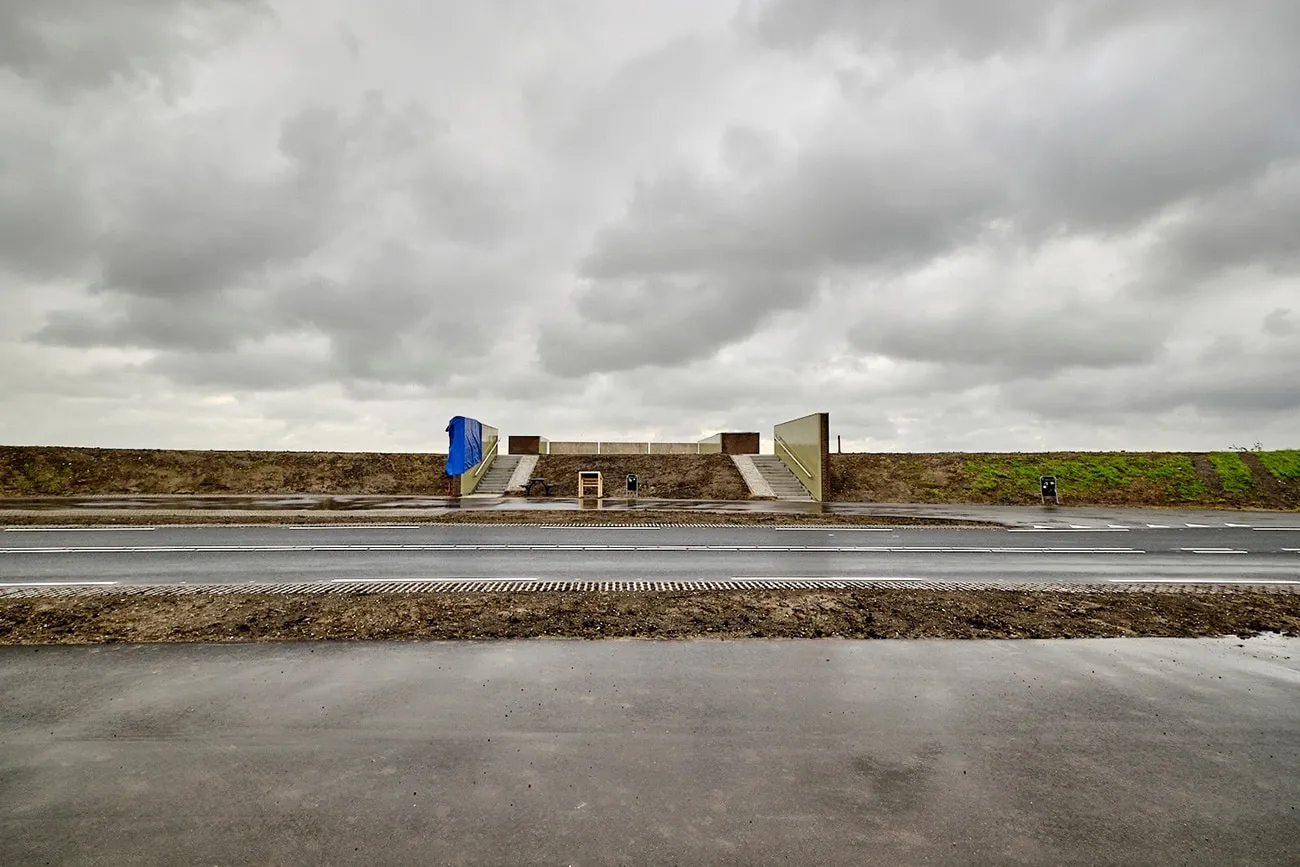
Together with Kadoelen pumping station near Amsterdam, De Poel pumping station manages water levels in the Waterlandse boezem. “It is essentially one large polder system, at an average level of 1.56 metres below N.A.P., with a number of lower-lying areas, such as the Burkmeer, and several deep pits,” explains Maarten Poort, water systems adviser at Hoogheemraadschap Hollands Noorderkwartier. “All our pumping stations are covered by a management and maintenance programme. When they reach the end of their technical service life, major maintenance is required, which was the main reason for tackling De Poel pumping station.”
Improving operational reliability
When an old pumping station is “taken in hand”, the work generally involves an upgrade to improve operational reliability. “A hundred years ago, everything in the province of North Holland was still green. Today, the province is dominated by urban agglomerations, which are making the water system increasingly vulnerable,” says Siem Jan Schenk, portfolio holder for water systems at Hoogheemraadschap Hollands Noorderkwartier. “It is our task to design the water system as an integrated whole so that it is less vulnerable and operational reliability is assured, including when water levels are higher.” Poort adds: “And operational reliability was precisely what the old De Poel pumping station lacked. It used a kind of siphon system, creating a vacuum to push the water over the crest (the Markermeerdijk, ed.). With offshore winds, the vacuum was interrupted, making the pumping station less reliable. It could also bridge a maximum level difference of just 1.10 metres between the polder and the Markermeer. If the difference was greater, capacity quickly fell to zero. It could still manage when the Markermeer level was 0.40 centimetres below N.A.P., but Rijkswaterstaat now maintains the Markermeer at a higher level to provide a buffer for dry summers.”
A radical solution
It quickly became clear to the water board that a new pumping station was needed. “Our pumping station programme has around 5 to 6 million euros available each year from the operating budget for the renovation or replacement of pumping stations,” says Schenk. “This project is part of that programme. In this case, however, we opted for a radical solution: building a new station at a different site, slightly further north.” With the support of the European Agricultural Fund for Rural Development: Europe investing in rural areas. Poort says: “We first looked at replacing the pumping station on the existing site, but there was really too little room and the location was not ideal. Traffic was very different a hundred years ago. By building at a new site, we could keep the old pumping station operating during construction. This avoided the need for a temporary pumping installation, which would have been a substantial investment given the required capacity of 520 m3 per minute.”
Freshwater source
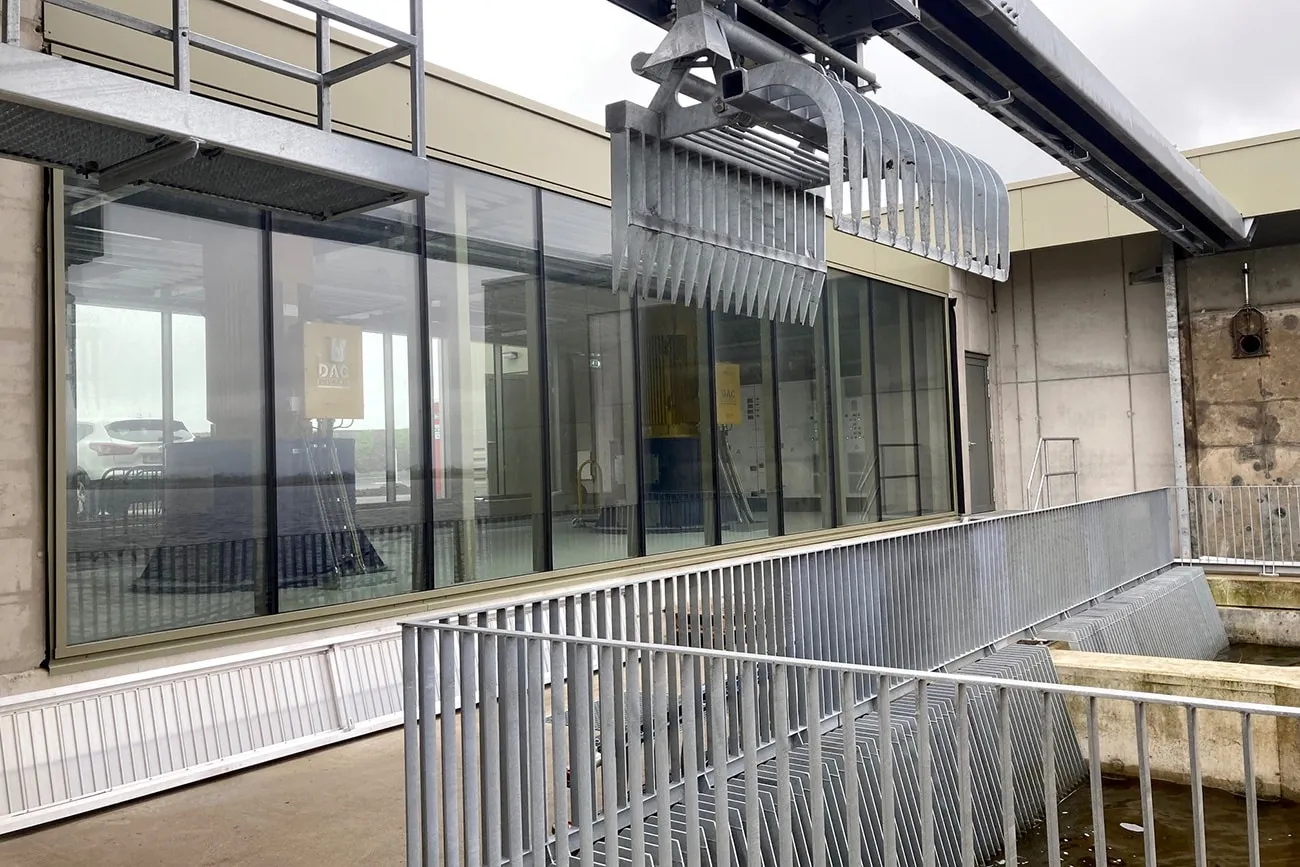
De Poel pumping station discharges directly into the IJsselmeer, the largest freshwater source in the Netherlands. “Kadoelen pumping station, by contrast, discharges into the Noordzeekanaal. The water flows into the North Sea, so we lose it,” says Poort. “At De Poel, we can now let water into the Waterlandse boezem during dry periods. And because we have increased capacity by 15% to two pumps of 300 m3 per minute each, with 80% of pumping capacity maintained at a level difference of 3 metres, the polder system also has a little more flexibility when dealing with excess water. We can then store this precious freshwater in the freshwater Markermeer.” Schenk adds: “We therefore have more options for keeping different situations under control. The new pumping station is also equipped with a fish passage, allowing fish to move freely between the Markermeer and the Waterlandse boezem. In short, with this new pumping station, the water board is better equipped for the future on all fronts.”
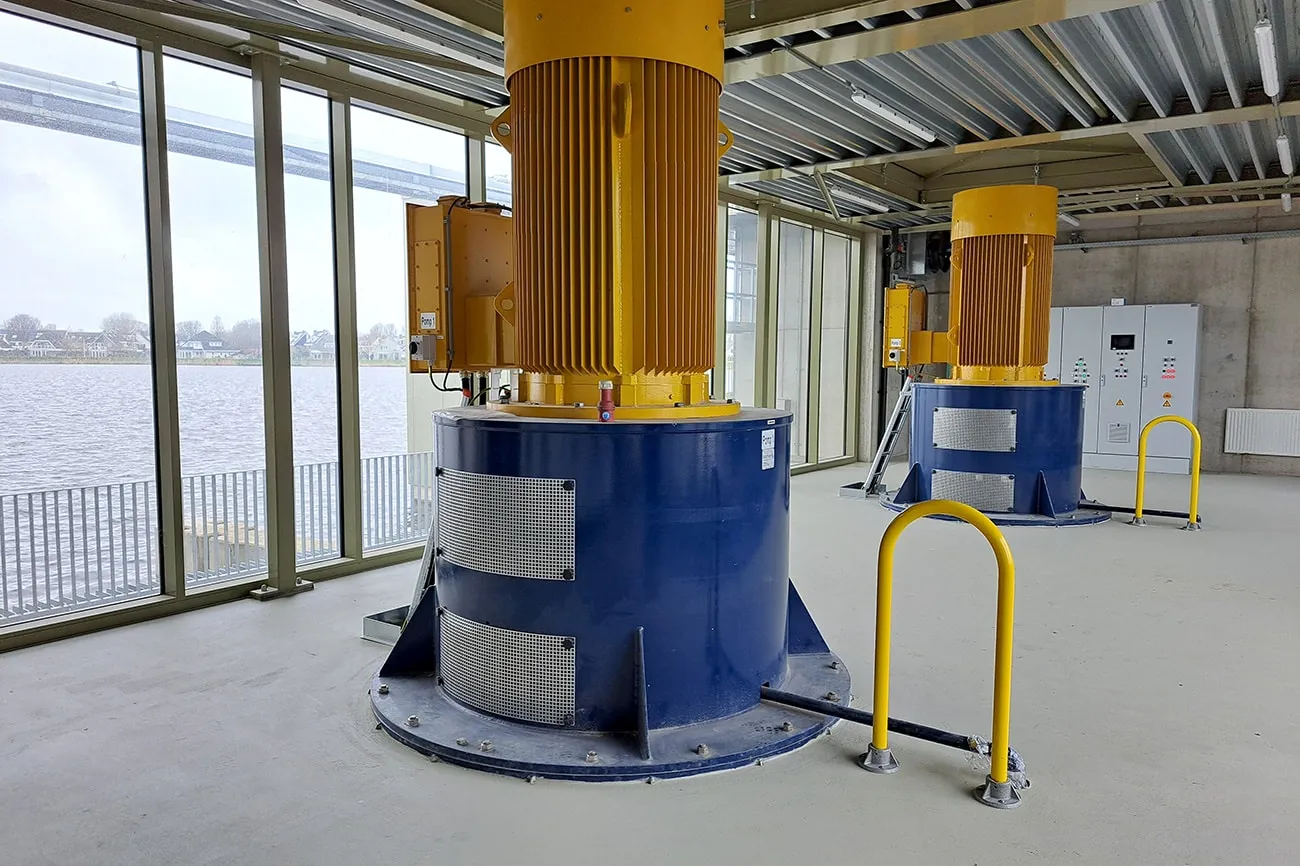
The new De Poel pumping station was officially opened on 13 April 2023. Schenk looks back on an exceptionally good collaboration with Aannemingscombinatie De Poel. “Despite the challenging location beside a provincial road, the project was completed on schedule and without exceeding the budget.”
Question about this story? Ask your question
Who worked on Gemaal De Poel
- clientHoogheemraadschap Hollands NoorderkwartierMentioned in Architectural superstructure for De Poel pumping station
- architectArchitecten- en ingenieursbureau H.W. van der LaanMentioned in Architectural superstructure for De Poel pumping station
- construction consortiumVOBI InfraMentioned in Architectural superstructure for De Poel pumping station
- construction consortiumGebr. Beentjes GWWMentioned in Architectural superstructure for De Poel pumping station
- soil protection
 Van AalsburgMentioned in Fascine mattresses provide bed protection at De Poel pumping station
- construction consortiumConstruction consortium De PoelMentioned in Fascine mattresses provide bed protection at De Poel pumping station
- structural engineeringIngenieursbureau Verhoeven en LeendersMentioned in Smart combination of permanent and temporary works at De Poel pumping station
- main contractorVan Boekel Bouw & InfraMentioned in Smart combination of permanent and temporary works at De Poel pumping station

Keep following this
Get an email when a new story is published. No account needed.
- ProjectGemaal De Poel
- ThemeFlood protection and climate-resilient water management
- SubjectNews







