









Craftsmanship and teamwork provide the impermeable foundation for the Dak van Drenthe cycling course
Text Tony VosImage André Sprong
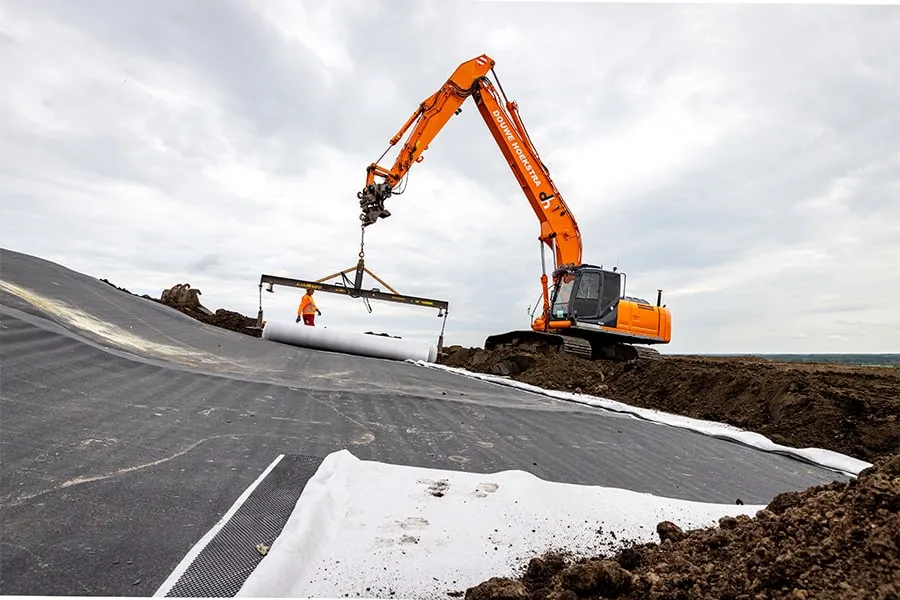
Cofra draws on more than 25 years of experience with High Density Poly Ethylene (HDPE) liner, also known as geomembrane. The liner is used to seal off contaminated subsoil completely, making it suitable for a new purpose. That is exactly how Cofra is using it at Dak van Drenthe. The European Cycling Championships will be held there at the end of September.
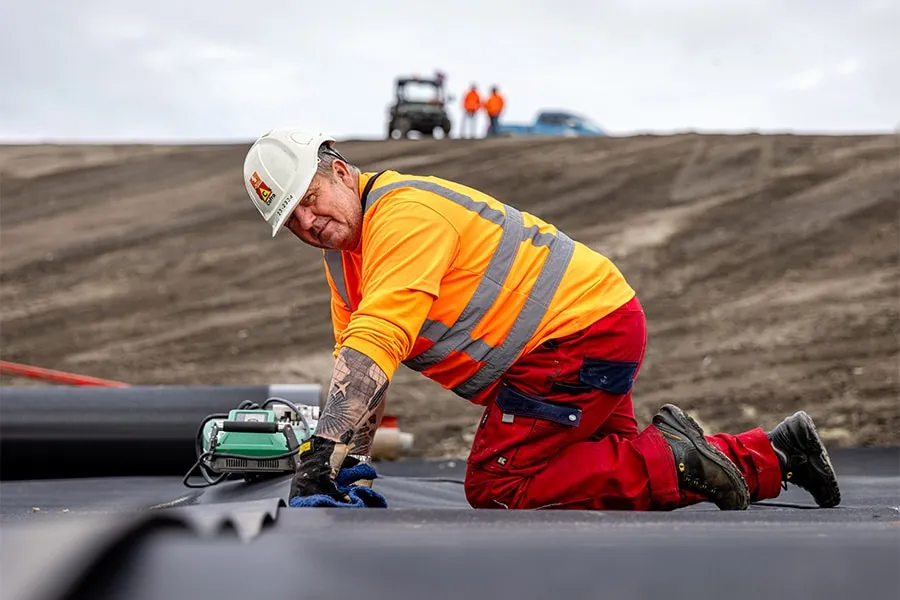
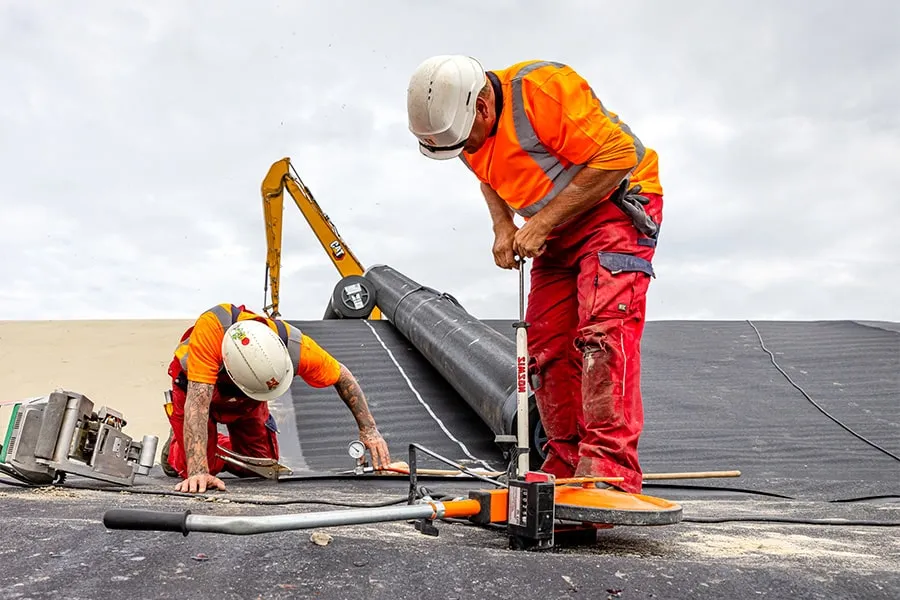
HDPE liner is resistant to a wide range of chemicals, including acids, salts, alkalis, alcohol, oils and hydrocarbons. In the Netherlands, this type of liner is used to cap landfill sites. The panels are welded together. Cofra carries out quality checks every day.
A major undertaking
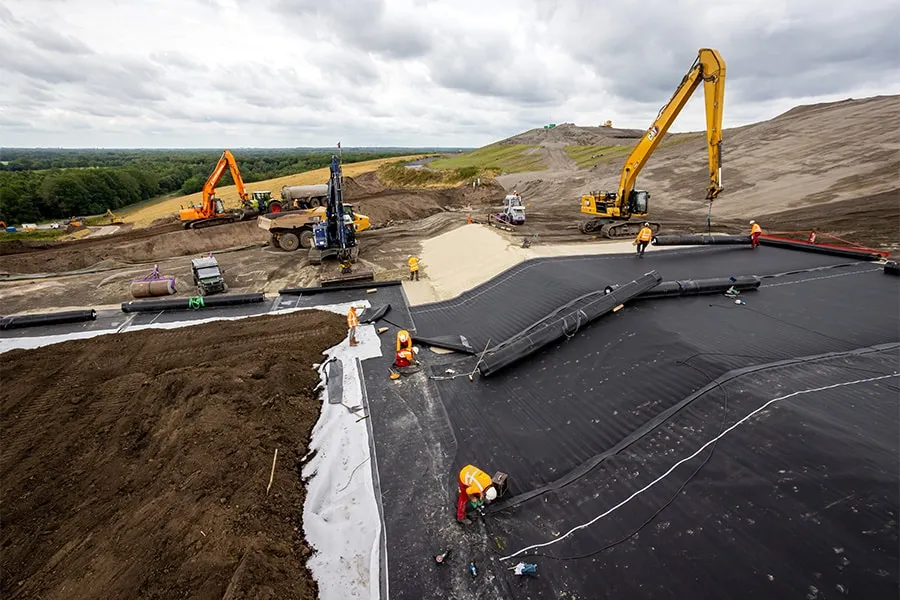
Rob Vorselman is responsible for delivery as project manager for the Netherlands: “Cofra has been working with Attero (then Essent milieu) since 2004. Around 90% of the landfill site at Wijster has been sealed using our product and by our specialists. We see Dak van Drenthe as the final piece, the prestigious finishing touch, if you like.” Given the total area and the long, steep slopes, this is a major undertaking. The total area is 160,000 square metres, of which 100,000 square metres were completed in this first phase.
Marchal Jacobs is responsible for the project preparation and follow-up at Cofra: “To be ready to start on 1 May, we began procuring materials in mid-March. Our deadline for completion was 31 July. That puts considerable pressure on the work.”
Rob: “For this project, bottom ash from waste incineration is laid as the first layer on the landfill site. The ash is profiled and compacted. This is followed by a 7-centimetre layer of Trisoplast, which provides protection and has self-healing properties. We then cover this layer with 2 mm HDPE liner. The panels are welded together to form an impermeable layer. The welds are tested as work progresses by applying overpressure. We then lay the drainage mat, which carries away rainwater. After all, water cannot pass through the HDPE liner.”
Data recorded
Depending on the gradient, Cofra selects either smooth or textured liner. Marchal: “All data is recorded throughout the process: the location of the panels, who carried out the welds and the tests, and the weather conditions, for example. We have a test container on site for continuous monitoring. Each roll also has a unique number that can be traced back to the production batch at the factory. This means we can always establish exactly when a particular section of liner was laid, which settings were used on the machinery and, where applicable, whether any repairs were carried out.”
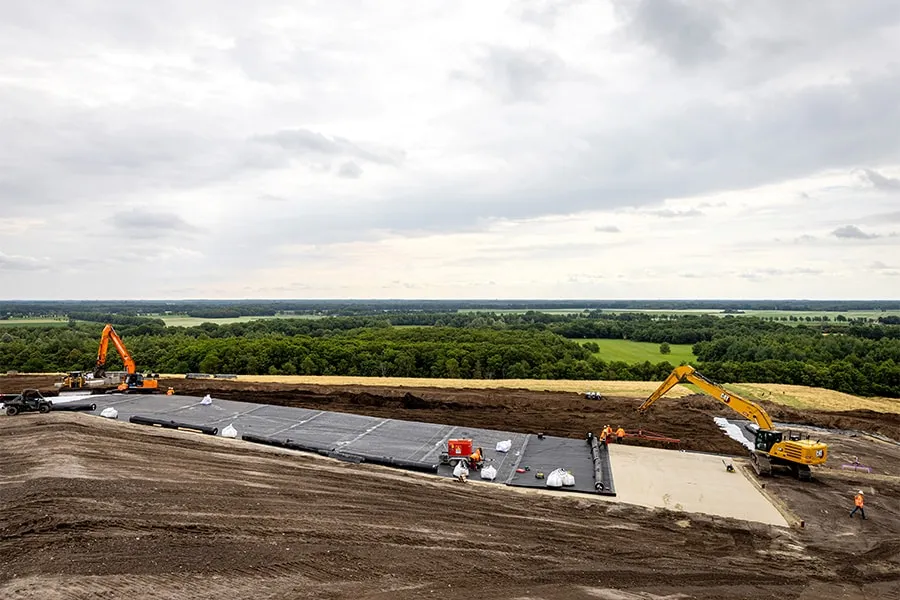
Craftsmanship, perseverance and teamwork
Cofra works exclusively with experienced staff. Our welders have been with us for 15 to 30 years. Rob: “Our team completed the entire project in 12 weeks. It was high-pressure work requiring the utmost accuracy. I would compare it to the Champions League. The liner panels are 80 metres long and 7.5 metres wide. In strong sunlight, the liner quickly reaches 60 degrees, which makes the work demanding for our team, particularly on such a long, steep slope. The work is also weather-dependent, so when it rained for three weeks, we had a scheduling problem. But we got it done without losing sight of the safety of everyone involved.”
Cofra finds working with its parent company Boskalis particularly rewarding. This was already evident on previous projects. The parties know each other and work as an integrated team. Mutual trust and strong working dynamics allow them to complement each other perfectly on projects of this kind. The liner installation was completed ahead of schedule.
A business enquiry for Cofra B.V.? Get in touch
Who worked on Dak van Drenthe
Keep following this
Get an email when a new story is published. No account needed.
- ProjectDak van Drenthe
- ThemeSafe working and skilled professionals
- SubjectNews
- CompanyCofra B.V.







