









Construction of the outer lock head cofferdam for the Nieuwe Sluis in Terneuzen in full swing
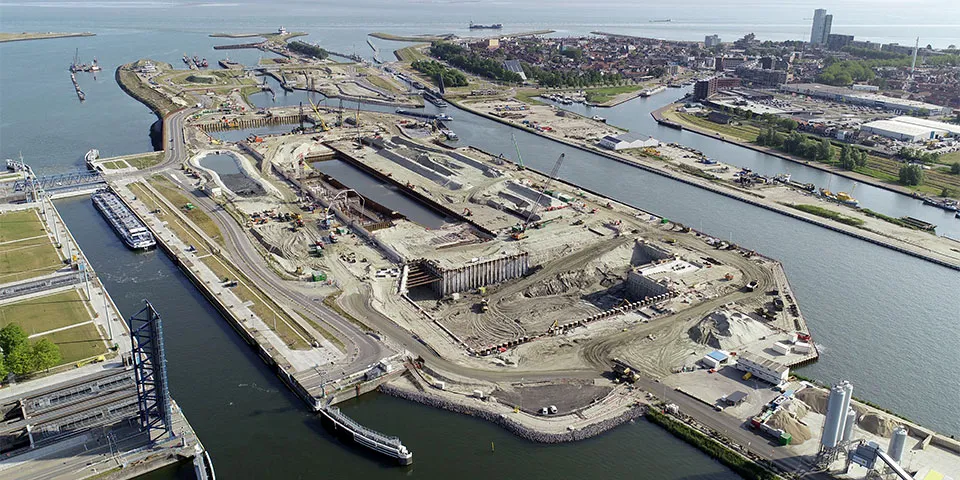
Work is proceeding at full speed in Terneuzen to build the cofferdam for the outer lock head.
The lock heads are being built in a dry cofferdam, where work will take place on the gate recesses, bridge chamber and levelling system on both sides of the lock chamber. Work on the outer head, the lock head on the Westerschelde side, is slightly ahead of work on the inner head, on the Kanaal Gent-Terneuzen side.
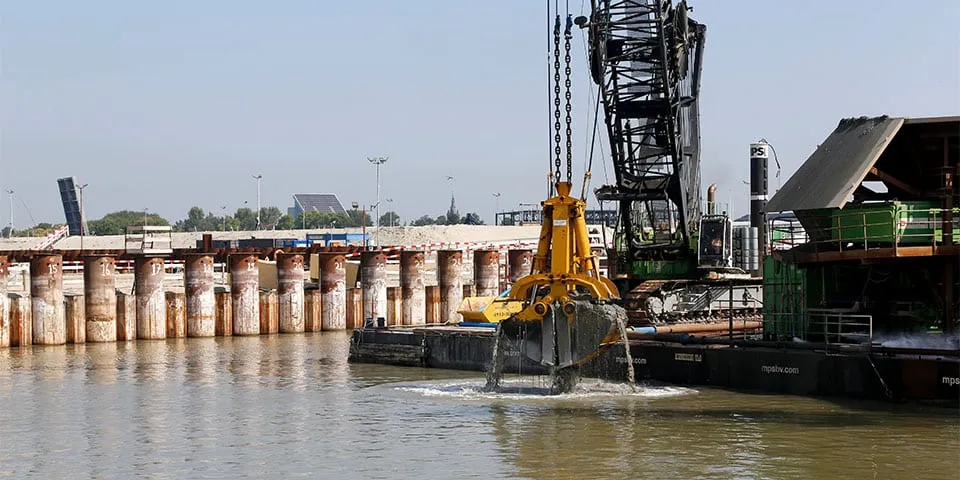
The cofferdam for the outer head was first excavated dry to -11 metres NAP. It will eventually be -22 metres NAP deep. To reduce the upward pressure on the base, after dry excavation the outer head cofferdam was filled with around 15,000 m3 of canal water. Two cranes then excavated underwater to -22 metres NAP from a 55 x 22 metre pontoon in the cofferdam. This work is currently in full swing at the inner head.
12,000 cubic metres of underwater concrete
Most of the material excavated underwater was pumped through the existing pipeline route. Non-reusable soil was taken away by ship from Buitenhaven-West. Reusable soil was pumped via a branch in the pipeline route to one of the soil depots elsewhere on the construction site. After the dry and underwater excavation, it was time to pour underwater concrete on the base of the outer head cofferdam. A layer of gravel was first laid as a base for 1 metre of underwater concrete. The pour took place on 4, 5 and 6 August 2020 in a continuous operation. For 24 hours a day over three days, divers helped pour a total of 12,000 cubic metres of underwater concrete. The operation had to be carried out without interruption to ensure the quality of the concrete floor.
Production at the on-site concrete plants
The on-site concrete plants are located at the Zeevaartweg construction site, where the underwater concrete was produced. A total of 60 tonnes of cement was used, delivered from Belgium by two bulk trucks per hour. As the process could not be interrupted, a ship carrying cement was kept on standby as a back-up in case anything went wrong with road deliveries. Sand and gravel for production were delivered by ship during the day.
This way of working was in line with the plan to minimise disruption as much as possible. Having the concrete plants on site avoided the need for concrete mixers to travel on public roads. In addition, producing the concrete on site made it possible to ensure consistent quality for the underwater concrete.
Pumping out the cofferdam
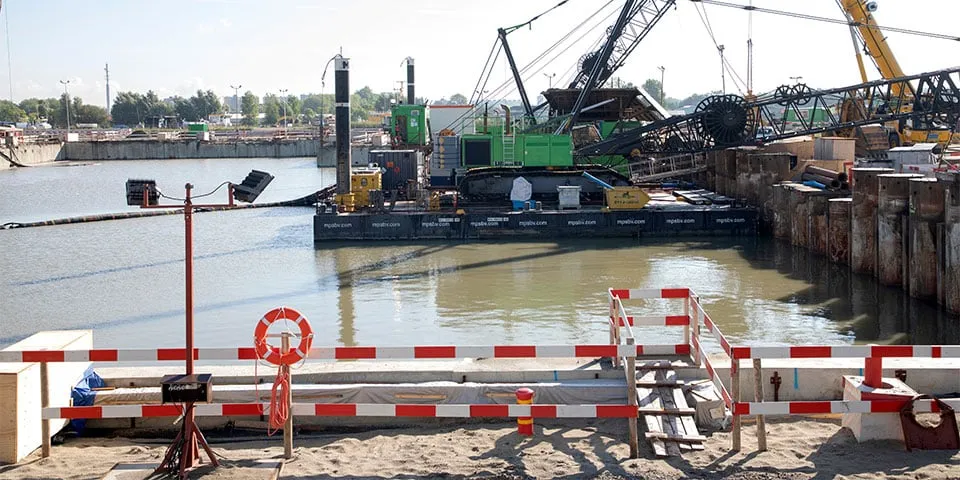
The underwater concrete has now hardened and the cofferdam is being pumped dry. The thick concrete floor, together with dewatering, keeps the pressure under control and prevents the floor from bursting open. Dewatering is carried out carefully and under controlled conditions. Groundwater is extracted from beneath the cofferdam and then returned to various soil layers nearby, so the impact on the surrounding area is negligible. Water levels around the cofferdam are monitored, as is the stability of the façades of several houses in the centre of Terneuzen. Survey bolts have been installed in the façades for this purpose. The dry cofferdam is around 25 metres deep.
Question about this story? Ask your question
Keep following this
Get an email when a new story is published. No account needed.
- ThemeUnderground construction
- SubjectNews







