









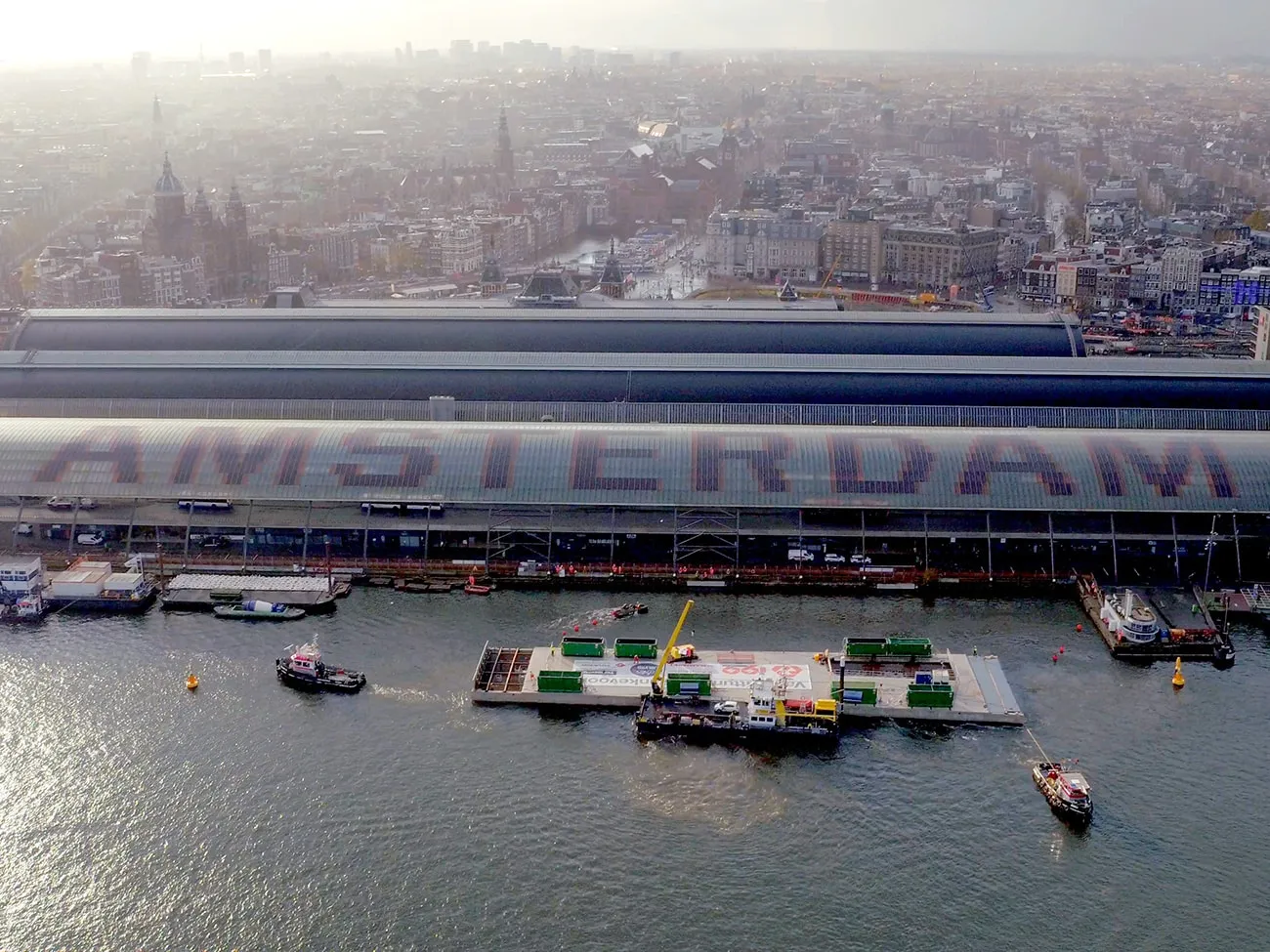
Concrete cycle parking facility transported across the water to the project site
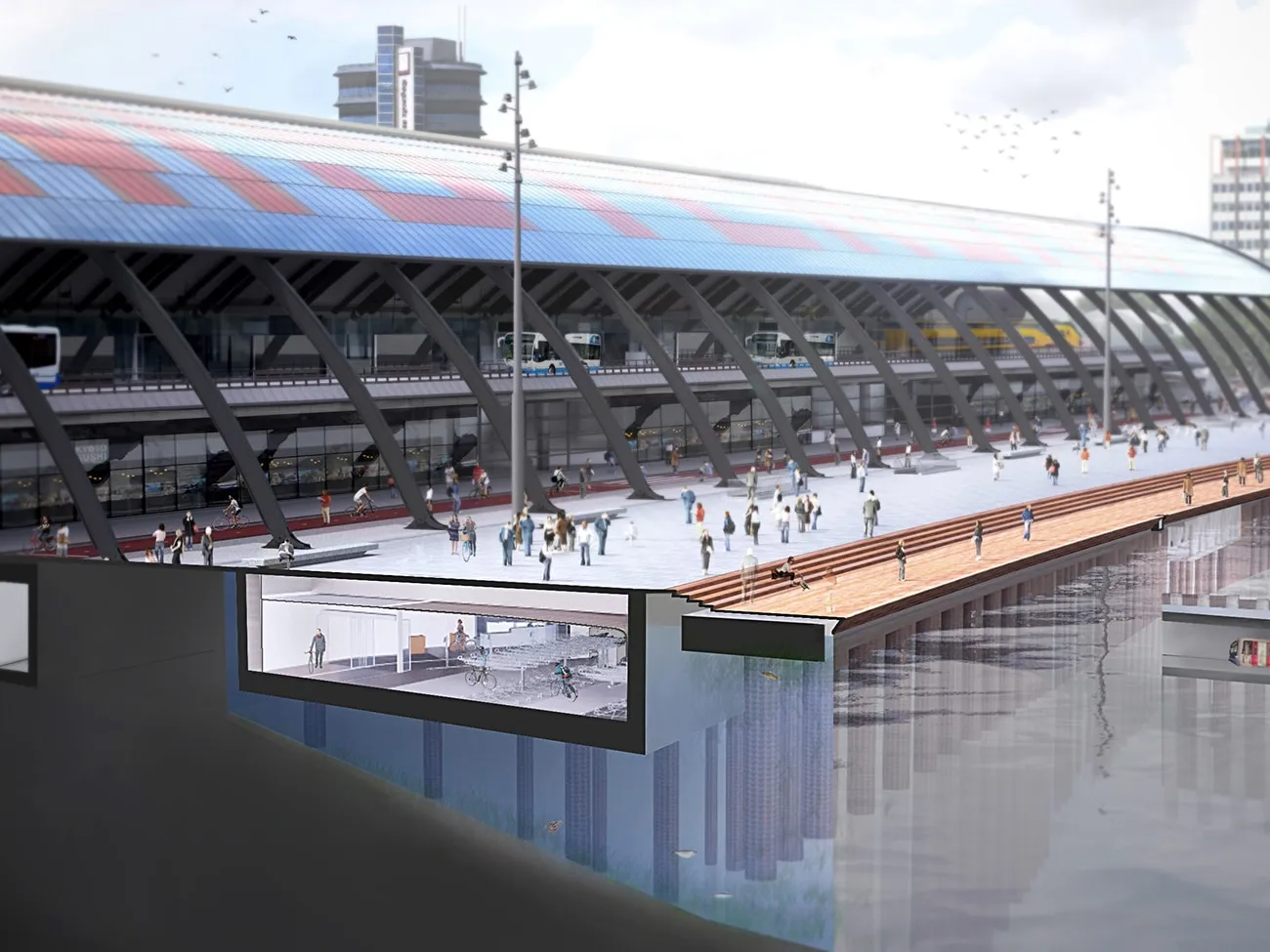
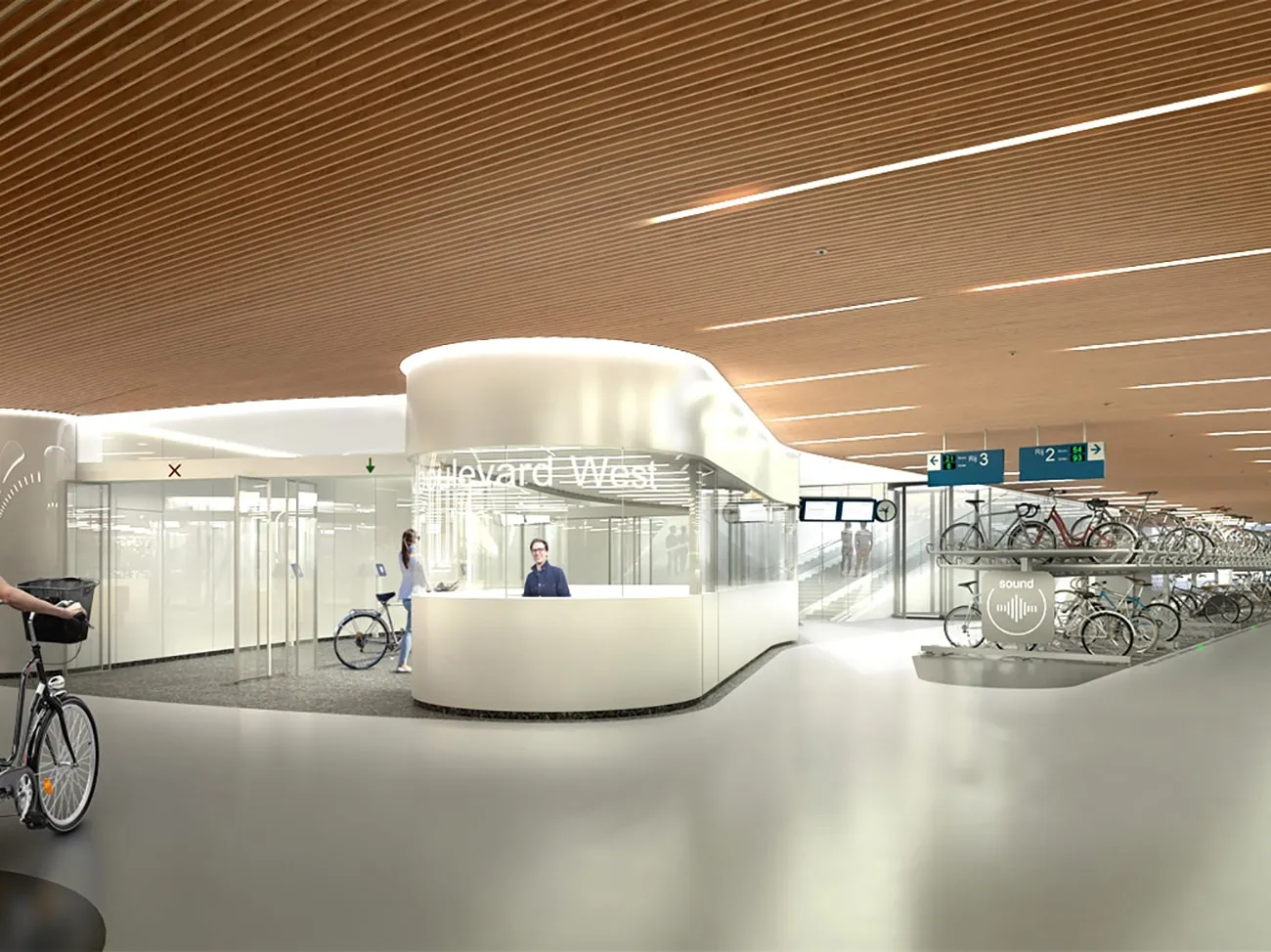
The IJboulevard, a 6,000 m2 pedestrian area on the IJ, is taking shape on the north side of Amsterdam CS station, commissioned by the Municipality of Amsterdam. One part of the project is the construction of an underwater cycle parking facility. The framework of this facility, which will accommodate 4,000 bicycles, consists of three colossal concrete caissons. Strukton Immersion Projects transported these elements from a precast site to the project site by tugboat and installed them there with the utmost precision.
For more than 30 years, Strukton Immersion Projects has been the specialist within Strukton Civiel for floating, transporting and immersing tunnel elements and caissons. “On behalf of main contractor Van Hattum en Blankevoort, we handled the transport and installation of the three elements for the cycle parking facility,” says project manager Robbert Martens of Strukton Immersion Projects. The company had been involved in the project since the tender stage and worked closely with Van Hattum en Blankevoort from the very beginning. These factors helped ensure that the operation went smoothly. “The main key to success, however, lies in the extensive expertise available within our company,” Martens believes. “By bringing together our knowledge and skills at an early stage, we achieved a fantastic end result.”
Floating box
The three U-shaped caissons, each 30 metres wide and 6 metres high, and measuring 70, 85 and 90 metres in length, were built by Van Hattum en Blankevoort at an off-site precast location in Amsterdam’s western harbour area. The civil engineering specialist also screwed the foundation piles required for the cycle facility into the bed of the IJ at the Ruijterkade. Strukton Immersion Projects then took over. Martens explains the feat completed late last year. “As well as installing various towing and pulling arrangements, we sealed the ends of the three elements with temporary watertight steel bulkheads for transport. This effectively created a box that could float. The entire structure was then driven onto a pontoon. By adding water ballast to the pontoon, it sank progressively lower. Eventually the pontoon sank away from underneath it and the element began to float. Over the course of a week, the three elements were driven onto the pontoon one by one, made buoyant and towed to a temporary mooring location. Two weeks later, we were able to begin the 12-kilometre journey by water through the Port of Amsterdam.”
Familiar territory
Once they had arrived at the project site, the caissons were positioned above the foundations with the utmost precision. They were then filled with ballast and carefully lowered onto the foundation piles. After the elements had been placed on the piles one by one, a 1-metre gap remained between them: the ‘closure joints’. These joints were sealed with external bulkheads and pumped dry. The final concrete work could then be completed in this dry space, joining the three separate elements into one large structure. It was the finishing touch to a fine project in familiar territory, as it turned out. “We were also working in the waters around Amsterdam Central ten years ago,” Martens recalls. “At the time, we were immersing metro tunnel elements for the Noord/Zuidlijn. We were able to put the experience gained then to good use on the current project.”
A business enquiry for Strukton Civiel? Get in touch
Who worked on IJboulevard
- main contractorVan Hattum en BlankevoortIn this story

Keep following this
Get an email when a new story is published. No account needed.
- ProjectIJboulevard
- ThemeMaterials and techniques for infrastructure
- SubjectNews
- CompanyStrukton Civiel
- CompanyVan Hattum en Blankevoort







