









Comprehensive groundwater-level monitoring
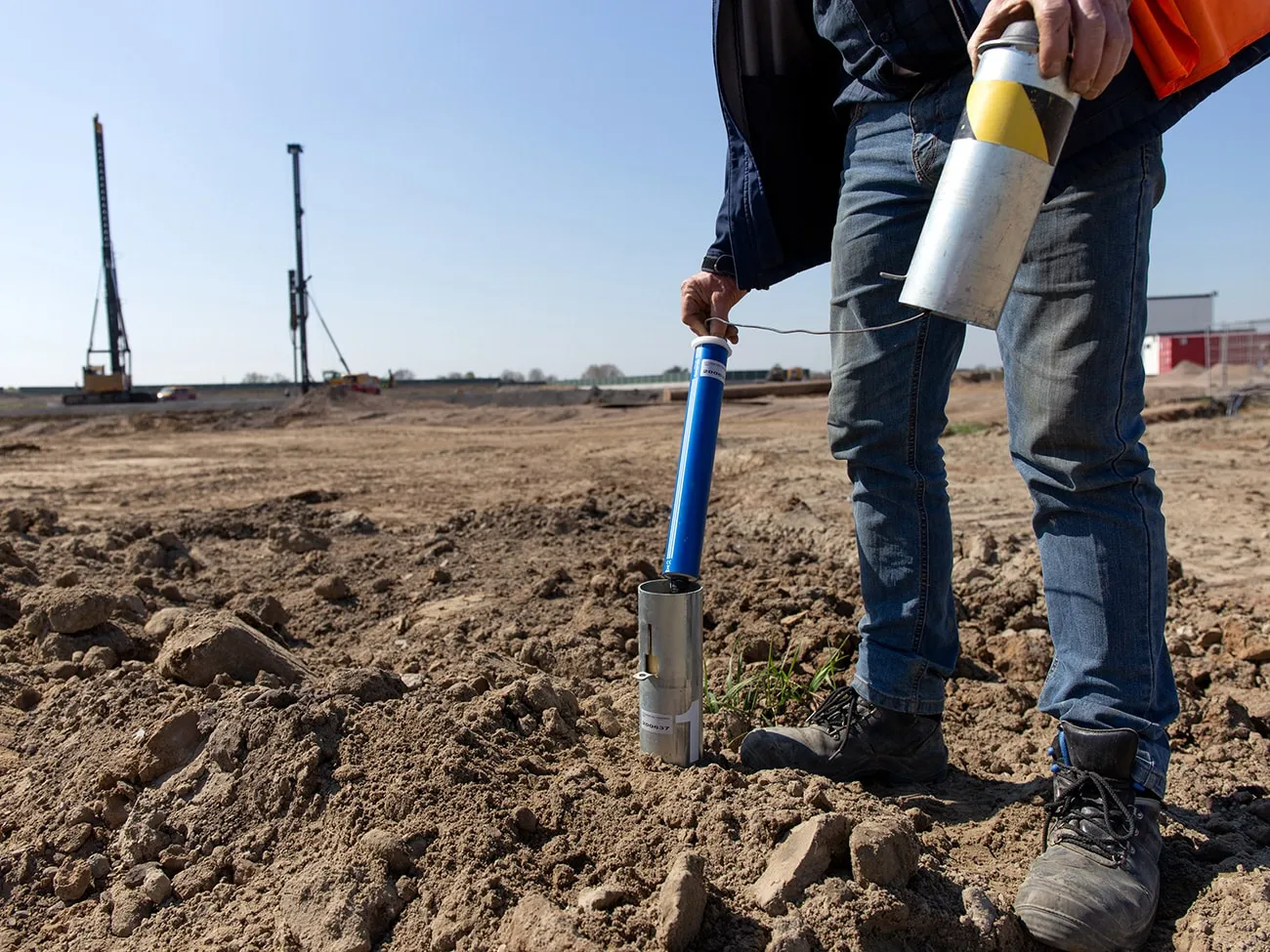
Climate change is not the only factor causing groundwater levels to fall or rise to extreme levels. Large-scale dewatering operations and dredging work can also cause significant ground settlement, with all the consequences that entails. Royal Eijkelkamp has developed a concept for efficient, comprehensive monitoring of groundwater levels. Its groundwater monitoring networks and associated technologies are attracting considerable interest.
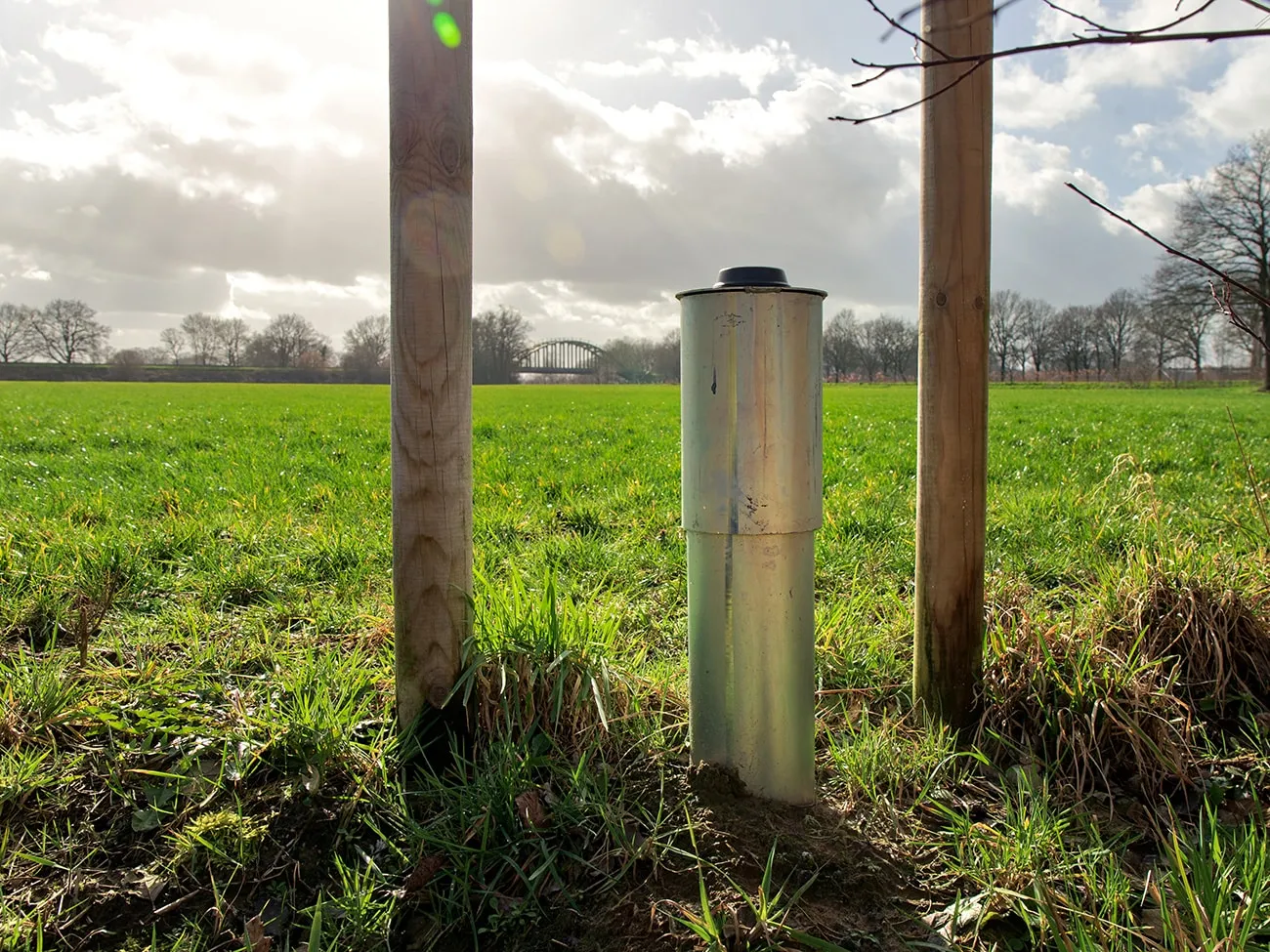
Civil engineering and infrastructure works can have a major impact on groundwater levels in the surrounding area. “Residents experienced this first-hand during maintenance work on the Twentekanalen some ten years ago,” says Erik Schrier, account manager at Royal Eijkelkamp. “That prompted Rijkswaterstaat to take a different approach when widening the Twentekanalen, a project that is due to run until the end of 2023. We were commissioned to install a groundwater monitoring network comprising 254 monitoring wells in residential areas, agricultural areas and locations around the canal, so that any deviations can be addressed in good time.”
Connected monitoring wells
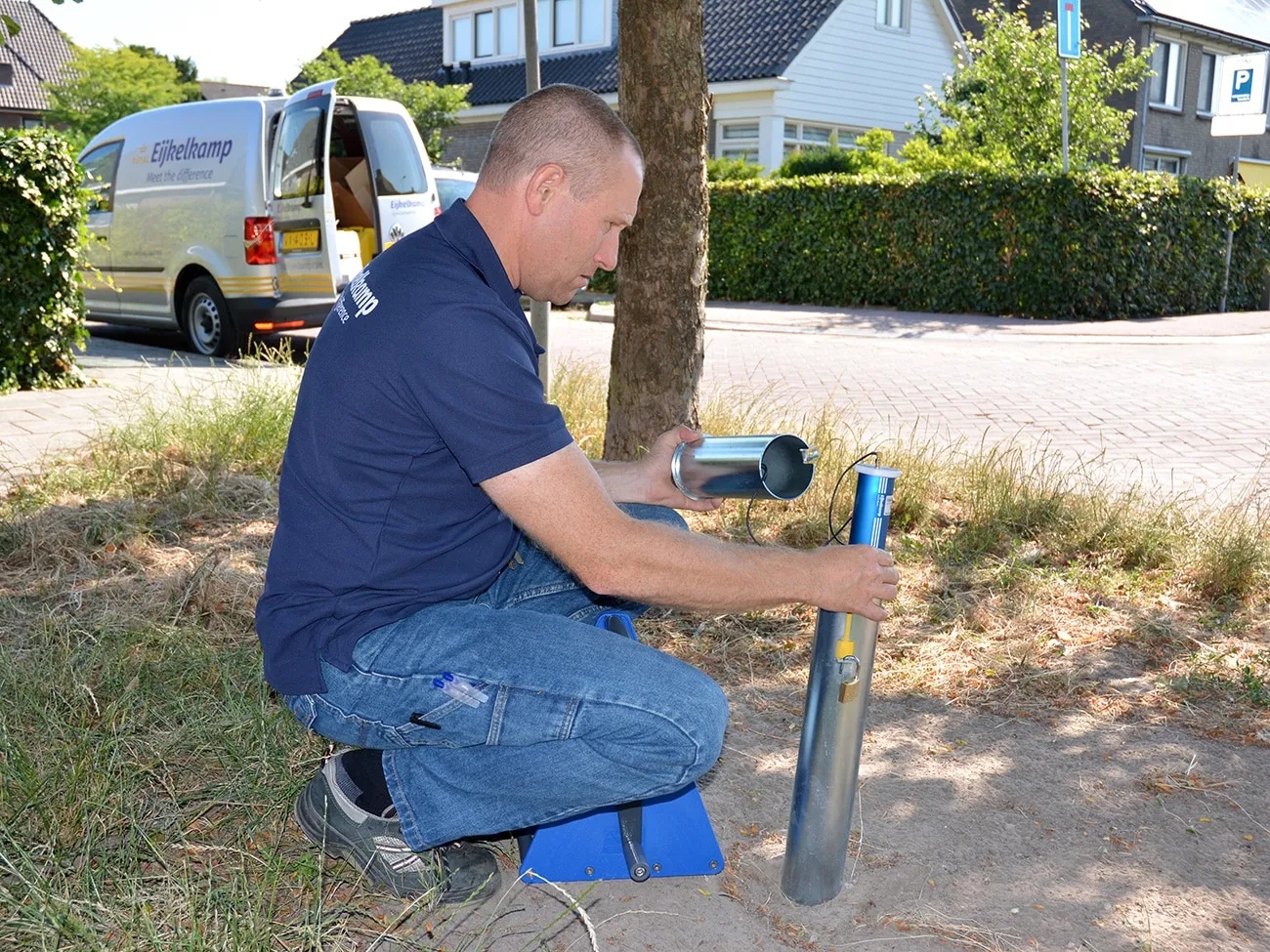
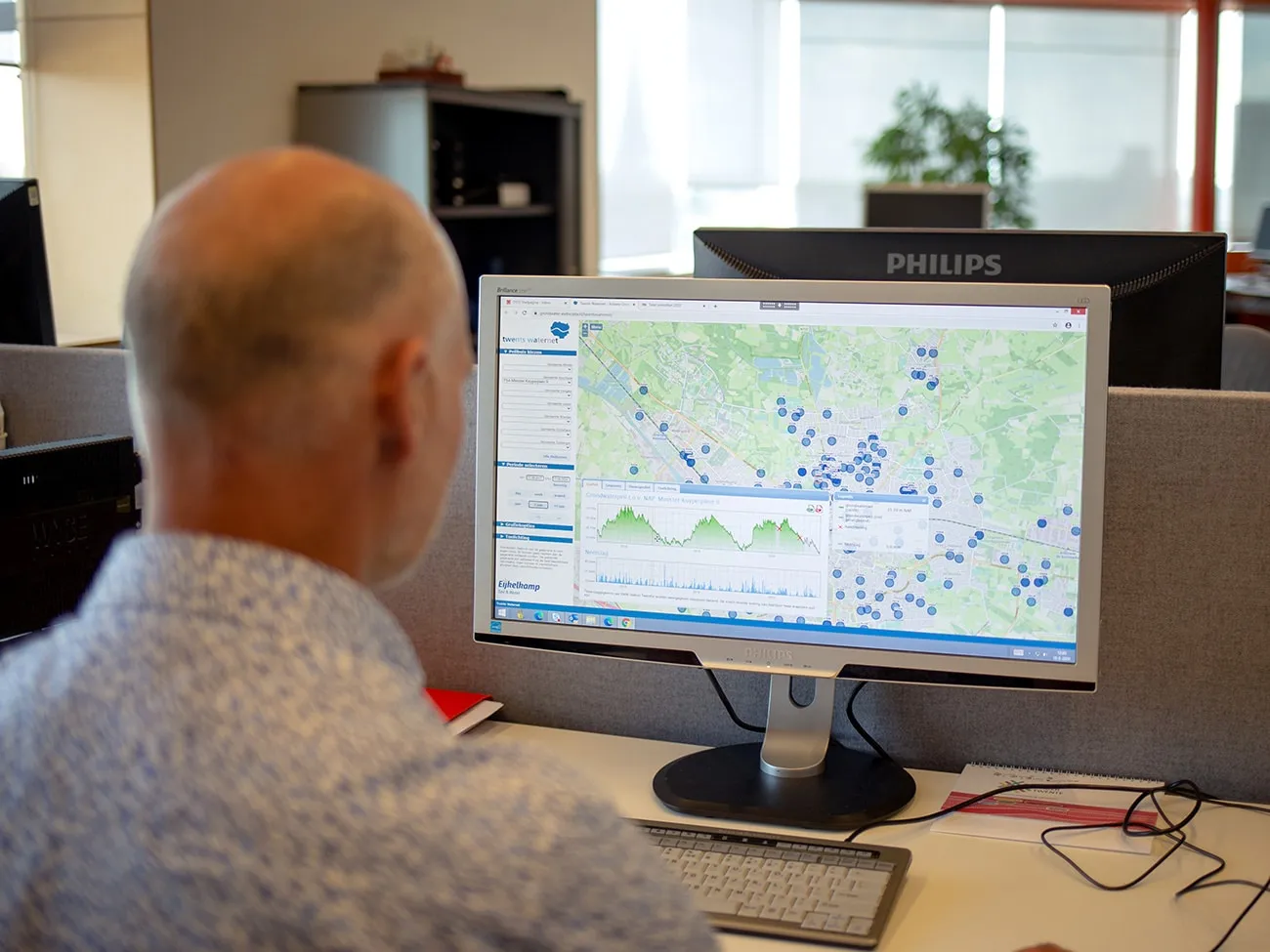
A groundwater monitoring network consists of a large number of monitoring wells. “The pressure sensor in each well is connected to a modem and transmits data to a web portal,” Schrier explains. “Depending on how the client wants the data delivered, we filter, validate and visualise it. Sometimes clients also want access to the raw data, so we provide those alone.” Municipalities, provinces and water authorities also benefit from real-time insight into groundwater levels, as well as infrastructure projects. “Under the Water Act, every municipality has a duty of care for groundwater,” says Schrier. “A target level must be set and monitored. We have installed such networks for several municipalities and water authorities, often with hundreds of monitoring points. We manage a network of 590 monitoring points for Enschede and the five surrounding municipalities, 800 for Waterschap Vallei en Veluwe and 240 for the Water Innovatie Netwerk (WINNET).”
Related technologies
The groundwater monitoring network may be owned by a municipality or another client. “In that case, we take care of management and maintenance, including periodic cleaning of monitoring points and carrying out check measurements. Increasingly, we retain ownership of the equipment ourselves and provide only validated data as a service. The client or their adviser interprets the validated data in relation to the research objective for which it was collected,” says Schrier. “Public authorities increasingly want us to take care of everything in this area. We have so much experience with groundwater monitoring networks that we can also use this technology, albeit with other sensors connected to telemetry, to measure soil moisture, flow rates, evaporation and water quality. Soil moisture monitoring networks are mainly set up by water authorities and farmers focusing on the zone above the groundwater table, the unsaturated zone. The data collected can be used to regulate the water balance. The same applies to flow monitoring networks, which record water discharged through ditches and canals. Water quality monitoring networks allow us to monitor the general quality of the water: acidity, turbidity, oxygen content, electrical conductivity and so on. Real-time monitoring means deviations can be addressed in good time, helping to prevent nuisance or damage wherever possible.”
Royal Eijkelkamp has also recently acquired measuring equipment, including inclinometers and crack gauges, to monitor settlement in the ground or buildings and carry out geotechnical measurements such as pore water pressure. “We can also incorporate this equipment into monitoring networks and, if required, connect it to telemetry and a web portal.”
Question about this story? Ask your question
Keep following this
Get an email when a new story is published. No account needed.
- ThemeUnderground construction
- SubjectNews







