









“Building sustainably, but not at the expense of quality”
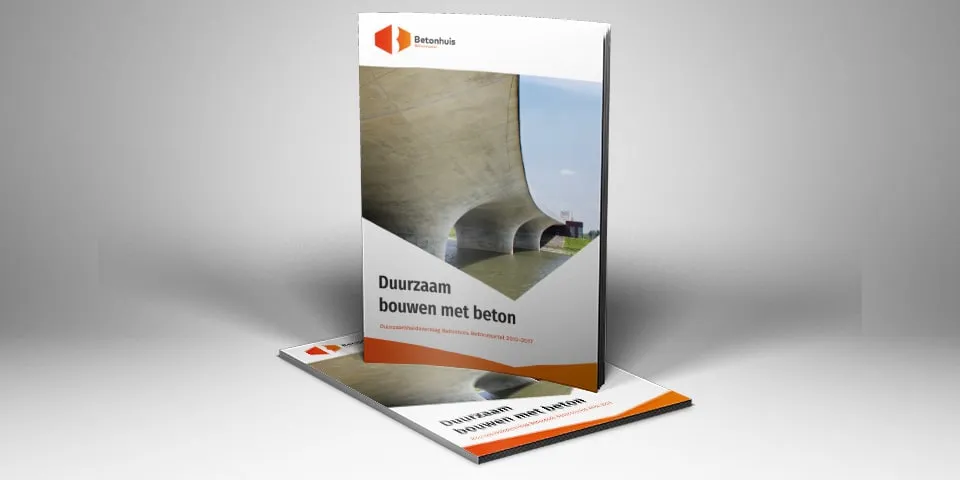
Concrete plants make a major contribution to a greener construction sector, including civil engineering. Sustainability is playing an increasingly important role in project planning and delivery. The Sustainability Report for Ready-Mixed Concrete, recently published by Betonhuis, charts the sector’s progress towards greener practices.
“The Netherlands is well ahead when it comes to concrete sustainability. We have been working to make the concrete industry more sustainable for a very long time and have made great strides. CO2 emissions have been falling for five years,” says Paul Ewalds, sector secretary for Ready-Mixed Concrete at Betonhuis. The figures bear out his statement: the Sustainability Report for Ready-Mixed Concrete shows that the 15 million cubic metres of concrete produced annually in the Netherlands account for just 1.5% of CO2 emissions. The EU average is 4 to 6%, while the global figure is as high as 9%. Compared with 2012, ready-mixed concrete production now generates 10% less CO2.
Efficient transport
A significant part of the concrete industry’s sustainability drive focuses on energy use, including transport and fuel for truck mixers. Economical driving, shifting freight from road to water, more efficient logistics and the move not only to electric vehicles but also to electric truck mixer drums all deliver substantial CO2 savings, the report says. The distance to the construction site also matters, says Ewalds: “Various regional authorities have come to recognise that the concrete industry has an important role to play, including in urban areas. Concrete plants can coexist perfectly well with housing and serve a public purpose, including by helping to deliver the construction programme. This also means shorter transport distances.”
Using binders wisely
The binder is responsible for the largest share of CO2 emissions from ready-mixed concrete. Making production more sustainable therefore involves choosing the right cement, as well as using alternative binders such as fly ash and blast-furnace slag, which produce less CO2. The reuse of materials is also being further optimised. Use of secondary raw materials, including recycled concrete aggregate, ballast gravel, fly ash and blast-furnace slag, rose slightly last year, from 4.2% in 2016 to 4.5%.
“These are good results,” says Ewalds. “But that does not mean there is no room for improvement. Betonhuis has two tools to help with that. The first is the CSC certification scheme. It grew out of a Dutch initiative six years ago to make the concrete supply chain, from raw materials to concrete, more sustainable. The CSC certification scheme is now international. Dutch companies hold around half of all certificates, while countries such as Turkey and Germany are also making good progress.”
The second tool is the Ready-Mixed Concrete Benchmark, an online comparison tool for sustainable business operations and production. Concrete companies that are members of Betonhuis can enter data from their production processes, such as binders, aggregates and energy consumption, online and compare them with the Dutch average. “We believe this voluntary approach to sustainability helps our members more than imposing measures on them. The results in this report show that it works.”
Expertise in-house
Ewalds stresses that focusing solely on sustainability in the concrete industry carries risks. “For us, sustainability must never come at the expense of quality. Using different types of binder can affect a product’s service life and its resistance to external factors such as salt water. For example, if you choose a concrete product with very low CO2 emissions, perhaps by using an alternative binder, and also want to use a high proportion of recycled concrete aggregate, the product’s service life may be shorter. You cannot have everything at once.”
Ewalds emphasises that producing and placing high-quality ready-mixed concrete with the required properties takes extensive knowledge and expertise. “It is a real craft. Betonhuis Betonmortel members have that expertise in-house. For complex projects involving sustainability and circularity, it is advisable to involve our members in the construction project at the specification stage.”
Question about this story? Ask your question
Keep following this
Get an email when a new story is published. No account needed.
- ThemeLower emissions and more reuse
- SubjectNews







