









Awards for modular viaduct, genetic design and sustainable fuel chain
Minister Harbers (I&W) presents the InfraTech Innovation Awards
The winners of the 15th edition of the InfraTech Innovation Awards were announced today, to great interest, on the second day of the Benelux’s largest infrastructure trade fair. Minister Mark Harbers of Infrastructure and Water Management presented the awards to construction company Max Bögl, engineering consultancy Antea Group and a partnership of government, business and education in the province of Gelderland.
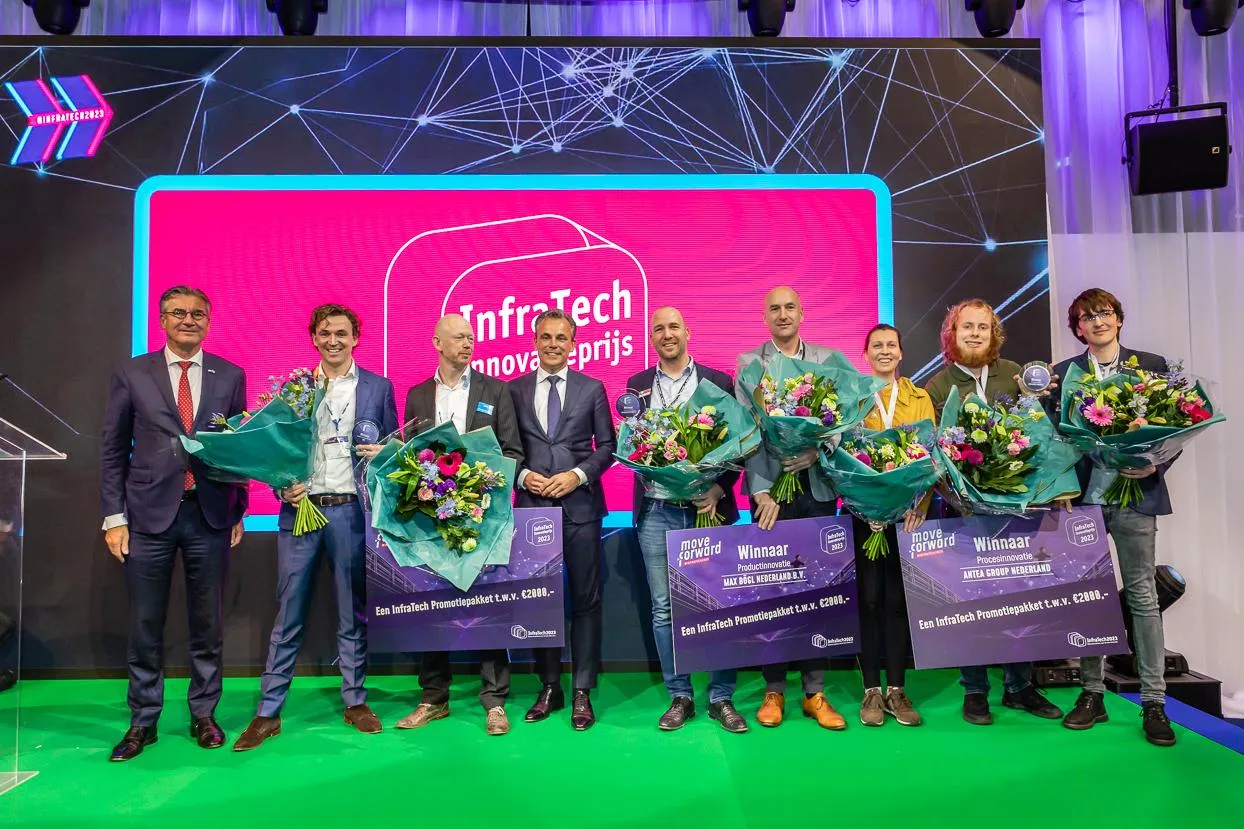
Jury chair Maxime Verhagen (Bouwend Nederland) praised the quality of the 64 entries. “If the entrants can further develop their innovations, they will make a major difference in the Netherlands and across Europe. Each of these innovations will make the world a little better. They aim to cut emissions, improve accessibility and create a healthier world. They show that things need to change, but fortunately, that change is possible too.”
Minister Mark Harbers presented the Innovation Awards. He quoted Albert Einstein, who once said that ‘logic will get you from A to B, but imagination can take you anywhere’. And we need that imagination to shape the future we want, and in which we can still live. To keep our country liveable, we need to do things differently and more intelligently. The winners of these awards show that this is possible.”
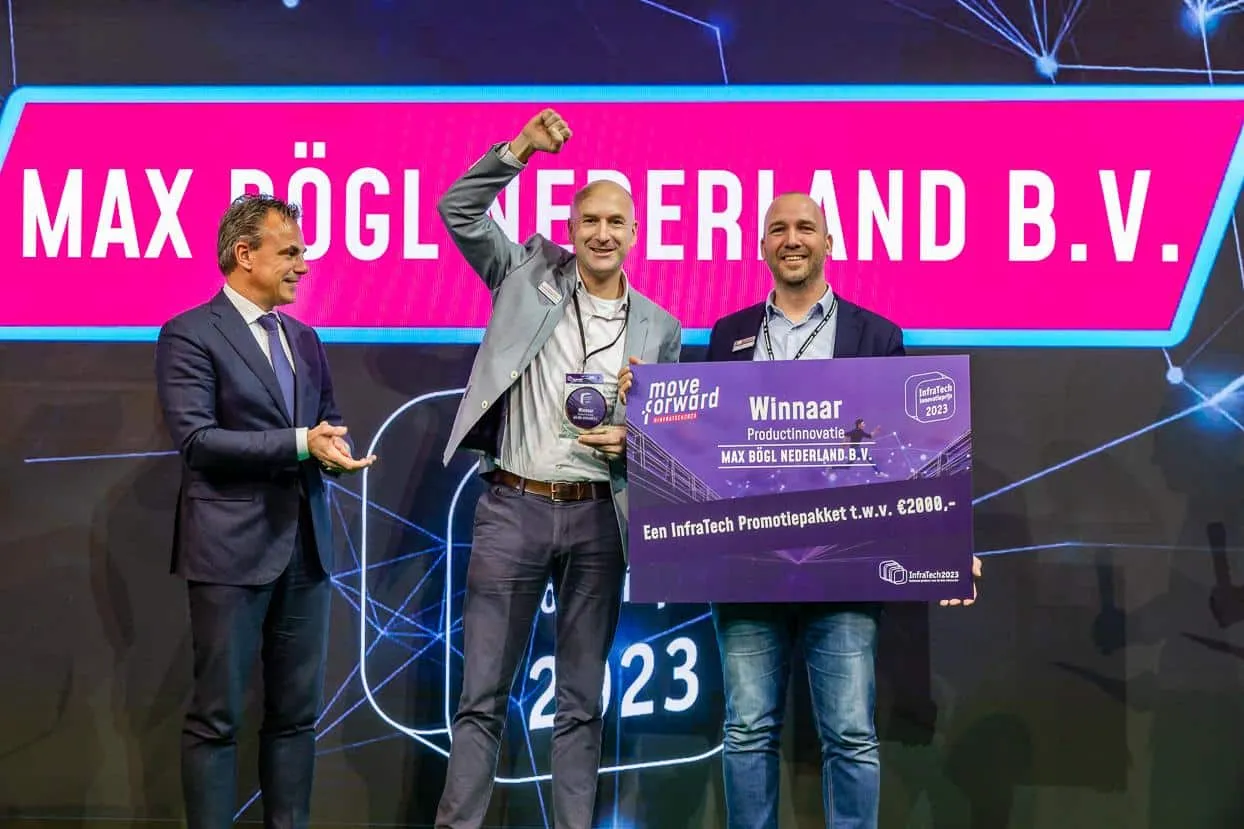
Max Bögl won in the Product Innovation category with a modular viaduct. The viaduct consists of an abutment made from a reinforced soil structure. The span is made up of steel beams and deck panels of cement-free geopolymer concrete, ground to an accuracy of 0.1 mm. This creates a seamless, watertight connection and eliminates the need for asphalt. The deck panels are tensioned with steel cables, making them easy to remove. The advantages of a modular viaduct include a very short construction time, low-cost production through serial manufacturing, rapid replacement of individual bridge elements and low maintenance costs.
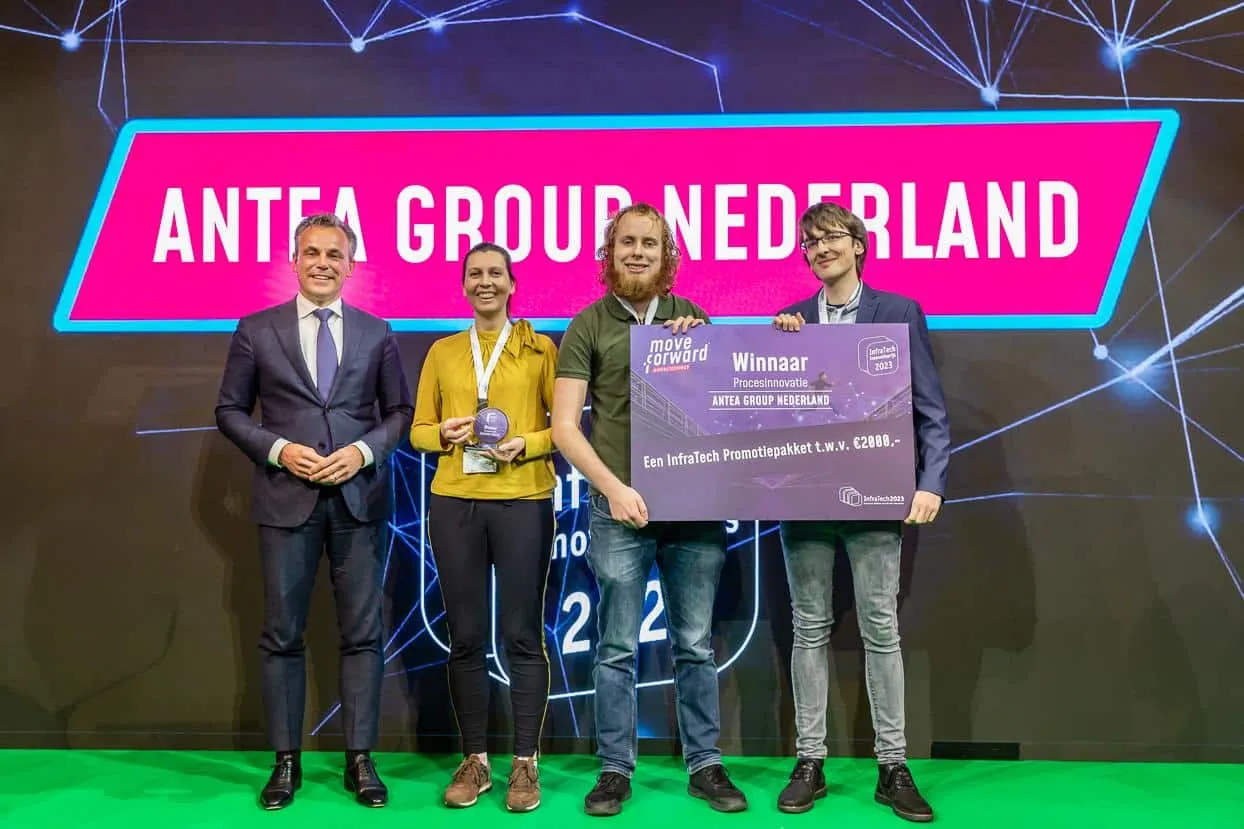
Antea Group developed a way to design structures using artificial intelligence, winning the Innovation Award in the Process Innovation category. What takes a structural engineer weeks of calculations is a matter of hours for an algorithm. Antea Group used artificial intelligence (AI) to build a new generation of design tools. The company developed a genetic algorithm to optimise foundation designs beneath tunnel approaches. By adding AI to parametric design, Antea can run calculations on thousands of options in a single day. Using AI, the computer selects progressively better designs that use fewer raw materials, making them more sustainable and less expensive, and identifying the optimum design. Antea Group is now working to make ‘Genetic Design’ available for other applications.
According to Antea, Genetic Design marks “the start of a revolution in engineering. In a fraction of the time, we can design slimmer structures that are therefore more sustainable, minimise our use of raw materials and achieve the lowest possible CO2 emissions. This will make more efficient use of the already scarce expertise in the infrastructure sector. Given the climate challenge, the need to replace ageing assets and capacity shortages, these benefits are extremely important for the future of our society.”
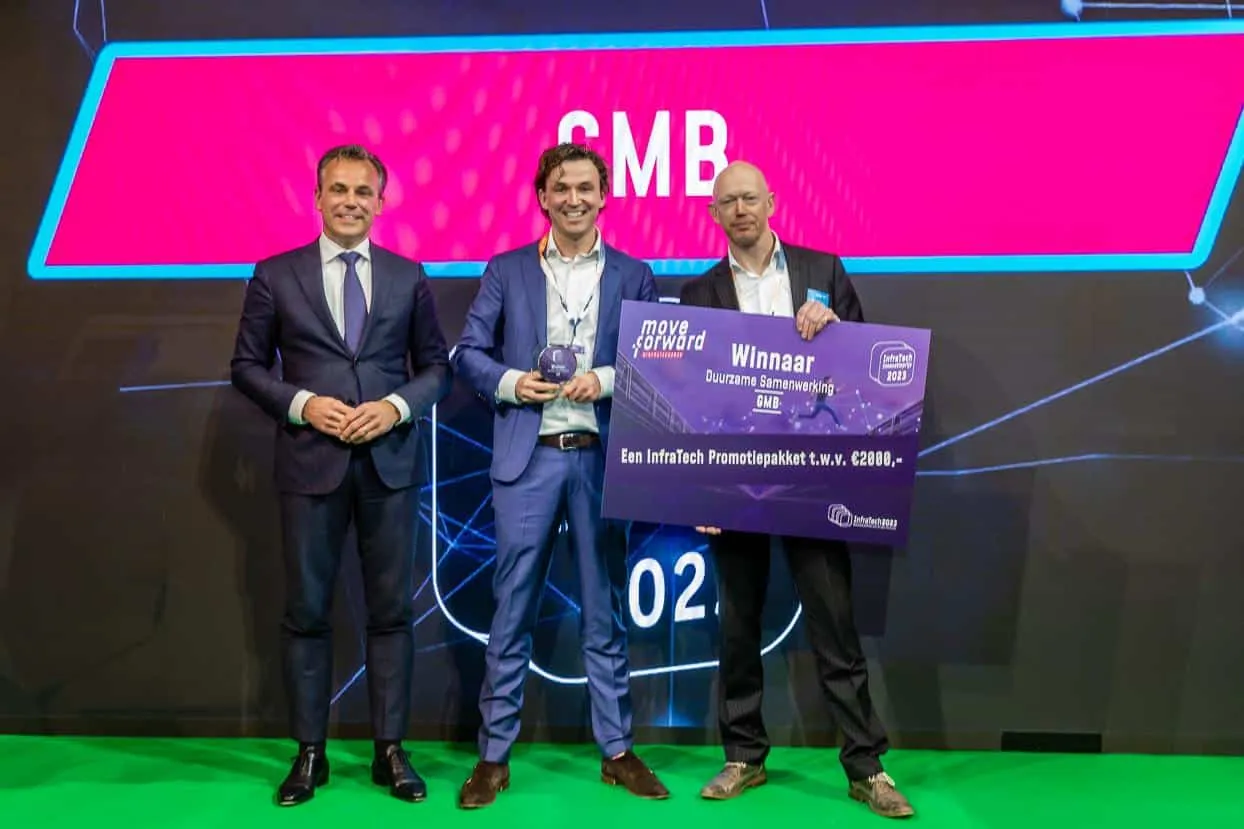
The Sustainable Fuel Chain is a partnership between (semi-)government, business and education, and won in the Sustainable Collaboration category. As part of the partnership, Waterschap Vallei en Veluwe and Gashouders are building a filling station to supply biogas to projects by construction company GMB in the region.
The first local fuel chain has been established between the Renkum wastewater treatment plant and a nearby construction site. This reduces emissions of CO₂, nitrogen oxides and particulate matter at both the wastewater treatment plant and the construction site. Gashouders manages the chain, in which surplus biogas from the water authority’s treatment process is no longer flared, but captured at a Gashouders filling station. The biogas is converted there into a zero-impact fuel and supplied to regional projects by contractor GMB. Buse Gas B.V. is developing containers for biogas storage, while Koninklijke van Twist is supplying the gas engine for a hybrid generator running on locally produced biogas. HAN (Hogeschool van Arnhem en Nijmegen) is researching the chain’s positive environmental impact.
In December, 9 of the 64 entries were nominated. You can find all the nominees here.
A business enquiry for InfraTech? Get in touch
Companies in this story
Keep following this
Get an email when a new story is published. No account needed.
- ThemeExtending the life of roads and civil engineering structures
- SubjectNews
- CompanyInfraTech
- CompanyGMB







