









AM-SIS proximity switch for sheet pile installation
Text Roel Bijlard Image ArcelorMittal
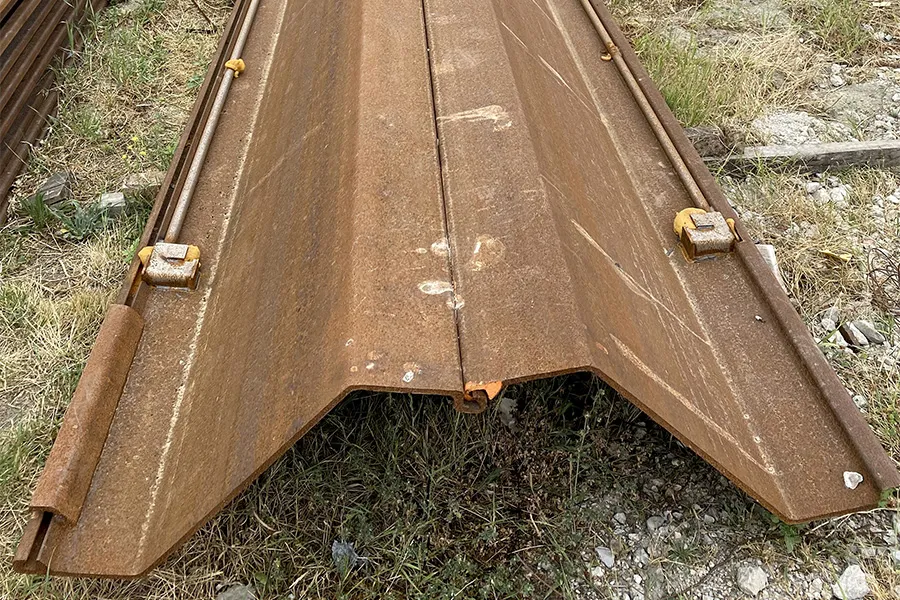
When constructing retaining structures, it is important to install a continuous wall without soil loss or leakage. In steel sheet pile or combined walls, all elements must be interlocked to ensure the wall is watertight to soil. Since the interlocks are underground or underwater, they often cannot be checked visually. Extremely heavy pile driving, or obstacles in the ground, can cause sheet piles to come out of the interlock, potentially resulting in ground loss.
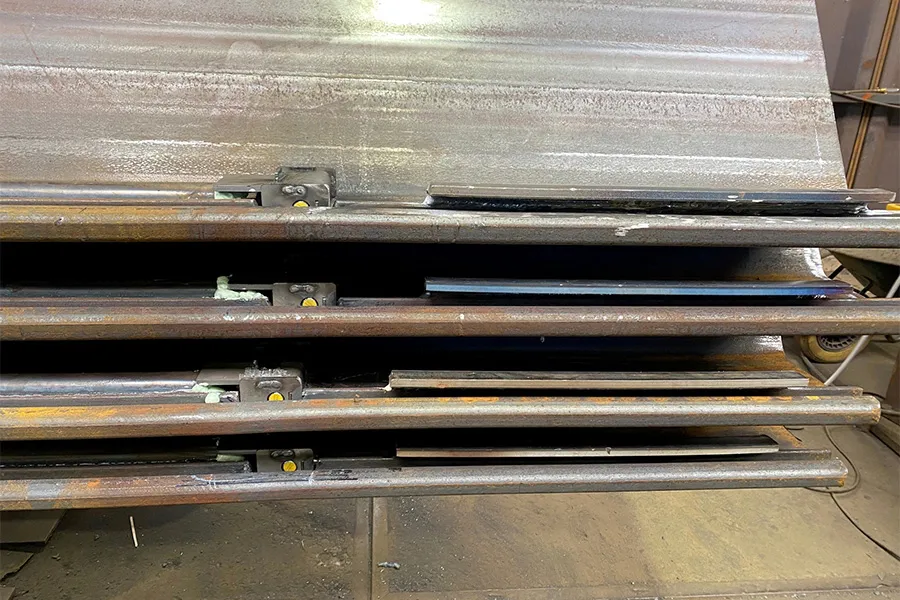
Discontinuous monitoring method using Dixeran™
A discontinuous monitoring method uses a sensor to verify at a single level whether the sheet pile has remained interlocked. ArcelorMittal uses the Dixeran™ system for this purpose. It consists of a break pin placed at the bottom of the leading interlock of the sheet pile. In a combined wall, these sensors are installed in the interlocks of the tubular piles. This interlock indicator detects whether the next sheet pile has remained interlocked: as it reaches the required depth, it breaks the sensor pin. This is recorded by a monitoring unit connected to the sensor at the top of the sheet pile. When the pin breaks, this confirms that the sheet pile has reached the required depth while remaining interlocked.
If the signal on the unit does not change, the sheet pile has come out of the interlock. However, the height at which this happened is unknown. If it happens in the top metre, it is easy to remedy if detected immediately. If the pile comes out of the interlock in the bottom metre, there may be no structural consequences at that depth. Not knowing the height at which the interlock came apart affects the corrective measures that need to be taken.
Continuous monitoring method using AM-SIS
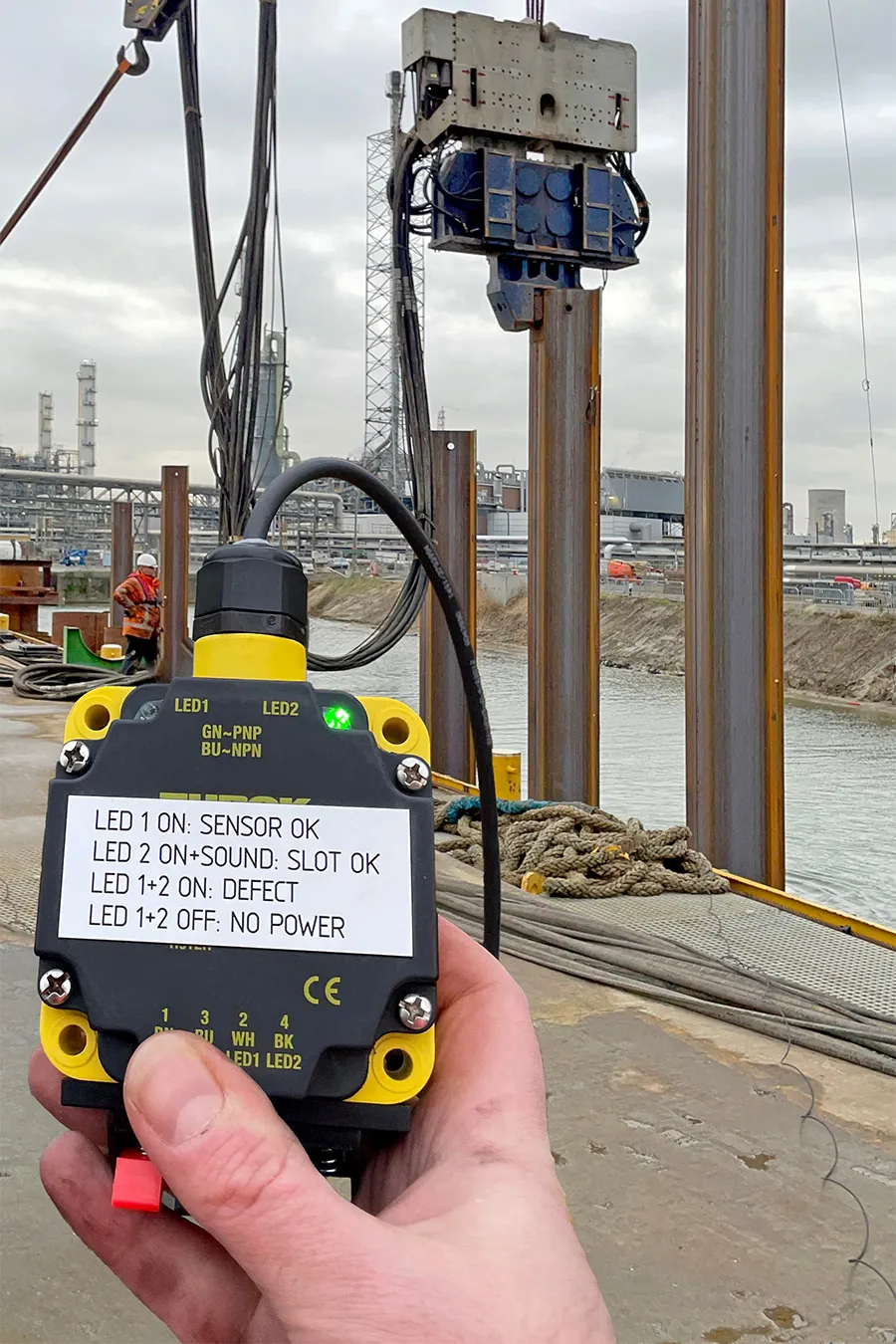
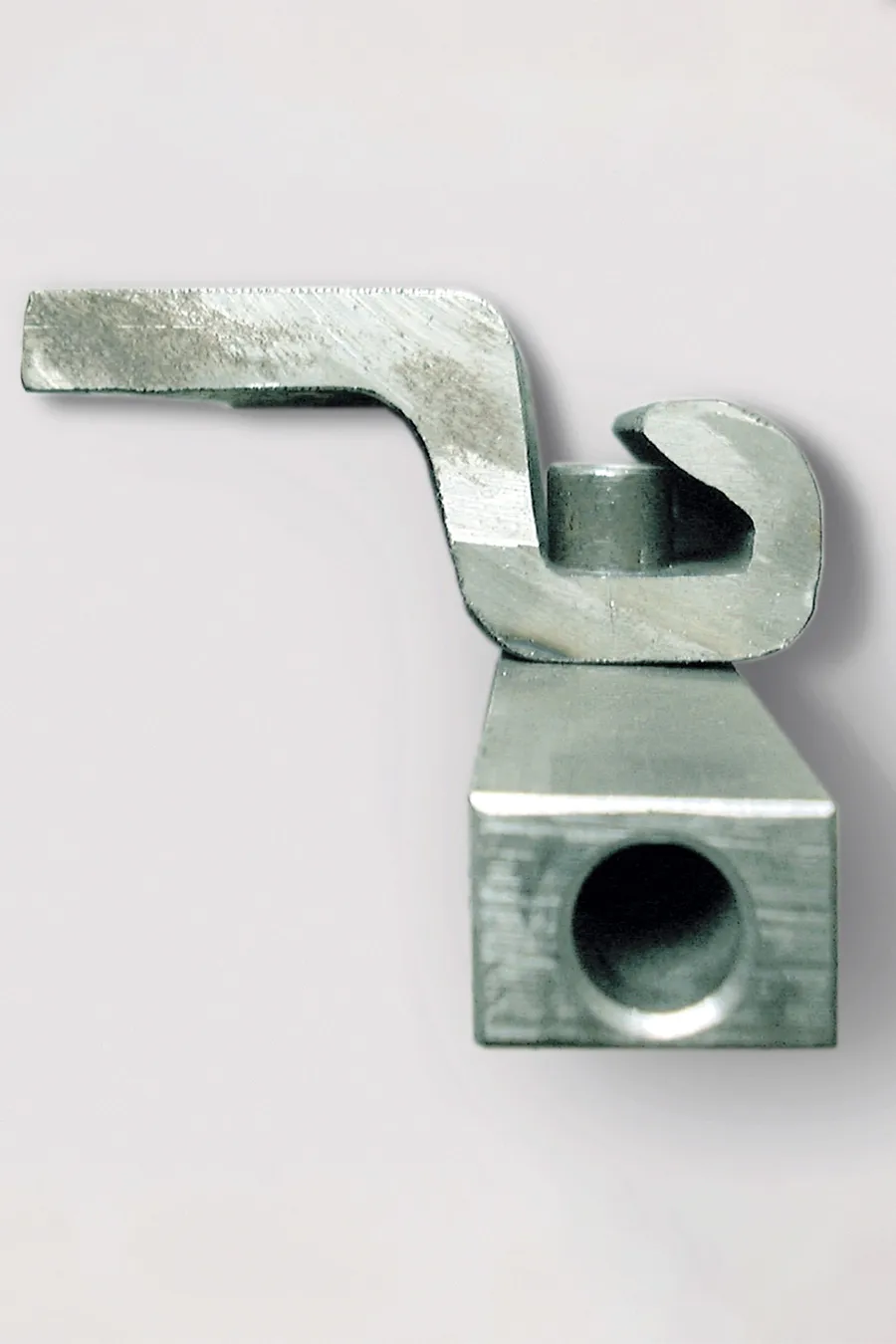
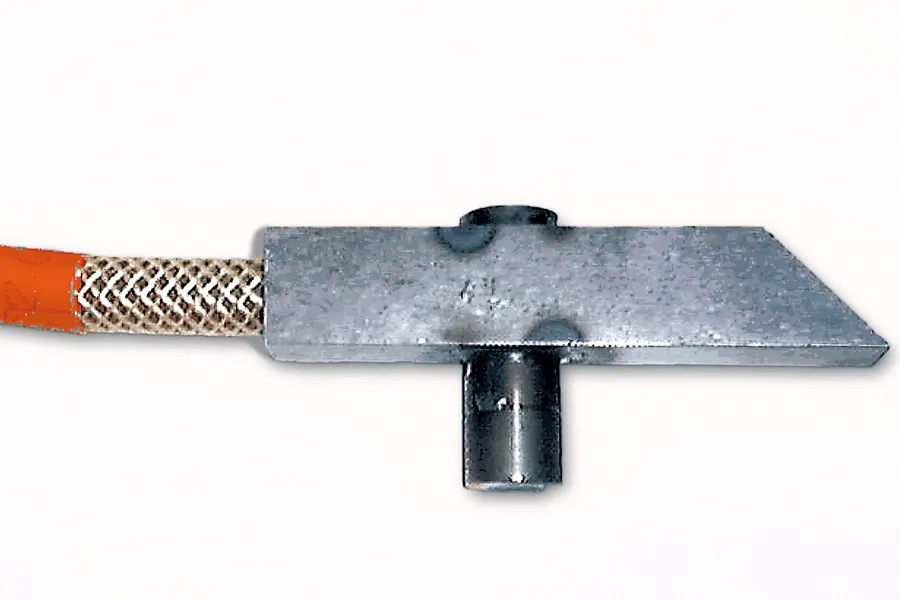
While discontinuous monitoring detects whether the sheet pile is still interlocked at just one level, a continuous system monitors this along the entire length of the sheet pile. The AM-SIS proximity switch uses an inductive sensor to detect whether the interlock is still connected. This relatively new proximity switch has been technically improved and built to be more robust than comparable systems. In recent years, the sensor has been used successfully on numerous projects in the Netherlands and Belgium under heavy pile-driving conditions. The system provides reliable results, regardless of the installation method or the type of vibrator and/or pile-driving hammer used.
The proximity switch is fitted at the bottom of the sheet pile to be installed, including in combined walls. A cable carries the sensor signal to the top of the sheet pile, where it is connected to a monitoring unit. During installation, the entire length is monitored to check that the sheet pile remains interlocked. If the pile comes out of the interlock, this is recorded immediately on the monitoring unit. The pile can then be pulled out, either partially or fully, and reinstalled after any necessary damage checks.
Continuous detection
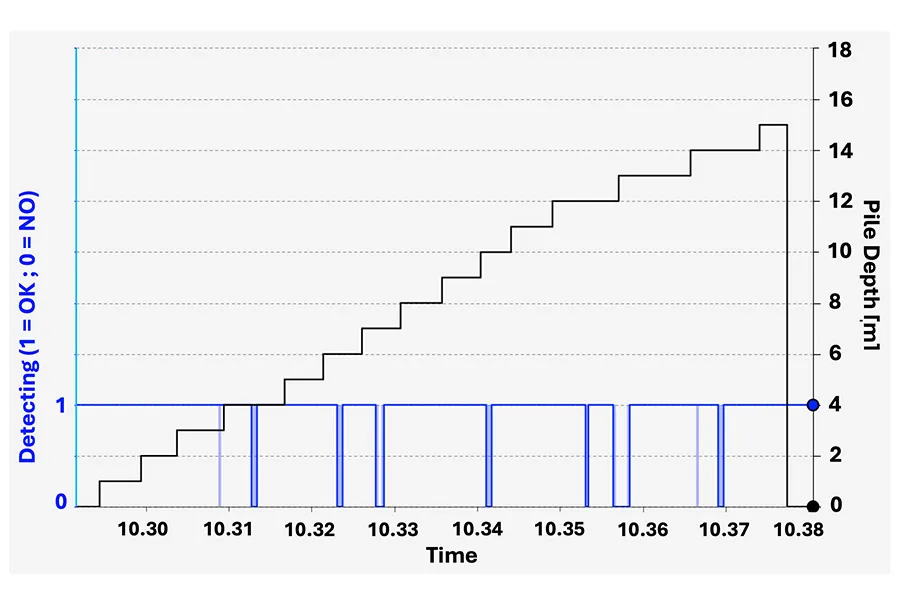
Unlike the break-pin method, this method detects immediately if the sheet pile comes out of the interlock. It also identifies the exact height at which this happens, which is important in determining any corrective measures required.
The sensors are read directly at the sheet pile, but it is now also possible to monitor installation remotely. A data logger is used to display the sensor signal on an online dashboard. The data logger can also add the sheet pile's installation depth over time to the signal. The dashboard therefore not only enables remote monitoring of installation, but also provides a clear report of the installation results.
Een zakelijke vraag aan ArcelorMittal Projects Europe B.V.? Get in touch
Companies in this story

Keep following this
Get an email when a new story is published. No account needed.
- ThemeUnderground construction
- SubjectNews
- CompanyArcelorMittal Projects Europe B.V.







