









“The Amsterdam Road Tunnel Programme affects the city’s accessibility and mobility”
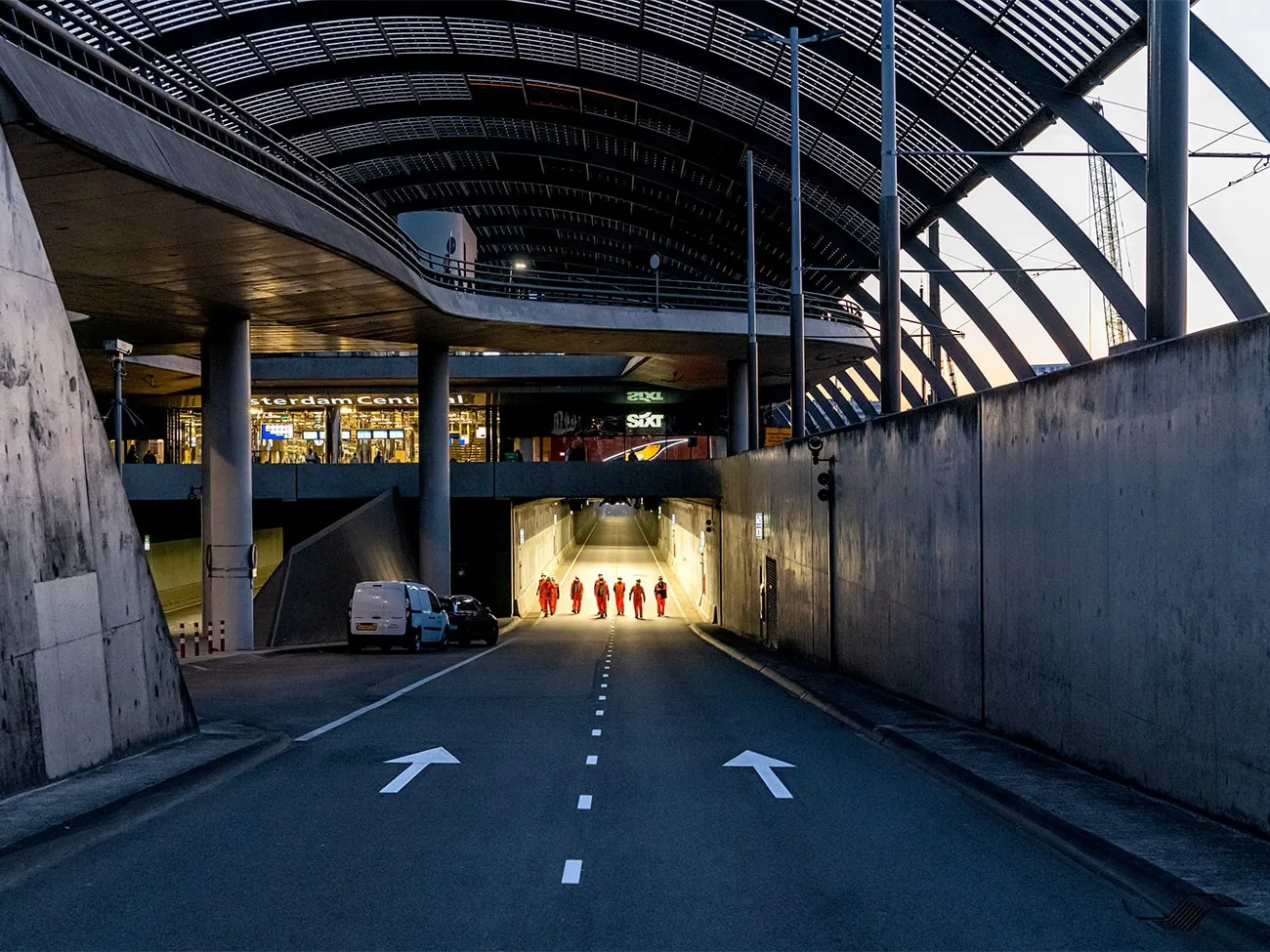
“I’ve really felt a connection with Amsterdam since 2012,” Ronald begins. “My Amsterdam adventure started with the renovation of the Oostlijn stations. I also saw the ‘tail end’ of construction of the Noord-Zuidlijn.” Ronald works on behalf of Amsterdam City Council, specialising in improving existing projects.
An interview with Ronald Siebrand, AWA programme director
The Metro and Tram Directorate brought in external expertise for the AWA programme. Ronald was already familiar with the work through his involvement with the Oostlijn, and is now ultimately responsible for delivering the AWA programme plan. “I’m always drawn back in by the dynamism of this city,” he explains. “You’re dealing with the people of Amsterdam, the complexity of the city and the politics that come with projects like these. The Amsterdam Road Tunnel Programme affects the city’s accessibility and mobility.”

AWA programme objectives
The AWA programme plan was drawn up at the end of 2018 and approved by the city council in 2019. Ronald outlines the objectives: “First, Amsterdam City Council must ensure that its tunnels are safe for today’s road traffic. Second, the aim is to create a future-proof tunnel asset base, ready for tomorrow’s world, safe to use, simple to operate and easy to maintain. Renewing the monitoring and control systems as well as working on several tunnels at the same time will ensure robust availability across the board. One of the considerations incorporated into the designs is to make future tunnel closures shorter and less disruptive.”
The AWA programme comprises four projects: a full renovation of the Piet Heintunnel, a full renovation of the Amsterdam ArenAtunnel, an upgrade to the fire safety of the Michiel de Ruijtertunnel, and construction of a new traffic control centre. “The key objective is for all the tunnels to fully comply with tunnel legislation once the work is complete,” says Ronald.
A standardised control concept
“Because we’re also delivering the traffic control centre, we can look at how each tunnel is operated. At present, each tunnel is controlled in its own particular way from the existing traffic control centre. But with the new traffic control centre at the LCM site on Van Marwijk Kooystraat, we’re moving to a standardised control concept. That’s what makes AWA so interesting: it gives us far greater scope. The five Amsterdam tunnels will be monitored and operated from standardised control desks: the Piet Heintunnel, ArenAtunnel, Michiel de Ruijtertunnel, IJ-tunnel and Spaarndammertunnel. That’s the strength of the AWA programme: all the knowledge and expertise gained on one project is carried over to the others. For example, the Piet Heintunnel is providing the blueprint for the new operating and control systems for the ArenAtunnel,” says Ronald.
No more one-off systems
Simple operation through the new traffic control centre will give traffic controllers new tools to do their jobs. “The renovations and upgrades under the AWA programme will bring the renovated tunnels fully up to date and make them safe. They’ll also be easier to maintain, because we’re doing away with so-called ‘one-off systems’. In other words, there will no longer be unique installations that make maintenance more difficult. In the Piet Heintunnel and ArenAtunnel, we’re standardising the installations, as it’s called. They will have a modular design, with identical design principles. That saves time and money on maintenance and repairs. Maintenance contractors will be able to work more easily and quickly, and the work will cause less disruption to road traffic.”
Why renovation and upgrading are needed
All of Amsterdam’s tunnels were built after the war, and the installations in several of them are reaching the end of their service lives at the same time. Ronald says they needed to catch up: “Maintenance and upgrades simply received less attention in the past. The resulting backlog reached its peak, or should we say its lowest point. In 2018, we looked not only at how to bring the tunnels back into compliance with tunnel legislation, but also at how the individual tunnel projects fitted together. We wanted to create lasting added value through synergies. Investing up front means reaping the benefits later.”
Ronald believes the decision to tackle and renovate the old infrastructure now was a wise one. “Personally, I give credit to Amsterdam City Council for putting asset management and maintenance back on the political agenda by committing to the renovation of older infrastructure. It does the city credit, and it’s sustainable too. It’s great to see how proud everyone involved in the programme is of their work. I also see a real sense of ownership among staff. I feel the same way: I’m happiest on site, with my boots in the mud.”
Question about this story? Ask your question
Keep following this
Get an email when a new story is published. No account needed.
- SubjectBridge construction







