









Sustainable renovation system for mooring piles
Text Chris Elbers Beeld Griekspoor
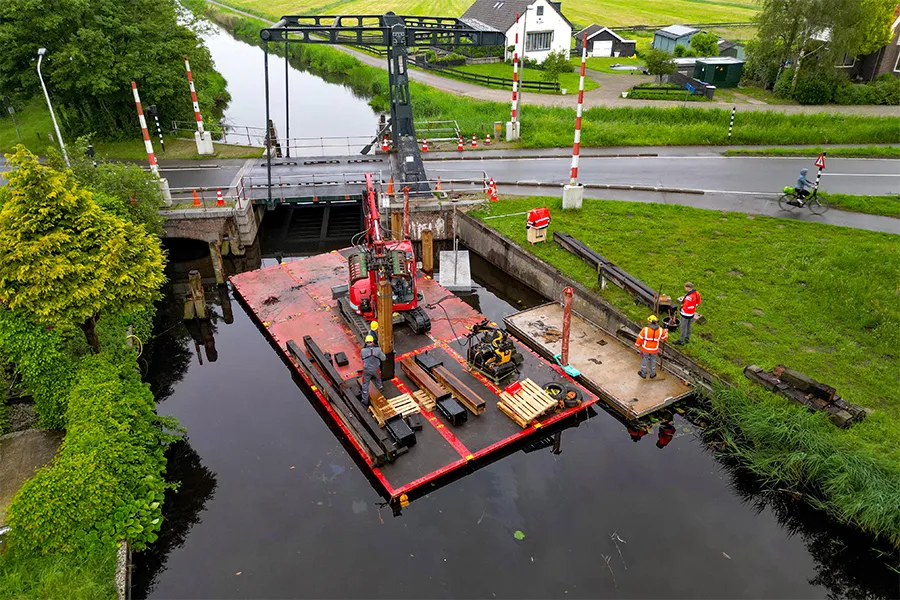
Wood rot is a common problem in hydraulic engineering structures. Particularly around the waterline, where these structures are exposed to the greatest stresses. Fluctuating water levels, currents, floating debris, exposure to (salt) water and chemical attack are just some of the factors that can significantly shorten the service life of timber and cause the structure to start rotting. Traditionally, the solution has often been to replace the affected structures entirely or carry out localised maintenance around the waterline that extends their service life only briefly. Both alternatives, however, are quite costly and time-consuming…
Griekspoor, a multidisciplinary civil engineering company, offers an innovative and sustainable solution to this problem with ‘De Bever’, a renovation system developed in-house. More than 400 mooring piles have now been renovated using the system, which has been successfully applied at various locations and in a range of project contexts. “With ‘De Bever’, we extend the service life of mooring piles by replacing only the damaged section and retaining the existing structure,” says Scott Griekspoor, Operations Director at the family-owned business based in Nieuw-Vennep. “This not only gives the piles a service life comparable to that achieved through complete replacement. It also significantly reduces environmental impact and costs, while causing less disruption to the surrounding area.”
Key principles
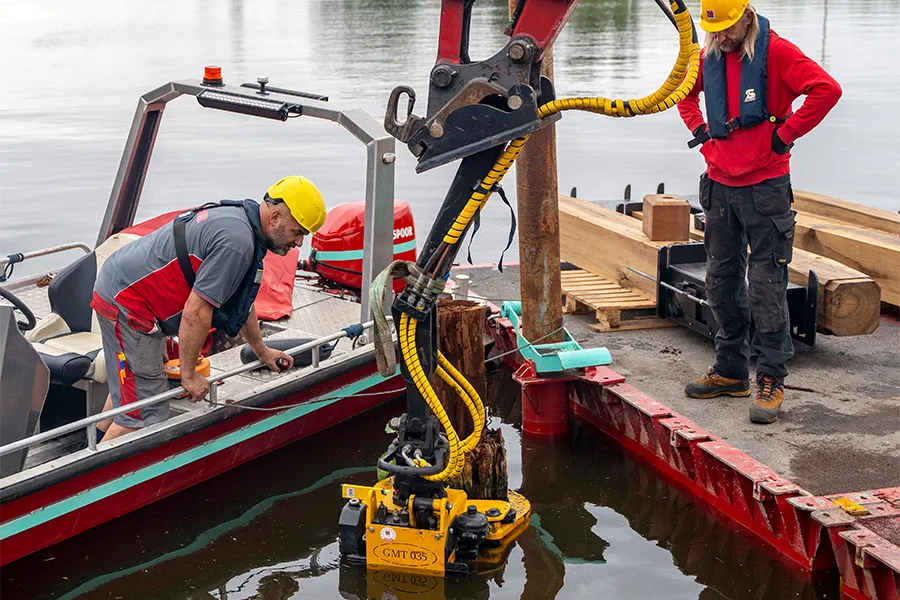
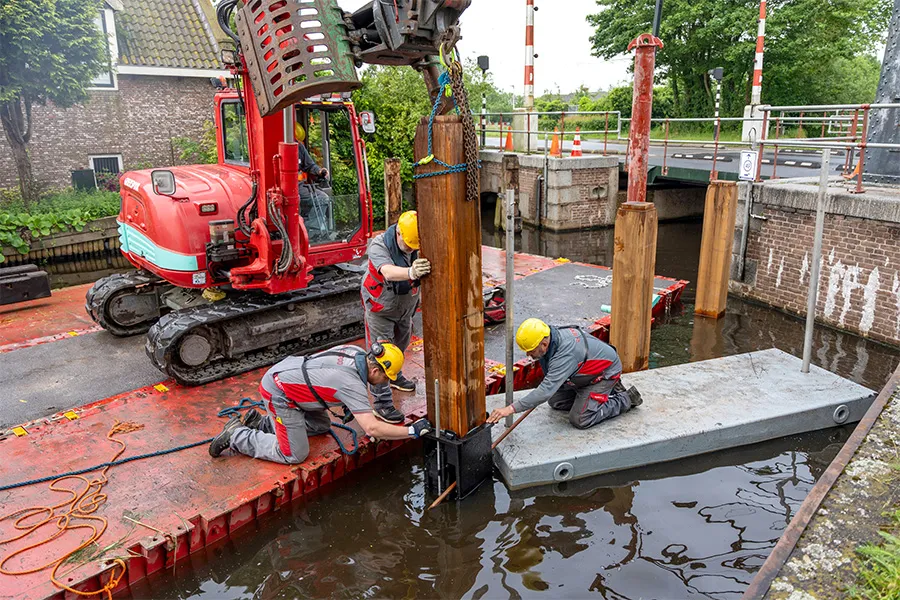
It turns out that Griekspoor drew much of the inspiration for the principles behind its patented mooring-pile renovation system from nature. “Beavers are known for their skill in building and repairing timber structures. They are also hard-working and efficient. These are traits you’ll find in both our company and this innovation,” continues Jop van Geffen, who is responsible for project coordination in Griekspoor’s Engineering department. “Sustainability, efficiency and reliability are the key principles behind ‘De Bever’, whose concept is as smart as it is simple.” Instead of replacing mooring piles and/or fendering entirely or repairing them locally with epoxy resin, the system allows only the damaged section to be replaced with timber, steel or plastic, thereby extending the structure’s service life. “We cut the mooring pile or fendering below the rotten section, beneath the waterline,” Jop explains. “We then use the steel clamp construction ‘De Bever’ to fit a new timber, steel or plastic head on top.”
Climate
The government aims to achieve climate neutrality by 2050. By 2030, CO2 emissions are to be reduced by 60% compared with 1990 levels. The ‘De Bever’ renovation system helps to achieve this by preparing the required pile heads in the workshop. This means fewer large machines are needed on site and saves as much as 70% of CO2 per pile compared with complete replacement.
Environment
With ‘De Bever’, Griekspoor helps keep waterways and roads safe while minimising environmental impact. Not only is 80% of each mooring pile retained, but the new pile head is also made from FSC®-certified hardwood. Using smaller machines also reduces noise and benefits biodiversity.
Circularity
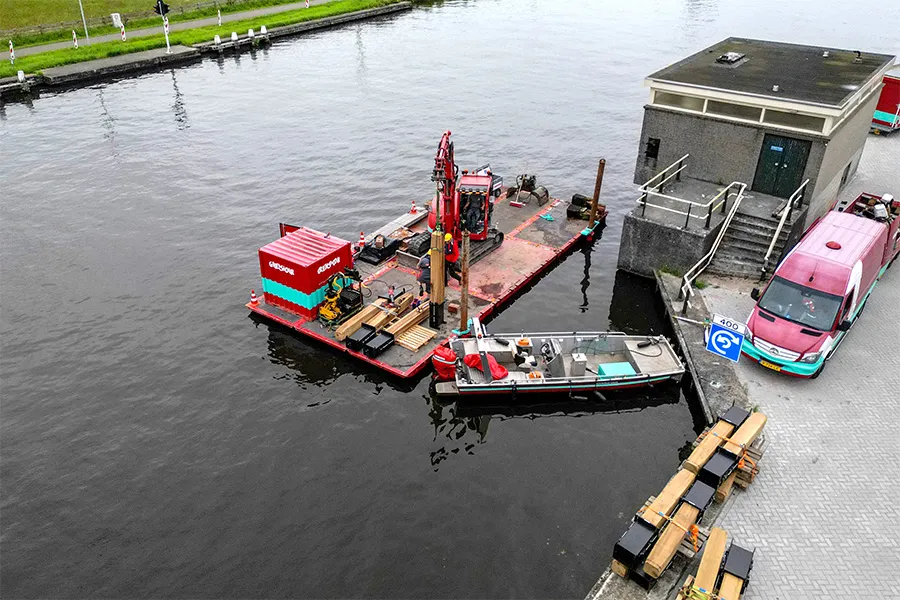
‘De Bever’ scores highly on the Ladder of Lansink (step B), the national standard for waste management. For example, sawn-off pile heads are reused, including as bark for playground surfaces. The pile cores, which are often still in good condition, are processed into intermediate and base blocks and other components of composite fendering.
Biodiversity
Using smaller machines reduces noise and odour nuisance for the surrounding area. The existing mooring pile is also retained below the waterline. This prevents scour and avoids disturbing flora and fauna.
People
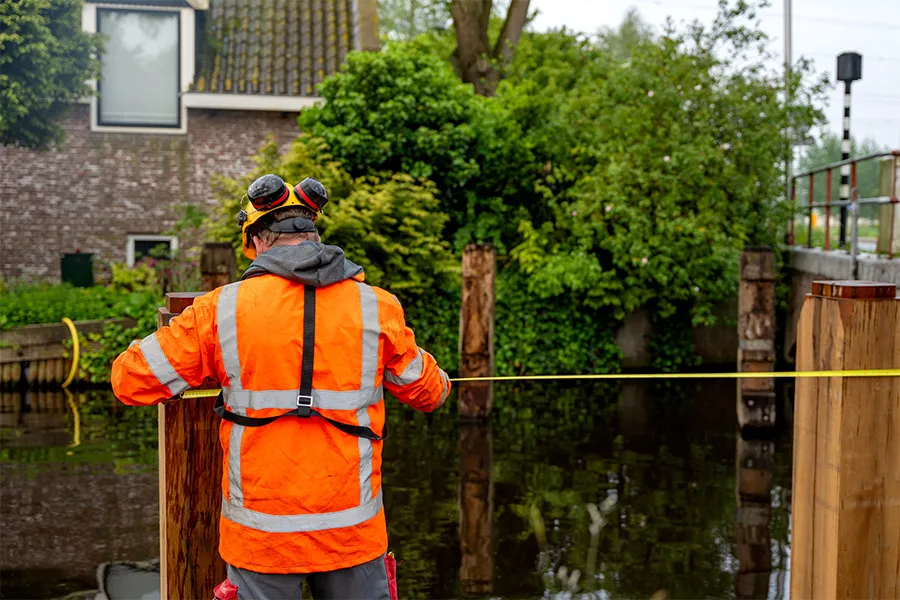
‘De Bever’ reduces environmental damage and improves working conditions. Thanks to lower fuel emissions and the fact that all preparation is carried out in the workshop, staff do not have to work in the water. This makes work on site efficient and quick.
Supports responsible commissioning and procurement
‘De Bever’ not only extends the service life of existing timber structures in hydraulic engineering. The technique also plays an important role in promoting ambitious socially responsible commissioning and procurement (MVOI). “Our renovation system specifically contributes to the social themes at the heart of MVOI, including climate, the environment, circularity, biodiversity and people-focused initiatives,” says Scott Griekspoor.
Question about this story? Ask your question
Keep following this
Get an email when a new story is published. No account needed.
- SubjectBridge construction







