









One of the Netherlands’ larger reinforcement projects
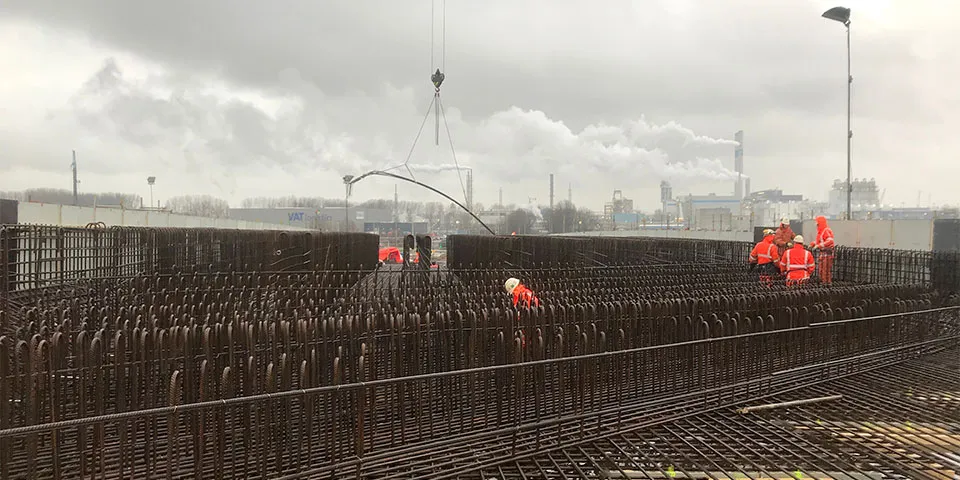
The Blankenburg Connection is one of the most talked-about projects in the Netherlands at the moment. In terms of the amount of reinforcing steel required, Wapeningscombinatie 3DBN A15/A20 says that, by tonnage, it is one of the larger projects in the country. Some of the required reinforcement cages are even prefabricated fully automatically, guided by a 3D model.
Wapeningscombinatie 3DBN A15/A20 was awarded the project by BAAK, which involves around 19,000 tonnes of steel, mainly because of its ‘well-oiled’ process and its exceptional focus on quality and safety. “Together with Betonijzerbuigcentrale, we provide the complete package,” says Ed Schipper of Diepstraten Wapeningstaal. “The division of responsibilities is clear. Diepstraten is responsible for developing the reinforcement in 3D and for the traditional on-site tying, while Betonijzerbuigcentrale uses our 3D models to prefabricate the reinforcement to size at its factory. This is a close collaboration that is nothing new for us. We are working together in the same capacity on the Theemswegtracé and the Groene Boog.”
In-house modellers
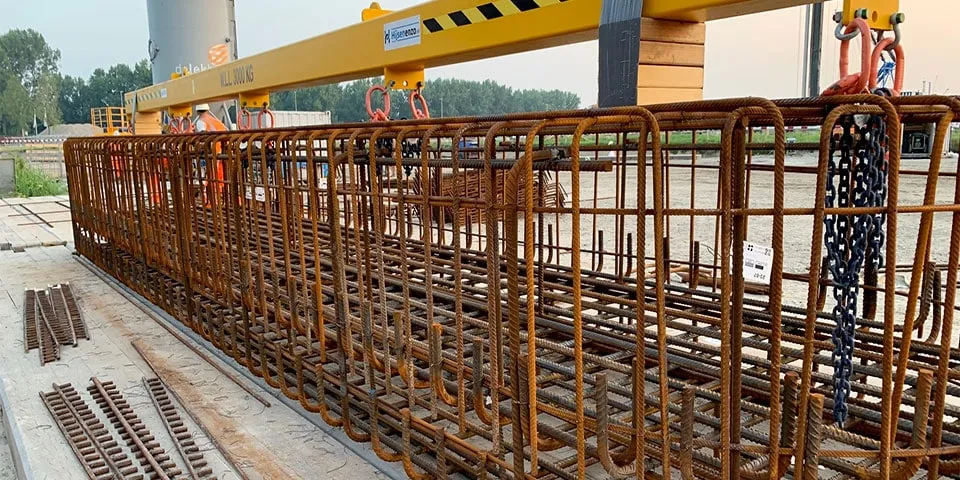
Diepstraten Wapeningstaal has four in-house modellers working on the development of all the 3D reinforcement models. “3D reinforcement modelling is now indispensable,” says Schipper. “It provides a clear visualisation of complex reinforcement structures and prevents potential clashes in advance. We also pay close attention to ensuring that the work can be carried out in compliance with health and safety requirements. We consider prefabrication, which saves time, and can achieve optimisations much more easily. One example of an optimisation on this project is the construction of the piers for the structures on the A15. We chose to prefabricate modules, each 2 metres high, so that the reinforcement for the piers could be assembled from inside the formwork. This not only saves time, it also means there is no need to erect scaffolding and our steel fixers can work 100% safely inside the formwork. The piers are being built right next to the motorway.”
3D reinforcement machine
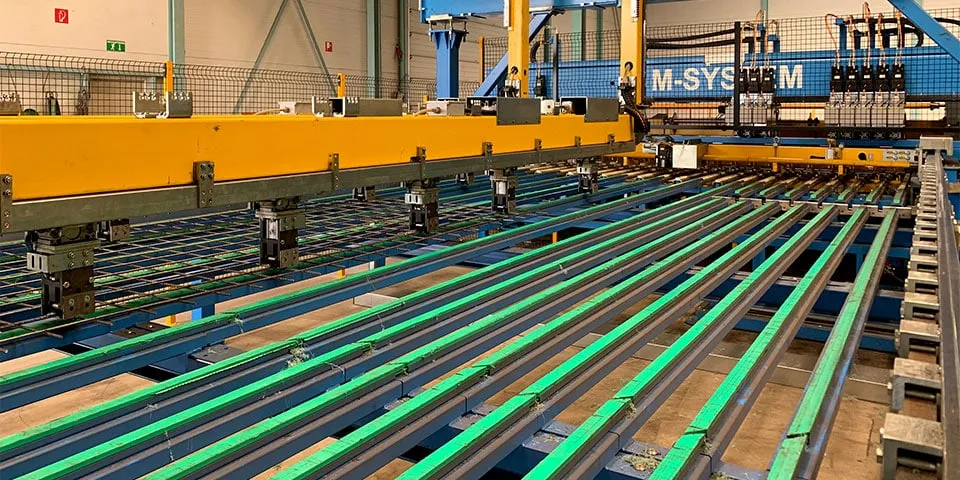
Betonijzerbuigcentrale converts Diepstraten Wapeningstaal’s 3D models into cut and bent reinforcement products. “In total, we are supplying around 9,000 tonnes of reinforcing steel for the structures on the A15 and A20, and around 10,000 tonnes for the two tunnels, mainly in the form of reinforcement cages for the underwater concrete,” says Mees van Wijngaarden of Betonijzerbuigcentrale. “We recently commissioned our latest 3D reinforcement machine, which has also been used extensively to produce the reinforcing steel for the Blankenburg Connection. Using a 3D model, the machine automatically produces a complete, finished product to a consistent standard of quality. For this project, for example, we produced the shear-force cages, hairpin cages and projecting reinforcement for the verge walls on our 3D reinforcement machine.”
Safety is one of BAAK’s key priorities. Diepstraten Wapeningstaal has developed a dedicated safety and quality app to support the checking and digital approval of 3D models. “On site, a steel fixer can check the 3D model and tick off each step to confirm that it has been completed correctly in accordance with the assembly plan, which is derived from the 3D model. Previously, all of this was done on paper. The app also includes a safety scan for reporting hazardous situations or accidents. It fits entirely with the sustainability philosophy that Diepstraten Wapeningstaal and Betonijzerbuigcentrale are committed to. In addition, next April we will be certified as a joint venture at level 3 of the Safety Culture Ladder.”
Question about this story? Ask your question
Keep following this
Get an email when a new story is published. No account needed.
- SubjectBridge construction







