









Nijmegen has the world’s longest 3D-printed concrete cycle bridge
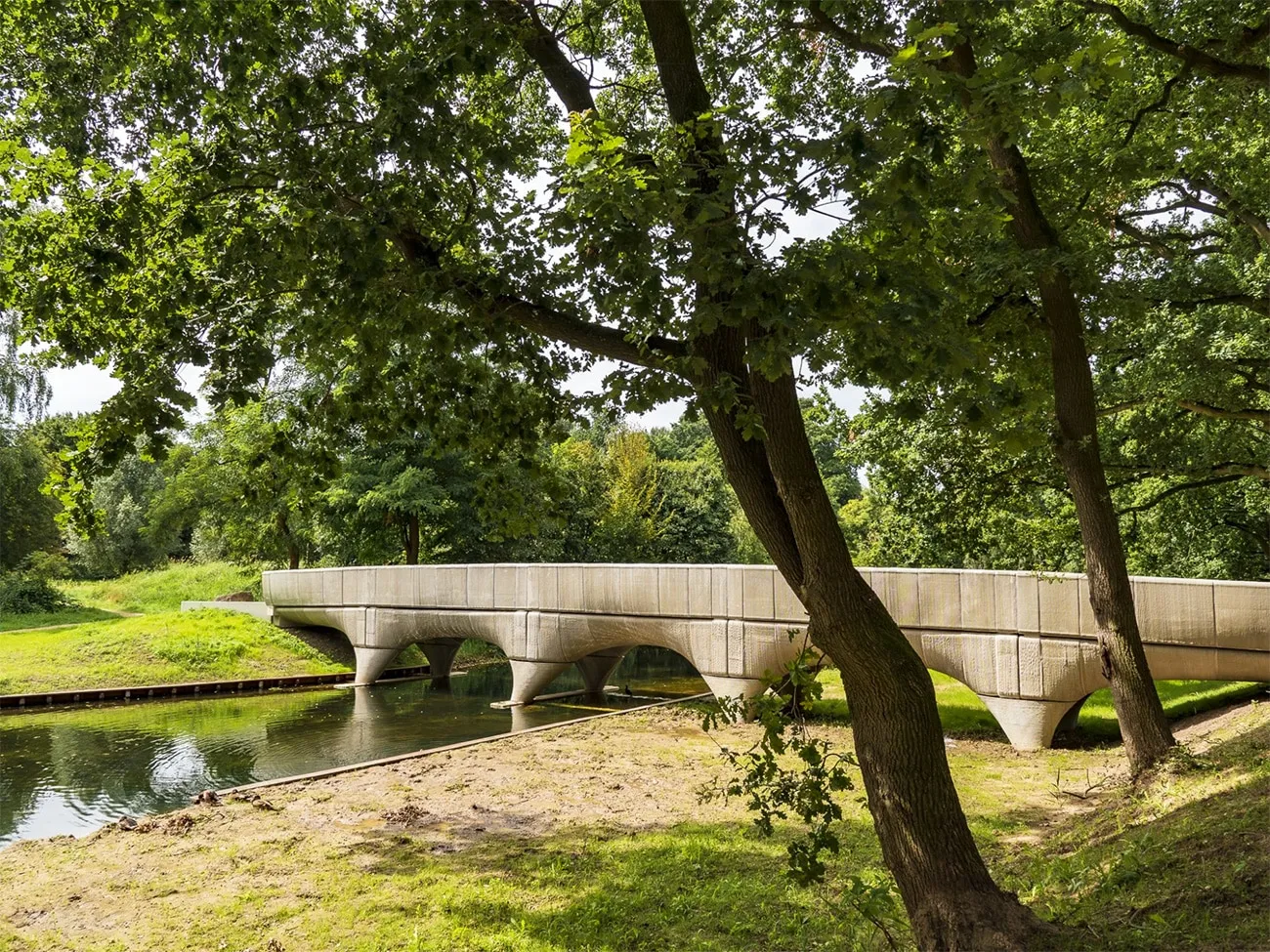
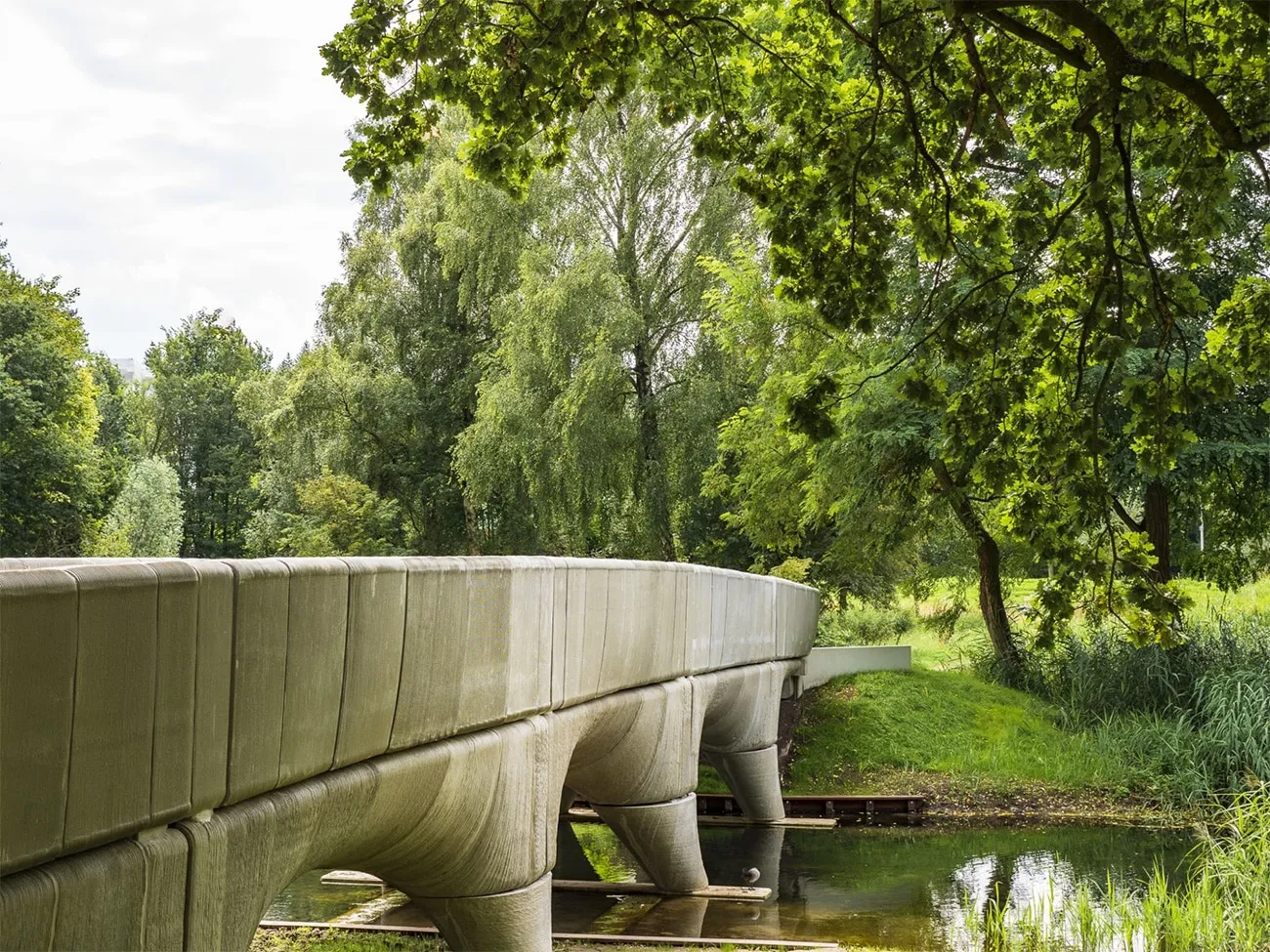
At 29 metres long, Nijmegen is now home to the world’s longest 3D-printed concrete cycle bridge.
The project is unique because the cycle bridge was designed with complete freedom of form, thanks to research at Eindhoven University of Technology and advances in 3D concrete-printing technology. Its distinctive rounded, flowing shapes make it a striking new feature in De Geologenstrook park in Dukenburg.
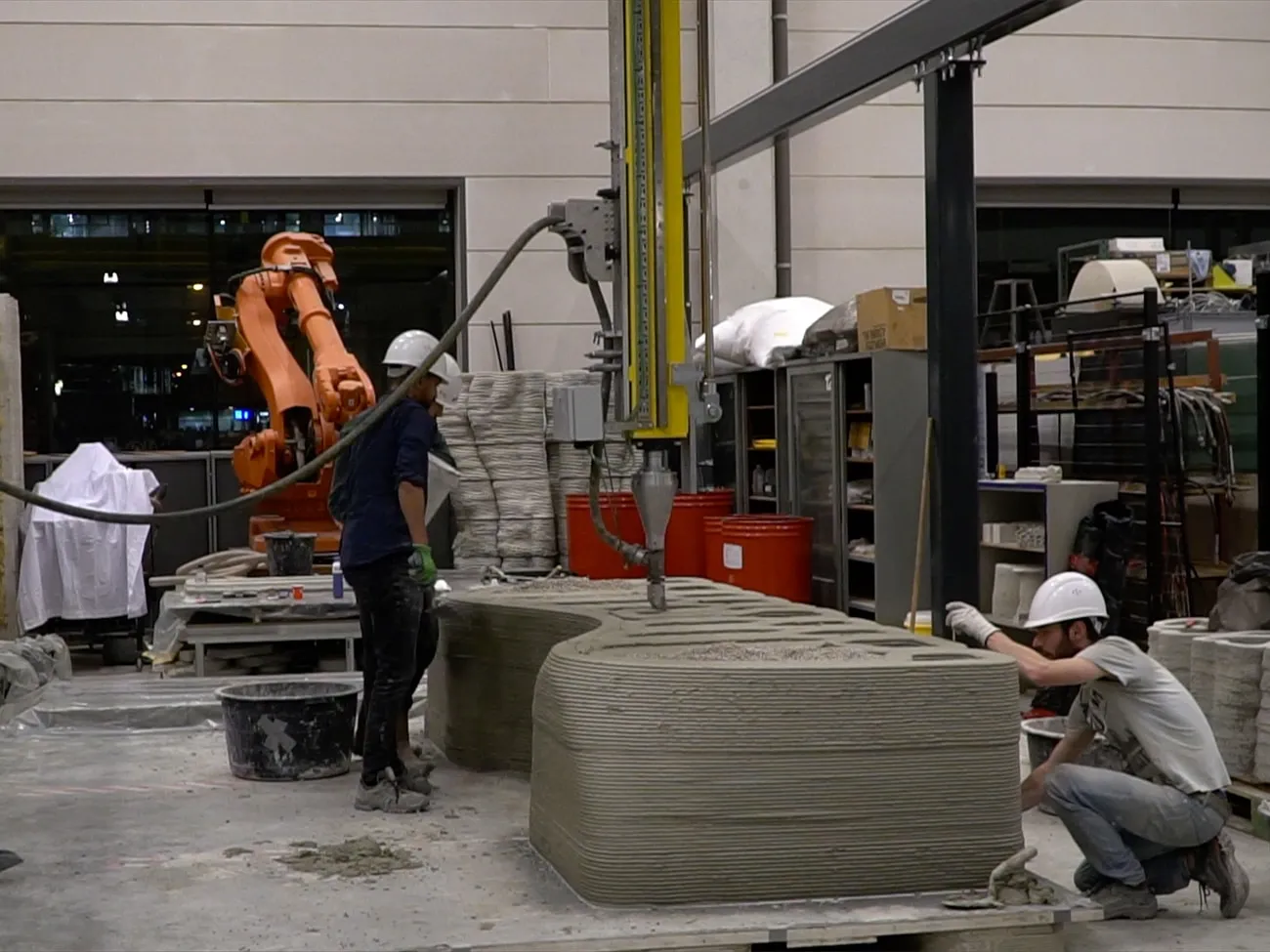
The bridge was printed layer by layer at the concrete-printing factory of Saint Gobain Weber Beamix and built by construction group BAM. As well as being the longest, it is also the world’s largest concrete bridge whose architect had complete design freedom. Michiel van der Kley was free to develop his design, without being constrained by the material or by traditional processes such as concrete formwork.
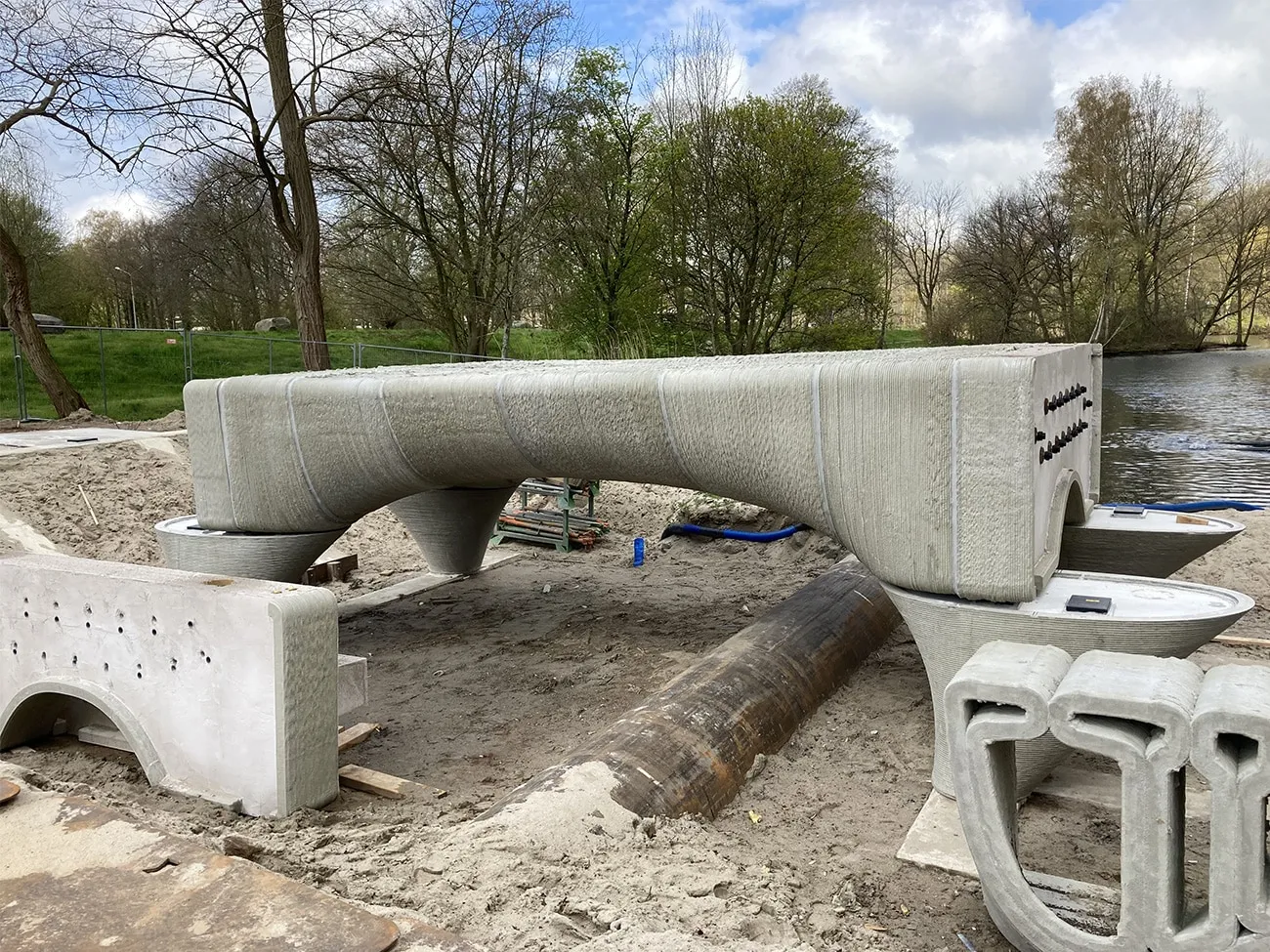
Because the span varies along the bridge, the changing weight of the structure had to be taken into account. The bridge was therefore divided into printable sections during the printing process. The final design was generated using a parametric model, in other words, a model based on data.
Faster and more flexible
In principle, 3D-printed bridges can be built considerably faster than conventional bridges, with greater flexibility and more scope for customised designs. They are also more sustainable, because they require less concrete. The partners behind this innovative project aim to make 3D concrete printing a sustainable construction method that can ultimately be used to produce bridges, homes and more.
That is also why Rijkswaterstaat and designer Van der Kley initiated the project. They have gifted this special bridge to the municipality of Nijmegen as a lasting memento of its election as European Green Capital 2018.
For the necessary knowledge and expertise, the project team turned to Eindhoven University of Technology and, in particular, Theo Salet, an expert in 3D-printed buildings. Consultancy and engineering firm Witteveen+Bos translated the bridge design into printable structural components. The bridge’s parametric model was developed by Summum Engineering.
Theo Salet, Professor of Concrete Structures, Eindhoven University of Technology: “Concrete printing has enormous growth potential. We use fewer raw materials and can dramatically increase construction speed. In the future, we want to make concrete itself more sustainable and reuse it as well. There is much more potential for gains across the supply chain. I am also proud that the knowledge we have developed has found its way into industry so quickly.”
Bert Velthuis, Alderman, Municipality of Nijmegen: “We in Nijmegen are very honoured to receive this innovative 3D-printed bridge. We are a city of bridges, and this special, innovative bridge is a wonderful addition. The bridge brings people together: during the design and construction phases it connected the various partners, and from now on it will connect our residents.”
Bas Huysmans, CEO of Saint Gobain Weber Benelux: “This 3D-printing technique can save up to 50 per cent in materials, because the printer deposits concrete only where it is needed for structural strength. 3D technology is maturing and becoming a serious option for building cycle and pedestrian bridges, among other structures, more quickly, sustainably and cheaply.”
Michiel van der Kley, designer: “What I particularly wanted to show was how far we have come with 3D-printing technology. The design is inspired by a shape found in nature, because it is the most efficient way to absorb a particular force, now translated into a digital process. With this shape, we have made 3D printing of concrete objects more interesting again.”
Opening available to watch online
The new bridge will be officially opened on 8 September. The event can be watched live from 16.00 via this link.
A business enquiry for Saint-Gobain Weber? Get in touch
Companies in this story

Keep following this
Get an email when a new story is published. No account needed.
- ThemeMaterials and techniques for infrastructure
- SubjectBridge construction
- CompanySaint-Gobain Weber







