









N307 Roggebot-Kampen: a project of extremes
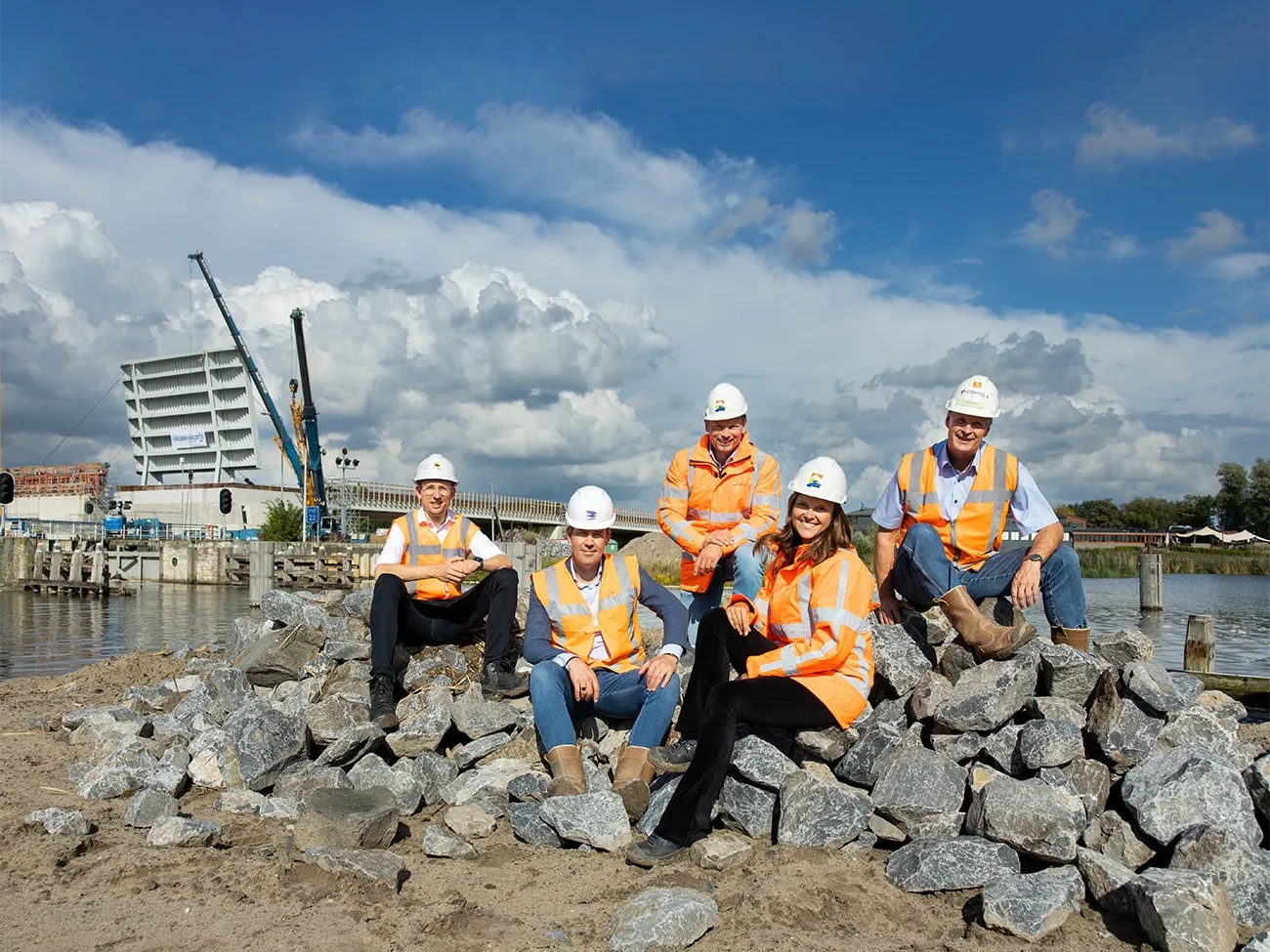
Improving flood safety in the IJsseldelta region, traffic flow and road safety on the N307, and the area’s spatial quality. The N307 Roggebot-Kampen project is truly a project of extremes. The 61-metre-long box girders for the new Roggebot Bridge are exceptional too, weighing 240 tonnes (!) each.
The provinces of Flevoland and Overijssel and the Ministry of Infrastructure and Water Management are jointly investing 100 million euros in accessibility and flood safety in the IJsseldelta region. “The N307 Roggebot-Kampen project is part of two larger programmes,” says Guido Koolhaas, project manager at the province of Flevoland. “The IJsseldelta programme (Room for the River), focused on flood safety and nature development, and the improvement of the east-west connection between Alkmaar and Zwolle (the A-to-Z road). The N307 Roggebot-Kampen project was awarded at the end of 2020 to Combinatie Roggebot, comprising Mobilis, Van Gelder and Van den Herik.”
Transformation of the water system
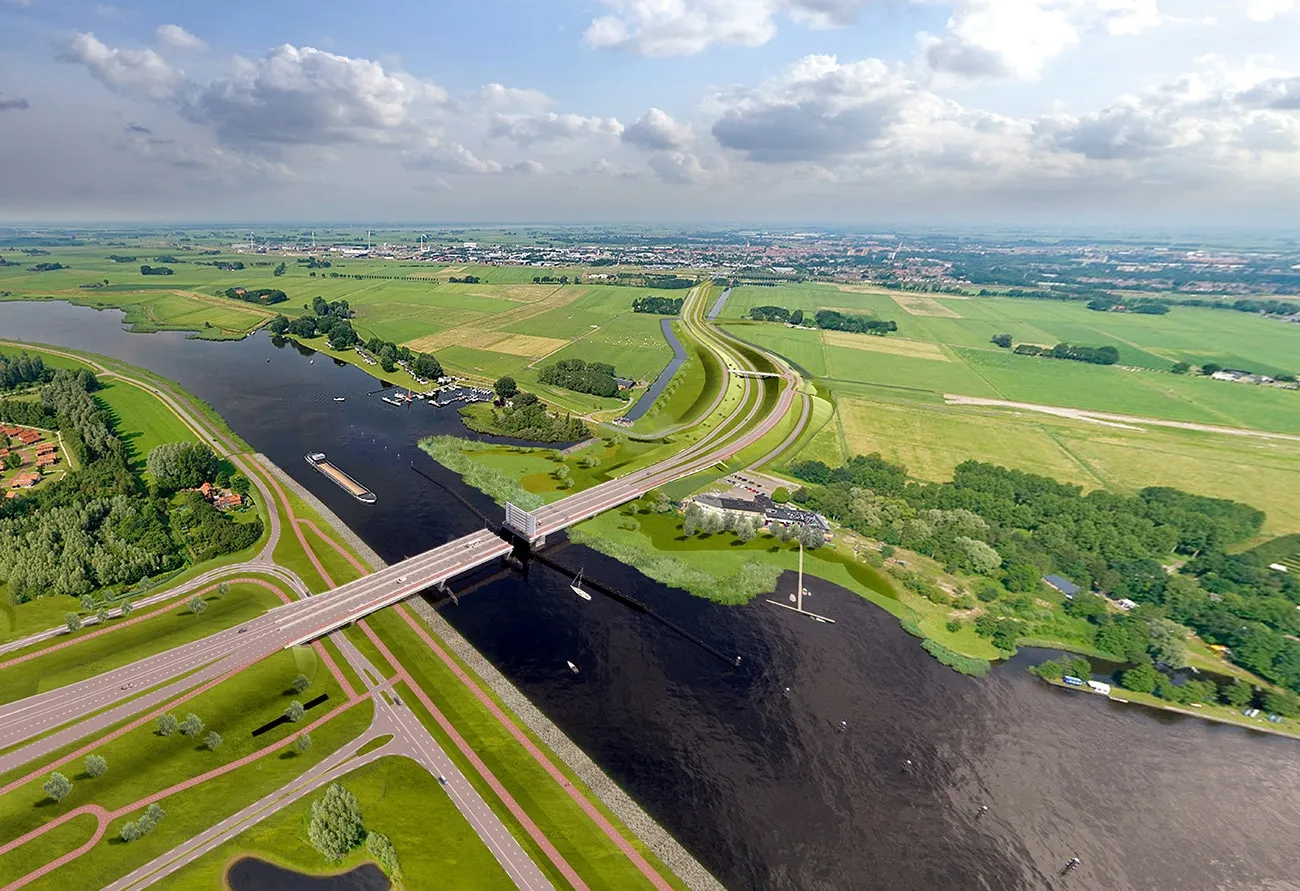
The project includes the construction of a through road with 2×1 lanes for through traffic and parallel roads for slow-moving and local traffic, the construction of a new, partly movable bridge over the Drontermeer and various smaller structures, including a local-traffic viaduct over the N307, a culvert bridge and several wildlife crossings. The flood defences are also being adapted to the new situation to ensure flood safety, while the existing bridge over the Drontermeer and the Roggebotsluis are being removed. “In the new situation, the Drontermeer and Vossemeer will be connected,” says Redmer Leegstra, environment manager for Combinatie Roggebot. “At present, they are two separate water systems, each with its own flood defences. To improve flood safety in the area, some defences will therefore be strengthened, while the Roggebotdam and lock are being removed. This is quite unusual. The transformation of the water system and the flood defences requires coordination with all parties, as well as carefully planned, phased execution of the earthworks, waterworks and dike works. Together with the water authorities, Rijkswaterstaat and the province, we are ensuring flood protection and keeping navigation and road traffic moving as smoothly as possible.”
From dike to dike
The N307 Roggebot-Kampen project brings together water, road and civil engineering. “The most striking feature is the construction of the new bridge, right next to the existing one,” says Robert Maat, project manager for Combinatie Roggebot. “The design of the new bridge, with a span of almost 300 metres from dike to dike, is intended to allow as much water as possible to pass through in the new situation (Room for the River), while also allowing as much traffic as possible to pass, improving traffic flow and safety. The new bridge will also be considerably higher, allowing more vessels to pass without the bridge having to open and traffic being held up.”
In a class of its own
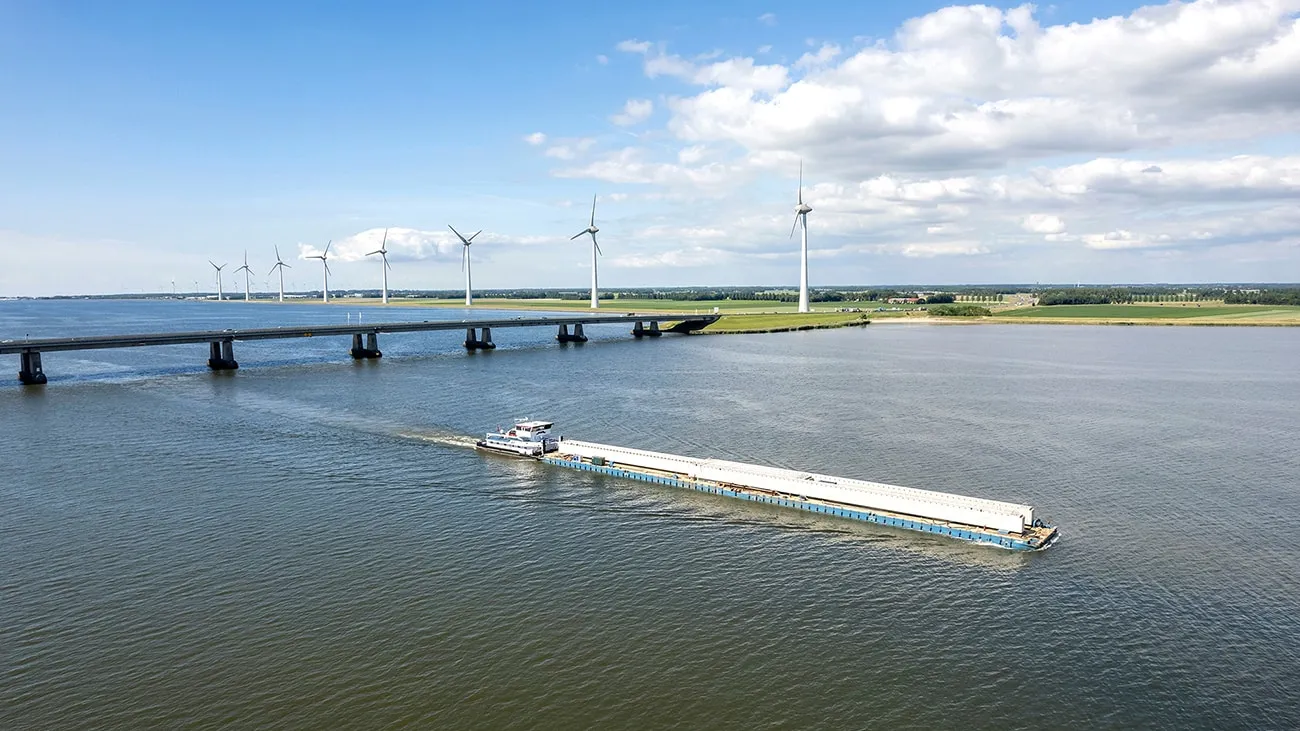
Mobilis, Van Gelder and Van den Herik frequently work together on integrated projects and complement one another well in terms of knowledge and expertise. “We also rely on a number of regular construction partners who are indispensable to delivering this project successfully,” says Maat. Haitsma Beton is one of them. “We are supplying and installing the concrete girders for three structures on this project,” says Bert van den Berg, project manager at Haitsma Beton. “The girders for the culvert bridge (38 HKO XL units and 2 edge girders weighing 8 and 10 tonnes respectively) and the viaduct over the N307 have already been installed. The viaduct required some sizeable box girders, 5 HKP girders weighing 135 tonnes each and measuring 45 metres long.” However, these pale in comparison with the exceptionally long girders for the new bridge over the Drontermeer, which links the provinces of Flevoland and Overijssel. A total of 68 HIP girders, measuring 54.5 and 34.7 metres, were delivered, along with 16 HKP box girders measuring 61 (!) metres. “They are absolutely in a class of their own,” says Van den Berg. The new bridge has five spans. “The spans on the Flevoland side, made up of 17 HIP girders weighing 87 tonnes and the 16 box girders weighing 240 tonnes, were delivered by water. From the pontoon in the lock, the girders were lifted straight into position using an impressive 650-tonne crawler crane and a 700-tonne mobile crane.”
Consistent appearance
Most of the girders for Roggebot Bridge are now in place, and the movable section of the bridge was also lifted into position in September. Haitsma Beton was brought in during the early stages to work with the engineering consultancy on the technical and aesthetic details of the bridge. “The aim is for all the spans to have the same appearance, even though both box girders and HIP girders are being used,” says Van den Berg. “To achieve this, we gave the box girders the appearance of HIP girders by adding a so-called nose element.”
Closure for vessels with masts
Not all the girders for the new bridge are in place yet. This is partly due to the need to keep the waterway available for vessels on the standing mast route. “The final girders will be installed over several nights in mid-November,” says Céline IJsseldijk, environment manager at the province of Flevoland. “From that point, vessels with an air draught of more than 7 metres will be temporarily unable to pass.
This period, known as the ‘standing mast route closure’, runs from 15 November to 1 April 2023. This will be a challenging period for all of us. This is partly because, from 13 March 2023, traffic will be diverted over the new bridge, after which the Combination will have until 1 April to complete the navigation channel beneath the movable section of the bridge. Demolition of the existing lock complex will then begin.” Leegstra adds: “There is a lot happening during this period, with different disciplines working together in an area that is still in use by both shipping and road traffic. It is quite a challenge to transition gradually to the new situation without causing too much disruption.”
Environmental management
The project involves many stakeholders, as it is taking place in an area covered by two provinces, two water authorities, two municipalities and Rijkswaterstaat. “It is important that everyone knows what is going to happen,” says IJsseldijk. “That applies both to residents and businesses in the area and to the asset owners who will take over the various parts of the project.” The environment managers from the province and Combinatie Roggebot hold frequent discussions. “We work together to ensure that the various stakeholders are kept informed in good time. As well as meeting people individually, we send out a monthly newsletter on progress and invite interested parties and residents to an information evening at least twice a year.” Leegstra says there is considerable interest in the project from the local community on all fronts. “Now that work is under way on site, we are seeing growing interest in visiting the project. We are also very happy to arrange that together with the province.”
Safety comes first in everything we do, IJsseldijk emphasises. “As a Combination, we also try to coordinate the phasing to limit disruption,” Leegstra adds. “We do ask local people to observe the speed limits and stay alert, as the road layout is changing considerably during the project. A viewing point has been set up on the Drontermeerdijk, where visitors can view the project safely and at their leisure.” Once traffic is diverted over the new bridge from 13 March and shipping can again pass ‘unimpeded’ from 1 April, future high-water discharge capacity will also be secured in the second half of 2023, Koolhaas expects. “The main milestones will then have been reached. A number of finishing works will follow to complete the project.”
Have a business enquiry for Mobilis? Get in touch
Who worked on Roggebot-Kampen
- concrete beamsHaitsma BetonIn this story
Keep following this
Get an email when a new story is published. No account needed.
- ProjectRoggebot-Kampen
- ThemeFlood protection and climate-resilient water management
- SubjectBridge construction
- CompanyHaitsma Beton
- CompanyMobilis







