









Major upgrade for historic lock complex
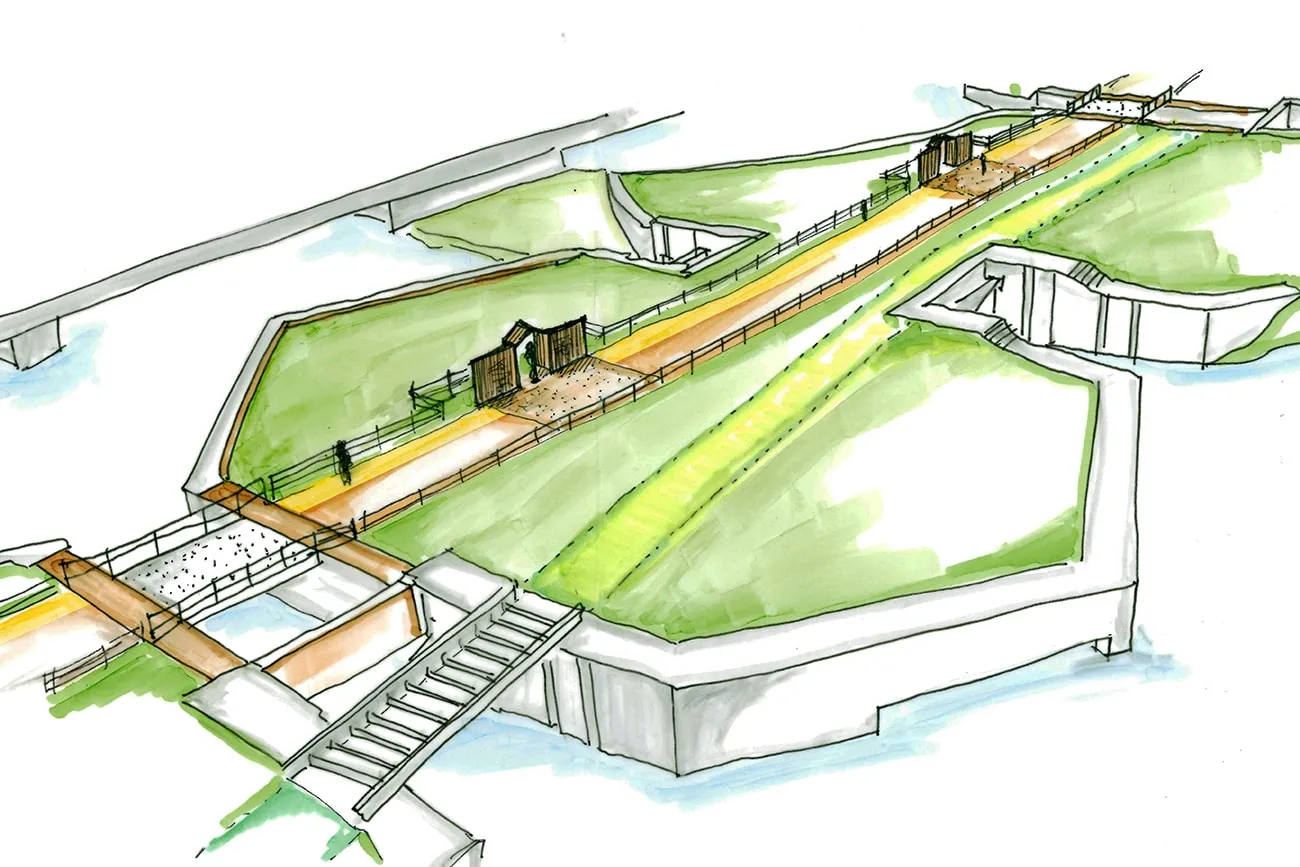
Water flow at the former lock complex in Halfweg needs to be significantly improved. Its listed status makes this a major challenge.
Improving water flow is necessary both to increase the discharge from the southern polders into the regional water system and to improve the supply to the Halfweg pumping station (Haarlemmermeer) further downstream. Halfweg has had three locks for seven centuries: the Haarlemmersluis, the Kruis- or Middensluis and the Amsterdamse sluis. They lie diagonally opposite the former sugar factory. The locks have been repaired and modified several times, and no longer serve a water-management function. However, the narrow passage between the islands restricts the flow to the Halfweg pumping station on Wethouder van Essenweg, preventing it from operating at full capacity. The lock complex is a municipal monument.
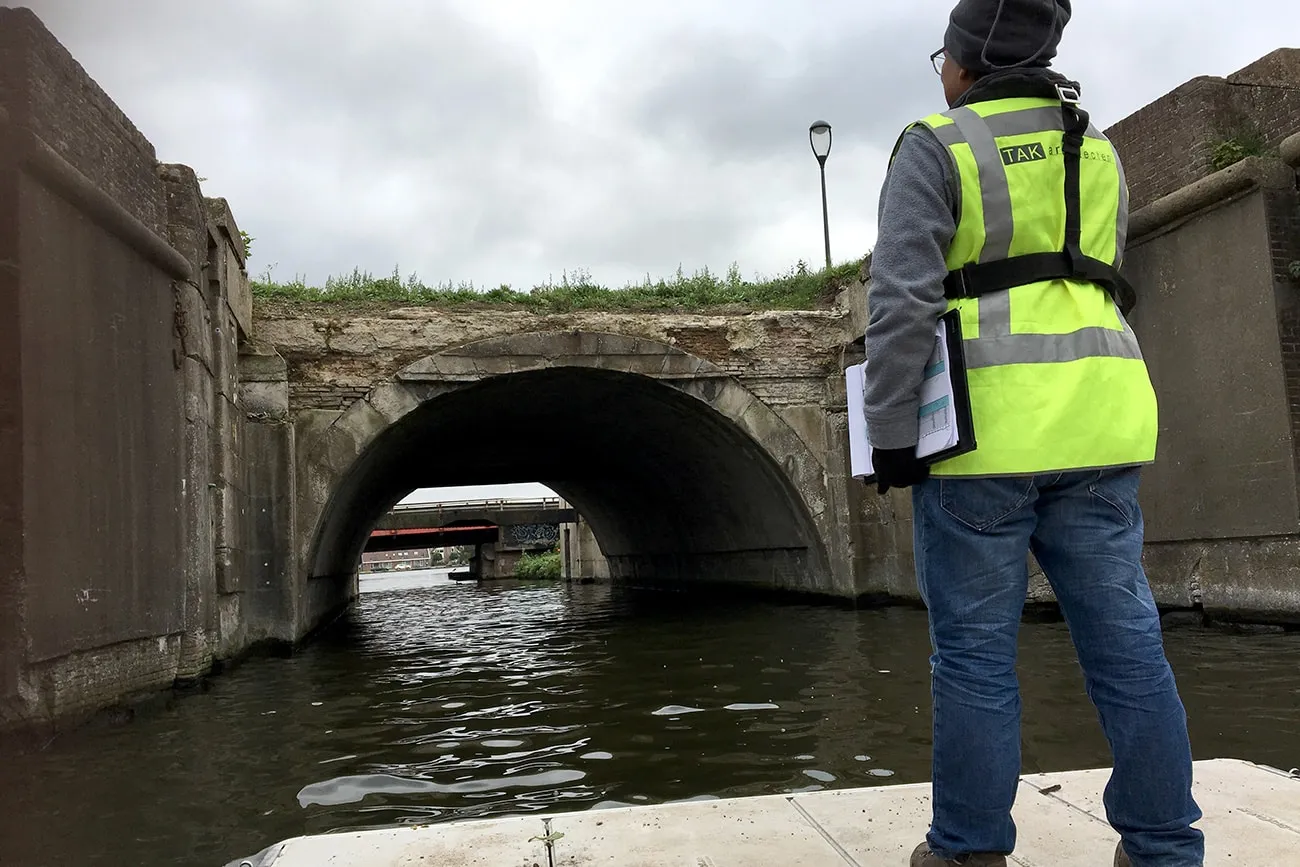
As water manager and owner, the Hoogheemraadschap van Rijnland is responsible for keeping the polders in the area dry and protecting them from flooding. Engineering firm Iv-Infra prepared the preliminary design for the improved water flow, based on the architectural design by TAK architecten.
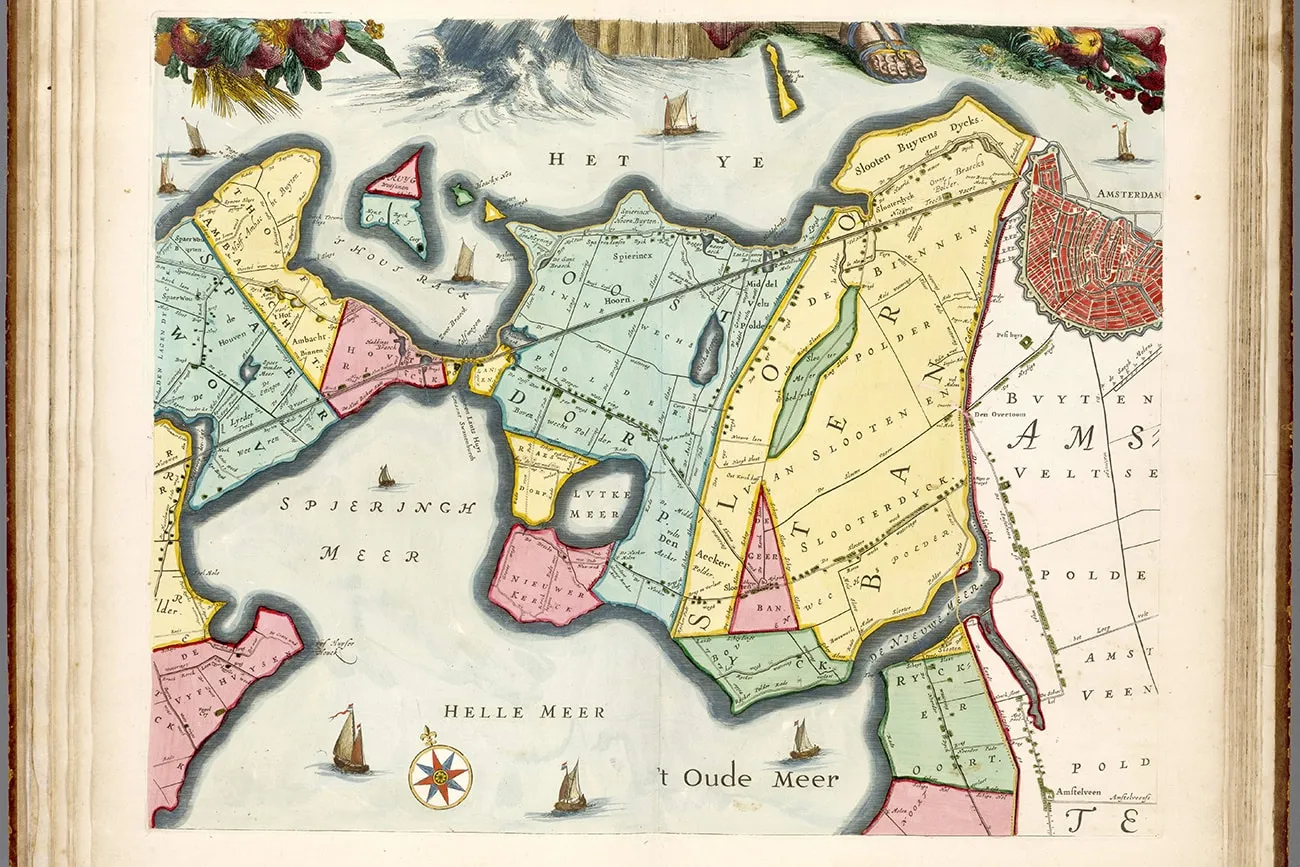
The lock complex at Halfweg captures the imagination. The foundations of the former Halfweg lock complex were laid in the thirteenth century. In the centuries that followed, it became an important part of a route used by horse-drawn towboats. Horses pulled the boats along both sides of the lock complex. Large screens were installed on the lock islands to protect the towboats from the turbulent waters of the Zuiderzee.
The problem
When heavy rainfall threatens to flood the polders, several pumping stations are brought into operation. Water supply at the former lock complex is a major bottleneck. The complex forms a chokepoint along the water’s route. Because the locks at Halfweg cannot pass enough water towards the Boezemgemaal, the water level in this stretch of water (Zijkanaal F) drops too far, causing considerable local disruption. With insufficient water flowing in, the Boezemgemaal cannot operate at full capacity and, in some situations, even has to be shut down.
Additional water passage
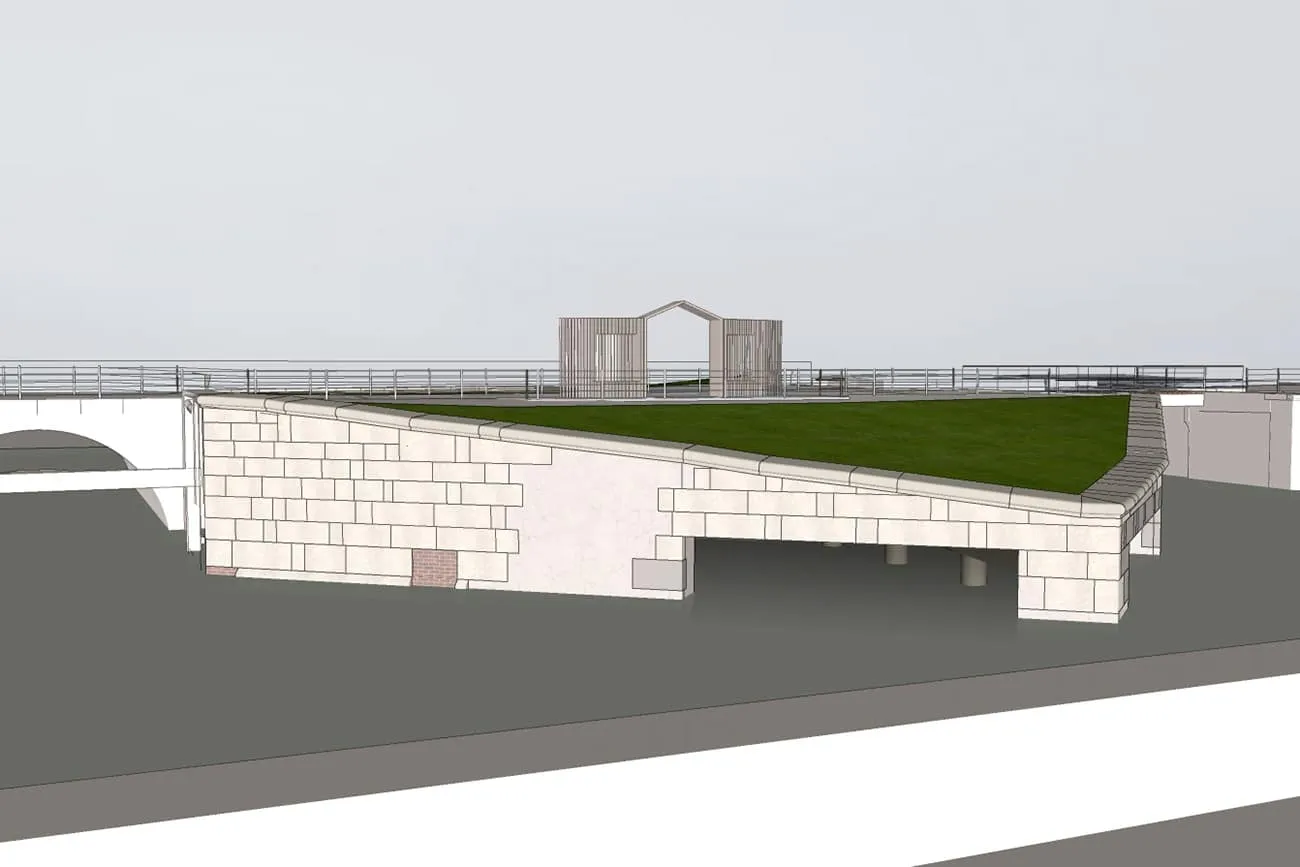
To improve future conditions and the flow of water from the polder, a new water passage will be excavated. It will be created in the eastern lock island of the historic lock complex. New sheet piles will strengthen the structures. A submerged concrete floor will act as a strut for the sheet piles.
The aim is to improve water flow without changing the island’s current appearance, thereby preserving its heritage value. The lock walls and wing walls will be restored, for example, and as many of the sandstone coping stones on the western and eastern islands as possible will be repaired. Cyclists crossing the lock complex will still see all its historic features. The route of the ‘later’ railway line, the first in the Netherlands, the Amsterdam-Haarlem railway line dating from 1839, will be marked visually using different materials, sedum instead of grass. Two seating areas will provide places to rest and nod to the former openings in the screens.
Public realm
The public realm around the complex will be improved. The former lock complex will once again provide a route for traffic similar to the one that existed when the old towpath was in use. The existing bridges over the Oostsluis and Westsluis will be replaced, and the paving and lighting renewed.
Engineering challenge
Tom Sikkema is Head of Water Engineering at Iv-Infra and has been closely involved in the project over the past few years. “It has been a rewarding but complex journey. Integrating a major civil engineering project into a historic monument is challenging. Not only is the setting vulnerable, but the project is also of great interest to the local community. The only way to make it work is to improve and enhance all the functions, not just the structure. We have done that very successfully in collaboration with TAK architecten.”
The preliminary design also involved a detailed assessment of the risks during construction. According to Sikkema, the poor condition of the locks and the practicalities of construction posed the biggest challenges.
The preliminary design therefore gave extensive consideration to the foundations, scour protection and infrastructure. “During construction, for example, we will use a gantry over the monument to excavate from. This prevents excessive loading on the existing structure itself.”
Stakeholder support
Eva Zonneveld is stakeholder manager at the Hoogheemraadschap van Rijnland. She says that building support for such a far-reaching project has been a challenge. “There is a reason this has been under discussion for 40 years. The Hoogheemraadschap van Rijnland has considered all the interests involved and incorporated them into the design, alongside the restoration of the entire complex. This makes it possible to create the new water passage while preserving the monument.”
The concept design by TAK architecten already had unanimous support. All parties have now also approved Iv-Infra’s preliminary design.
Environmental permit
“The heritage committee of the municipality of Haarlemmermeer has endorsed our plans and issued a positive recommendation,” says Sikkema. “That was the only way this could happen: everyone had to support it. For us at Iv-Infra, this has been a valuable learning experience, particularly in coordinating the engineering, the restoration, which incorporates the architectural design of the water passage, and our collaboration with the architect (TAK), who really played a leading role.”
Question about this story? Ask your question
Keep following this
Get an email when a new story is published. No account needed.
- SubjectBridge construction







