









LED lighting gains ground in public spaces
Text Suzanne van Gaale Image LED Technic
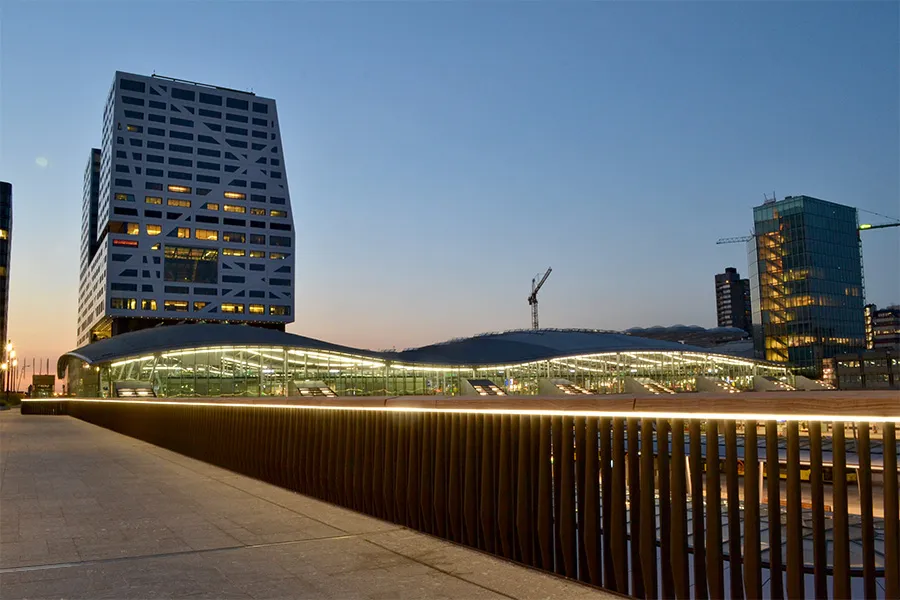
Piet Devriese of LEDtechnic is seeing growing interest in LED lighting in public spaces. Applications include cycle and pedestrian bridges, tunnels, platform crossings, public lighting, steps and seating. For good reason: LED lighting scores highly on safety and aesthetics. A striking example is the spectacular cycle and pedestrian bridge over the Watersportbaan in Ghent.
“Lighting is like a marriage between the designer’s aesthetic requirements and wishes and the need to achieve a certain level and quality of lighting. The next step is to work out how to integrate the lighting into the design,” says Piet Devriese, owner of LEDtechnic. The Belgian company has specialised in linear lighting for public spaces for more than twenty years. Key features of its LED lighting are that it is waterproof, impact-resistant and made in Belgium. It can withstand both vehicles and vandalism. Broadly speaking, there are two applications. The first is visible or indirect lines of light in paving, retaining walls and other walls, benches and steps, in both concrete and metal. The second is handrail lighting on cycle and pedestrian bridges and stairways. Piet says: “The possibilities for our LED lighting are endless. They range from integrated LEDrail lighting in a handrail and indirect lighting in a staircase to LED marker lighting for footpaths and shopping areas. There are also plenty of options when it comes to colour. For example, we often use amber-coloured LEDs in areas inhabited by nocturnal animals.”
Much safer
Asked about the advantages of linear LED lighting over conventional point lighting, Piet replies: “The right lighting has a positive effect on road safety. Where our LED lighting has been installed in bridge handrails, cyclists and pedestrians are more clearly visible than under conventional street lighting. That is because LED lighting reaches a height of 1.5 to 2 metres. You can see people’s faces, which also improves social safety. In this type of application, recognising faces is more important than achieving a high level of illumination.”
Enhancing public spaces
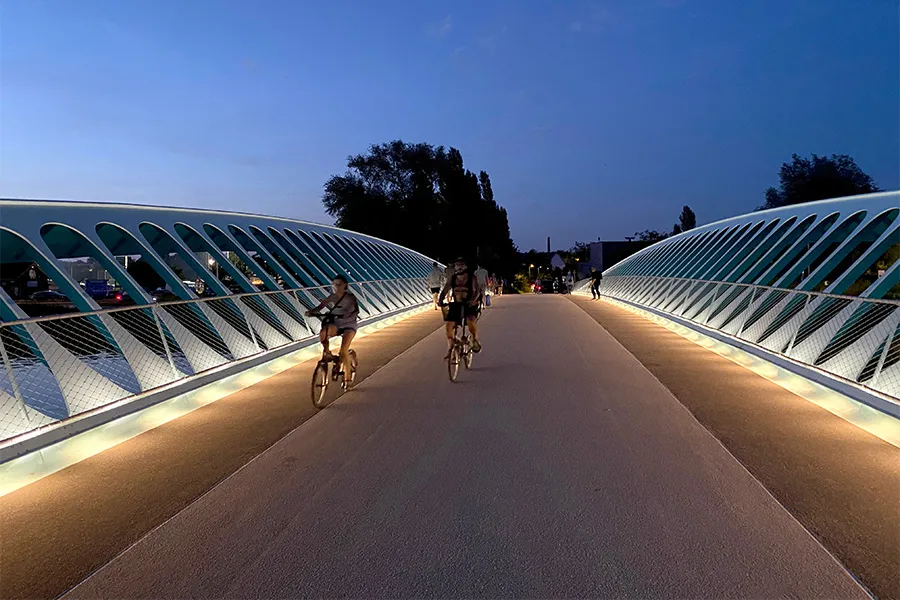
The increased level of safety partly explains the growing interest in LED lighting. The aesthetic value of a bridge, tunnel or seating element is also playing an increasingly important role. “Lighting in public spaces must meet certain standards. It also enhances the public realm. With twenty years’ experience and having encountered just about every situation, we work closely with architects and designers to integrate the lighting into the design. We also take the burden off the contractor with our complete solution. We supply and install complete lighting systems, including all components such as power supplies, cabling, controls and LED modules.” A striking example is the spectacular design of the cycle and pedestrian bridge over the Watersportbaan in Ghent. “Here, the lighting was approached in a completely different way,” Piet explains. “The lighting designer came up with a layout that places the luminaires low down against the bridge deck. Some are aimed horizontally to illuminate the deck, helping to keep passers-by safe. The rest are aimed at the bridge structure, both highlighting its silhouette perfectly and using the reflection off the wall to provide subtle, attractive facial recognition. This bridge in Ghent is just one example. More impressive projects can be seen on our website.”
Question about this story? Ask your question
Keep following this
Get an email when a new story is published. No account needed.
- SubjectBridge construction







