









Iconic Van Brienenoordbrug set for major overhaul
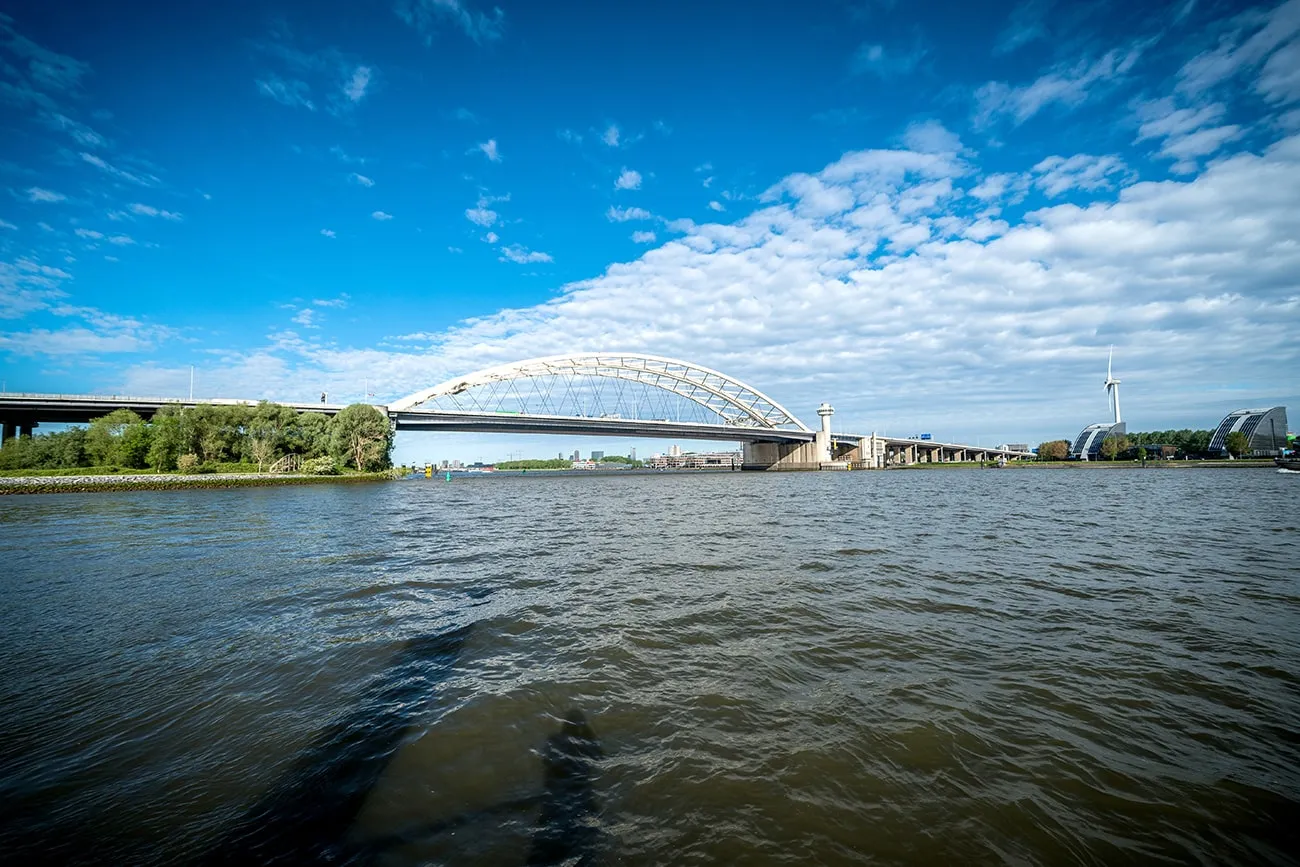
For people in Rotterdam, driving over the Van Brienenoordbrug really feels like coming home, says Roy Stroeve of Rijkswaterstaat. Stroeve is the project manager for the major renewal planned for the iconic bridge. It is a complex undertaking with a considerable impact, and will take three years to complete. “Renewing the Van Brienenoordbrug will ensure that future generations can continue to cross the Nieuwe Maas.” The proud people of Rotterdam need not worry about the skyline of their beloved city: the Van Brienenoordbrug will remain a distinctive arch bridge. Stroeve takes us through the project.
Major overhaul will make the bridge safe and fit for purpose for the next 100 years
National Replacement and Renovation Programme
Many of the Netherlands’ bridges, locks and tunnels were built in the 1950s, 1960s and 1970s. They were designed using the data and calculation methods available at the time, with traffic volumes then as the baseline. Most of these structures have now reached the end of their service lives. Heavier lorries than in the past, coupled with an exponential increase in the number of cars on the country’s roads, are taking their toll on the Van Brienenoordbrug. Rijkswaterstaat’s National Replacement and Renovation Programme includes a substantial number of renovation projects in South Holland and around Rotterdam, involving tunnels, roads and bridges. The Van Brienenoordbrug is the largest arch bridge in the Netherlands. Its location in the busiest region of the country, with 230,000 vehicles crossing it each day, makes its renovation a particularly challenging project in terms of disruption.
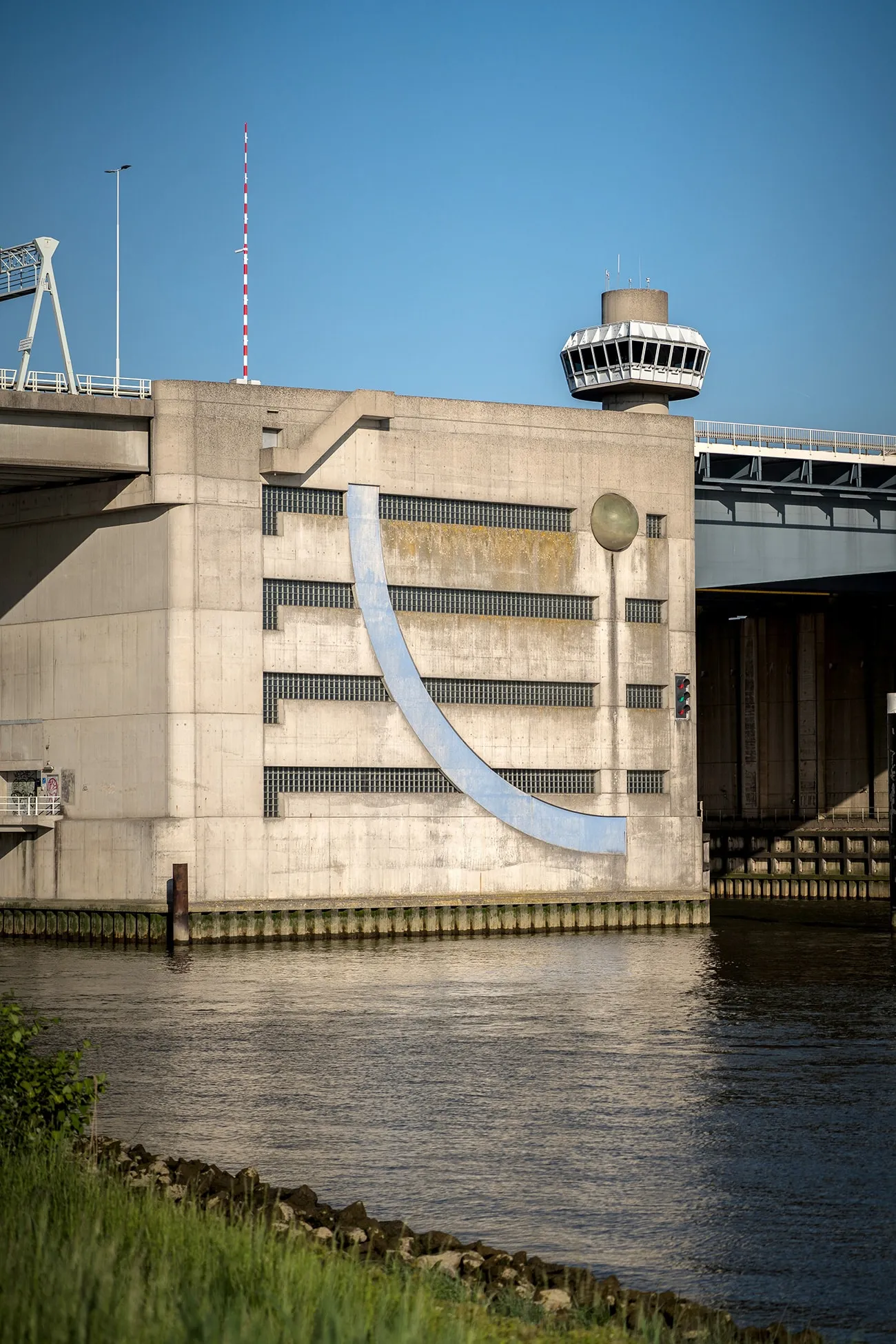
Stroeve: “In the past, the effects of steel fatigue were underestimated. The Van Brienenoordbrug consists of two parts. The eastern arch was built in 1961 and opened in 1965. This half is now seriously outdated. It is a steel structure assembled with rivets. The western arch was added later and opened in 1990. Although this part is still ‘relatively new’, damage is already appearing in the steel connections beneath the carriageway, especially under the right-hand lane used by lorries. While the bridge is still safe to use, there are plenty of reasons for a major overhaul.”
Phased, circular approach
Work will first begin on the western arch, the newer section, in 2026. A new arch will be built to replace the existing western arch. The existing arch will be refurbished at a construction yard, then returned to replace the eastern arch once fully renovated. “Our circular approach will save as much as 3,200 tonnes of steel,” explains Stroeve. “The sustainability of the project is reflected in the reuse of materials and in our aim to give the bridge a service life of 100 years after the project is completed.”
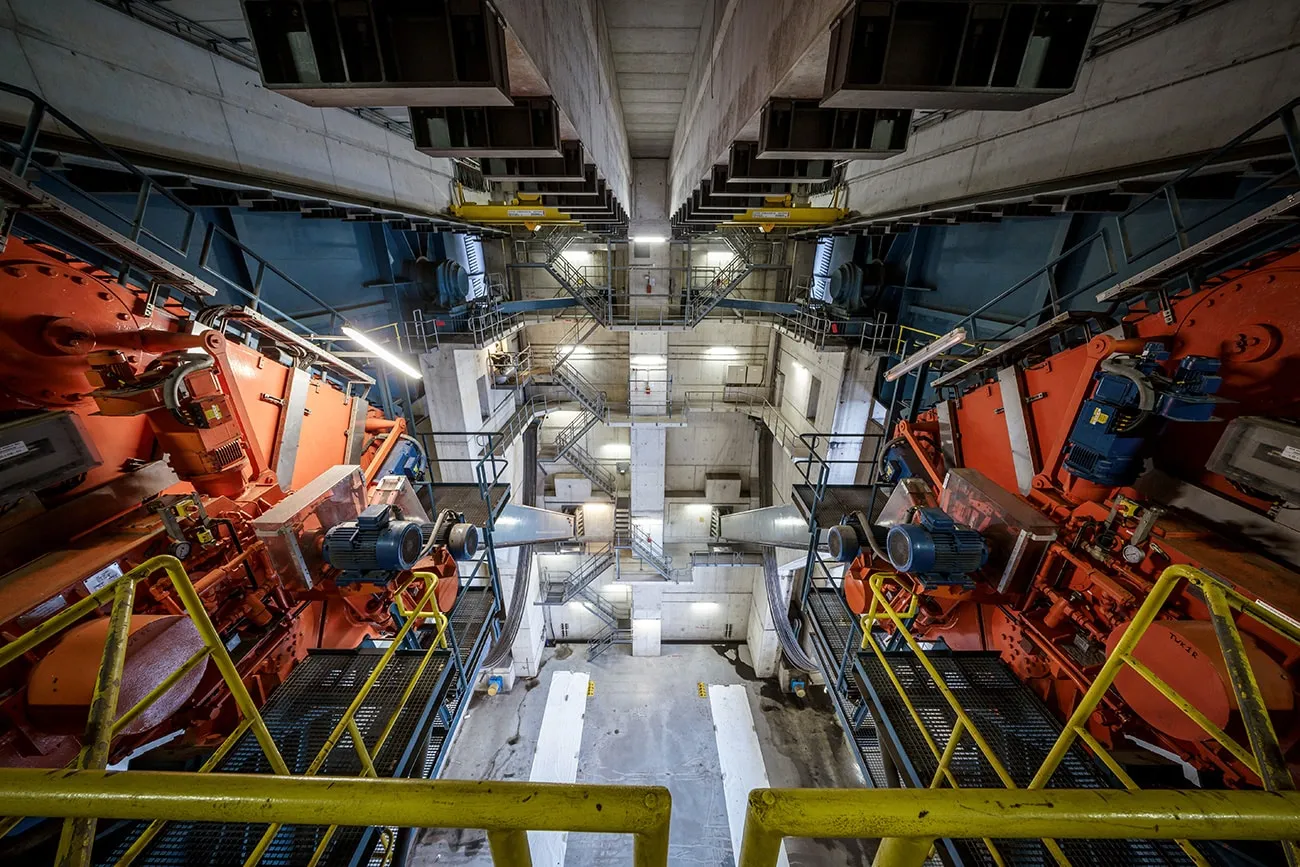
Once the new western arch has been installed, work will begin on the bridge’s moving parts. “That will happen in 2027. It is a formidable undertaking because the work is highly complex. The Van Brienenoordbrug has six lanes in each direction. The moving parts, or bridge leaves, are located within these lanes. The eastern section has two leaves that open independently, while the western section opens as a single unit. All the moving parts in the huge bascule chamber, including the operating mechanism, must be completely replaced. This is a major job, as it requires the roof of the bascule chamber to be removed. The new operating mechanism will take up more space, but enlarging the bascule chamber is highly undesirable. Everything must therefore fit within the existing space, down to the millimetre. The operating mechanism on the west side is in good condition, but it will be modified to bring the technology up to date. The entire bridge will receive CE marking, with machinery safety also a key focus.”
Another part of the work on the eastern side involves replacing the bridge leaves. They currently have timber decks that require a lot of maintenance. In the new design, these sections will also be made of steel. In the final phase, in the summer of 2028, the renovated western arch will be given a new lease of life on the eastern side. The bridge’s entire operation and control systems will also be replaced as part of the project.
Disruption over three summers
Despite every effort to minimise disruption to traffic, shipping and road users will be affected during various periods over the three-year project. The main works have therefore been scheduled for the summers of 2026, 2027 and 2028. Stroeve says the disruption plans take account not only of shipping and road traffic, but also of other renovation and replacement projects in the region. “Rotterdam faces a very intensive period of renovation over the coming years, with the Van Brienenoordbrug the biggest project of all. The projects overlap, so their coordination is being carefully planned. Rijkswaterstaat is working with the Port of Rotterdam Authority, and a range of important issues have been coordinated with neighbouring municipalities such as Rotterdam and Capelle aan den IJssel. We must tackle this major challenge together, on land and on the water. Some bridge components will be transported to and from the site by water. This requires extremely precise coordination, as we cannot afford to take any risks.”
A head start for the contractor
Rijkswaterstaat has designed the main components of the project. Stroeve stresses that preparing the design in-house from the outset helps minimise delivery risks. Royal HaskoningDHV and Arup have been, and continue to be, involved in the design work, having supported preparations for many years. Stroeve: “We now have a Detailed Design for the arches and a Preliminary Design for the moving parts.”
Preparations are comprehensive and far-reaching: even the protective coating colour for the arches has already been discussed with Rotterdam municipality’s aesthetics committee. Rijkswaterstaat, Royal HaskoningDHV and Arup have not only produced the designs, but also drawn up the tender documents. Stroeve concludes: “We consulted market parties in advance, seeking their input on the contract preparations and procurement approach. You could say that once the contract is awarded, the contractor will have a head start. Despite these thorough preparations, it will still be an enormous challenge for the contractor.”
About the Van Brienenoordbrug
The Van Brienenoordbrug was built in 1961 to a design by ir. W.J. van der Eb, who worked for Rijkswaterstaat. In 1962, the bridge was named after the Eiland van Brienenoord beneath it.
First Van Brienenoordbrug (east side): opened in 1965
Second Van Brienenoordbrug (west side): opened in 1990
Type: arch bridge, bascule bridge and approach bridges
Length: 1,320 metres
Width: 2 x 28 metres
Arch height above carriageway: 40 metres
Clearance: 25.04 metres (arch) and 22.50 metres (bascule)
Navigation span: 280 metres (arch) and 50 metres (bascule)
Longest span: 300 metres (arch) and 60 metres (bascule)
Road traffic (A16): more than 230,000 vehicles a day
Waterway traffic: more than 120,000 vessels a year
Bridge openings: approximately 100 a year
Question about this story? Ask your question
Who worked on it
Van Brienenoordbrug in Rotterdam
- designRoyal HaskoningDHV
- designArup
Keep following this
Get an email when a new story is published. No account needed.
- ProjectVan Brienenoordbrug
- SubjectBridge construction
- CompanyRoyal HaskoningDHV
- CompanyArup







