









Geopolymer concrete cycle bridge is a promising pilot
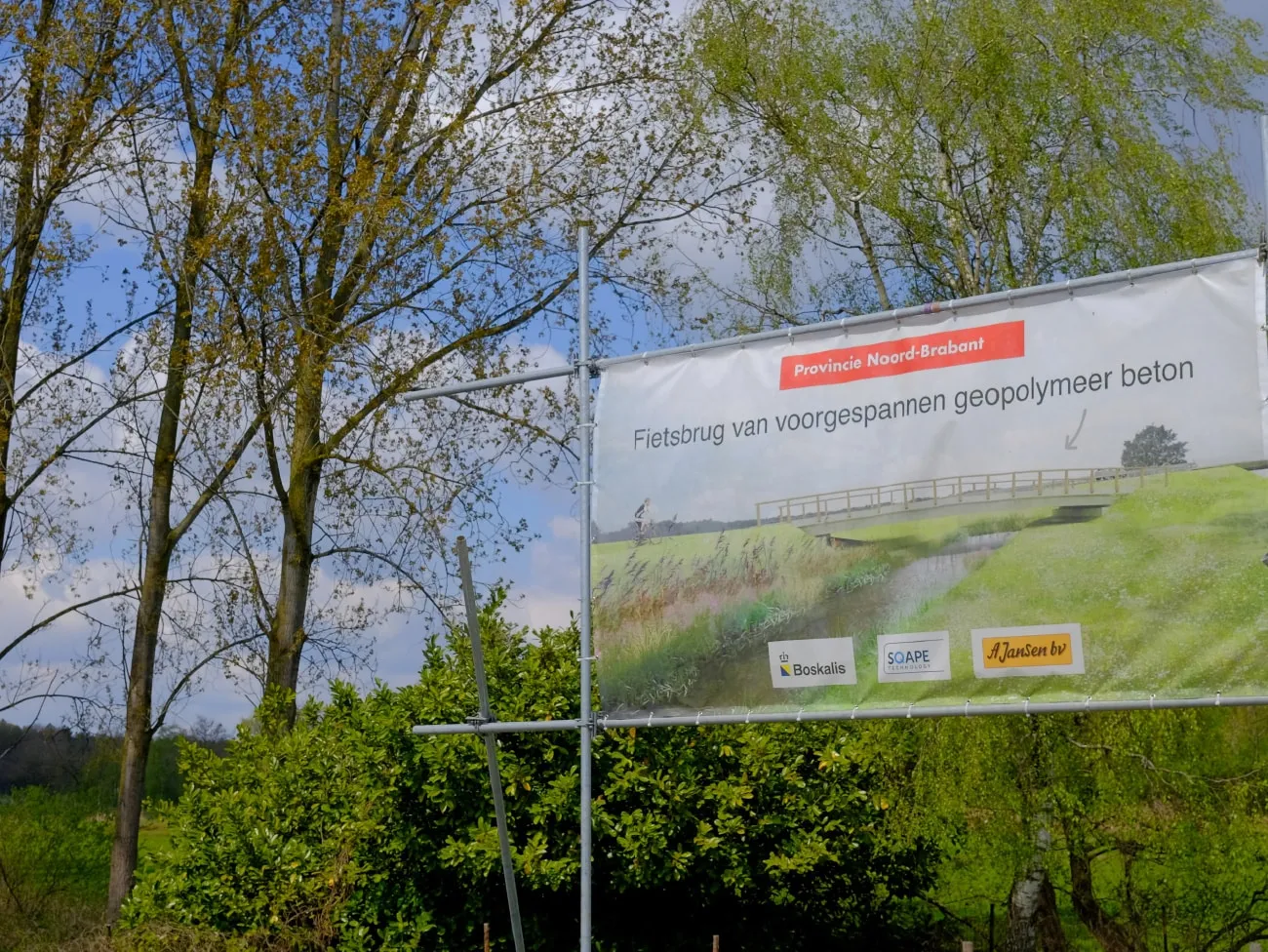
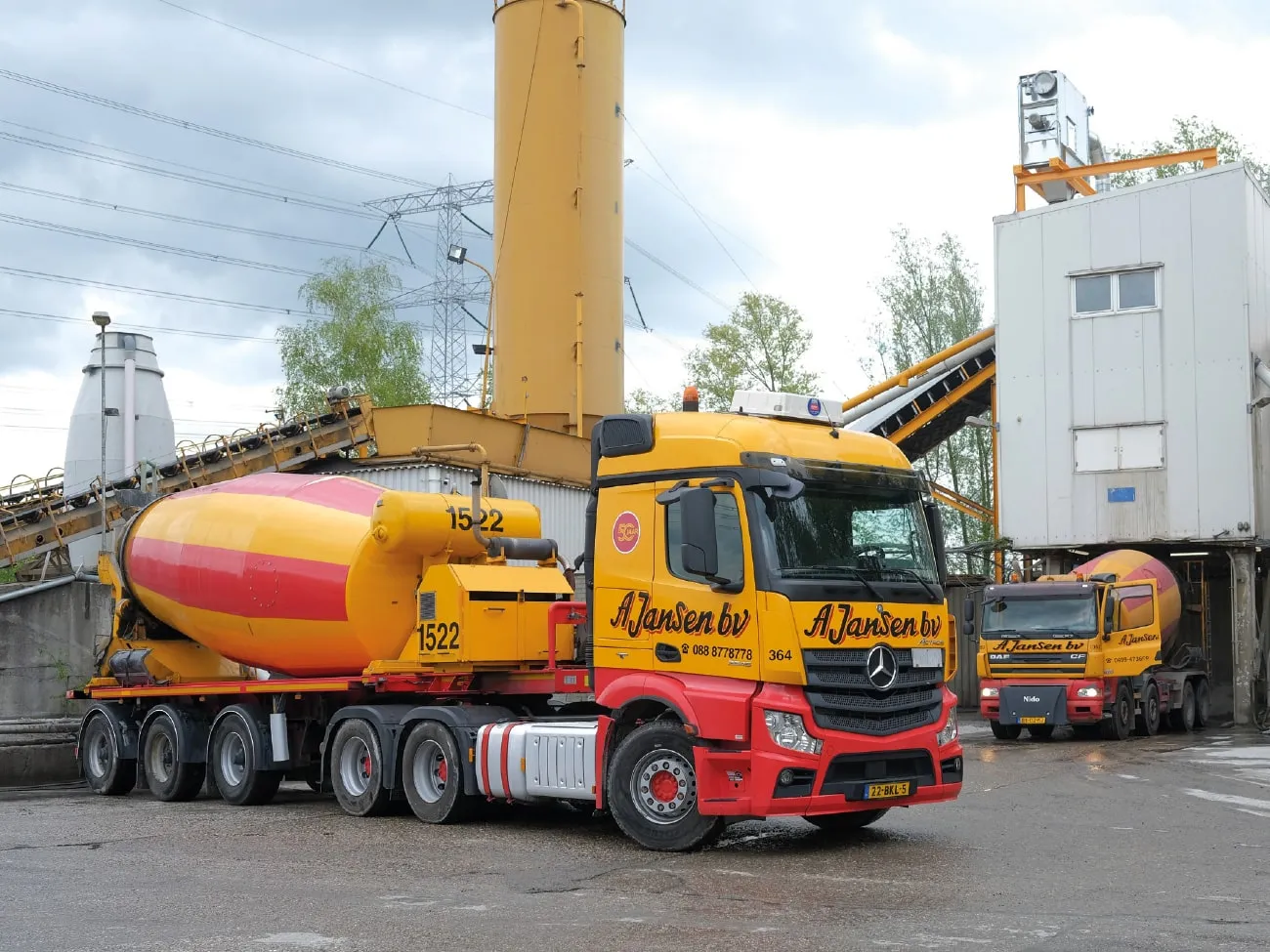
At Jansen Beton, they combine the development of their infrastructure, recycling and concrete activities as much as possible with innovative, sustainable solutions.
One of these solutions is geopolymer concrete, a highly environmentally friendly type of concrete being used in connection with the construction of the new N69 to build a 16-metre-long post-tensioned bridge for cyclists and pedestrians. Boskalis initiated this promising pilot project with partners Sqape (developer) and Jansen Beton (producer). It enables the market to literally take new paths towards the future.
The development and use of geopolymer concrete fits seamlessly with the Province of North Brabant’s aim to make projects as sustainable as possible. “With this product, together with our partners, we are not only providing an appropriate and well-considered answer to the client’s needs,” says Han Heijsters, who is jointly responsible for sustainability policy in the broadest sense at Jansen Beton. “At the same time, we are learning so much from this that it will be easier to take steps together towards new applications in the future. With a trial pour in January and the final pour in June 2021, we have at least made a start. And it is a promising one…”
60% lower environmental impact
The type of geopolymer concrete used to build the bridge deck, approach slabs and abutments for the bridge near Dommelen has been optimally tailored to the performance requirements specified by the contractor. “In the concrete mix specially developed for this purpose, geopolymer completely replaces cement as the binder,” Heijsters explains. “The aggregates consist entirely of thermally cleaned sand and granulate. This results in an environmental impact that is as much as 60 per cent lower than that of traditional Portland cement concrete.”
Extensively tested
While geopolymer concrete has already been used cautiously in safe, ground-supported applications such as cycle paths and roundabouts, Jansen Beton and its partners are aiming much higher with this project. “We are talking about a generously proportioned, free-hanging post-tensioned bridge deck,” says Heijsters. “And that has implications, including for the composition of the concrete mix, the method of placing it and, of course, the safety requirements. These are completely different here and, above all, more stringent. All of this makes the application considerably more complex and extensive. That is why TU Delft, Sqape and we have carried out various tests, including on compressive strength, tensile strength and shrinkage. We are playing it safe and leaving nothing to chance.”
Have a business enquiry for Boskalis Nederland? Get in touch
Companies in this story
Keep following this
Get an email when a new story is published. No account needed.
- ThemeMaterials and techniques for infrastructure
- SubjectBridge construction
- CompanyBoskalis Nederland







