









First bascule chamber successfully lowered into place
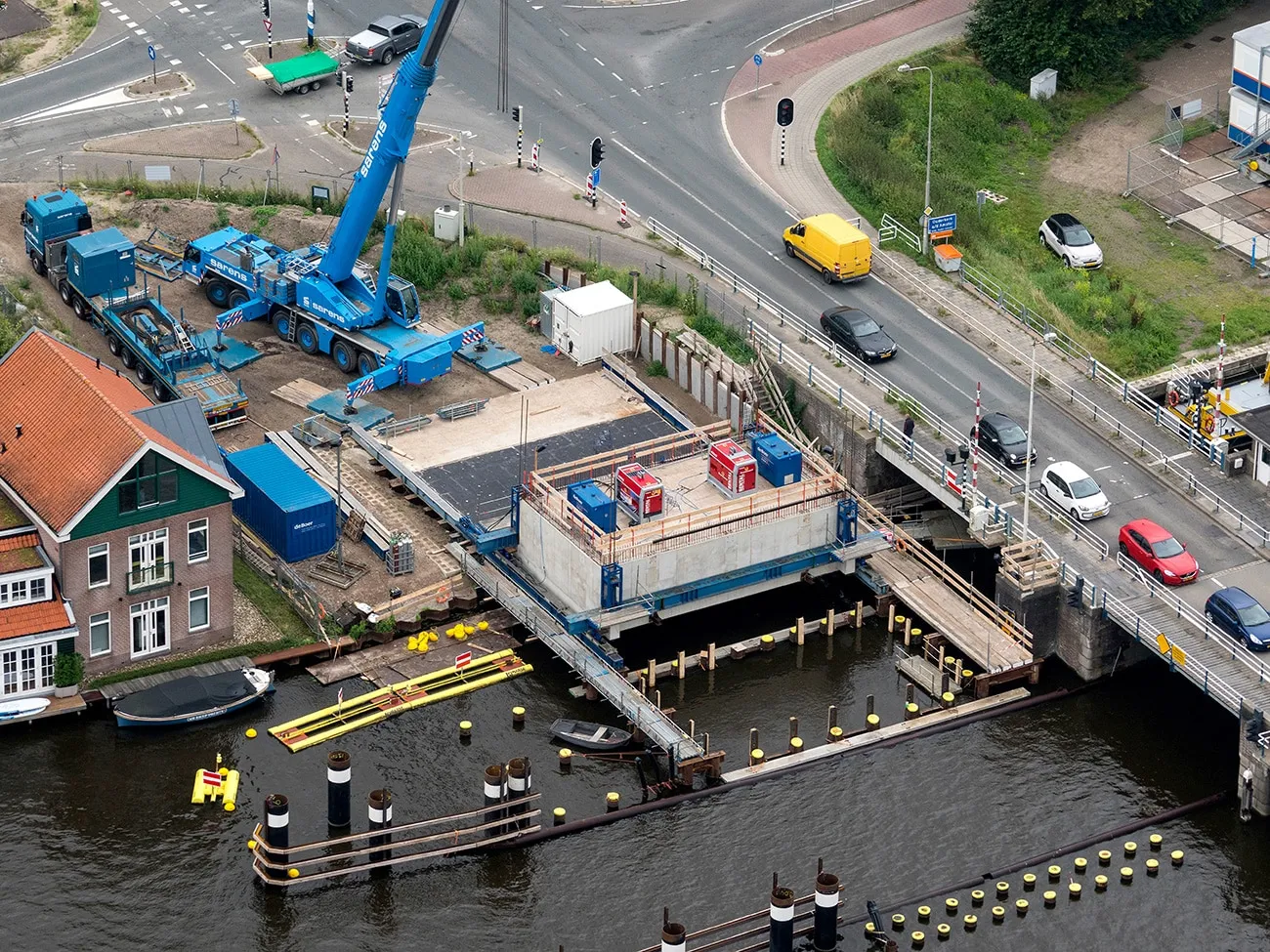
The counterweights for the two new bridges over the Amstel at Ouderkerk will sit neatly below the waterline in two bascule chambers. The chambers are being built on the riverbank, then slid into position and lowered using an ingenious method developed by Civiele technieken deBoer. The first chamber has now been successfully lowered into place.
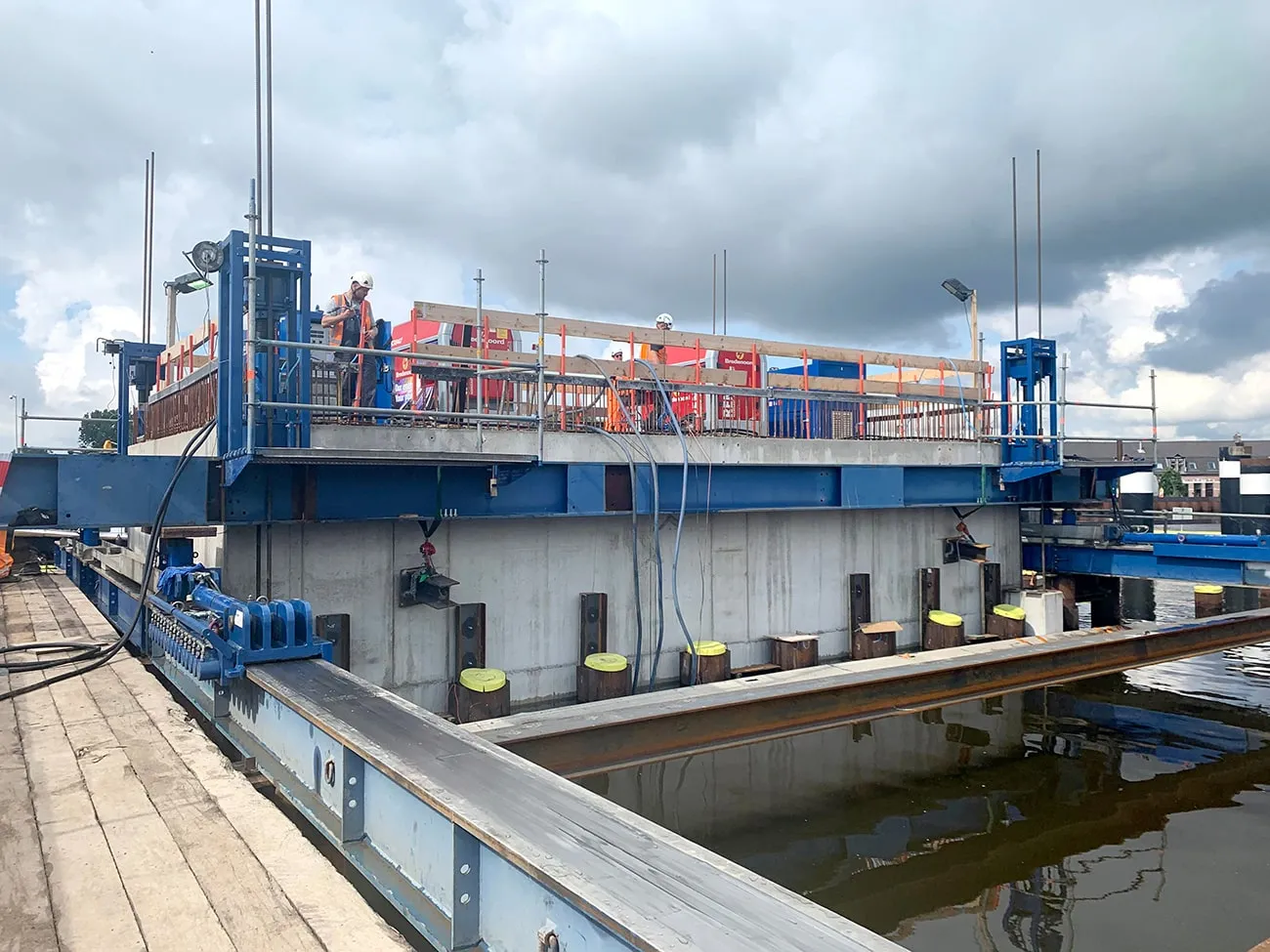
“Van Hattum en Blankevoort first approached us in 2018 to develop a plan for sliding both bascule chambers into position and lowering them,” says Paul den Hollander of Civiele technieken deBoer. “At 220 tonnes, the chambers are too heavy to be lifted into place using a conventional crane. Given the tight schedule, the entire operation had to take place over a single weekend, so we devised a combined structure. This allows us to carry out two operations in a single pass: sliding the chamber into position and then lowering it.”
To ensure the necessary stability and load-bearing capacity, Ct deBoer’s sliding tracks rest on a temporary structure of piles, sheet piles and brackets installed earlier. “At the crucial moment, the concrete chamber was transferred onto the sliding tracks via cast-in lugs, then moved almost 20 metres across the water,” explains Den Hollander. “In the same operation, the chamber was lowered and placed on the permanent piles, 4 metres below the waterline. And all of this was completed in just two days, including the assembly and dismantling of our temporary structures, jacks and hydraulic pump units.” Ct deBoer will repeat this feat for the second bascule chamber at the end of the summer.
Question about this story? Ask your question
Keep following this
Get an email when a new story is published. No account needed.
- SubjectBridge construction







