









Exceptional collaboration between idverde NL and all parties involved in recovery operation near Stuwweg, Maastricht
Text Susan Peek Beeld Adriaan van Dam Fotografie
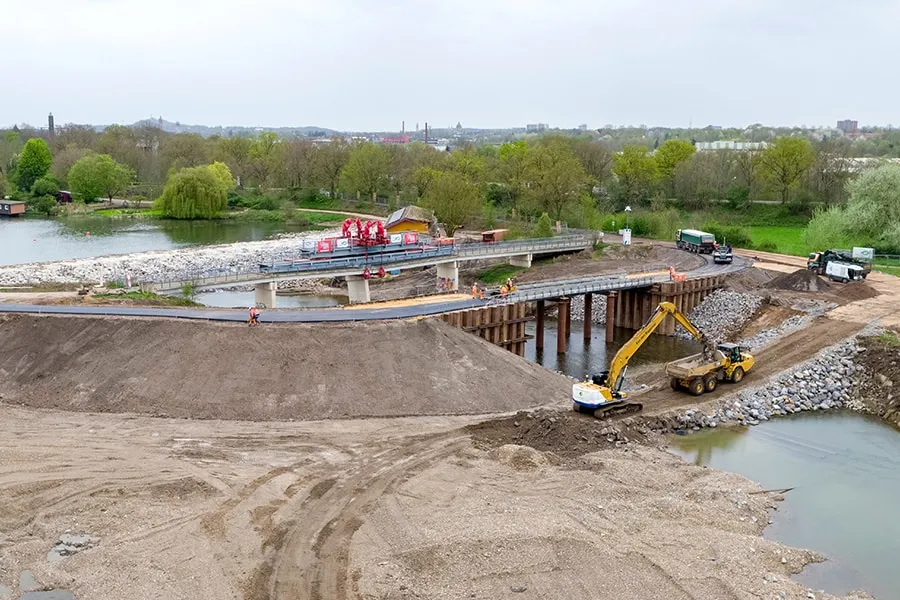
As Rijkswaterstaat’s regular maintenance partner, idverde NL looks after not only routine green-space and civil engineering maintenance, but is also available to respond to emergencies. So when an emergency arose at the weir near Stuwweg in Maastricht, a project manager and technical manager were mobilised in no time, a design team was assembled, and preparations and repair work got under way. Less than two months later, the recovery operation is virtually complete.
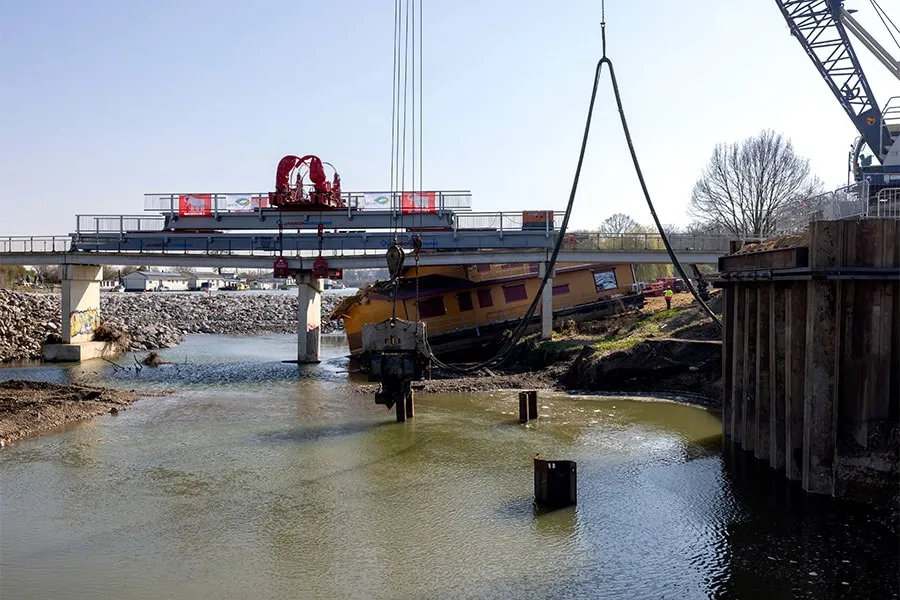
A quick look back to early 2024: a brief period of high water around Christmas 2023, followed by a higher peak in water discharge, damaged the weir over a length of 50 metres. The weir, located at the end of a dead-end branch of the Meuse, normally holds back almost still water where around forty houseboats are moored. After the breach, a strong current developed, creating a risk that the houseboats could break free. As the situation deteriorated, that risk became reality when one moored houseboat broke loose and drifted into the Stuwweg bridge. The bridge was immediately closed to traffic due to the potential risk of collapse. Working with Rijkswaterstaat and on its behalf, idverde Realisatie, team PCN Maas, set about finding suitable solutions.
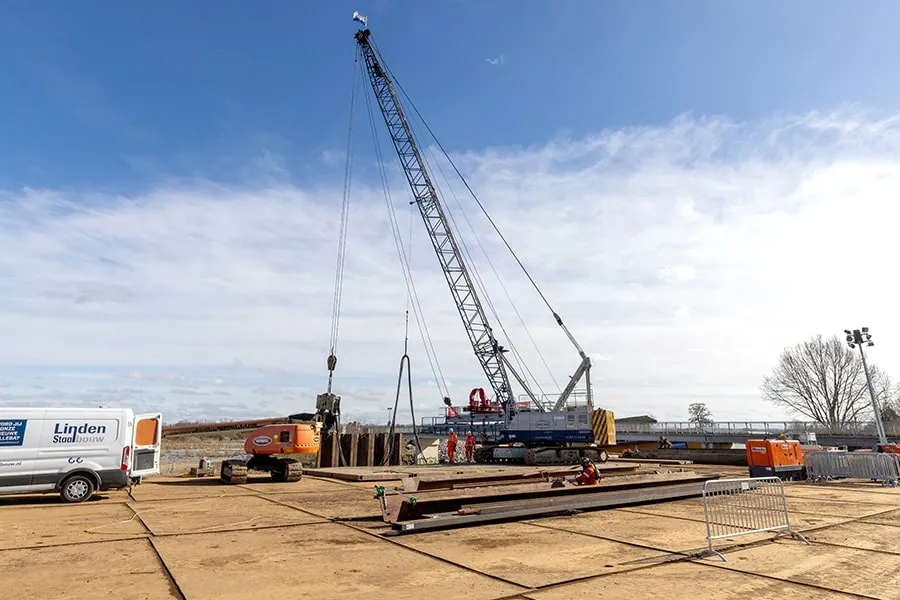
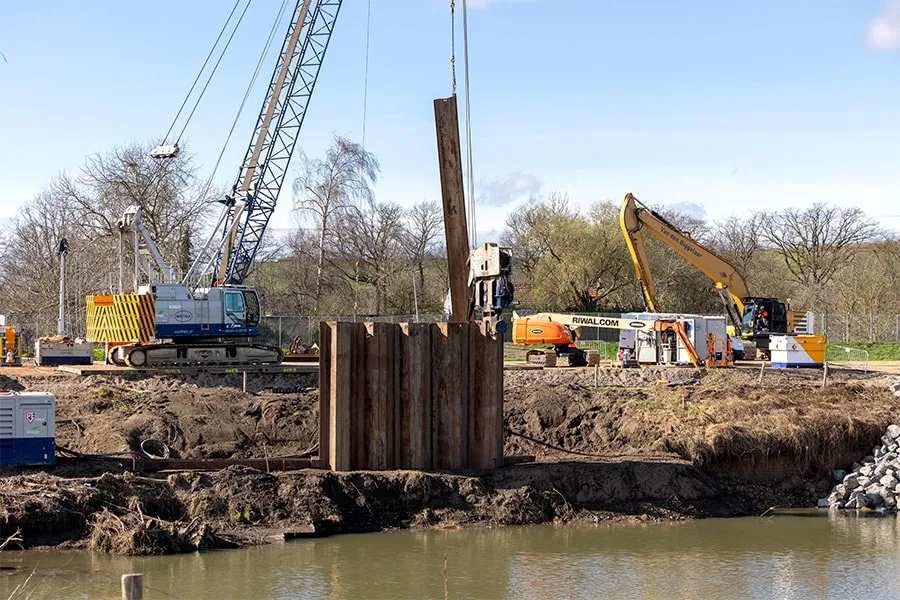
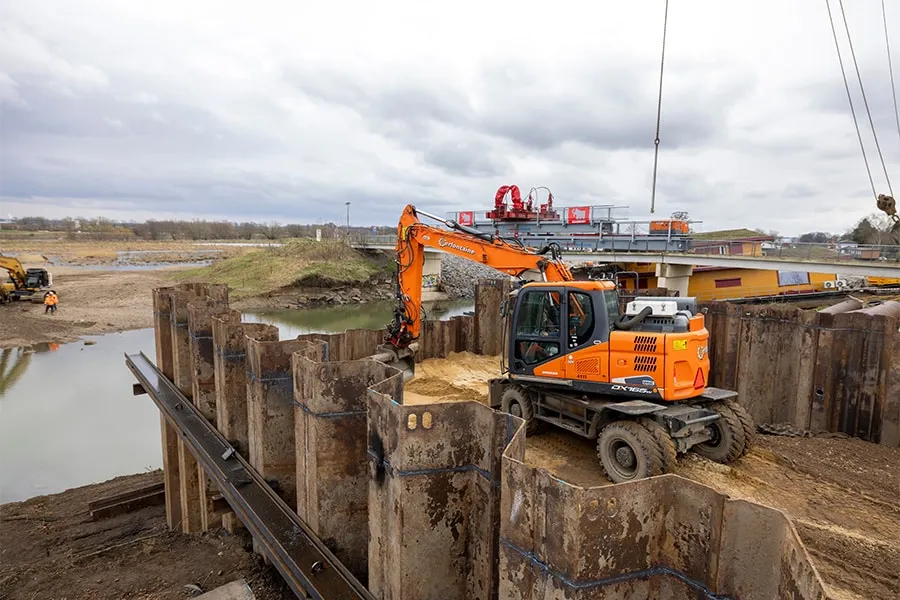
Optimal collaboration between all the parties involved was the key to success and to the speed achieved on this project.
Repair and strengthening measures
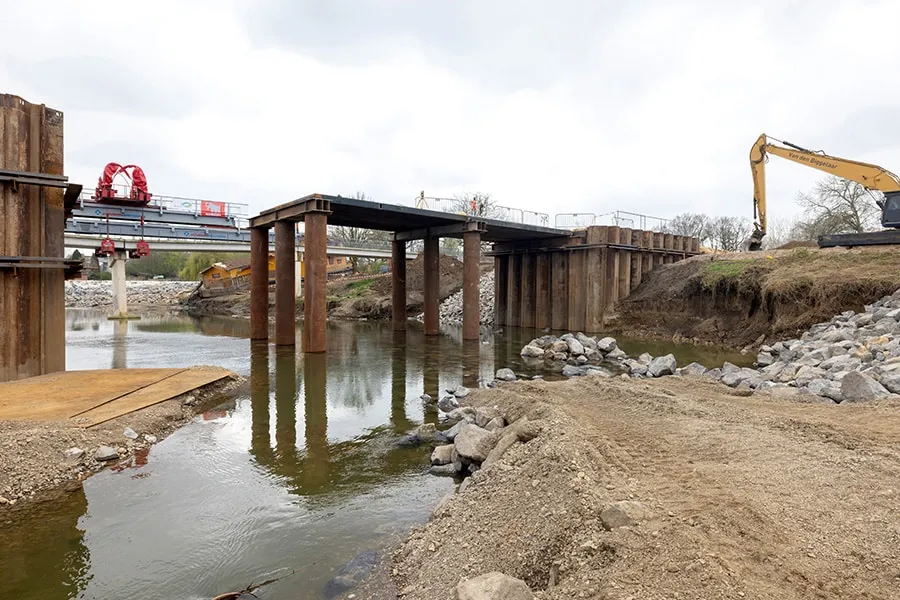
“We initially set about securing the other houseboats so they could not move,” says Mateusz Bala, acting technical manager at idverde Realisatie, team PCN Maas. “To provide the civil engineering expertise needed, Oceaa Projects, of which Mateusz is managing director, is supporting idverde NL as a project partner on this challenging job. “Next, we recovered the houseboat that had broken loose, stabilised the damaged bridge pier, set up a temporary ferry service, installed emergency lighting and started creating a temporary shore crossing.” And the work was carried out almost as quickly as Mateusz has just described it.
Flexible and fast
“Within two days, working with a skipper from our network, we had set up the temporary ferry service, allowing residents to get back to their houseboats. Within a week, a full design team was in place to put forward solutions to Rijkswaterstaat, the necessary preparations were under way and the site had been set up. The design for stabilising the damaged bridge was complete within two weeks, and after six weeks the full design for the temporary shore crossing was ready.” Mateusz says it is quite unusual to be able to respond so quickly and flexibly. “In an emergency, it is vital to put forward clear solutions quickly so people can get straight to work,” he says.
Optimal collaboration
“A challenging, multidisciplinary project like this can only be delivered if the right people are brought on board and there is close, effective collaboration between the various parties involved. And that is exactly where our strength lies,” says Mateusz. He explains that a strict meeting structure was in place, with ongoing coordination with Rijkswaterstaat, houseboat residents, the municipality of Maastricht, other stakeholders and the subcontractors involved. “The added value of idverde NL and Oceaa Projects lay in how flexibly and quickly we mobilised to help Rijkswaterstaat, and then made sure everything was properly organised logistically. Work really did begin seven days a week from day one, from seven in the morning until seven in the evening, on both planning and delivery. And all of it was done in accordance with sound safety principles.” He is proud of the exceptional collaboration between Rijkswaterstaat, idverde NL, Oceaa and all the other parties involved, including DVA-Engineering BV, Boels, Defensie, Nobleo Bouw & Infra, Hektec, HKV lijn in water, Mammoet and Van den Biggelaar Grond- en waterbouw. “It was genuinely the best collaboration we have had so far.”
Fit for the future
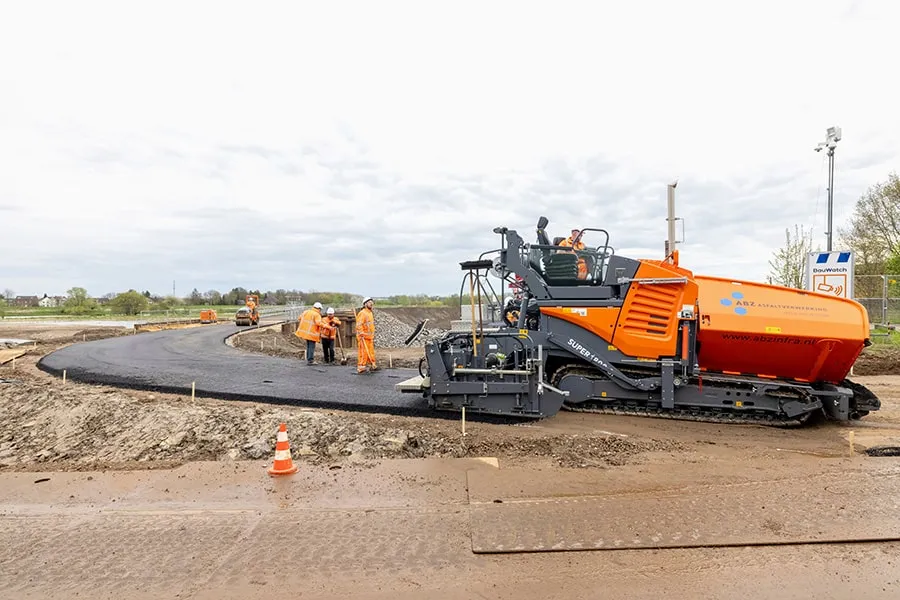
Asked about the current status of the recovery operation, Mateusz says that the temporary shore crossing is complete and has been handed over. Another contractor will repair the weir, while the stabilised bridge is undergoing an extensive inspection. “Investigations will determine whether the bridge can be repaired or needs to be replaced. We are reviewing the findings with a specialist bridge builder and drawing up plans. The necessary arrangements are already in place. Naturally, we will look at what can be reused as part of our sustainability efforts.” Once the bridge has been repaired or replaced and the weir restored, the temporary shore crossing will be removed, and idverde NL will be responsible for its annual inspection. Mateusz concludes: “All in all, a complex project in a unique location, involving a wide range of disciplines. Thanks to determination and optimal collaboration, a safe environment was created here very quickly.”
Question about this story? Ask your question
Companies in this story
Keep following this
Get an email when a new story is published. No account needed.
- SubjectBridge construction
- CompanyNobleo Bouw & Infra
- CompanyVan den Biggelaar Grond- en waterbouw BV







