









Bridge deck made entirely from residual waste
Biocomposite as an alternative to hardwood
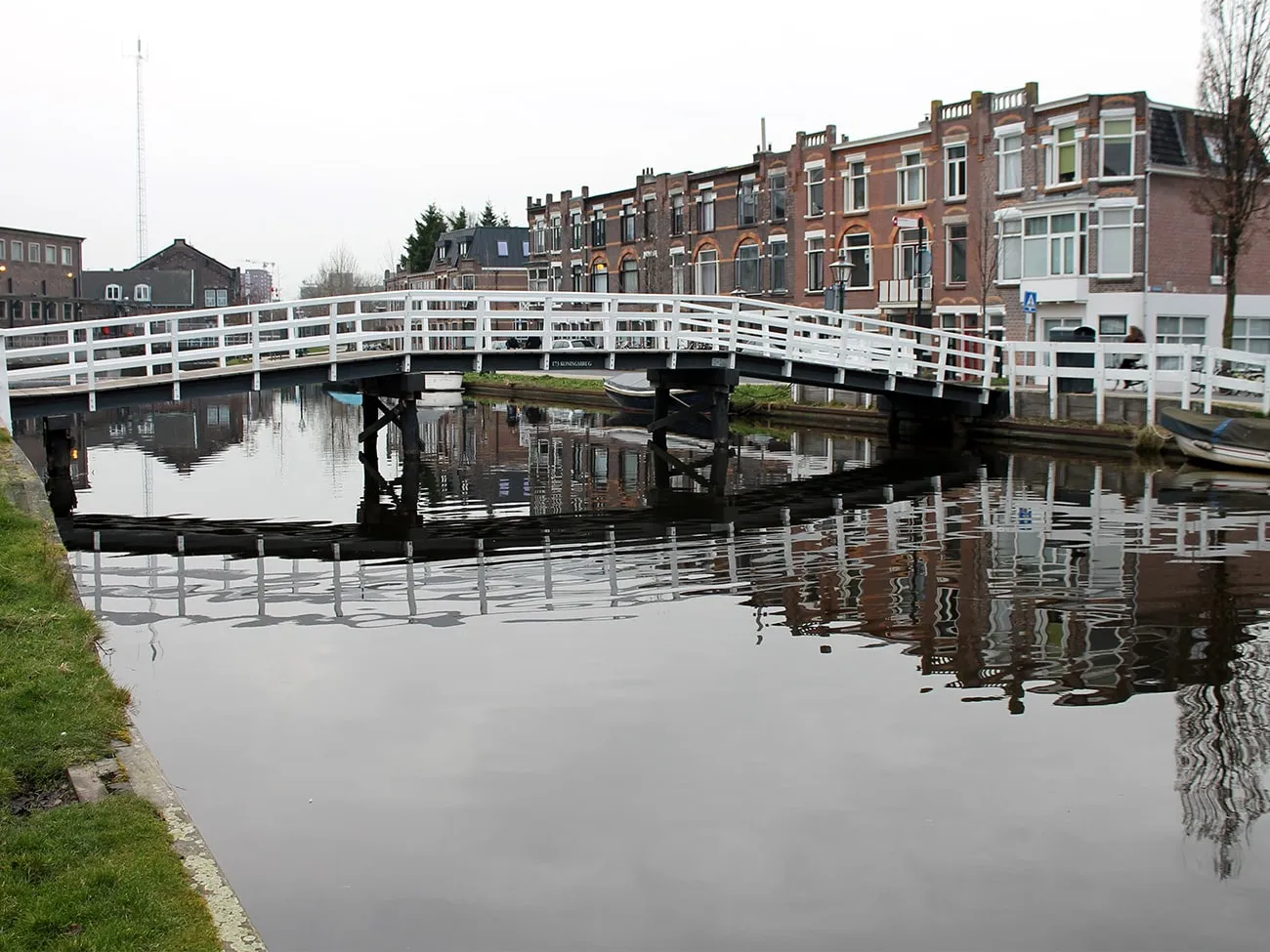
At first glance, the Koningsbrug in Leiden is much like any other bridge for cyclists and pedestrians. But it is not. Its deck is made from biocomposite produced from 100% upcycled residual waste. A superb and highly sustainable alternative to hardwood.
“Innodeen’s strength lies in working with clients to develop the best possible sustainable solutions and alternatives for a wide range of applications. That is how we were asked by others in the supply chain whether we would help develop a ‘waste’ bridge for cyclists and pedestrians,” says Jos Beverborg, Technical Sales Engineer at Innodeen. “We were also asked how circular the biocomposite we developed is. It already has a durability class of 1, but we are always looking for better solutions and opportunities. That prompted us to take another critical look at our biocomposite.”
Sustainable and local
The original biocomposite consists of 72% softwood fibres, imported from Germany, and 28% virgin polypropylene. “We could make significant gains by sourcing the components closer to home instead of importing them. Working with recycling company Rouwmaat in Enschede and Saxion University of Applied Sciences, we investigated whether collected grade A demolition timber, such as pallets and packaging wood, could be ground into fibres suitable for our production line. Tests showed that its quality is just as good as that of the German softwood fibres.” This got Innodeen thinking. Could it also use polypropylene granules from a recycling company? It turned out that it could, sourcing them from Veolia in Vroomshoop. “We take polypropylene recyclate from them and use it in our biocomposite. This would have been unthinkable 20 years ago, but recycling companies now produce such high-grade material that it can hardly be called demolition waste any more.”
The first bridge of its kind in the Netherlands
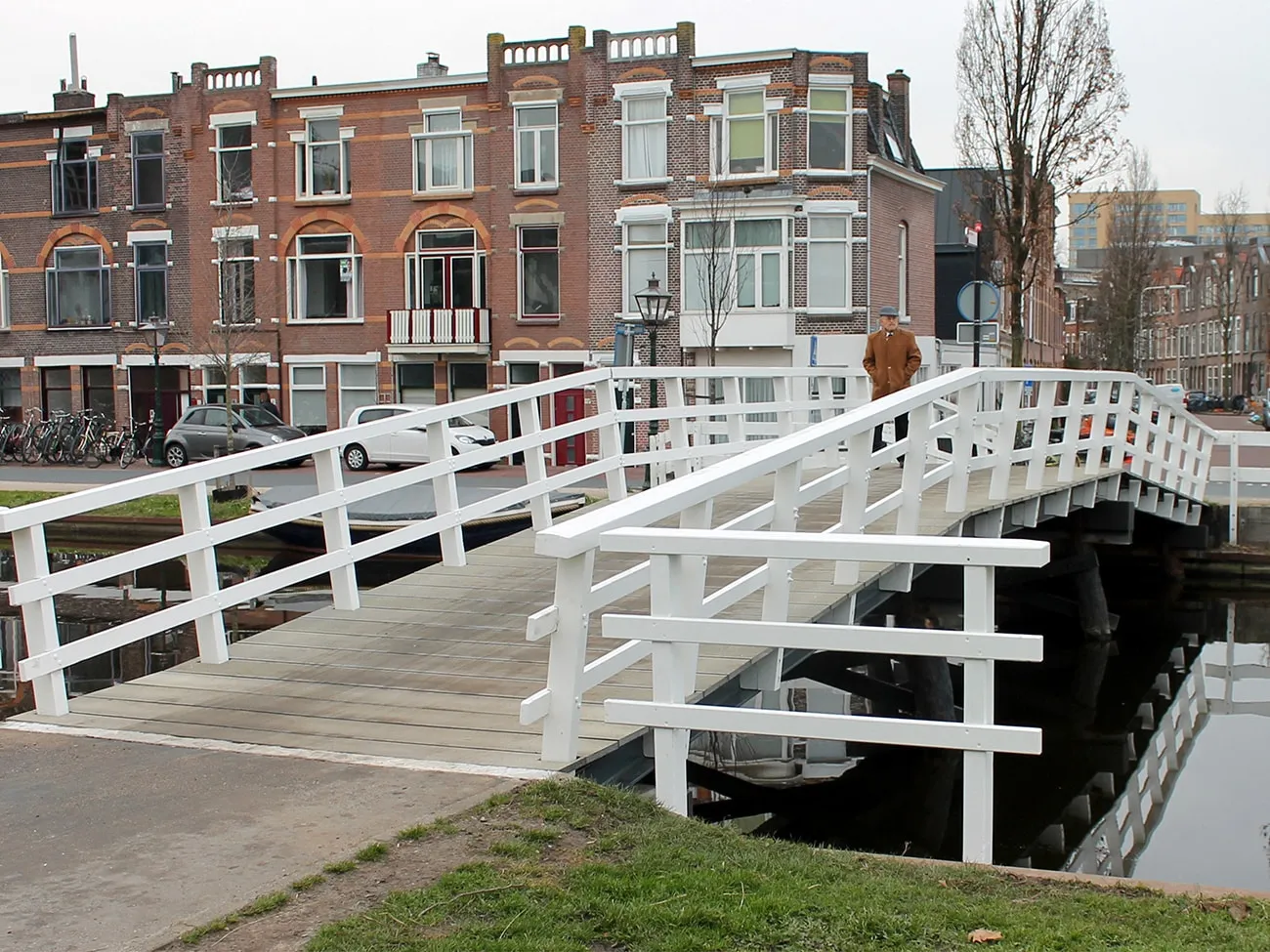
The ‘new’ biocomposite has been used in the deck of the Koningsbrug, a bridge for cyclists and pedestrians in Leiden. The Koningsbrug is therefore the first bridge with a deck made entirely from residual waste. A number of similar bridges are now lined up for renovation using the same approach.
Competitive on price
“Now we want to make progress,” says Jos. “For example, we are working with Rijkswaterstaat and the water boards to investigate whether existing hardwood bank protection can be replaced with circular biocomposite. It is also highly suitable for jetties, decking, façade cladding and fendering structures. One of the great things about biocomposite is that it can be formed into bespoke shapes and is resistant to fresh, salt and brackish water.” Innodeen is keen to hear from companies in construction and civil engineering looking for a sustainable, full-performance alternative to hardwood. “In time, I expect we will be able to make profiles that we do not even know exist yet. And, importantly, it is competitively priced compared with conventional materials. What is more, this material can be recycled at least four times, and, just as importantly, the CO2 stored in the wood is retained.”
Question about this story? Ask your question
Who worked on it
Koningsbrug in Leiden
- BiocompositeInnodeen
Keep following this
Get an email when a new story is published. No account needed.
- ProjectKoningsbrug
- SubjectBridge construction
- CompanyInnodeen







