









‘At this stage, the key is to keep our sights firmly set on the end product’
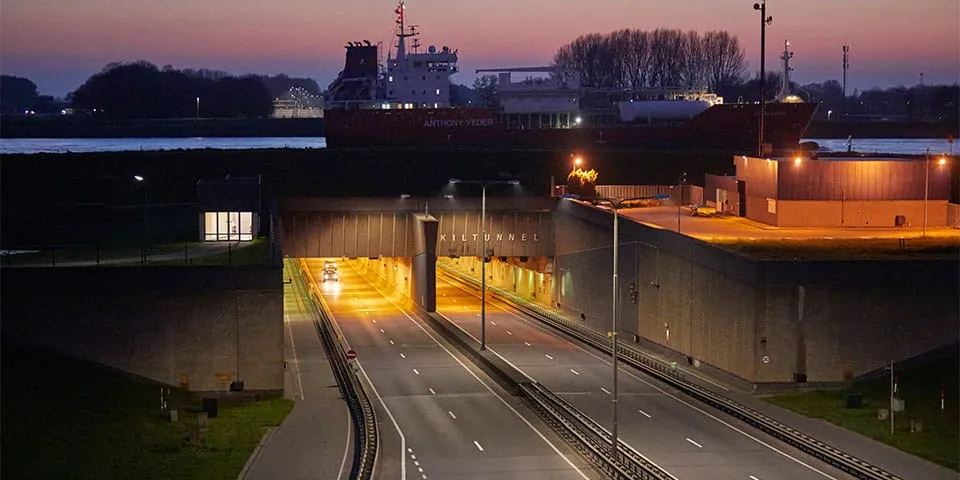
The Kiltunnel is due for major maintenance. Its installations have reached the end of their service life and the concrete needs extensive repairs. And while the maintenance work is under way, Wegschap Tunnel Dordtse Kil is also reviewing the safety and convenience of road users and staff on the approach roads, toll plaza and escalators, inside the tunnel and in the offices.
The Tunnel Dordtse Kil links the N217 from ’s Gravendeel with the N3 towards Dordrecht. The tunnel’s owner, Wegschap Tunnel Dordtse Kil, has been monitoring its condition for years and has concluded that the time has come for major, wide-ranging maintenance. “The concrete is damaged, the installations are outdated, and the working areas could be safer and more comfortable,” says Kiltunnel director Arie Bras.
European tender
All the points requiring attention have now been identified. The full board is involved, and Ingenieursbureau Drechtsteden has been brought in to help draw up a clear project specification. The plan was ready for an open European tender in early 2019. “The sKILs contractor consortium, a partnership between Dynniq & Mourik Infra, came out on top,” Bras explains. “During what is known as the ‘design and build team phase’, it has worked with us on the detailed engineering. I expect this to take ten months. After that, we will see whether we can reach agreement on the price, allowing us to sign a construction contract. If so, the major maintenance work can start this year.”
Providing detailed direction
For Bras, being involved in the design and build team phase is very important. “At this stage, the key is to keep our sights firmly set on the end product. For every situation, we need to work together to find the best solution and provide detailed direction. The Kiltunnel is a toll tunnel. Toll revenue is needed to cover operating costs, such as loan repayments, staff salaries and maintenance of the entire asset base, including the tunnel, toll plaza and buildings. We have a responsibility to manage this properly. The measures we take must be effective, useful and necessary.”
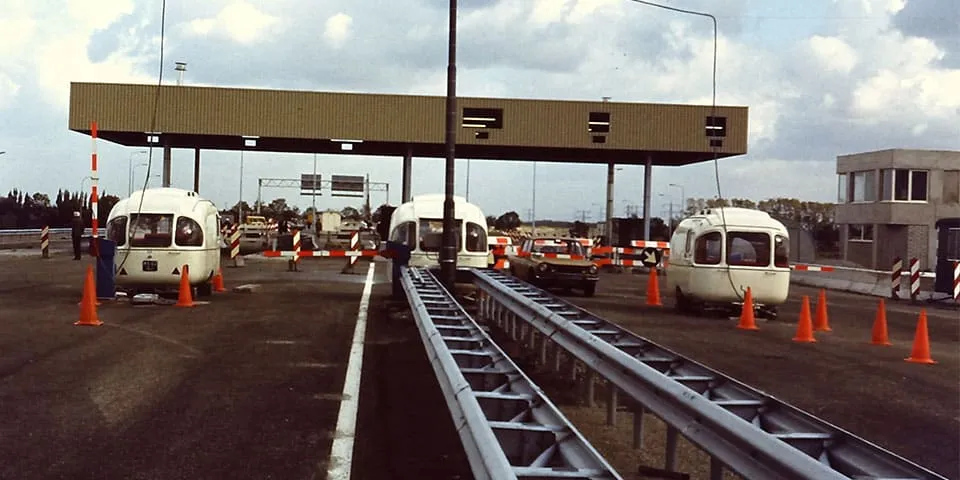
The toll plaza in 1977.
State-of-the-art installations
A large number of installations are needed to keep the tunnel and its surrounding buildings operational. All the tunnel and traffic systems are being replaced, including safety equipment, electrical installations, LED lighting, signage, fire suppression systems, wastewater drainage, communications facilities, and control and operating systems. Bras says: “In 2002, these installations were inspected and repaired where necessary, and vulnerable components were replaced. This ensured safety, but it is not something you can keep doing indefinitely.
The components are becoming increasingly difficult to obtain, and once they fall into the ‘specialties’ category, prices rise too. Now that the entire project is being modernised, it is time to switch to state-of-the-art installations. Good, robust solutions, no more and no less.”
Customer-friendly
Another consideration for the new installations is making the tunnel more customer-friendly. Feedback shows that certain measures are not always clear to road users. Bras says: “For example, we are regularly asked why there is a cross above a particular lane. In future, we want to explain this immediately via an information panel. That will help us stay in closer contact with our customers.”
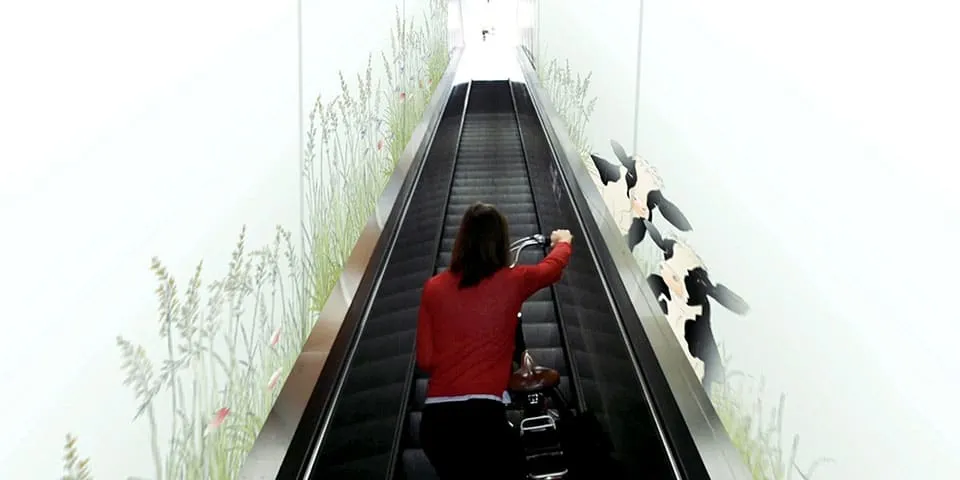
The escalator for cyclists will be in a bright, transparent setting.
Concrete repairs
Unlike the major maintenance work in 2002, repairs to the concrete structures are now also necessary. Inspections have identified settlement differences, impact damage, leaks and deformed expansion joints, among other issues. “All of this will be repaired,” says Bras. “The expansion joints in particular will be cleaned. If they become clogged, the concrete can no longer respond to temperature changes, and there is a risk that it will move in the wrong direction. The expansion joints will also be fitted with so-called ‘silent joints’ to reduce noise and improve driving comfort. After the concrete repairs, the whole tunnel will look bright and fresh again.”
Toll plaza redevelopment
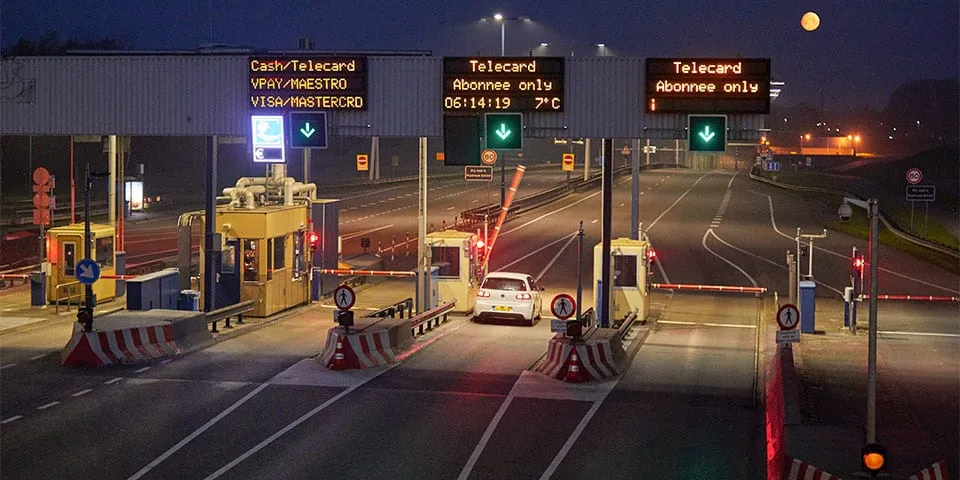
The toll plaza dates from the 1970s and is still configured to the standards of that time. Much more is now possible in terms of technology. In the new layout, for example, all modern payment methods will be accepted at every entrance. This includes contactless payment, debit cards and users’ own RFID (Tele)cards.
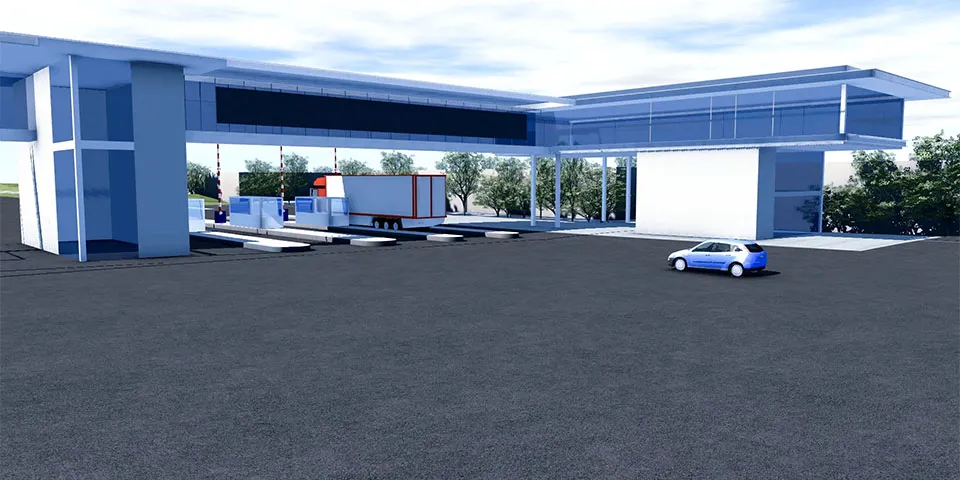
Staff will be able to reach their workstations safely via a footbridge.
Improved traffic flow
By increasing the number of entrance gates from three to five, Wegschap Tunnel Dordtse Kil is responding to rising traffic volumes. The increased capacity should improve traffic flow. At present, queues during rush hour are a daily occurrence because drivers choose the wrong toll lane. The board expects five entrance gates to provide a more consistent flow, including during minor incidents such as a driver stopping at the barrier without any money.
Safety
Safety is another key consideration. “Of course, this means the safety of road users,” Bras explains. “They can expect better signage, lighting and information. Dynamic signs will help them anticipate situations earlier. The escalator for cyclists will be in a bright, transparent setting, creating a safe environment. But safety also covers our employees’ working conditions. They will be based in a new office, from where they can reach their workstations at the toll plaza safely via a footbridge. Parking areas will also be laid out on the north and south sides. Crossing ‘in traffic’ will be a thing of the past.
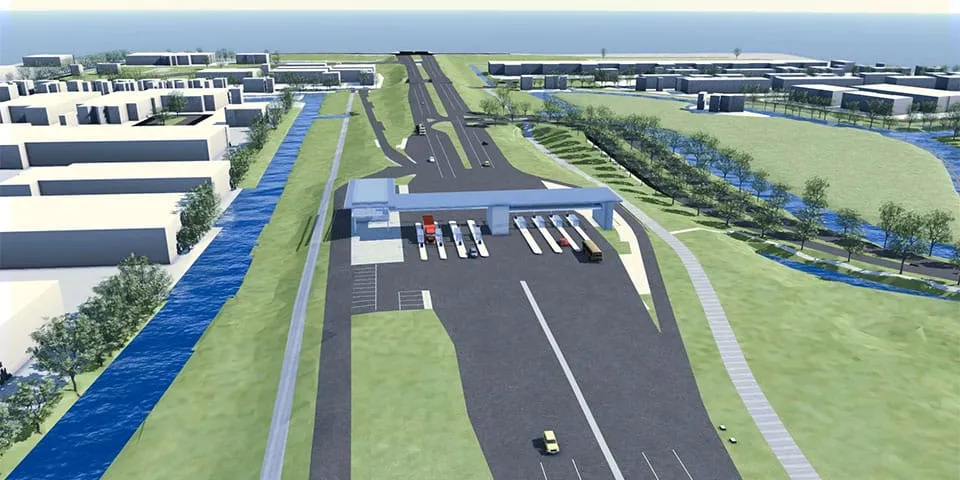
Increasing the number of entrance gates from three to five will improve traffic flow.
Sustainability
Sustainability is a major consideration in all the measures. They are intended to reduce maintenance and management costs, energy consumption, and emissions of CO2 and particulate matter. With measures including solar panels, good insulation and a smart design in terms of material selection, Wegschap Tunnel Dordtse Kil is aiming for an energy-neutral building, also known as an ‘ENG’ building. If the solar panels generate more energy than needed, the surplus will be used to power the tunnel installations. Sustainable choices are also being made in the selection of construction materials. For example, green piles will be used and the safety barriers will be made from FSC-certified timber.
Keeping the tunnel accessible
Major maintenance of the Dordtse tunnel will take at least two years. Even so, the board of Wegschap Tunnel Dordtse Kil wants to minimise disruption to access to the tunnel during this period. New facilities will therefore be built alongside existing ones wherever possible. The existing installations will remain in use until it is certain that the new installations can take over. For the same reason, the new toll plaza will be built alongside the current one, and the office building will be moved to the other side of the road. Only occasionally will traffic have one fewer lane available or face a tunnel closure.
Information for road users
“We will keep all stakeholders, including motorists, cyclists, pedestrians and local residents, fully informed about what is happening,” Bras concludes. “Major maintenance of the tunnel requires thorough preparation. That is what we are working on now. The actual maintenance work is expected to start at the end of this year.”
A business enquiry for Mourik? Get in touch
Who worked on Kiltunnel
- ownerDordtse Kil tunnel authorityIn this story
- contractorDynniqIn this story
- engineering consultancyIngenieursbureau DrechtstedenIn this story
Keep following this
Get an email when a new story is published. No account needed.
- ProjectKiltunnel
- ThemeMaterials and techniques for infrastructure
- SubjectBridge construction
- CompanyMourik
- CompanyDordtse Kil tunnel authority
- CompanyDynniq
- CompanyIngenieursbureau Drechtsteden







