









A structure beneath a structure
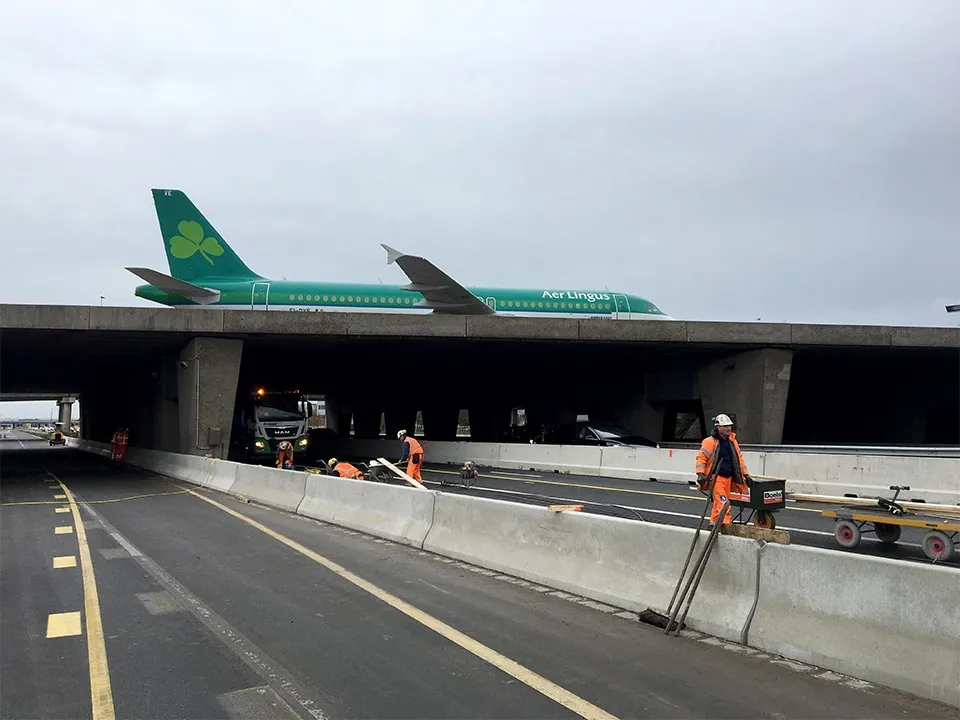
A consistent, uncluttered road layout that meets current requirements for safe roadside design. That was Rijkswaterstaat’s design requirement for protecting the piers of the structures as part of the Voltooiïng Dubbele Rijbaanstelsel project at Schiphol.
This seemingly standard assignment proved to be a considerable challenge, keeping Heijmans’ road designers busy. Drawing on Heijmans’ specialist expertise, a ‘structure beneath a structure’ is being created to protect the existing and new viaduct piers.
“A consistent road layout can be achieved by installing one type of vehicle restraint system, or by using several types with the same appearance,” says Kees Hanegraaf of DELTA BLOC®, a leading manufacturer of vehicle restraint systems. “The existing situation features four different systems: a safety barrier, steel barriers and two different types of concrete barrier. Over the years, this has resulted in a cluttered road layout.”
Severely limited space and variable ground conditions
“The limited space in the cross-section and current roadside safety requirements mean that standard vehicle restraint systems cannot be used beneath these flyover viaducts,” Hanegraaf continues. “This is a problem road designers often face when reconstructing roads. In this case, the designers also had to take different ground conditions into account, while making as few changes as possible to the road structure. This meant that vehicle restraint systems were needed for installation on a concrete surface, on the verge or on the asphalt. Given the limited space and the need for safe transition sections to connect one system to another, this was an almost impossible task.”
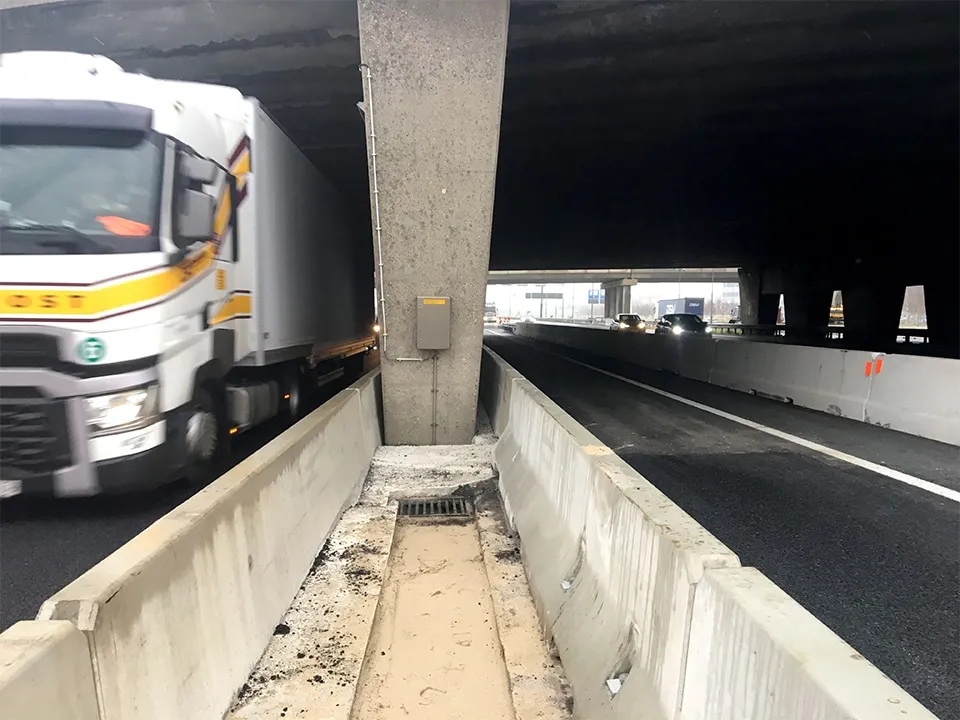
DELTA BLOC® DB 80 series
The piers of structures are only safely protected if the vehicle restraint system can do its job in a collision. Hanegraaf explains: “Most vehicle restraint systems move considerably when struck. This movement absorbs the impact energy and guides the vehicle back into its lane. The forces experienced by the occupants are kept to a minimum. Compliance with the requirements must be demonstrated through the prescribed impact tests in accordance with NEN EN1317-2.” But what if there is no room, or too little room, for the required movement? DELTA BLOC®’s DB 80 series offered the ideal complete solution for Heijmans’ road designers. Intensive collaboration between specialists from Heijmans and DELTA BLOC resulted in eight runs of concrete vehicle restraint system incorporating no fewer than five different types of DB 80. All have been impact-tested in accordance with NEN EN 1317-2, delivering a safe, complete solution. “A feat of engineering in its own right, and one that had never been carried out in this way before.”
Thanks to DELTA BLOC®’s DB 80 series, Heijmans was able to create a continuous vehicle restraint system in performance class H2. The height and impact profile of the different types of DB 80 barrier are identical. Only the installation method differs. “Road users notice no difference between the various vehicle restraint systems, but simply drive past a structure beneath a structure,” Hanegraaf concludes.
Question about this story? Ask your question
Keep following this
Get an email when a new story is published. No account needed.
- SubjectBridge construction







