









Whatever the circumstances, safety must come first, including for temporary traffic management
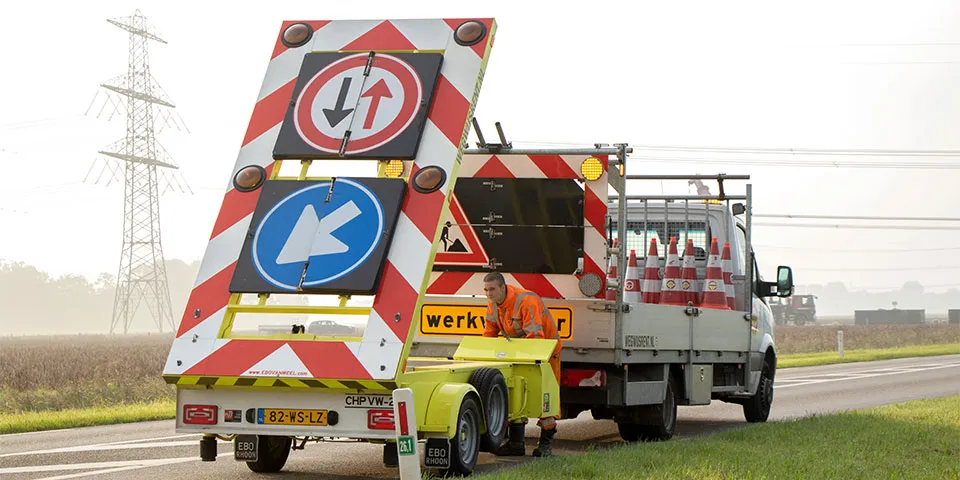
Whether replacing a section of asphalt, building a wind turbine or pruning trees alongside a motorway, all these activities are carried out with maximum protection for road users and minimum disruption.
As road users, we take this entirely for granted. Of course the road is closed when the surface is being repaired. And of course signs point us in the right direction again after a diversion. Yet organising these traffic management measures involves a great deal of work.
The traffic management plan
Temporary traffic management starts with the client’s work area. The client tells Wegwijsrent when each job needs to be carried out. “That is our cue to find the safest way to carry out the work while causing as little disruption to the surrounding area as possible,” says Danny Kamps, traffic manager at Wegwijsrent. “We then submit the plan to the road authority, municipality, province or government body, which assesses whether it is acceptable and does not conflict with other roadworks. Once the road authority has approved it, we schedule the traffic management measures, enabling our client to work safely.”
Competing interests
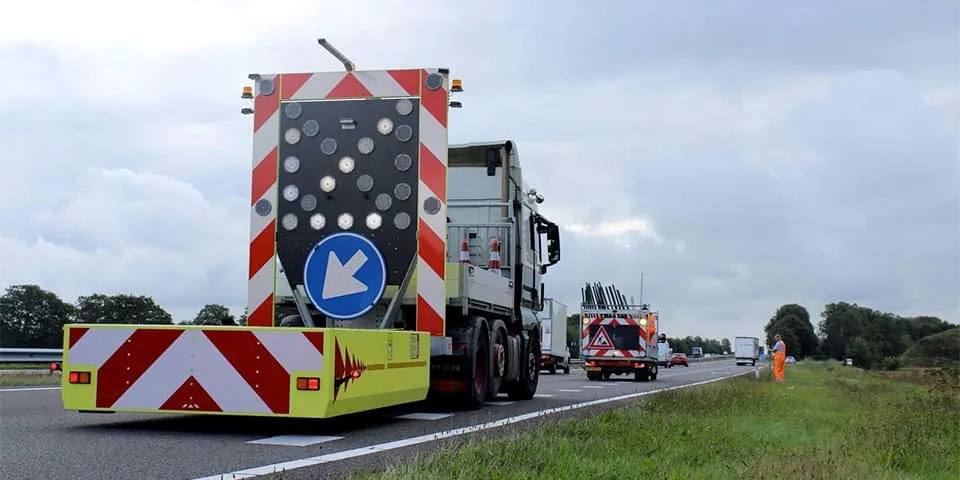
Time and again, Wegwijsrent finds that specialist expertise is essential in this field. Assessing the impact of a closure, especially on a motorway, and managing it effectively requires knowledge and experience. Safety is rarely the only consideration. “A contractor would naturally prefer to close the entire road and carry out the work during the day,” says Kamps by way of example, “whereas the road authority is primarily concerned with keeping traffic moving. Cost is also a factor. The challenge is to strike the right balance between safety, traffic flow and accessibility.”
Quality assurance
Wegwijsrent is subject to rigorous oversight to ensure the quality of its temporary traffic management. “To begin with, we set high standards for our own staff,” says Diana Hoeksema, commercial employee at Wegwijsrent. “Through toolbox talks, work briefings and the distribution of handbooks, we do everything we can to ensure they understand the importance of their role. Safety must always come first. We are also BRL 9101 certified, which means we are authorised to work on motorways too. We deploy traffic control equipment in accordance with CROW Publication 96a. As a certificate holder, we are rigorously assessed through two audits and six to seven project visits each year.”
Question about this story? Ask your question
Keep following this
Get an email when a new story is published. No account needed.
- SubjectBouwMat







